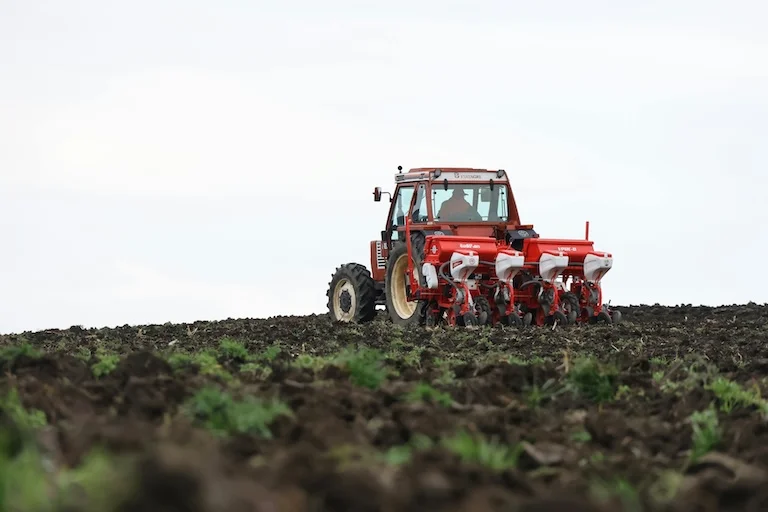
Rod ends are not components you casually scatter across an agricultural machine. Anyone who has spent time around seed drills or planters—whether on the design side, sourcing side, or in post-season teardown—knows that most joints still rely on simple pins and basic hinges for good reason.
That said, there are a few places where those simple solutions stop being “good enough.”
When loads stop behaving nicely, geometry starts changing mid-stroke, or a failure would take an expensive hydraulic system down with it, engineers tend to reach for rod ends—not because they’re elegant, but because they tolerate reality better.
This article looks at three common areas on seed drills where rod ends are regularly used in practice, and more importantly, why they end up there.
1. Downforce Hydraulic Cylinders
If you’ve worked with precision planters, you already know how unforgiving seed depth consistency can be. A few millimeters off, and emergence uniformity starts slipping fast.
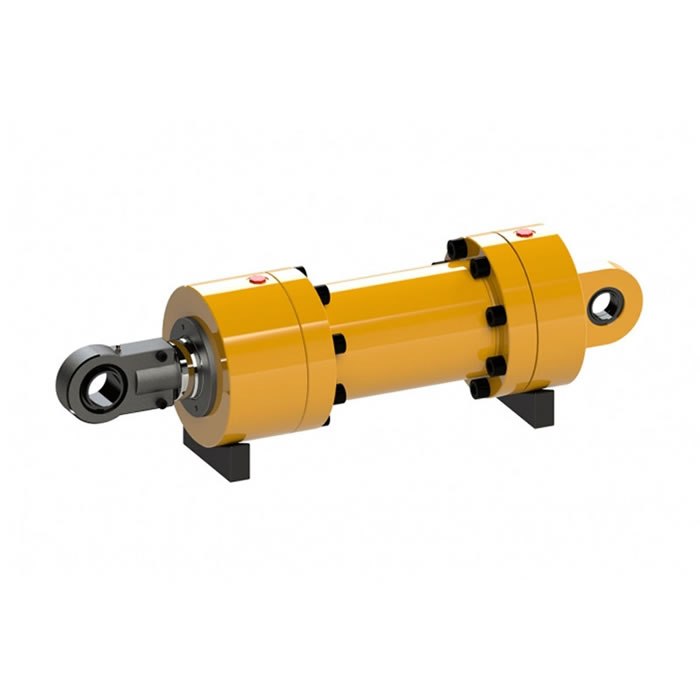
That’s why modern high-end planters rely on independent hydraulic downforce systems. Each row unit is kept pressed against the ground using a dedicated hydraulic cylinder, constantly reacting to surface changes.
On paper, that cylinder should only see axial load.
In the field, it never does.
What Are the Operating Challenges?
Once the planter is moving, several things stack up at the same time:
- Ground conditions are uneven, even in “good” fields
- Row units see small but persistent lateral resistance
- Frames flex slightly, especially on wider toolbars
The result is predictable: the cylinder experiences side load and angular misalignment whether the designer wanted it to or not.
Why Are Rod Ends Used?
If both ends of the cylinder are tied in with rigid pins, those side loads have nowhere to go except into the piston rod and seals. Over time, that usually shows up as:
- Slight piston rod deflection
- Premature seal wear
- Oil leakage that’s hard to diagnose until it’s already a problem
Adding a rod end—or a pressed spherical bearing—at the cylinder eye changes the load path. Instead of fighting misalignment, the joint absorbs it. The cylinder is allowed to follow the row unit’s natural movement while the piston rod continues doing what it was designed to do: carry axial force.
From experience, this choice has very little to do with squeezing out more performance. It’s about protecting a hydraulic system that’s expensive, sensitive, and not forgiving once contamination or seal damage starts.
2. Wing Folding Systems
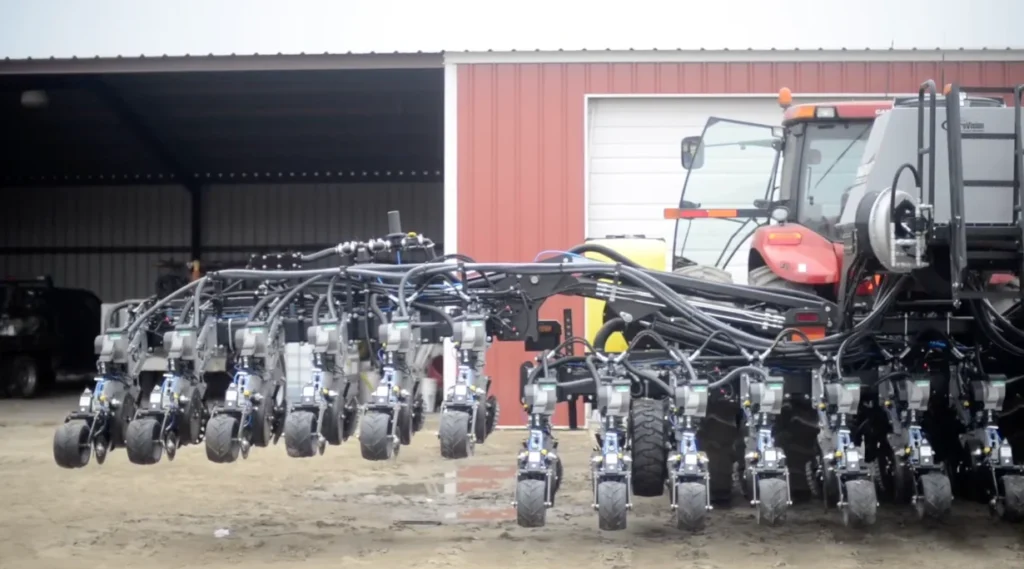
Once you get into large air drills and wide planters, transport becomes the real constraint. Forty feet turns into sixty, sixty into eighty, and suddenly folding wings are no longer optional.
Those folding systems are among the most heavily loaded structures on the entire machine.
What Are the Operating Challenges?
During folding and unfolding:
- Several tons of steel are being lifted by hydraulic cylinders
- The geometry changes continuously through the stroke
- Perfect alignment between cylinder, pivot, and frame simply doesn’t exist
Even with careful design, nothing stays perfectly coaxial through the full motion.
Why Are Rod Ends Used?
Rigid connections at these points tend to fail quickly and without warning. When geometry shifts under load, something has to give. In real machines, that often means:
- Sheared pins
- Cracked or torn mounting ears
- Hydraulic cylinders taking bending loads they were never designed for
Large rod ends step in here as a controlled failure-avoidance mechanism. They behave like heavy-duty universal joints, allowing the cylinder to push with several tons of force while accommodating frame twist and alignment drift.
This is one of those applications where rod end quality really matters. Load ratings, heat treatment, and housing integrity all show up quickly if they’re not right.
A note on alternative joint options
It’s also worth pointing out that rod ends aren’t the only solution engineers use in these hydraulic connections.
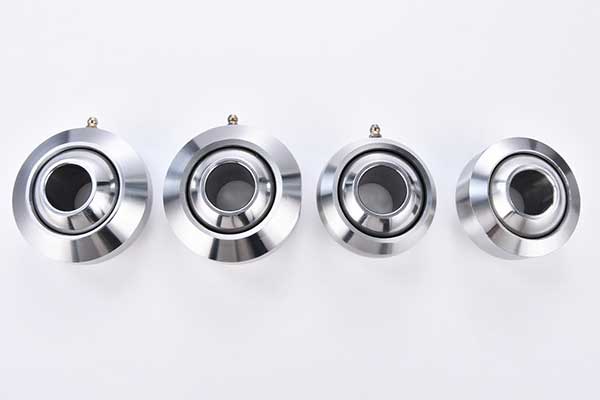

Depending on load levels, available space, and manufacturing approach, you’ll also see:
- Clevis yokes, where articulation requirements are limited and geometry is well controlled
- Weldable ball joints, especially in heavy structures where welding into the frame makes more sense
Each option has its place. The decision usually comes down to how much misalignment the joint needs to tolerate, how the structure is built, and how much margin the designer wants before things start breaking.
3. Rear Steering Systems on Air Carts
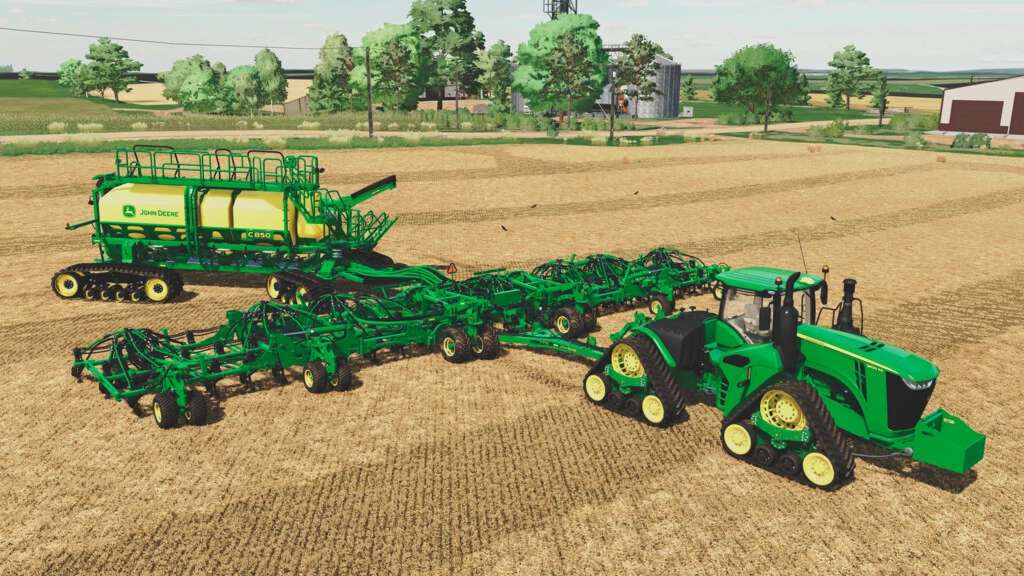
Large air carts bring another challenge: turning without destroying soil structure or fighting the tractor.
To deal with this, many higher-end carts use rear-wheel passive or active steering. Structurally, it looks familiar—very similar to automotive steering—but the operating environment is far less forgiving.
What Are the Operating Challenges?
The rear steering tie rods have to manage multiple demands at once:
- Steering input forces
- Vertical axle movement over rough ground
- Impact and vibration under heavy loads
This is a textbook compound motion scenario, and it’s where simple joints tend to bind.
Why Are Rod Ends Used?
Rod ends exist for exactly this type of problem. Using them at both ends of the steering tie rod allows the linkage to move vertically without disturbing steering geometry.
When things are working correctly:
- Wheel travel doesn’t interfere with steering response
- Steering force follows a clean, predictable path
- Binding and loss of control are avoided
On a heavily loaded air cart, failure here isn’t just about wear or noise. Loss of directional stability can make towing unpredictable and unsafe, especially on uneven ground or during transport.
Closing Thoughts
Looking at real seed drill structures, one thing becomes clear fairly quickly: rod ends are used sparingly, and usually for good reason.
Most joints still rely on rigid pins because they’re simple, cost-effective, and perfectly adequate in stable load conditions. But when loads become unpredictable, geometry starts moving mid-operation, or the cost of failure is simply too high, rod ends provide a level of tolerance that rigid joints can’t.
The downforce hydraulic cylinders, wing folding systems, and air cart rear steering linkages discussed here are good examples of where rod ends prove their value. Not by adding complexity, but by giving the machine enough flexibility to survive real field conditions without sacrificing long-term reliability.
If you’re interested in learning more about the role of rod ends in agricultural machinery, check out our detailed guide on agricultural machinery rod ends.