

Industrial Rod Ends for Automation
Reliable pivot connections for smart manufacturing, robotics, and high-cycle motion control.
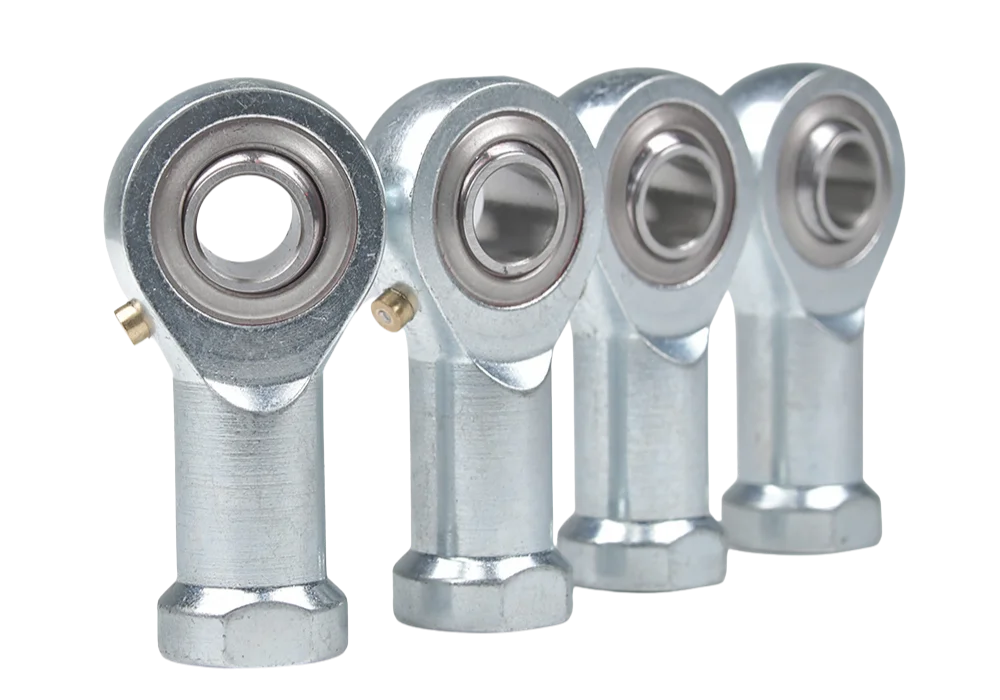
Four Core Capabilities
Precision Motion Starts at the Joint
Industrial rod ends are small components with a critical role: they connect linear and rotary motion while allowing controlled angular movement under load. In modern automation systems, they provide four essential mechanical capabilities:
Core Capability 1
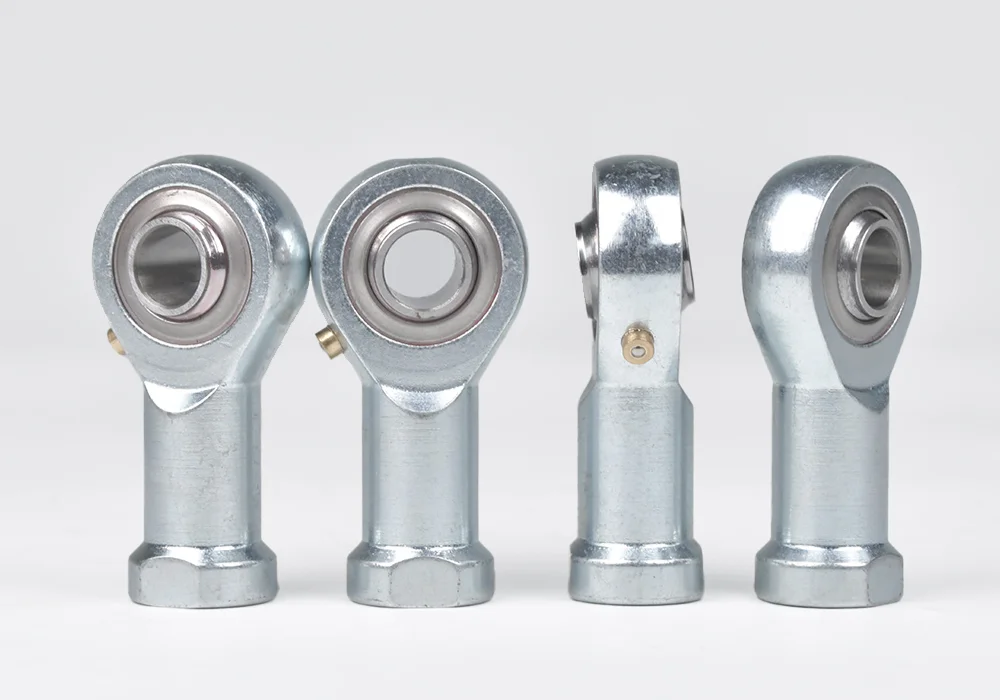
Angular Misalignment Compensation
No actuator, cylinder, or mechanical assembly is perfectly aligned.
Even small installation tolerances create angular deviation during movement. A spherical bearing inside a rod end allows controlled angular articulation, preventing:
- Side loading on linear actuators
- Bending stress on shafts
- Premature bearing wear
Core Capability 2
Adjustable Linkage Control
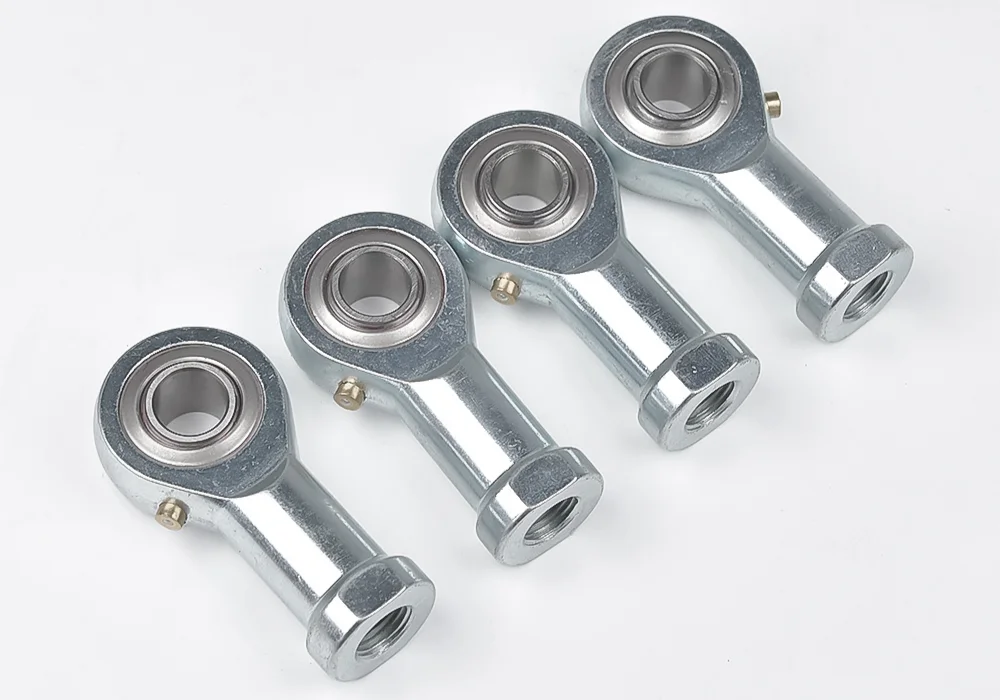
Threaded rod ends allow precise length adjustment of mechanical linkages. This enables:
- Fine tuning of actuator stroke
- Synchronization between multiple motion points
- Tension adjustment in belt or chain systems
Core Capability 3
Oscillating Pivot Stability
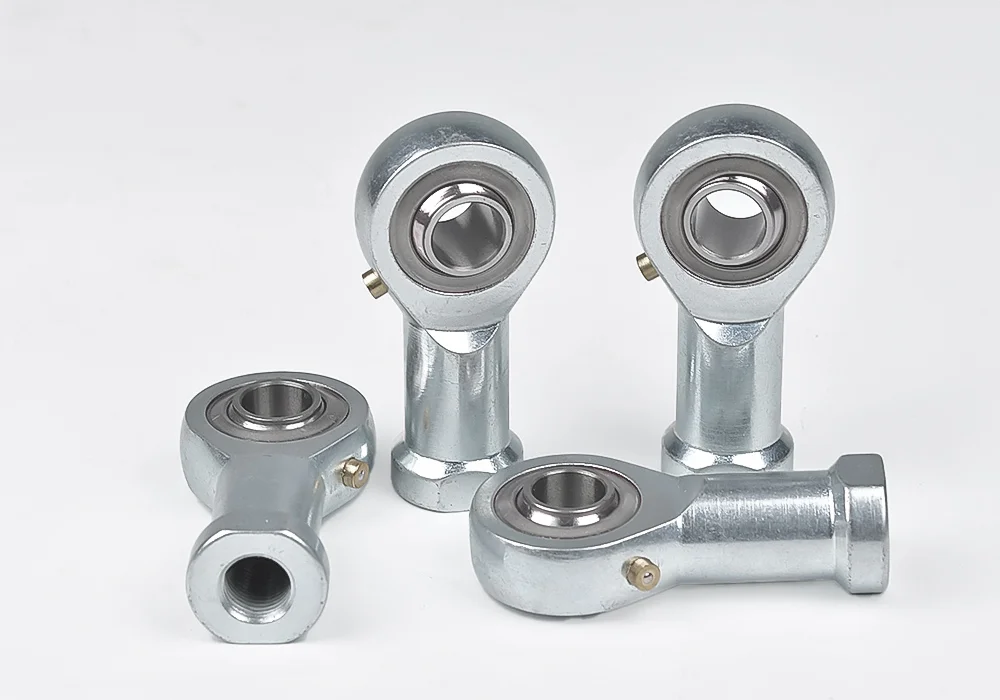
In high-cycle automation systems, pivot points may operate thousands — sometimes millions — of cycles per month. A rod end provides a compact spherical pivot that allows controlled angular movement while maintaining consistent load distribution across the bearing surface. For demanding environments, self-lubricating PTFE-lined rod ends are commonly used. These liners:
- Reduce friction without external grease
- Eliminate the need for periodic relubrication
- Maintain stable motion performance over long duty cycles
Core Capability 4
Tension & Compression Load Transfer
Automation linkages rarely operate under static load. Most operate under cyclic tension and compression, often combined with slight angular movement. Rod ends are designed to:
- Transfer axial load efficiently
- Handle dynamic load transitions
- Maintain alignment under fluctuating force
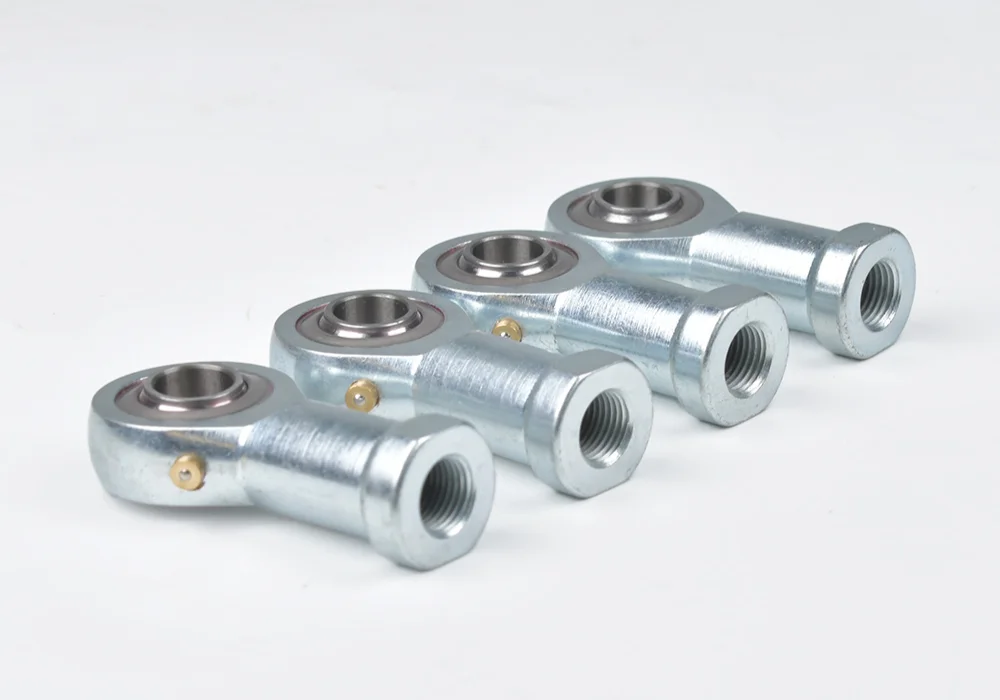
Typical Automation Applications
CNC-machined components designed for professional instrument builders. All parts manufactured to your specifications with verifiable dimensional accuracy.
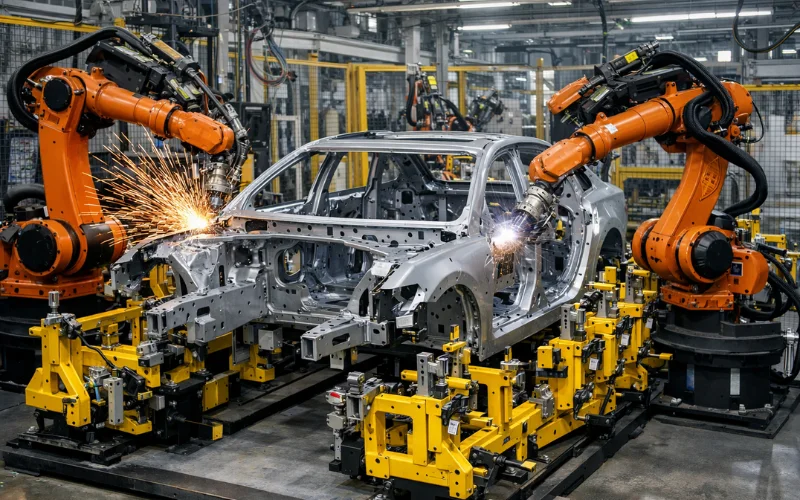
Rod ends connect pneumatic or servo actuators to welding fixtures, allowing angular misalignment while maintaining stable clamping force during repetitive robotic body-in-white production cycles.
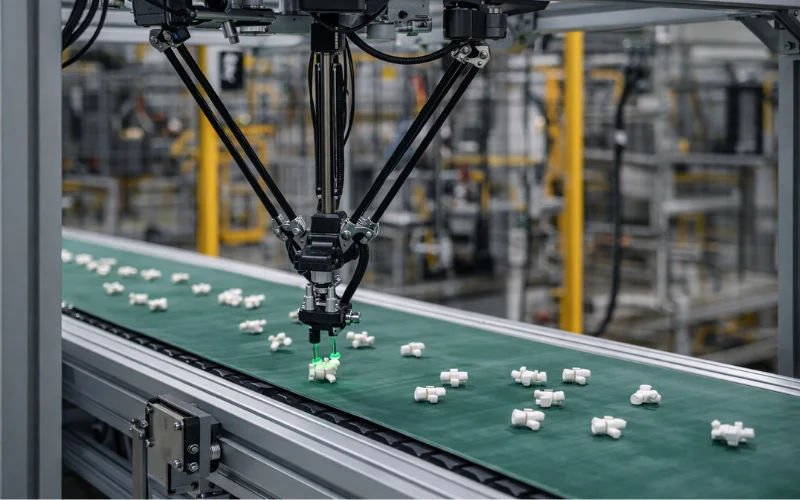
In high-cycle pick-and-place systems, rod ends provide lightweight pivot joints that maintain precision motion under rapid oscillation without introducing friction variation or alignment stress.
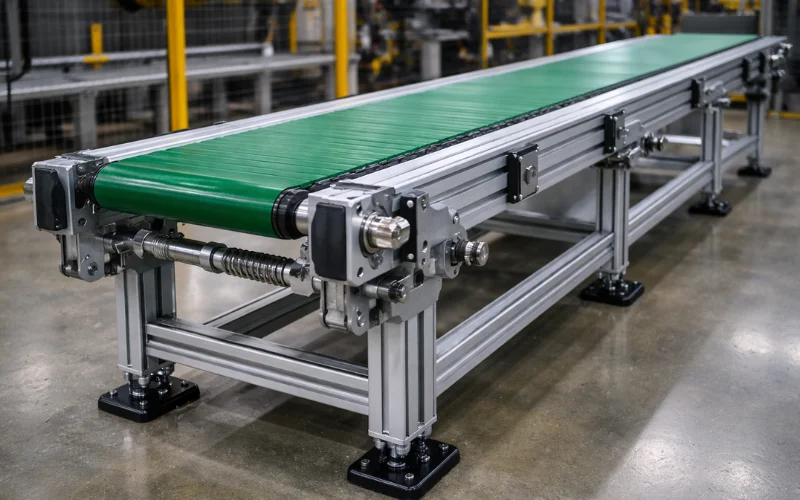
Threaded rod ends enable precise tension adjustment in conveyor systems, compensating for belt stretch and ensuring smooth tracking across long production lines.
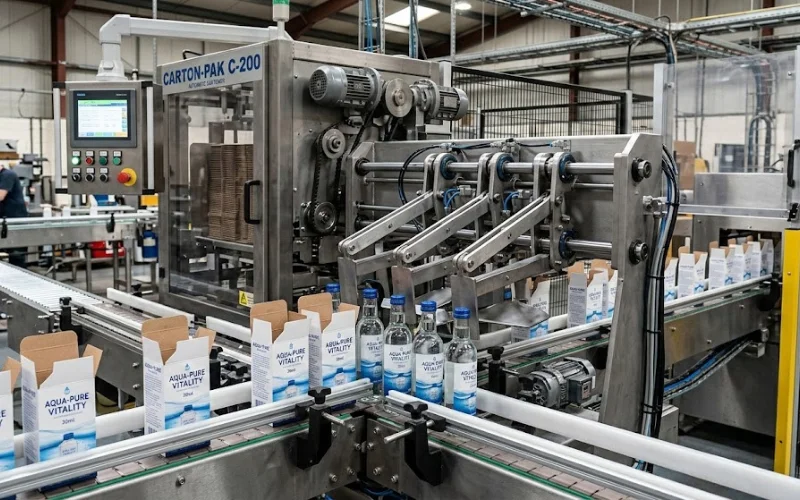
Rod ends stabilize oscillating push arms and sealing mechanisms, reducing wear while supporting maintenance-free motion in high-speed packaging environments.
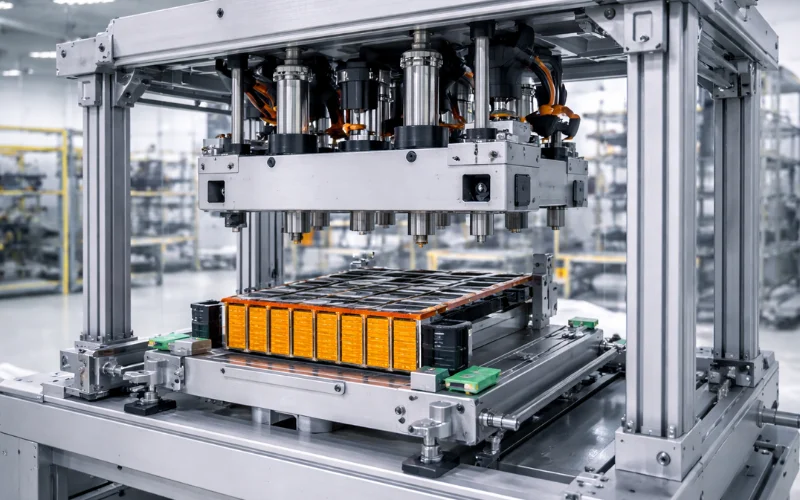
In battery pack assembly lines, rod ends connect servo-driven pressing actuators, allowing controlled angular movement while maintaining consistent axial load transfer.
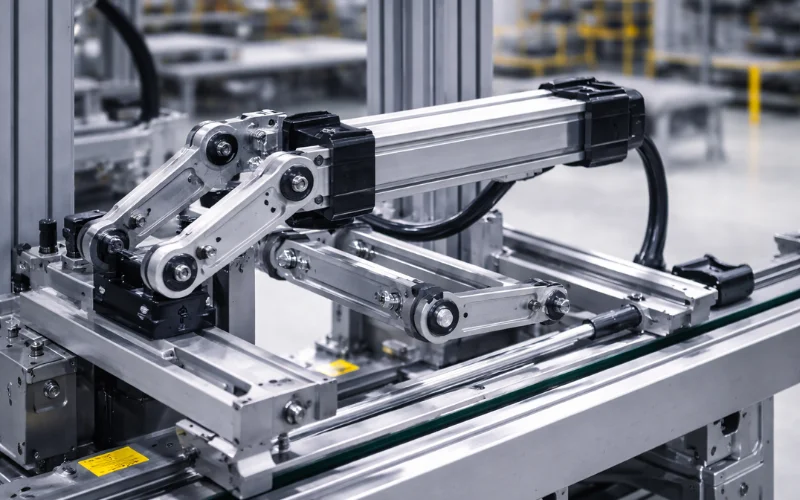
Rod ends prevent side loading on servo actuators by accommodating alignment deviations, protecting seals and extending actuator service life.
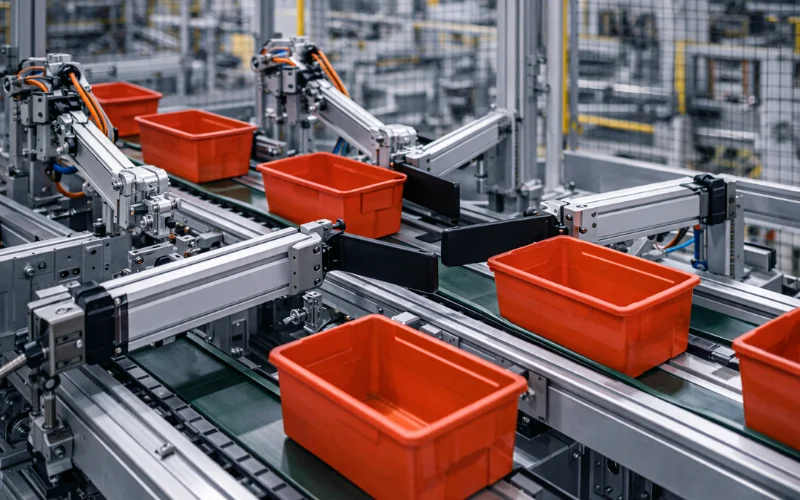
Sorting & Diverter Systems
Diverter arms rely on rod ends for compact pivot stability, ensuring consistent motion and reduced fatigue under continuous cyclic operation.
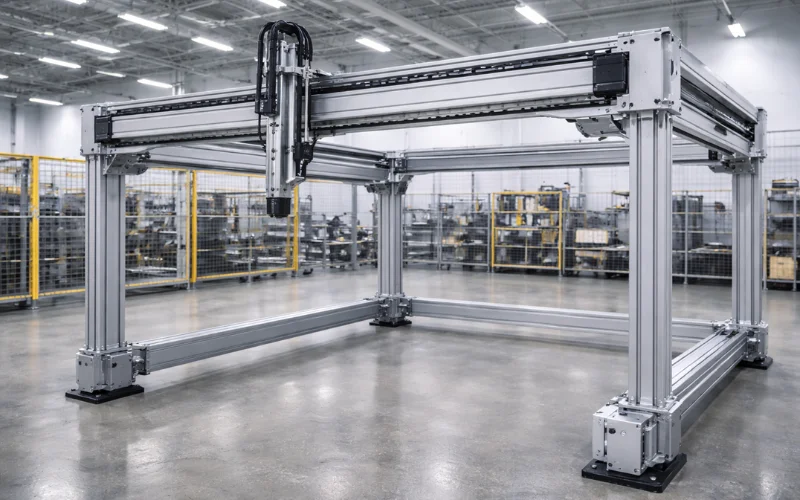
Gantry Automation Systems
In gantry automation platforms, rod ends manage axial loads and small angular shifts within adjustable linkage structures supporting heavy-duty positioning systems.
Industrial Rod End Options
Thread
Male, Female
Materials
Carbon steel, chromoly steel, stainless steel, aluminum
Structure
2-piece, 3-piece
Surface
Zinc plating, hard chrome plating, black oxide, nickel plating, hard anodizing, etc.
Lubrication
PTFE-lined self lubricating, greaseable configurations
From Drawing to Delivered Parts
1
Design & Engineering
We start by collaborating with clients to understand specific needs and provide tailored designs. Detailed CAD models are created to ensure accuracy and optimal performance.
2
Prototype & Material Selection
After finalizing the design, we select the appropriate materials based on performance needs. Samples are produced and tested to ensure that the rod ends meet exact specifications before proceeding to mass production.
3
Manufacturing
Once the prototype is approved, we begin the manufacturing process using advanced CNC machining or forging techniques. This ensures that each rod end meets the required dimensional and strength standards.
4
Quality Testing & Inspection
Each rod end undergoes thorough testing, including load, fatigue, and dimensional inspections. Only those passing all quality checks proceed to packaging and delivery, ensuring reliable performance in the field.
Frequently Asked Questions
How do rod ends prevent premature failure in linear actuators?
Most linear actuator failures result from side-loading—lateral forces that wear out internal seals and damage lead screws. By incorporating a rod end as the coupling interface, the spherical bearing can absorb angular misalignment (up to 15° depending on the specific model and application). This minimizes side loading, ensuring the actuator experiences primarily axial force, which significantly extends the lifespan of cylinders and servo motors.
When should I specify a 3-piece construction over a 2-piece design?
For high-precision automation, a 3-piece construction (comprising the body, race, and ball) is preferred. This design allows for tighter tolerances and “zero-backlash” fits, making it ideal for applications such as Delta robots or synchronized packaging arms, where any mechanical play would result in positioning errors. 2-piece designs are typically used for static linkages or low-cycle applications where precision is less critical and cost-effectiveness is prioritized.
Are PTFE-lined rod ends truly "maintenance-free" in high-cycle environments?
Yes. PTFE (Teflon) fabric liners create a self-lubricating film on the ball during rotation, eliminating the need for manual greasing. This is essential in “clean” industries, such as food packaging or EV battery assembly, where external grease could contaminate products or attract abrasive dust. However, please note that extreme operating conditions, such as excessive temperatures or shock loads, can influence the longevity of the PTFE lining.
Why is Chromoly Steel (4130) preferred over Carbon Steel for load transfer?
While Carbon Steel is adequate for general support, Chromoly Steel (4130) is preferred for its significantly higher strength-to-weight ratio and superior fatigue resistance. In dynamic applications involving rapid tension and compression cycles—such as high-speed pick-and-place robots—Chromoly can withstand millions of load reversals without developing micro-cracks. Its resilience makes it the industry standard for high-stress dynamic environments.
How does the "Length Adjustability" feature help with multi-axis synchronization?
In complex automated assemblies (such as case erectors), slight manufacturing variances in physical components can affect timing. Our rod ends feature precision-threaded shanks (available in both Right-hand and Left-hand threads), allowing for fine-tuning of linkage length by fractions of a millimeter without disassembling the machinery. This ensures perfect mechanical synchronization that software offsets alone cannot achieve.
Can I get custom surface treatments for specialized inspection environments?
Absolutely. For optical inspection or laser-guided sorting lines, we offer Black Oxide finishes to minimize light glare and prevent sensor interference. For wash-down environments in food or pharmaceutical industries, we provide electroless nickel plating—valued for its uniform coating and superior corrosion resistance—or hard anodizing for aluminum, ensuring components won’t shed metallic flakes into the production line.
Why Choose us?
Manufacturer & Supplier
As both a manufacturer and a wholesale supplier, we bridge the gap between factory capabilities and global customer needs—efficiently and professionally.
In-House Manufacturing Strength
With full in-house machining and quality control, we provide stable production, fast sampling, and the flexibility to handle complex rod end customizations.
Integrated Sourcing Support
Beyond rod ends, we help source related mechanical parts—offering one-stop procurement support and reducing coordination time and cost for our clients.
Reliable Service & Communication
From fast RFQ responses to full logistics coordination, our team ensures timely updates, clear documentation, and smooth communication throughout your project.











Need Technical Support?
Our experts offer fast response, design support, and product matching for your mechanical application.
TECHNICAL RESOURCES
Related Articles & Guides

Technical Guide
Material Selection for Pedal Steel Components
Comparing stainless steel, tool steel, and aluminum alloys for different mechanical requirements in linkage systems, pivot points, and structural elements.
Manufacturing
Tolerance Requirements for Smooth Pedal Action
Why ±0.01mm precision matters in ball joints, bell crank holes, and cross-shaft bores. Real-world examples of binding issues caused by loose tolerances.
Design Tips
Common Design Mistakes in Custom Pedal Steel Builds
Lessons from engineering review: undersized threads, inadequate leverage ratios, material selection errors, and manufacturability issues to avoid.