When building a custom suspension system, it’s important to understand the different types of suspension joints available. In this blog, we’ll explore two common types of suspension joints: Bushings and Johnny Joints. Each has its own design and functionality, suited to different vehicle needs and driving conditions.
1. Bushings
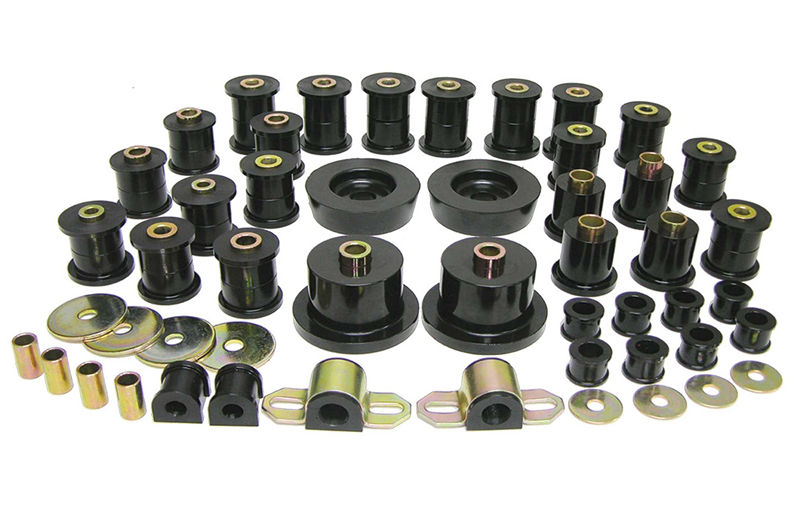
Bushings are common components used in suspension systems, typically found in vehicles like the Jeep Wrangler TJ, Toyota 4Runner, or Dodge Trucks. The basic design involves a metal link with a tube, and at each end, there’s a flexible material like rubber or polyurethane that helps reduce noise and vibration.
How They Work:
Bushing Design: A metal rod has bushings at either end, with flexible materials (rubber or polyurethane) inside. These materials effectively absorb road noise.
Main Function: The primary function of bushings is to reduce noise, making them ideal for modern vehicles focused on comfort. They offer some flexibility but not as much as Johnny Joints or Heim joints.
When to Use:
If you’re more focused on comfort and reducing road noise, bushings are a solid choice. They’re used in many OEM vehicles, especially in models where ride comfort is a priority.
Say you have a link suspension like on a Jeep Wrangler TJ or JK or on the back of a Toyota 4runner or those new dodge trucks. A lot of the linked suspensions are basically a bar and then at the end it has some sort of joint that has to flex. Most of the OEMs will use a basic bushing which is like you have the metal link and there’s a tube. And then at the end of it there’s some sort of rubber or polyurethane or flexible bushing and then a metal tube in the middle of that. So you run a bolt through that into a bracket and that works as your suspension joint. It doesn’t move a lot. It doesn’t transmit much a whole lot of noise from the road to the vehicle. Most late model vehicles are more concerned with noise reduction than a lot of flex, so a lot of them will have some sort of bushing.
2. Johnny Joints
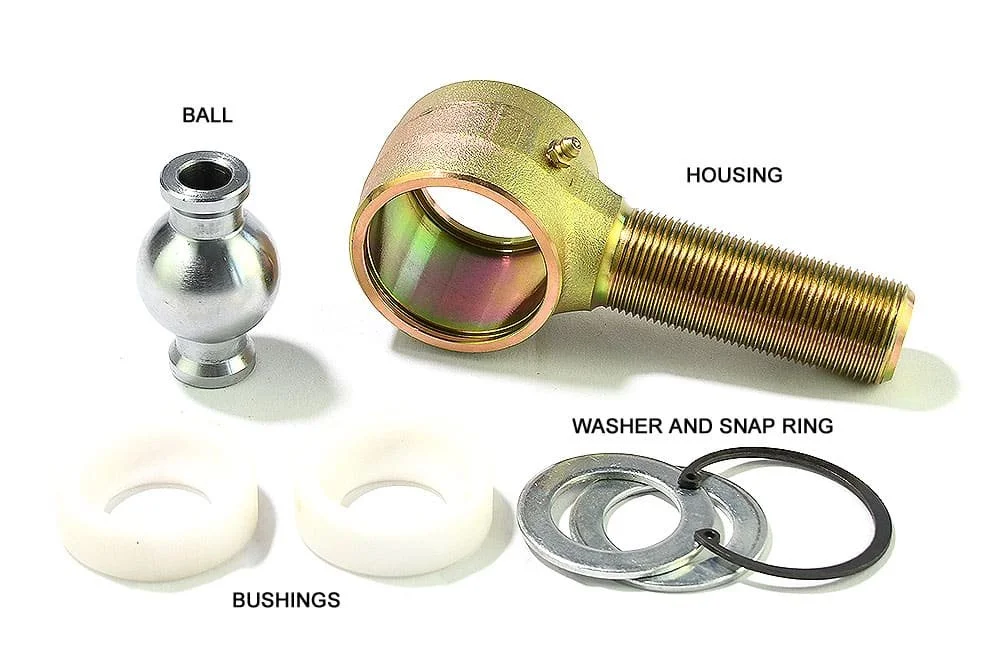
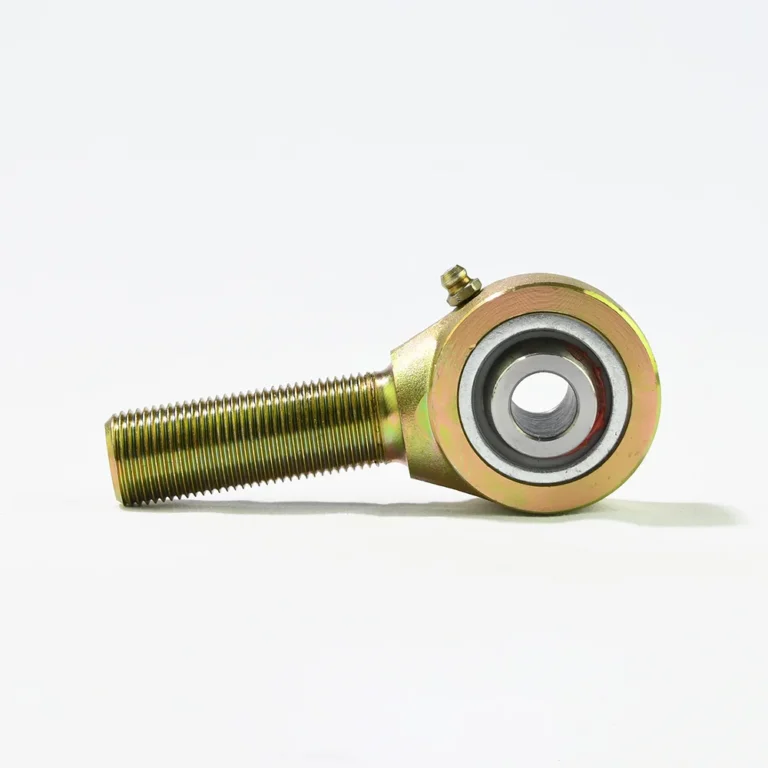
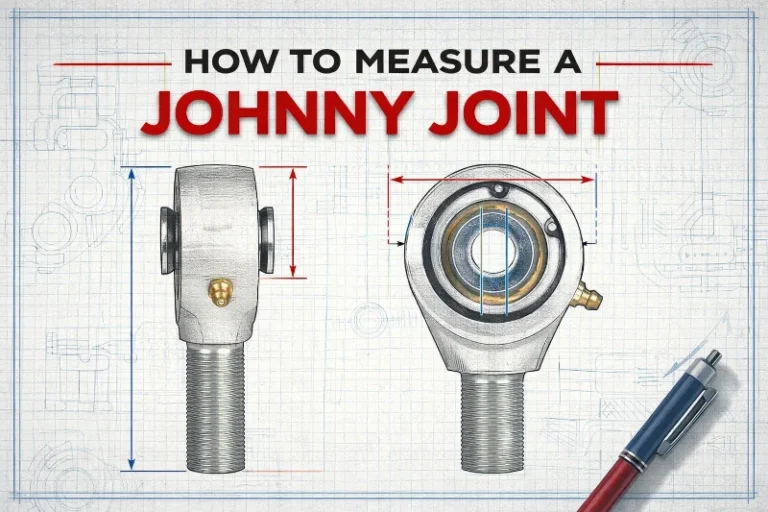
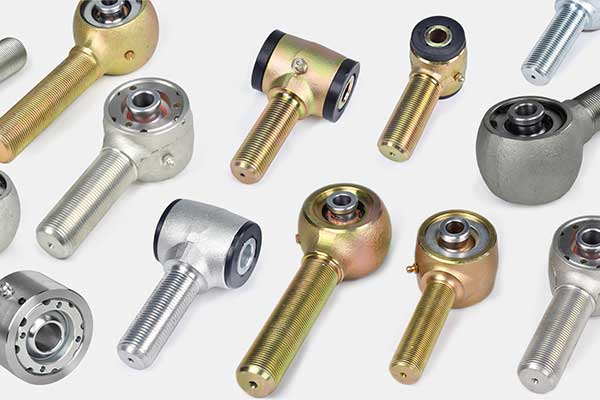
Johnny Joints are a middle-ground suspension joint that offers more flexibility than bushings while not being as rigid as high-end Heim joints. It consists of a tube with bushings inside, and within the bushing, there’s a ball with legs that connects to a bolt, making it a highly durable and functional choice for off-road and custom vehicles.
Design Features:
Internal Structure: The core of a Johnny Joint is a ball with legs sticking out, enclosed within a metal housing and surrounded by bushings that allow for more movement and flexibility.
Benefits: Johnny Joints provide a balance between flexibility and durability. They’re less prone to shock load transmission, offering some cushioning while still being strong enough to handle off-road demands.
When to Use:
Custom Suspension Builds: If you’re building a custom suspension for the first time, Johnny Joints are a great option. They offer better performance than standard bushings but are still comfortable enough for regular use.
Off-Road Driving: Johnny Joints are perfect for off-roading, as they can absorb impacts and reduce vibrations on rough terrains.
Why Choose Johnny Joints?
Johnny Joints offer better flexibility compared to bushings, but they aren’t as stiff as Heim joints, making them ideal for a custom suspension that requires both performance and comfort.
3. Johnny Joints vs. Heim Joints
While both Johnny Joints and Heim Joints serve similar functions, they’re designed for different applications. Here’s a quick comparison:
| Feature | Johnny Joint | Heim Joint |
|---|---|---|
| Flexibility | Medium flexibility, good for most off-road needs | High flexibility, ideal for extreme driving |
| Comfort | Provides some cushioning, reduces vibration | Stiffer, transmits more road shock |
| Durability | Strong, suitable for moderate loads | Extremely durable, for heavy-duty use |
| Best For | Custom suspension builds, off-roading | High-performance racing, heavy loads, extreme off-roading |
4. Conclusion
Whether you’re building an off-road vehicle or adding a custom suspension to your car, understanding the different types of suspension joints is essential. Bushings are great for reducing noise and offering basic flexibility, while Johnny Joints provide a perfect balance of flexibility and strength for more demanding off-road and custom suspension applications. If you’re upgrading your suspension for the first time, Johnny Joints are a solid choice that delivers great performance without sacrificing comfort.
Know more details about our Johnny Joints products.
Jonny Joint is a piece of tubing which has some bushings inside. But inside that bushing is a ball. And the ball has some little legs sticking out the end and a bolt will run through that. This is a great kind of middle-of-the-road joint. Because it’s between a bushing and the high-end heim joint or rod end. When I say when I say middle of the road that doesn’t mean that they’re not really good. They can take a lot of abuse. They’re not as kind of prone to transmitting shock loads there’s a little bit of cushion in there. So this is a good opportunity especially if you’re doing your first custom suspension, you might want to look into a flex joint or Jonny joint.