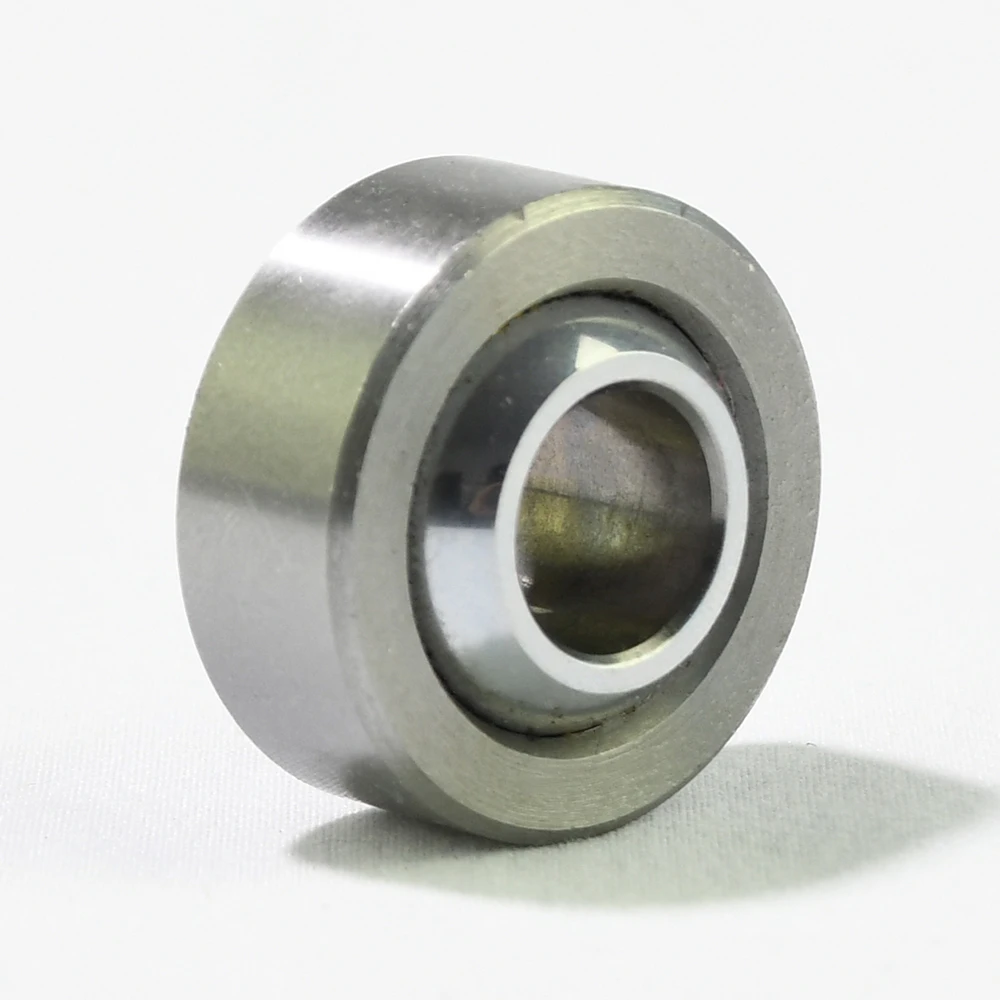
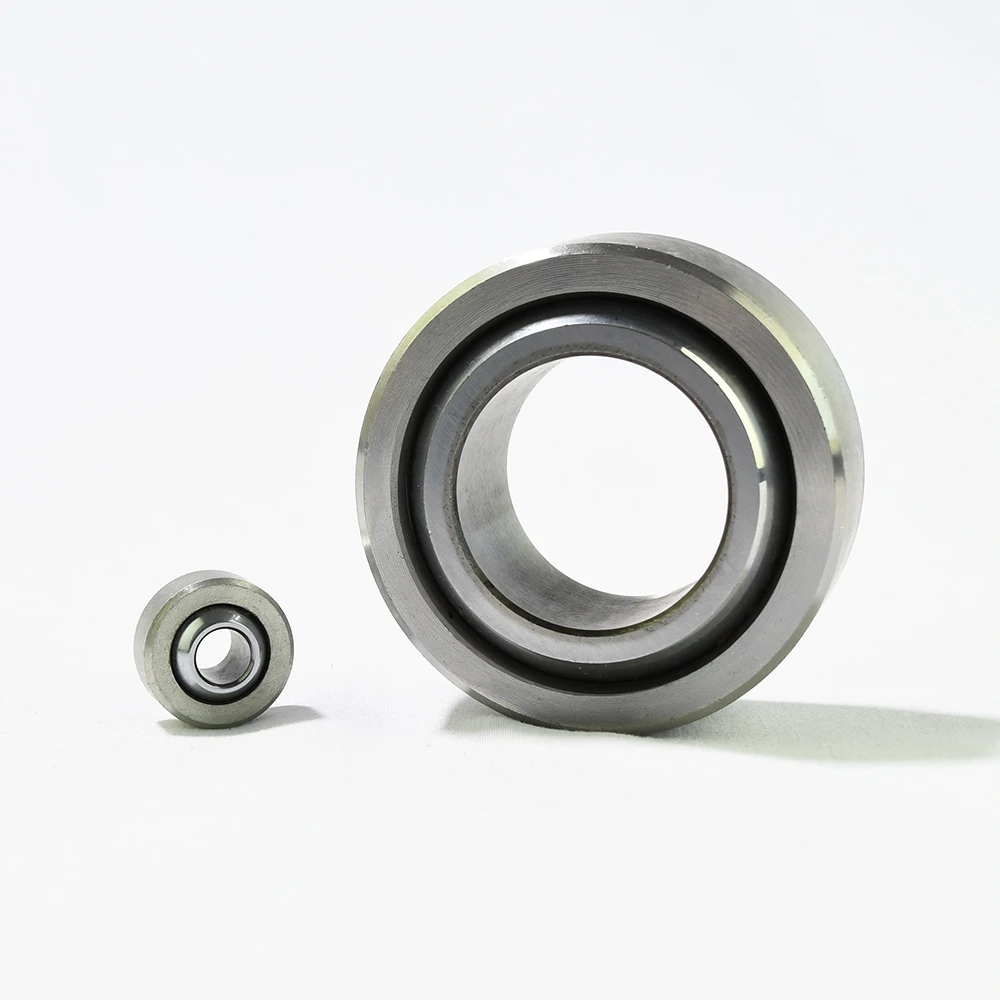
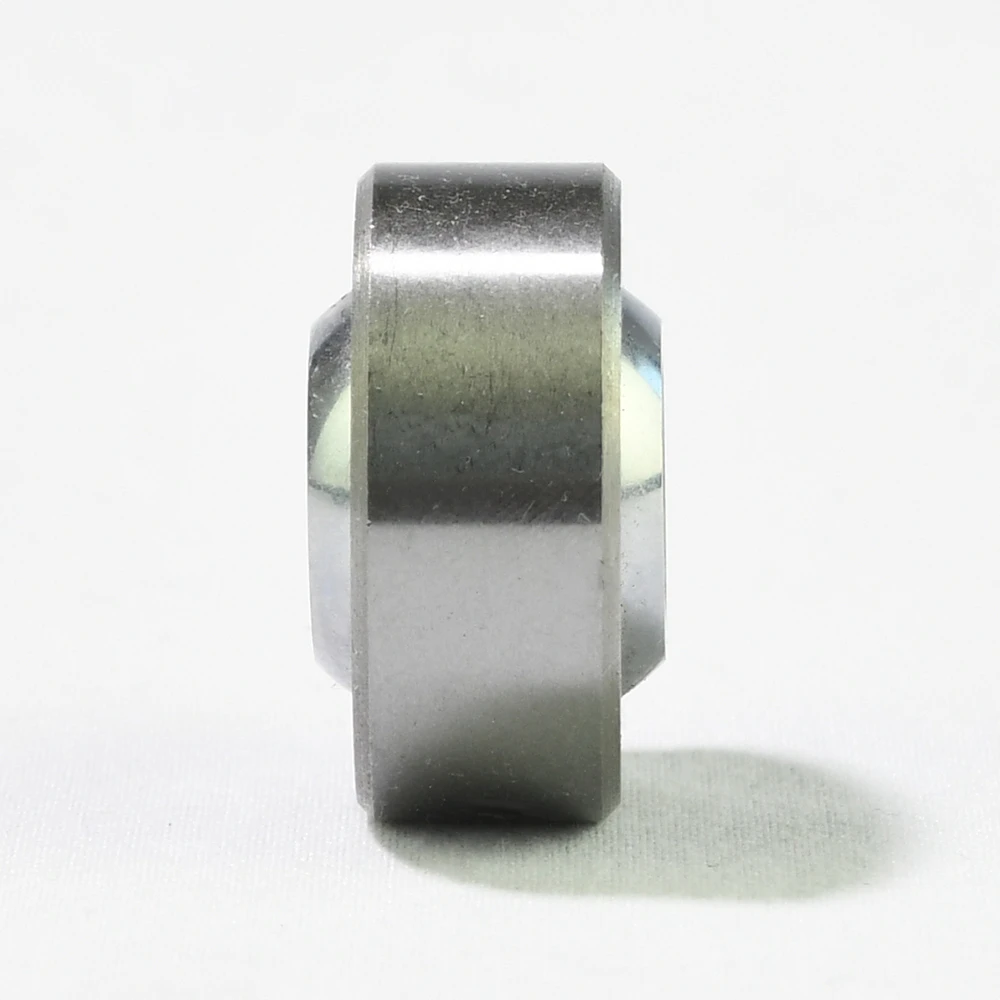
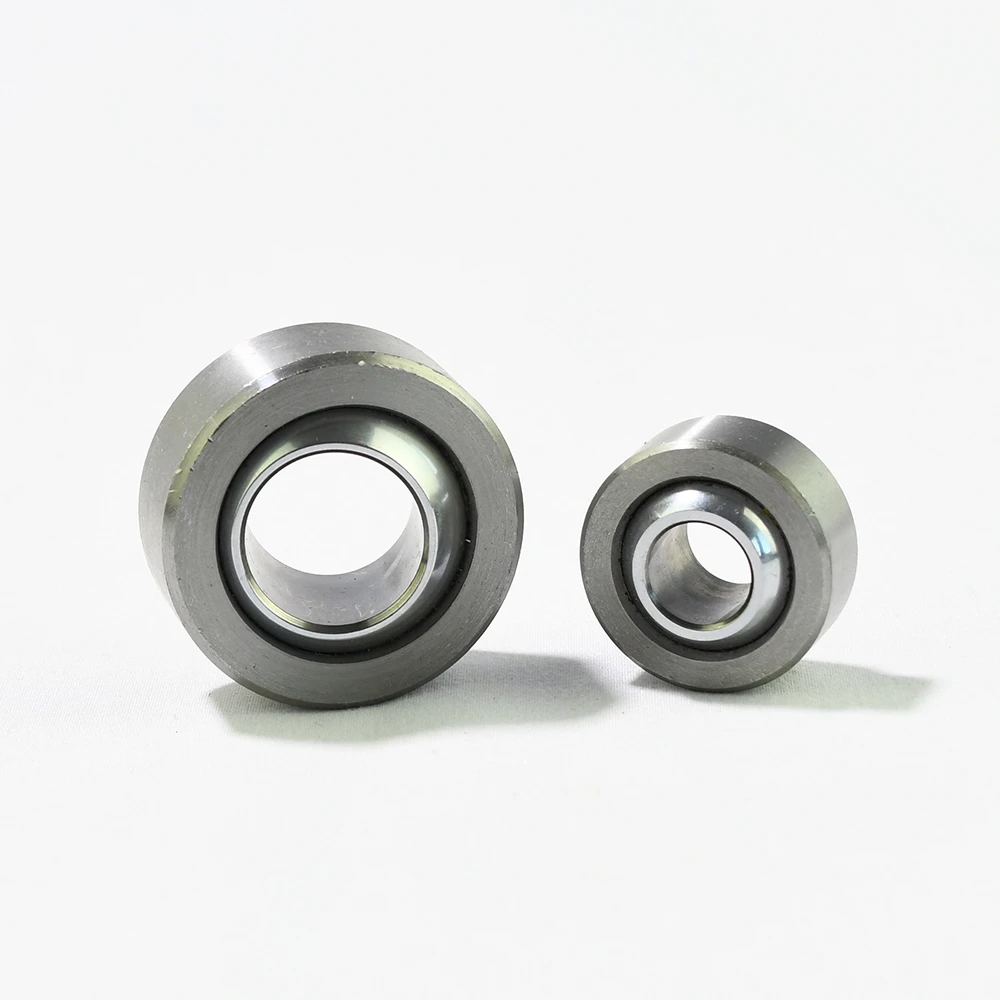
B 8 / D 16GE8C Spherical Bearing (Metric)
GEC Product Overview
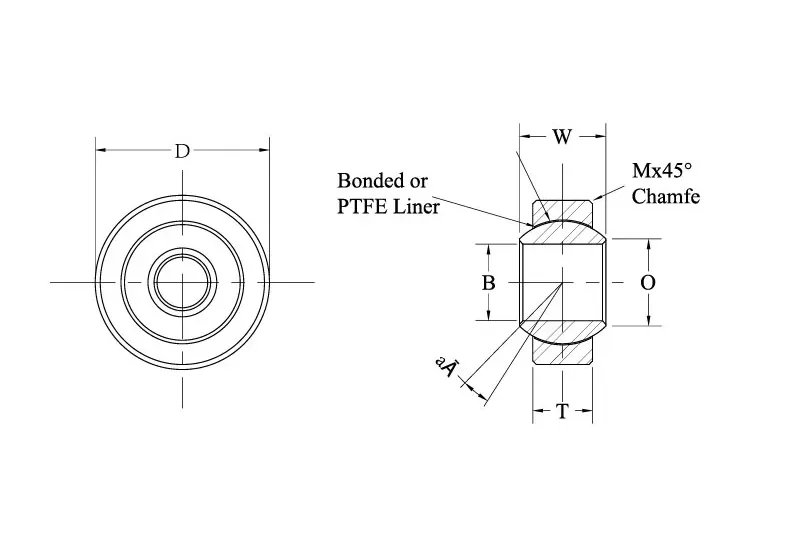
GE8C is a compact metric spherical bearing (standard width) with a 8 mm bore (B) and 16 mm OD (D). Width (W) = 8 mm, inner race width (T) = 5 mm. Approximate weight: 0.008 lb.
Rated at 14 kN static radial load with ±15.0° misalignment angle. The 52100 bearing steel ball is precision ground, heat treated, and hard chrome plated. The carbon steel race is PTFE-lined for self-lubricating, maintenance-free operation, with optional zinc plating for additional corrosion resistance. Suited to shock absorbers, suspension links, industrial linkages, and compact pivot assemblies requiring a self-lubricating metric spherical bearing.
Zinc plated race option available on request. Wide-series metric equivalent is the GEG (GEGC) series. Inch-size fractured-race equivalent is the GEZ series.

GEC Series — Full Size Range
All available sizes in the GEC series. Can’t find your size? Contact us for custom dimensions.
| GEC PART NO. | B DIA. +0.065 -0.012 | D DIA. +0.38 -0.38 | W WIDTH +0.12 -0.12 | T WIDTH +0.12 -0.12 | O FLAT DIA. REF. | a° MIS. ANGLE REF. | STATIC RADIAL LOAD (LBS) | APPROX WEIGHT (LBS) |
|---|---|---|---|---|---|---|---|---|
| GE4C | 4 | 12 | 5 | 3 | 0.3 | 16.0 | 5 | 0.003 |
| GE5C | 5 | 14 | 6 | 4 | 0.3 | 13.0 | 9 | 0.004 |
| GE6C | 6 | 14 | 6 | 4 | 0.3 | 13.0 | 9 | 0.005 |
| GE8C | 8 | 16 | 8 | 5 | 0.3 | 15.0 | 14 | 0.008 |
| GE10C | 10 | 19 | 9 | 6 | 0.3 | 12.0 | 21 | 0.011 |
| GE12C | 12 | 22 | 10 | 7 | 0.3 | 11.0 | 28 | 0.015 |
| GE15C | 15 | 26 | 12 | 9 | 0.3 | 8.0 | 45 | 0.027 |
| GE17C | 17 | 30 | 14 | 10 | 0.3 | 10.0 | 56 | 0.041 |
| GE20C | 20 | 35 | 16 | 12 | 0.3 | 9.0 | 78 | 0.066 |
| GE25C | 25 | 42 | 20 | 16 | 0.6 | 7.0 | 127 | 0.119 |
| GE30C | 30 | 47 | 22 | 18 | 0.6 | 6.0 | 166 | 0.163 |
Every Unit Inspected Before Shipment
Raw Material Inspection
Material certifications verified. Composition confirmed by spectrometer before machining begins.
Thread Gauge Inspection
100% go/no-go gauge check on all threaded sections. Zero tolerance on dimensional non-conformance.
Load Capacity Test
Static and dynamic load tests run on representative samples from each production batch.
Dimensional Measurement
CMM verification of critical dimensions — ball diameter, bore, thread pitch, and body length.
Surface Inspection
Visual and tactile inspection for burrs, scratches, surface cracks, and plating defects.
Articulation Test
Misalignment angle and torque measured to confirm liner performance meets specification.
Heat Treatment Verify
Hardness tests confirm proper heat treatment on chromoly steel bodies and bearing balls.
Batch Documentation
Full traceability from raw material heat number to finished part. COC and inspection reports available.
Where GEC Spherical Bearings Are Used
More from the GEC Series
Request a Quote for the GEC Series
Share your part number, required quantity, and any special material or packaging requirements. We respond within 24 hours.
GEC Frequently Asked Questions
What is GEC used for?
GEC spherical bearings are used in metric articulated joints, compact suspension points, and shock absorber connections where self-lubricating PTFE-lined movement is required.
What materials are used in GEC spherical bearings?
GEC uses a 52100 bearing steel ball, precision ground, heat treated, and hard chrome plated, together with a carbon-steel outer ring that is PTFE lined and may be zinc plated as an option.
Is GEC self-lubricating?
Yes. GEC is a self-lubricating spherical-bearing series built around PTFE-lined race construction for low-friction articulation.
What makes GEC different from GEGC?
GEC is the standard-width metric self-lubricating spherical-bearing series, while GEGC is the wide-series version with larger section dimensions for similar bore sizes.
Can GEC be used in shock absorber applications?
Yes. The GEC series is specifically suited to metric shock absorber bearing positions and similar articulated linkage points that benefit from compact self-lubricating construction.
How do I choose the right GEC size?
Start with the required bore, OD, widths, misalignment angle, and static radial load in the size chart, then confirm the standard-width GEC geometry suits the application envelope.