
Threaded Eye Ends for Cylinders & Linkage
Rod Eyes — Threaded Eye Ends
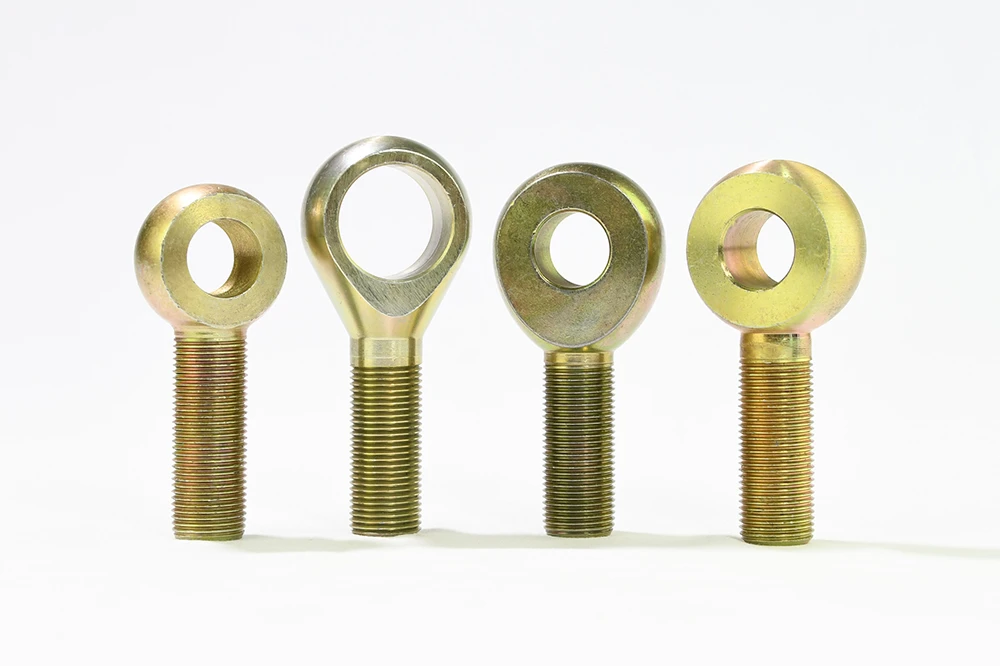
A rod eye is a solid eye end with a threaded shank — a simple, rugged pivot point for cylinders, springs, shocks and linkage, without a spherical bearing. SYZ rod eyes are zinc-plated carbon steel in right-hand (RER) and left-hand (REL) thread: bore 1/2″–3/4″, thread 1/2-20 to 3/4-16, 6 sizes.
Overview
What Is a Rod Eye?
6 Standard Sizes
Rod Eye Size & Dimension Table
Choose the eye bore for the pin first, then match the RER/REL thread to the rod. D is the eye outside diameter, W is eye width, and A/C are the published length dimensions.
| Part no. pair | Bore | Thread | D | W | A | C |
|---|---|---|---|---|---|---|
| RER8 / REL8 | 0.500″ | 1/2-20 | 1.312″ | 0.625″ | 2.437″ | 1.500″ |
| RER8-12 / REL8-12 | 0.500″ | 3/4-16 | 1.500″ | 0.875″ | 2.875″ | 1.750″ |
| RER10 / REL10 | 0.625″ | 5/8-18 | 1.500″ | 0.750″ | 2.625″ | 1.625″ |
| RER10-12 / REL10-12 | 0.625″ | 3/4-16 | 1.500″ | 0.875″ | 2.500″ | 1.650″ |
| RER10-12-1 / REL10-12-1 | 0.625″ | 3/4-16 | 1.750″ | 0.875″ | 2.875″ | 1.750″ |
| RER12 / REL12 | 0.750″ | 3/4-16 | 1.750″ | 0.875″ | 2.875″ | 1.750″ |
Engineering Guide
Selection Guide
Industrial Uses
Applications
Hydraulic/pneumatic cylinder rod ends, spring and shock mounts, simple control linkage, and machinery pivots that hinge on one axis.
Technical Guide
Rod Eye vs Rod End vs Clevis — Choosing the Simplest Joint That Works
A rod eye is the most basic of the three pivot fittings — and often the right answer when designers over-spec a spherical rod end out of habit:
| Articulation | Construction | Choose when | |
|---|---|---|---|
| Rod eye | Single-axis pivot, no bearing | One-piece eye + threaded shank | The joint hinges on one pin axis; no misalignment needed |
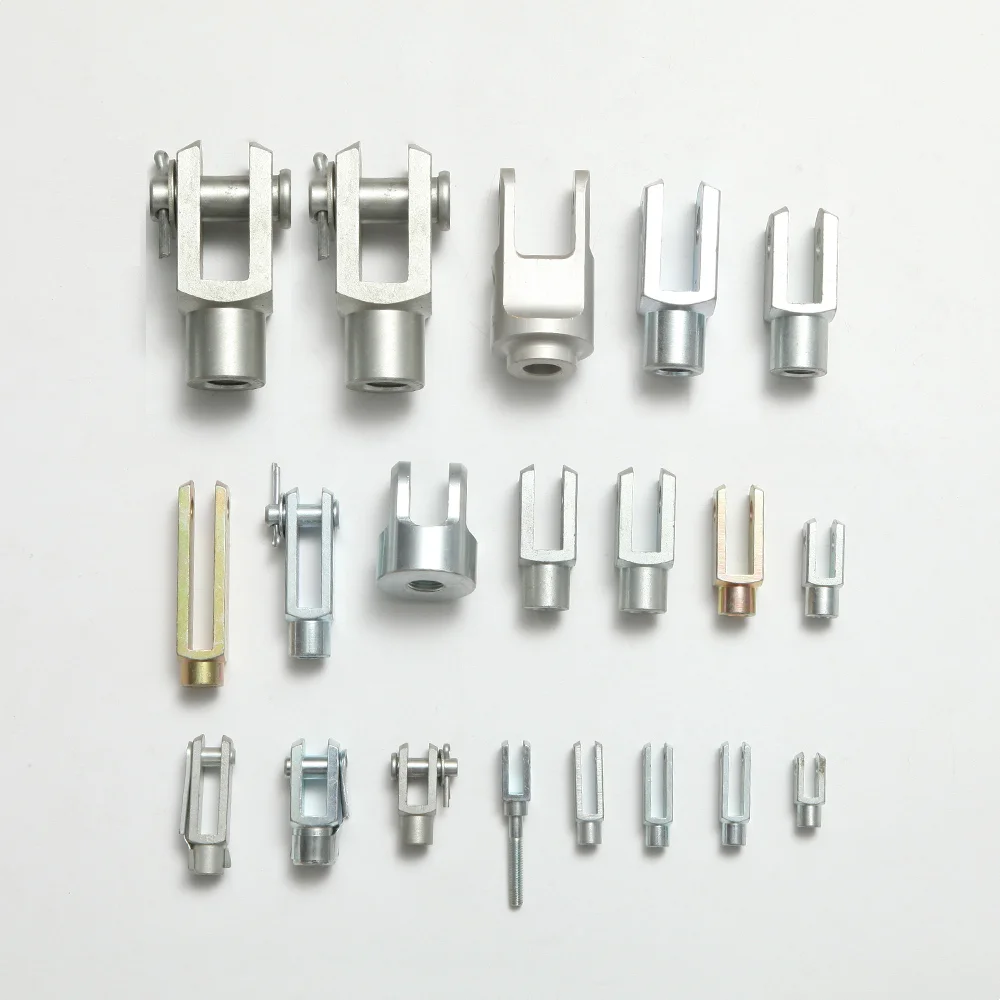
| Clevis / yoke | Single-axis hinge | Fork + cross pin | Same single-plane motion but you want a fork-and-pin interface |
| Rod end (heim joint) | Multi-axis (spherical) | Ball-in-housing + thread | The joint must tilt out of plane / absorb misalignment |
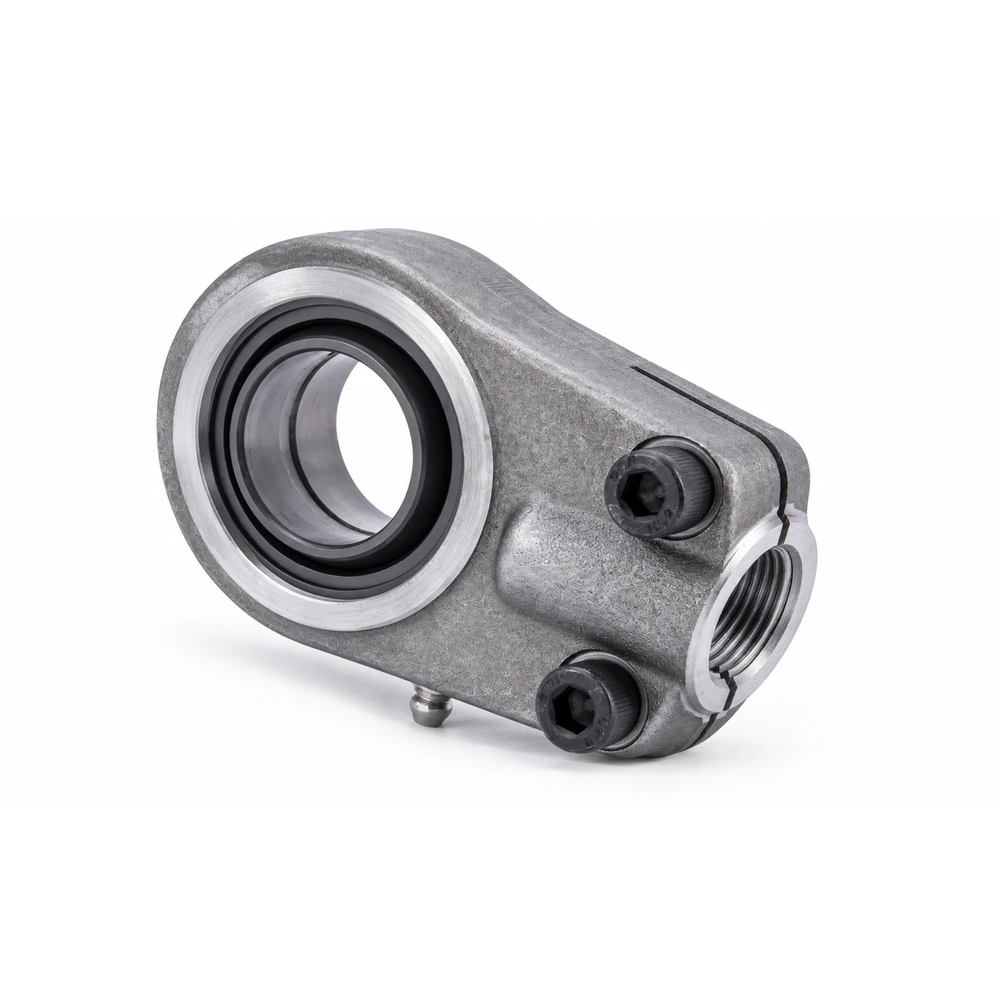
| Hydraulic cylinder rod end | Single-axis eye with spherical bearing | Bearing in eye housing + threaded rod connection | The cylinder eye needs bearing articulation; confirm the hydraulic series |
Because it has no spherical bearing to wear, a rod eye is rugged, economical and maintenance-light — ideal for cylinder rods, spring/shock eyes and basic linkage. The trade-off is zero misalignment capability: if the mating geometry tilts off-axis, the pin binds and you need a rod end instead.
Engineering Detail
Sizing & Failure Modes
Two dimensions drive a rod eye selection: the thread (to the rod) and the eye bore (to the pin). Get either wrong and the joint either won’t fit or wears fast.
| Symptom | Cause | Prevention |
|---|---|---|
| Pin bore wallows / elongates | Bore too large for pin (slop) | Match bore to a close fit on the pin/bolt |
| Eye cracks at the neck | Side/bending load on a single-axis joint, or undersized | A rod eye is single-axis only — use a rod end where the joint tilts off-plane; size up if loaded hard |
| Thread strips | Insufficient engagement | Keep full thread engagement at the set length |
| Surface rust | Plating worn / wrong environment | Re-coat, or specify a corrosion-resistant option for wet/outdoor use |
Complete the Link
Choose the Next Joint Component
Hydraulic Cylinder Rod Ends
Upgrade to the spherical-bearing hydraulic rod-end family when the cylinder eye needs articulation.
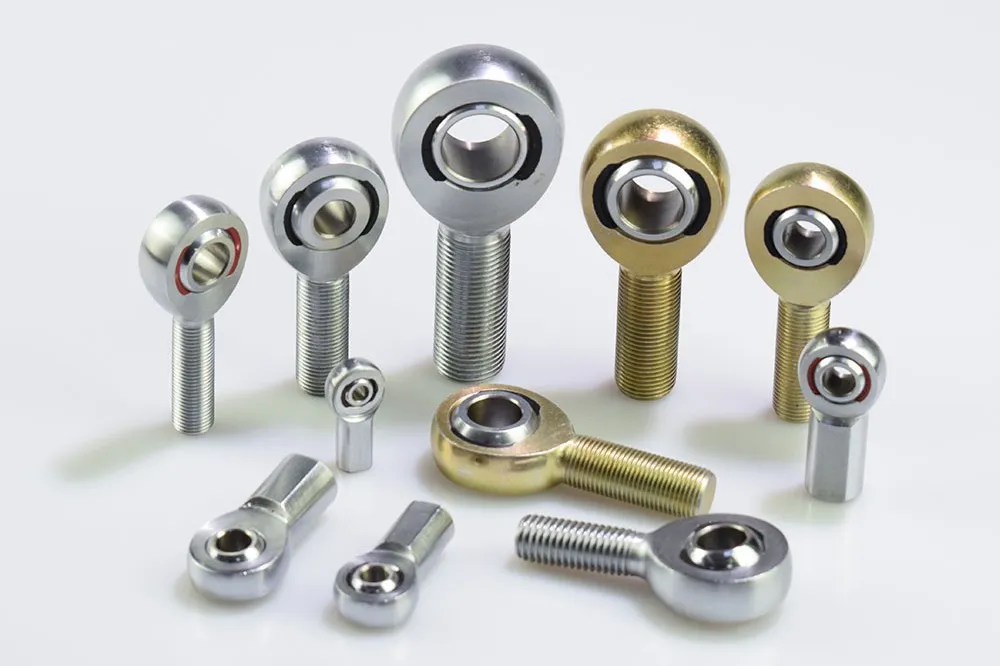
Rod Ends / Heim Joints
Choose a spherical rod end when the linkage must absorb multi-axis misalignment.
FAQ
Common Questions
What’s the difference between a rod eye and a rod end?
What does RER vs REL mean?
What material are rod eyes?
What sizes are available?
Can a rod eye replace a rod end?
Engineering Tools
Calculators for This Product Family
Factory Direct
Request a Quote
Tell us your specific part numbers and quantities. We respond within 24 hours with pricing and lead time.