
Female-Female Hex Bar Turnbuckles for Adjustable Links
Turnbuckles & Hex Bar Adjusters for Rod Ends
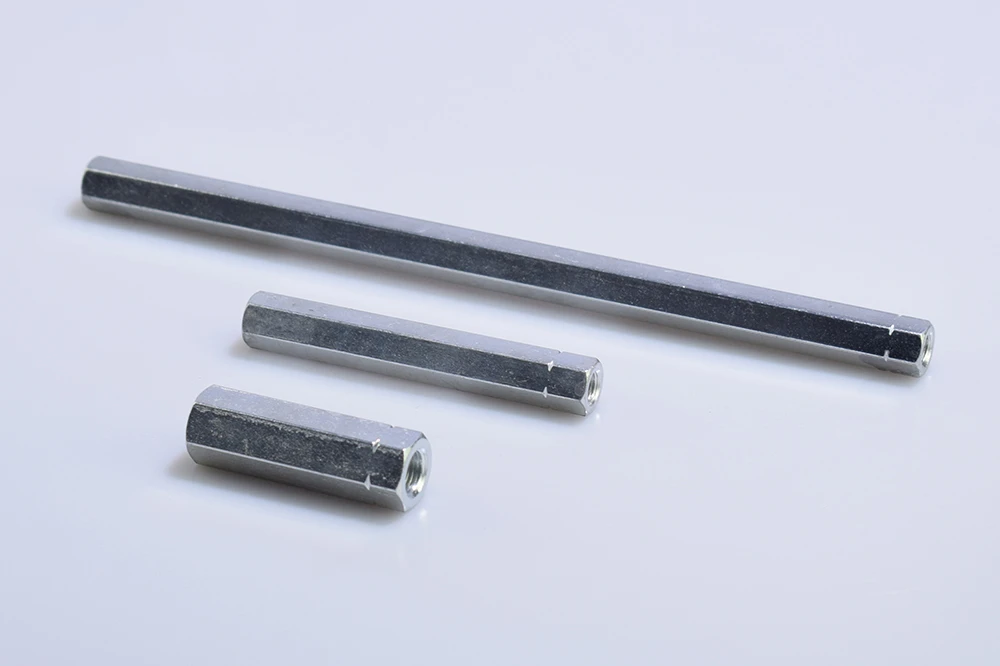
A turnbuckle is the fast way to build an adjustable link: thread a rod end into each end and rotate the hex bar to set length. SYZ female-female hex bar turnbuckles cover thread 10-32 to 3/4-16 in 161 configurations and multiple lengths, with RH/LH ends for on-assembly adjustment and wrench flats for easy tightening. For 7/8″ and larger rod-end threads, use tube adapters in chromoly tubing.
Overview
What Is a Turnbuckle Hex Bar?
Product Offerings
Series
| Series | Type | Thread / sizing | Notable |
|---|---|---|---|
| Turnbuckle Hex Bar | Female-female | Thread 10-32 to 3/4-16, multiple lengths | 161 configurations; for rod ends & clevises |
161 Published Configurations
Turnbuckle Thread, Hex & Length Matrix
Use the mating rod-end thread first, then confirm the available body length and hex. Each row links into the published size chart; exact part numbers, thread lengths and adjustment ranges remain on the spec page.
| Female thread | Hex across flats | Body length range | SKU count | Typical mating rod-end bore |
|---|---|---|---|---|
| 10-32 | 0.375″ | 2″–17.75″ | 22 | Typical 3/16″ bore rod end with 10-32 male thread |
| 1/4-28 | 0.438″ | 3″–24″ | 22 | Typical 1/4″ bore rod end with 1/4-28 male thread |
| 5/16-24 | 0.5″ | 3″–24″ | 25 | Typical 5/16″ bore rod end with 5/16-24 male thread |
| 3/8-24 | 0.563″ | 3″–24″ | 22 | Typical 3/8″ bore rod end with 3/8-24 male thread |
| 7/16-20 | 0.688″ | 3″–4″ | 2 | Typical 7/16″ bore rod end with 7/16-20 male thread |
| 1/2-20 | 0.75″ | 2.5″–23″ | 22 | Typical 1/2″ bore rod end with 1/2-20 male thread |
| 5/8-18 | 0.875″ | 4″–26″ | 23 | Typical 5/8″ bore rod end with 5/8-18 male thread |
| 3/4-16 | 1″ | 4″–26″ | 23 | Typical 3/4″ bore rod end with 3/4-16 male thread |
All current listed parts are carbon steel with silver zinc plating. Metric threads, special hex sizes and custom lengths are quoted separately; the 161-row standard program is inch UNF.
Engineering Guide
Selection Guide
Industrial Uses
Applications
Adjustable suspension/steering links, control linkages, tensioning and alignment assemblies, and any rod-end link needing repeatable length adjustment.
Technical Guide
How a Hex Bar Turnbuckle Works — and Which Adjuster to Pick
The turnbuckle’s trick is opposing threads: one end RH, the other LH. Thread a male rod end into each end, and rotating the hex body draws both ends in (or pushes both out) at the same time — so you change installed length without disconnecting either end. The hex shape gives wrench flats to turn it and to hold it while locking.
A clean adjustment:
- Thread a rod end into each end (RH end ↔ RH rod end, LH end ↔ LH rod end).
- Rotate the body to length, keeping full thread engagement at both ends.
- Lock each rod end with a jam nut against the turnbuckle body.
With 161 configurations across thread 10-32 to 3/4-16 and multiple lengths, match the female thread (and hand) to your rod ends and pick a length that spans your adjustment range with thread to spare.
Engineering Detail
Thread Engagement, Inspection Windows & Safe Adjustment
The hidden risk with any turnbuckle link is running out of thread: adjust it too long and the rod ends back out until only a few threads hold — a failure waiting to happen. Two safeguards:
- Minimum engagement — keep each rod end threaded in by at least its thread diameter’s worth (more for safety-critical links). When you near the limit, switch to a longer turnbuckle body, not a longer reach on the threads.
- Inspection window — some builders drill a small witness hole in the body so the thread end is visible; if you can see thread through the hole, engagement is sufficient. Where that’s not present, mark the rod ends at the safe-minimum insertion before final adjustment.
Failure modes:
| Symptom | Cause | Prevention |
|---|---|---|
| Link lengthens / loosens in service | No jam nuts; vibration | Jam-nut both ends against the body; re-check after run-in |
| Rod end pulls out under load | Too little thread engagement | Keep ≥ ~1× thread-diameter engagement; size the body for range |
| Can’t adjust on the vehicle | Round body, no grip | Hex bar gives wrench flats — hold the body while turning |
| Cross-threaded / mismatched hands | RH/LH mixed up | Match RH rod end to RH end, LH to LH; confirm before assembly |
FAQ
Common Questions
What is a turnbuckle used for?
Why female-female with RH/LH threads?
What thread sizes are available?
Turnbuckle vs jack screw?
Are these wire-rope turnbuckles?
Do I need jam nuts?
Engineering Tools
Calculators for This Product Family
Factory Direct
Request a Quote
Tell us your specific part numbers and quantities. We respond within 24 hours with pricing and lead time.