Skip to content

Corrosion-Resistant Stainless + Specialty-Liner & High-Misalignment Rod Ends

Stainless, High-Misalignment
& Self-Lubricating Rod Ends

Specialty rod ends solve one of three problems standard steel rod ends cannot: corrosion, extra articulation angle, or zero-maintenance running. Choose 304 stainless with a 440C ball for marine and washdown service, PCM/PCYM high-misalignment chromoly for wide articulation, or bronze, nylon and copper-PTFE races for self-lubricating industrial links.
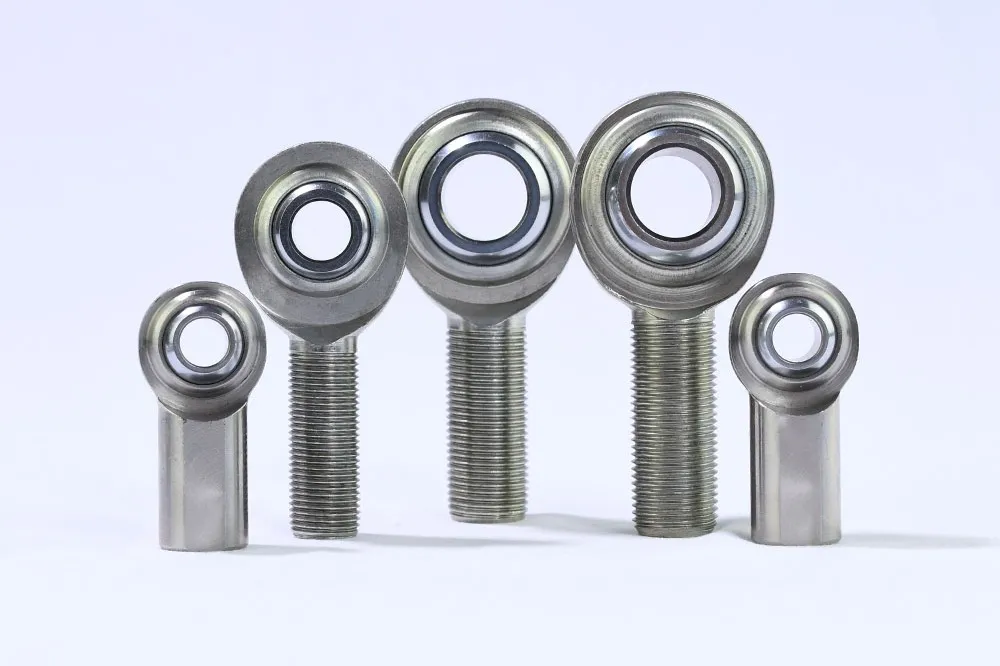
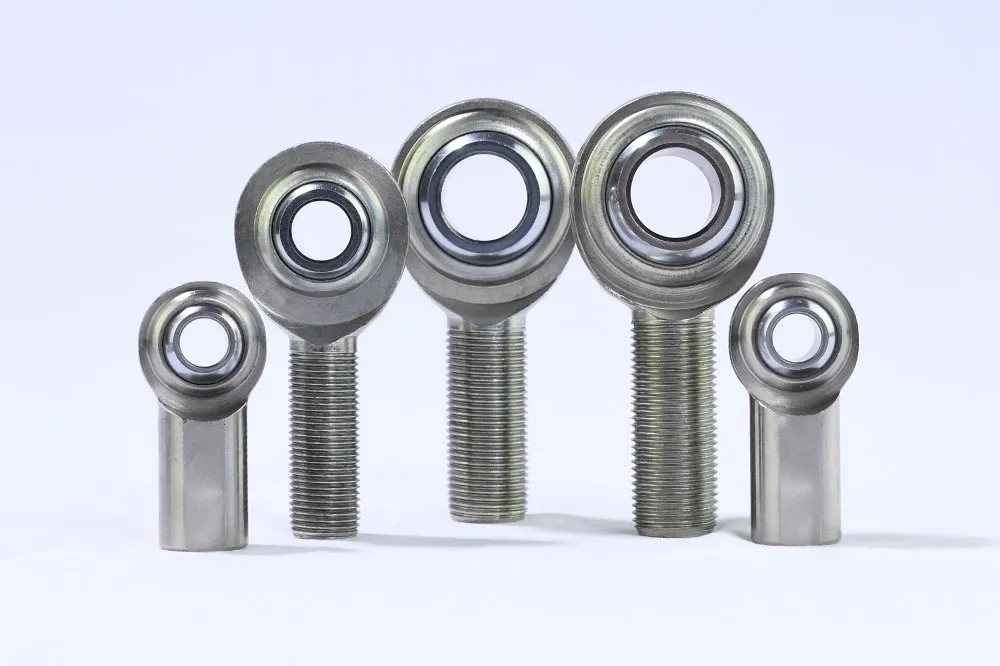
Stainless and specialty rod ends for corrosion resistance, articulation and low maintenance
8 Series
136 sizes across three needs
304 SS / 440C
Stainless body / ball
High-Misalign
PCM / PCYM family
Bronze · Nylon · PTFE
Self-lubricating race options
Material Certs Available
Sample to Full-Container
304/440C Corrosion Shield
FK · QA1 · Aurora Cross-Ref
Specialty Geometry Articulation

Overview

How the Range Breaks Down

The range splits into three practical groups, so you can choose by the real requirement first: corrosion resistance, extra misalignment, or low-maintenance specialty race design.

If you need a fixed stud-style attachment instead of a rod end body, see the dedicated Rod End Studs page.
Stainless Steel (SCM / SCF)
Corrosion resistance is the dominant requirement. Standard 304 body, 440C ball, and self-lubricating PTFE liners.
High-Misalignment (PCM / PCYM)
Wide articulation angle is the requirement; these are built from high-strength 4130 chromoly (not stainless).
Specialty Self-Lubricating Races
Low maintenance at moderate load without paying for stainless. Features sintered bronze and molded nylon race designs.

Specifications

Material & Construction

Detailed alloy specifications and component configurations across all specialty and stainless series:

SeriesBodyBallRace / LinerThreadCross-ref
SCM-T / SCF-T304 stainless, PTFE lined440C stainlessPTFEInch UNFFK, QA1
SCM-MT / SCF-MT304 stainless, PTFE lined440C stainlessPTFEMetricFK, QA1
PCM(-T)4130 chromoly, black oxide, PTFE lined52100 (high-misalignment)PTFEInch UNFQA1
PCYM-T / PCYF-T4130 chromoly, black oxide, PTFE lined52100 (high-misalignment)PTFECurrent records: inch UNF; taxonomy says Metric — verifyQA1
VM / VFCarbon steel, yellow zinc plated52100Sintered bronze, oil-impregnatedInch UNFFK, Aurora
PM / PFCarbon steel, yellow zinc plated52100Injection-molded nylonInch UNFAurora, QA1, Midwest Control
MPM / MPFCarbon steel, yellow zinc plated52100Injection-molded reinforced nylon + PTFEMetric—
SA-TK / SI-TKCarbon steel, silver zinc plated52100Copper alloy, PTFE linedMetric—

Complete Range

8 Specialty & Stainless Series · 136 Sizes

SCM-T and SCF-T stainless rod ends
SCM-T / SCF-T Rod Ends
Stainless · Inch

Corrosion-resistant 304 stainless body with a hardened 440C stainless ball and a PTFE liner for maintenance-free operation. Cross-ref FK, QA1.

Inch UNF · Male & Female · 304 housing / 440C ball · Cross-ref FK, QA1

SCM-MT and SCF-MT metric stainless rod ends
SCM-MT / SCF-MT Rod Ends
Stainless · Metric

Metric counterpart of the SCM line, combining a 304 stainless housing and 440C steel ball with a PTFE liner for ISO metric linkages. Cross-ref FK, QA1.
Metric · Male & Female · 304 housing / 440C ball · Cross-ref FK, QA1

PCM high-misalignment chromoly rod ends
PCM(-T) Rod Ends
Chromoly · Inch

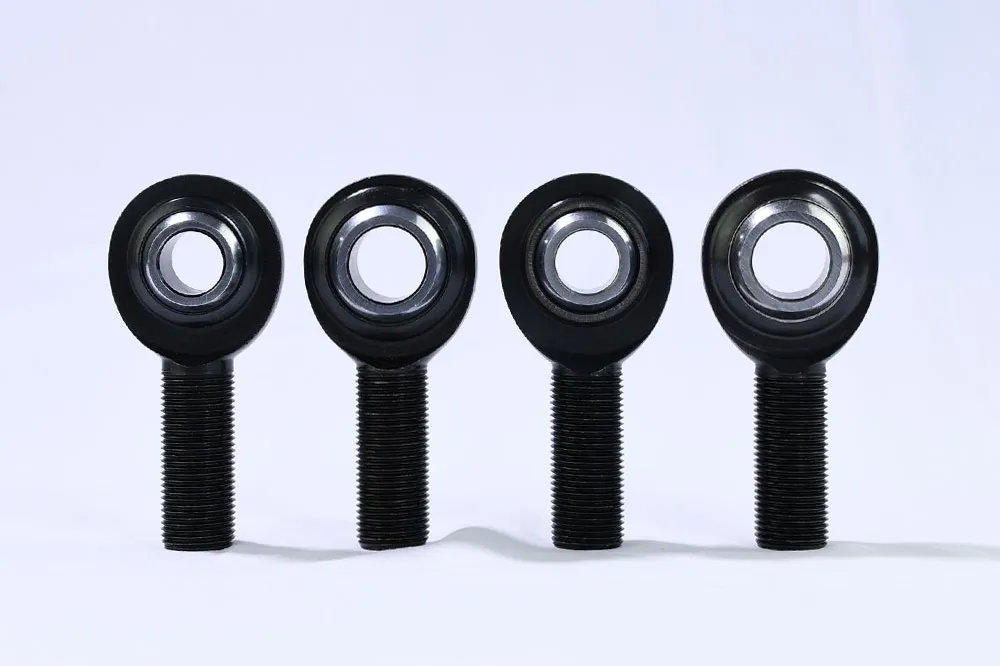
Wide-angle articulation male rod ends built with a 4130 chromoly housing, black-oxide coated for corrosion protection. Cross-ref QA1.
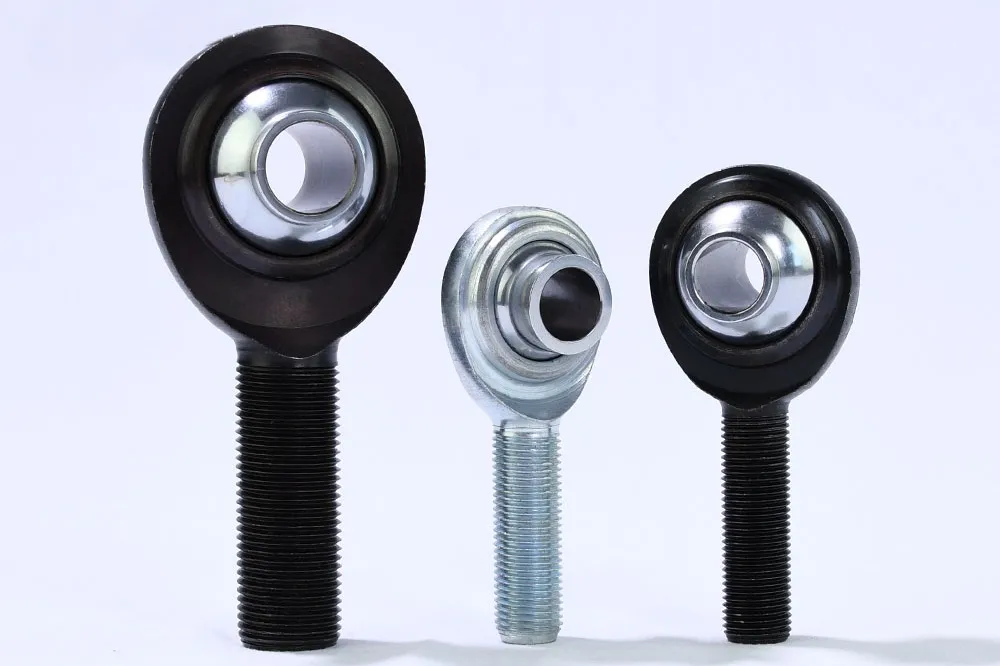
Inch UNF · Male · 4130 housing / 52100 ball · Cross-ref QA1

PCYM high-misalignment chromoly rod ends
PCYM-T / PCYF-T Rod Ends
Chromoly · Unit designation pending

Wide-angle high-misalignment series, male & female configurations, PTFE lined, black oxide finish. The current 11 published product records show inch UNF sizes; the taxonomy label says Metric, so confirm the unit designation before ordering.
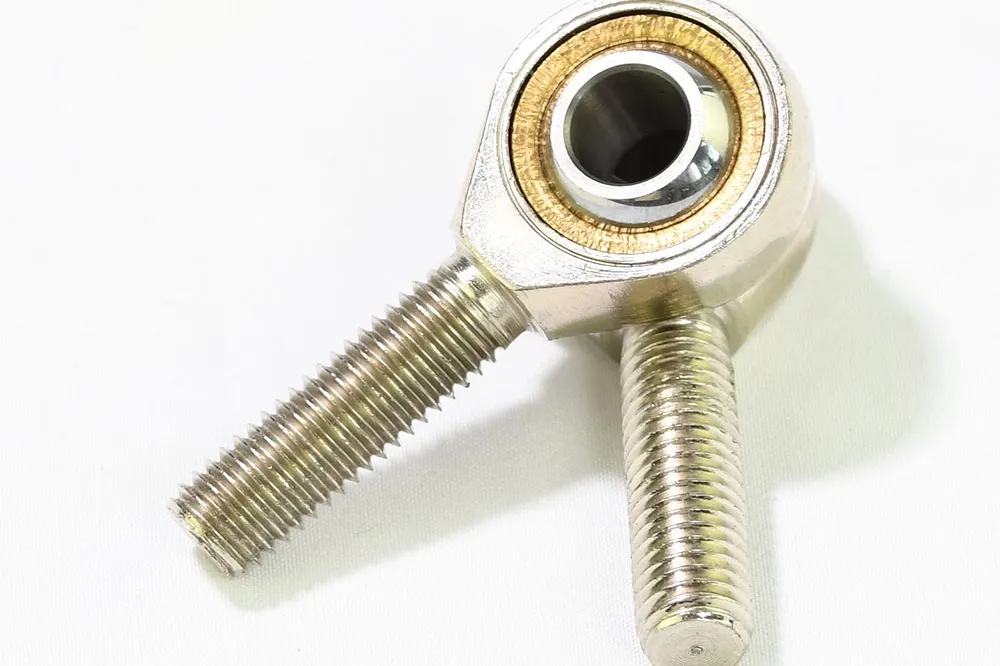
Current product records: inch UNF · 4130 housing / 52100 ball · Taxonomy label says Metric — verify

VM and VF sintered bronze race rod ends
VM / VF Rod Ends
Specialty · Bronze

Oil-impregnated porous bronze race draws oil to the ball surface under friction for continuous self-lubrication. Cross-ref FK, Aurora.
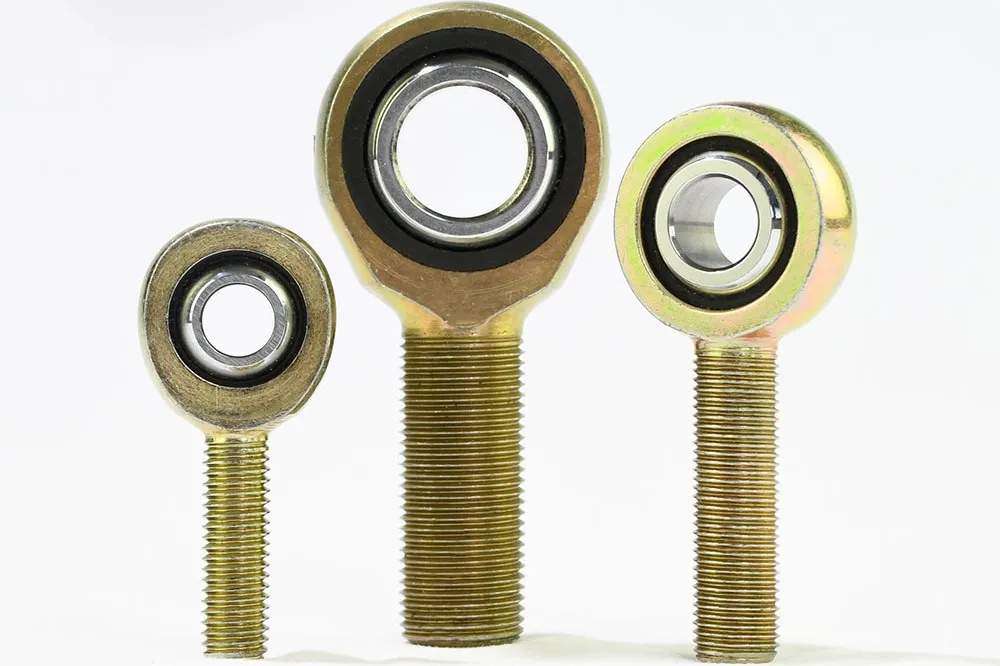
Inch UNF · Male & Female · Sintered bronze race · Cross-ref FK, Aurora

PM and PF molded nylon race rod ends
PM / PF Rod Ends
Specialty · Nylon

Molded nylon race provides zero-clearance conformal fit, dampens vibration, and prevents metal-to-metal stick-slip. Cross-ref Aurora, QA1, Midwest Control.

Inch UNF · Male & Female · Molded nylon race · Cross-ref Aurora, QA1, Midwest Control

MPM and MPF metric molded nylon race rod ends
MPM / MPF Rod Ends
Specialty · Metric

Metric molded-race series using self-lubricating reinforced-nylon and PTFE for maintenance-free automation links.
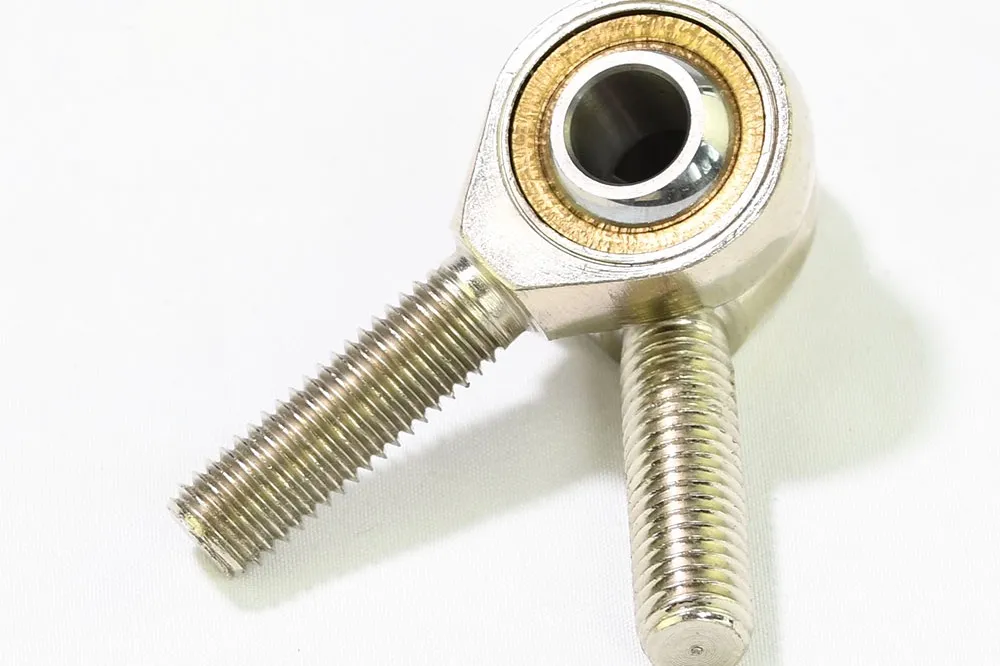
Metric · Male & Female · Reinforced Nylon-PTFE race

SA-TK and SI-TK copper PTFE race rod ends
SA-TK / SI-TK Rod Ends
Specialty · Metric

Copper alloy race with a PTFE liner, male (SA) and female (SI) configurations in ISO metric threads.

Metric · Male & Female · Copper alloy PTFE race

Choosing the Right Series

Which Specialty Family Fits the Job?

Start with the dominant requirement, then confirm exact bore, thread, angle and load on the spec page.

Corrosion → SCM

Choose SCM-T/SCF-T for inch or SCM-MT/SCF-MT for metric. Both use 304 stainless bodies, 440C balls and PTFE liners.

Articulation → PCM / PCYM

PCM is the confirmed inch high-misalignment option. Current PCYM product records are inch UNF even though the taxonomy label says Metric; verify before ordering.

Low maintenance → specialty races

VM/VF use sintered bronze; PM/PF and MPM/MPF use molded nylon; SA-TK/SI-TK use a copper-alloy PTFE race.

Exact part selection: verify bore, thread, misalignment angle, liner/race and load on the individual series page. For a threaded stud rather than a bearing-style rod end, use Rod End Studs →.

Applications

Where Specialty & Stainless Rod Ends Perform

Match the environment first, then confirm the series-specific load and clearance.

Stainless rod ends for marine steering and deck hardware
Marine & outdoor

SCM/SCF when salt spray, moisture and rust staining are the dominant risks.

Stainless rod ends for food processing washdown
Food & washdown

304/440C stainless with PTFE lining for washdown areas where grease access is limited.
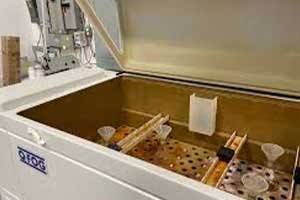
Salt spray corrosion testing for rod end materials
Corrosion evidence

Use salt-spray and material-certificate review to select stainless instead of a plated steel body.

ApplicationSeriesWhy
Marine steering / deck hardwareSCM/SCF304 body + 440C ball + PTFE through the bearing assembly
Food / pharma / washdownSCM-T/SCF-TStainless construction with no routine grease requirement
Chemical plant linkagesSCM-MT/SCF-MTMetric stainless option; confirm chemical compatibility
Off-road long-travel suspensionPCM(-T) / PCYM familyHigh articulation; verify PCYM unit designation before order
Custom 4-link / high articulationPCM(-T)Wide angle without binding
Test and measurement equipmentPM/PF, MPM/MPFMolded nylon for low friction, damping and low clearance
Low-maintenance industrial linksVM/VF, SA-TK/SI-TKSelf-lubricating bronze or copper-PTFE race

Material & Quality

What We Verify for Specialty Programs

Salt-spray review

Use the environment and exposure cycle to decide whether a plated body is acceptable or stainless is required.

304 / 440C mill certificates

Material certification can be supplied for stainless body and ball requirements in OEM quotations.

Dimensional inspection

Confirm bore, thread, ball movement, race and mounting envelope against the approved series drawing.

FAQ

Common Questions

What grade of stainless are SYZ stainless rod ends?
A 304 stainless body with a 440C stainless ball and PTFE liner — corrosion resistance plus self-lubrication. SCM-T/SCF-T (inch) and SCM-MT/SCF-MT (metric).
When are stainless rod ends worth the premium over zinc-plated steel?
When the joint faces continuous moisture, salt spray, chemical exposure or washdown — zinc plating delays but doesn’t prevent corrosion and can wear through. Stainless resists corrosion through its full cross-section.
Are stainless rod ends as strong as steel?
Stainless trades some load margin for corrosion resistance. For maximum strength in a non-corrosive setting, chromoly is stronger; choose stainless when the environment would corrode plated steel.
What is a high-misalignment rod end and which series?
One built for a wider angular range before binding — PCM(-T) (inch) and PCYM-T/PCYF-T (current product records: inch; taxonomy label says Metric — verify), 4130 chromoly with black oxide and PTFE.
What does “self-lubricating” mean across these series?
A race that needs no grease: PTFE liner (stainless, PCM), sintered bronze oil-impregnated (VM/VF), molded nylon (PM/PF, MPM/MPF), or copper-alloy PTFE (SA-TK).
Molded nylon race vs PTFE liner — which lasts longer?
A molded nylon race is a thick structural component (longer wear life, vibration damping, zero clearance) but lower max load; a PTFE liner is a thin low-friction layer that can wear through but supports higher loads on a metal race. Choose by load vs precision needs.
Do you offer a studded rod end?
Yes — source studded or threaded-stud parts separately from the Rod End Studs page. This page covers bearing-style stainless and specialty-liner rod ends.
Are they available in inch and metric?
Yes — inch (SCM-T, PCM, VM, PM) and metric (SCM-MT, MPM, SA-TK); current PCYM product records are inch and should be verified before ordering.
What grade of stainless are SYZ stainless rod ends?
A 304 stainless body with a 440C stainless ball and PTFE liner, giving corrosion resistance plus self-lubrication. SCM-T/SCF-T are inch and SCM-MT/SCF-MT are metric.
When are stainless rod ends worth the premium over zinc-plated steel?
When the joint faces continuous moisture, salt spray, chemical exposure or washdown. Zinc plating delays but does not prevent corrosion and can wear through; stainless resists corrosion through its full cross-section.
Are stainless rod ends as strong as steel?
Stainless trades some load margin for corrosion resistance. For maximum strength in a non-corrosive setting chromoly is stronger; choose stainless when the environment would corrode plated steel.
What is a high-misalignment rod end and which series?
One built for a wider angular range before binding — PCM(-T) inch and PCYM-T/PCYF-T (current product records: inch; taxonomy label says Metric — verify), 4130 chromoly with black oxide and PTFE.
What does self-lubricating mean across these series?
A race that needs no grease: PTFE liner (stainless, PCM), sintered bronze oil-impregnated (VM/VF), molded nylon (PM/PF, MPM/MPF), or copper alloy with PTFE (SA-TK).
Molded nylon race versus PTFE liner — which lasts longer?
A molded nylon race is a thick structural component with longer wear life, vibration damping and zero clearance but lower max load; a PTFE liner is a thin low-friction layer that can wear through but supports higher loads on a metal race.
Do you have a studded rod end?
Yes. Source studded or threaded-stud parts separately from the Rod End Studs page; this page covers bearing-style stainless and specialty-liner rod ends.
Are stainless and specialty rod ends available in inch and metric?
Yes. Inch options include SCM-T, PCM, VM and PM; metric options include SCM-MT, MPM and SA-TK; current PCYM product records are inch and should be verified before ordering.

Engineering Tools

Calculators for This Product Family

Estimate required articulation clearance for a threaded rod end.
Check working load against your selected safety factor.

Buyer Guides

Stainless & Specialty Resources

Factory Direct

Request a Quote

Tell us your series, part numbers and quantities. We respond within 24 hours with pricing and lead time.

We respond within 24 hours · Factory direct · No spam, ever

Request a Quote

Please submit the form or email [email protected]

🍪
We Use Cookies