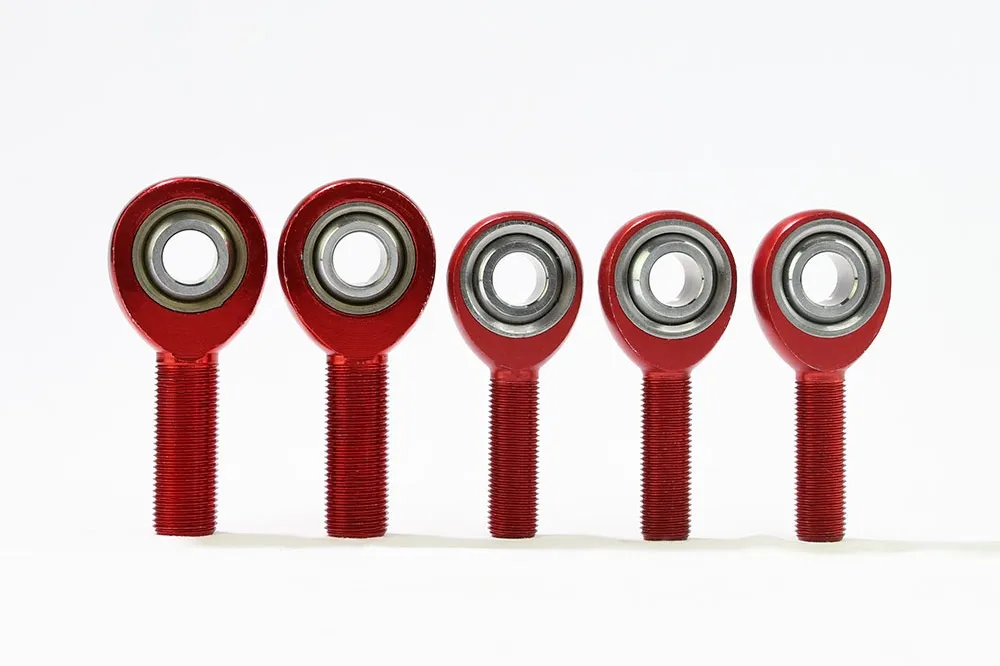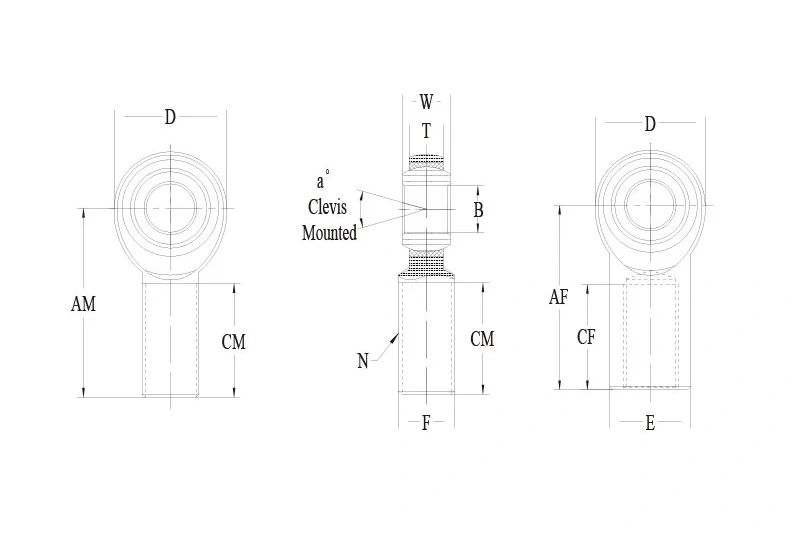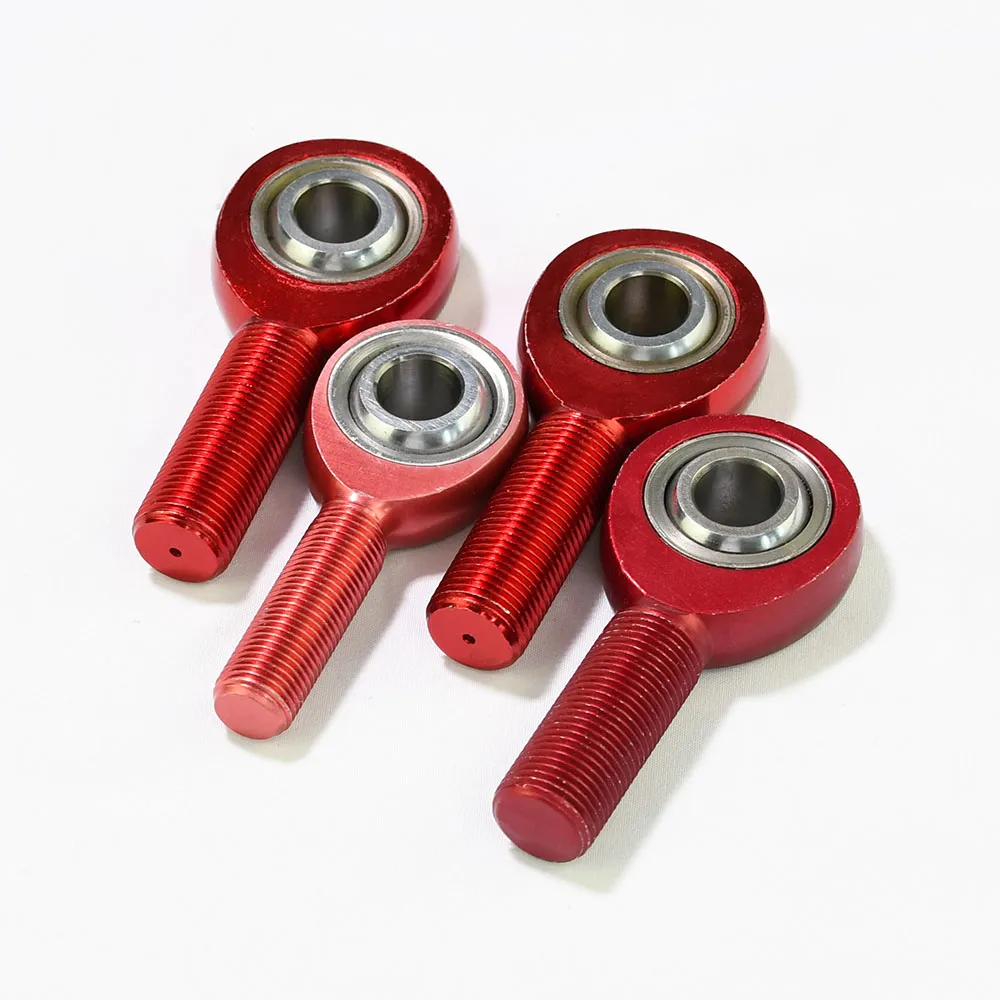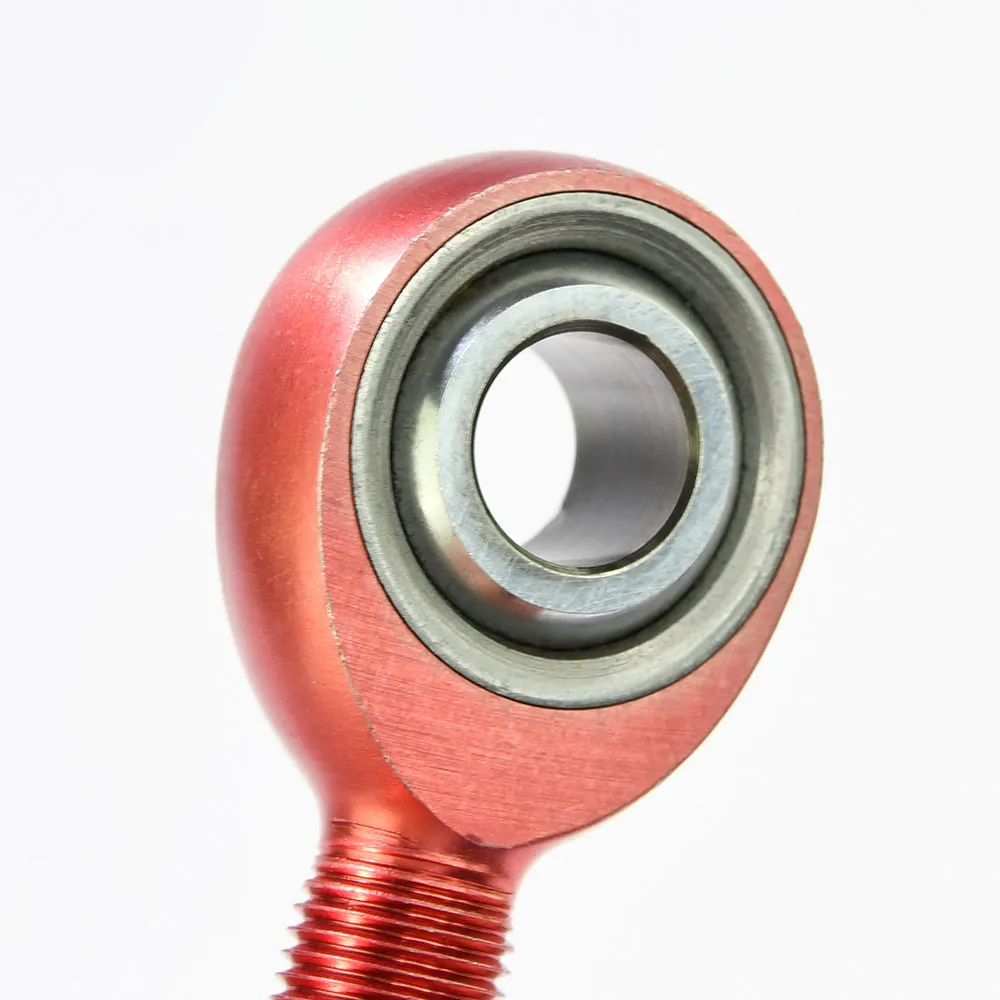
Higher-grade 3-piece aluminum with precision movement and a PTFE-liner option. Best for racing linkage, lightweight control rods, robotics — anywhere the joint must articulate smoothly while keeping assembly mass low. ALRSM adds a reinforced shank. Cross-reference: FK, Aurora.
Lightweight 7075-T6 Aircraft Aluminum — Rod Ends & Heim Joints
Aluminum Rod Ends
& Heim Joints
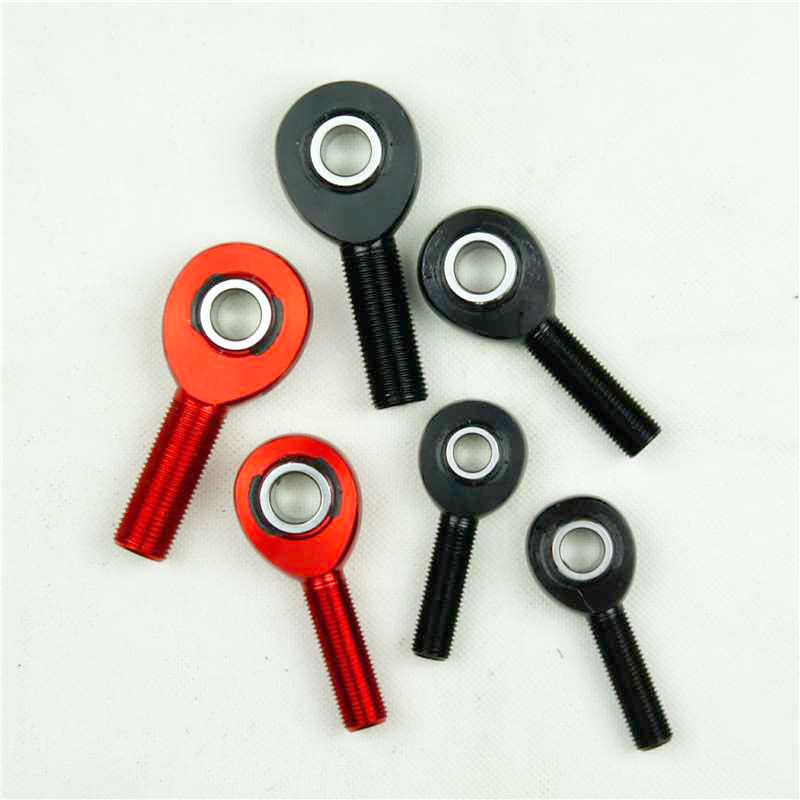
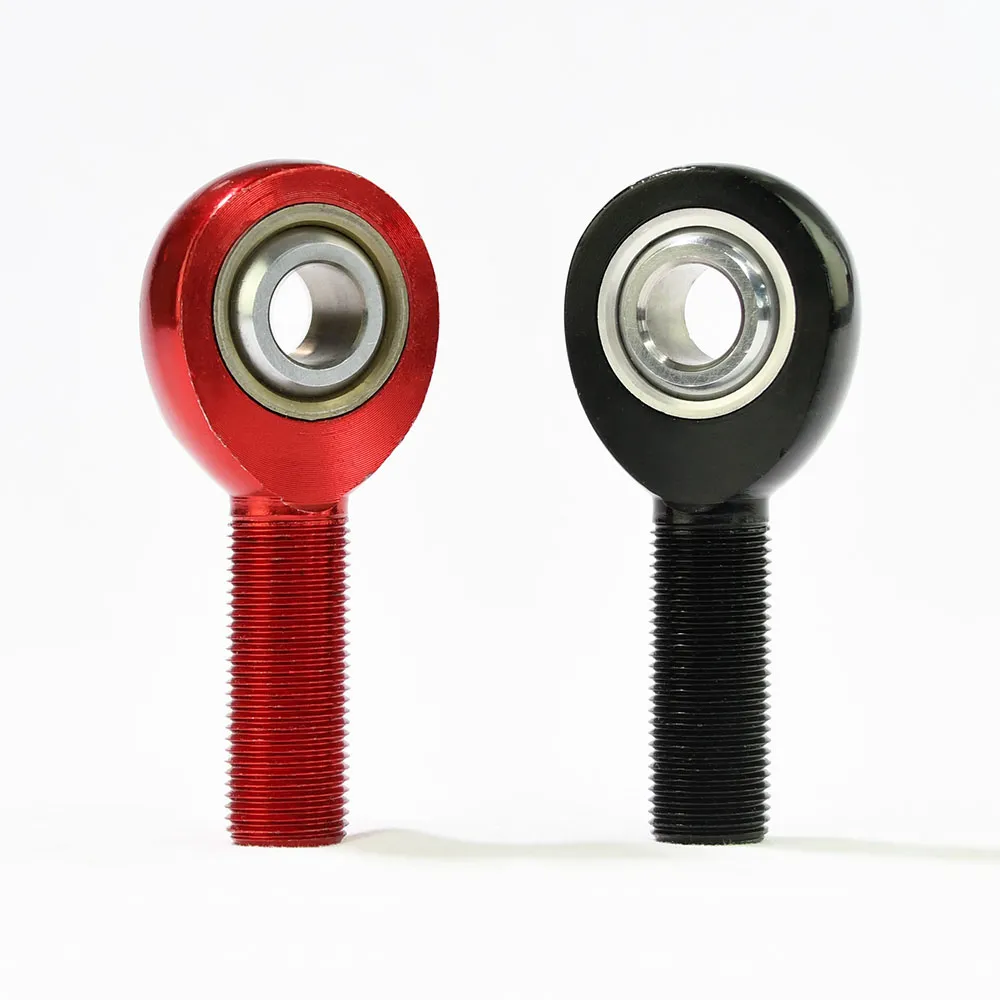
Aluminum rod ends use a 7075-T6 aircraft-aluminum body around a hardened spherical bearing — chosen when weight reduction, a clean anodized finish, and responsive linkage movement matter more than maximum shock-load capacity. SYZ supplies aluminum heim joints for racing linkage, robotics, UAV, instrumentation and OEM assemblies that need a lighter alternative to steel. Available 2-piece (AM/AF) and 3-piece (ALJM family), color anodized red or black, in male and female, right- and left-hand thread.

Overview
What Are Aluminum Rod Ends?
Aluminum rod ends (aluminum heim joints / rose joints) replace the steel housing with a 7075-T6 aircraft-aluminum body, cutting weight while keeping the same spherical articulation. The ball stays 52100 hardened bearing steel — aluminum is never used for the ball because it lacks the surface hardness for wear resistance.
The trade-off is deliberate: aluminum lowers mass at the cost of shock-load margin versus chromoly. So the real selection question isn’t “aluminum or steel” in the abstract — it’s whether your linkage carries light-to-moderate, well-inspected loads (aluminum wins) or high-impact suspension/steering loads (use chromoly).
Material Science
Why 7075-T6 (Not 6061 or 2024)
Aluminum rod ends live or die on the alloy. SYZ uses 7075-T6, the high-strength aerospace grade, for a reason:
Strength
7075-T6 is the strongest commonly available aluminum alloy, with tensile strength far above general-purpose 6061 — approaching the range of mild steel while keeping aluminum’s ~1/3 density. (Published alloy property — see each spec page for part-level data.)
The T6 Temper
Solution heat-treated and artificially aged to peak strength, the standard temper for structural aerospace and high-end motorsport parts.
Why Not 6061
6061 is weaker and would force lower load ratings; a “6061 aluminum rod end” from another supplier is not equivalent to a 7075-T6 part.
Anodizing
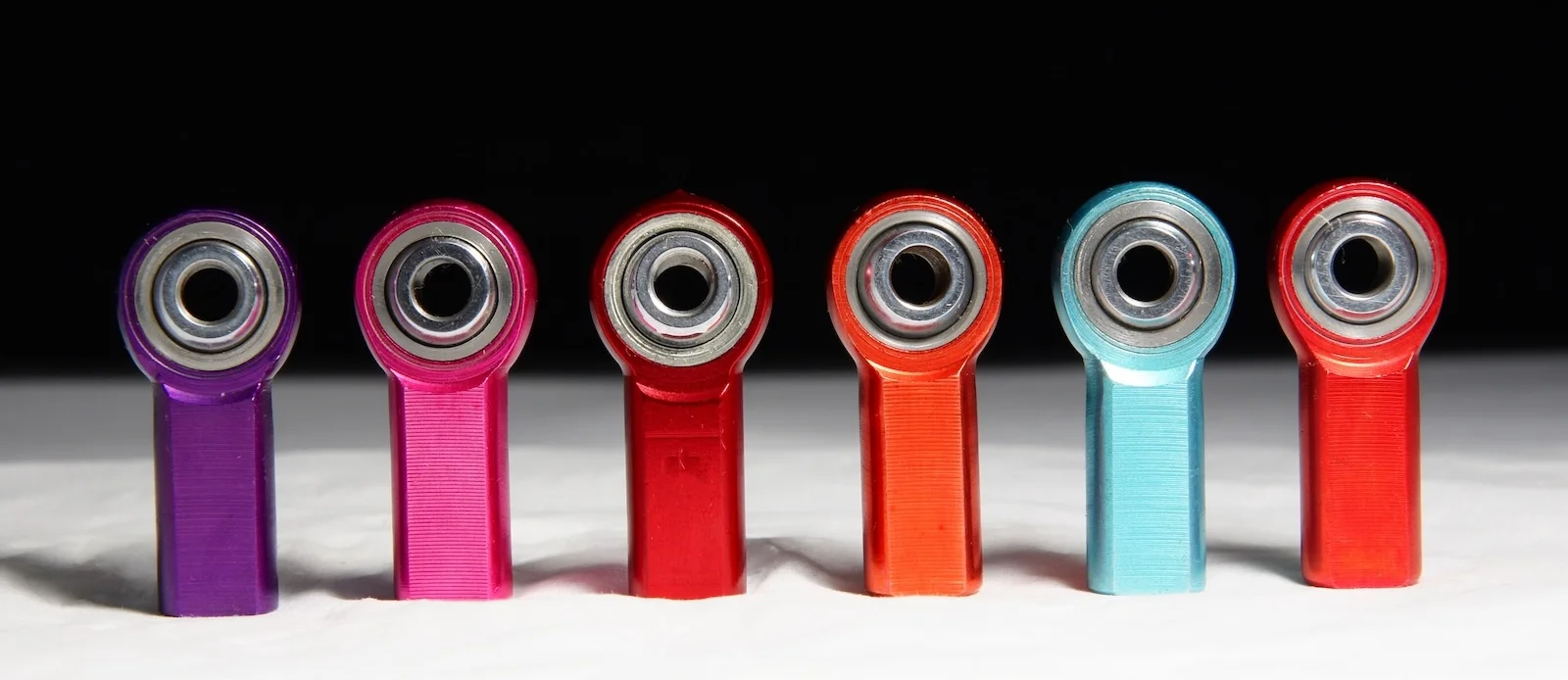
The color-anodized finish (red/black) hardens the surface, improves corrosion resistance, and lets you color-code RH/LH or load paths in complex assemblies.
The weight story is the whole point: cutting mass on tie rods, radius rods, sway-bar links and control linkage reduces unsprung/rotating mass, which improves acceleration, response and fatigue on supporting structure — provided the loads stay within the aluminum series’ rating.
Verified Specifications
Material & Construction
SYZ aluminum rod ends share a high-strength 7075-T6 body and a 52100 bearing steel ball. The internals and races are optimized per series:
| Component | ALJM / ALRSM / ALJF (3-piece) | AM / AF (2-piece) |
|---|---|---|
| Body | 7075-T6 aircraft aluminum, color anodized red/black | 7075-T6 aircraft aluminum, color anodized red/black |
| Ball | 52100 bearing steel, heat-treated, precision-ground, hard chrome plated | 52100 bearing steel, heat-treated, precision-ground, hard chrome plated |
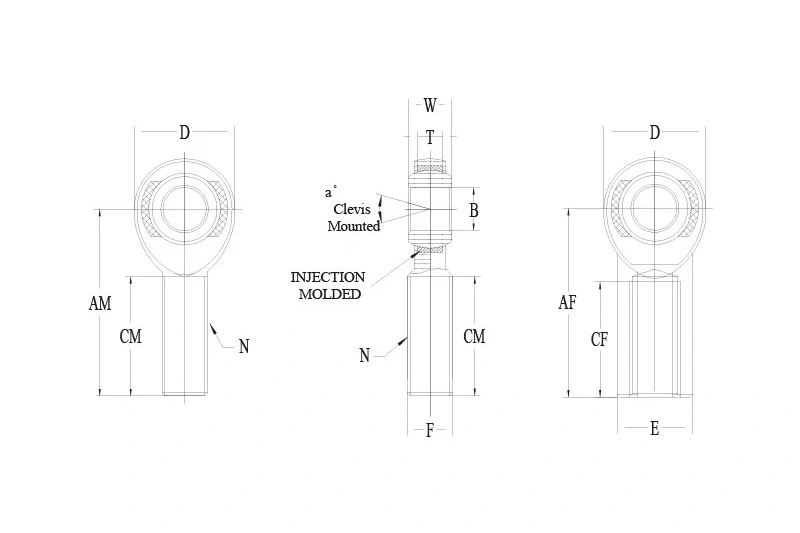
| Race / Liner | Alloy steel race; PTFE liner optional (-T); zinc plating optional | Injection-molded reinforced nylon with PTFE |
| Bore range | 0.1900-0.7500 inch | 0.1900-1.000 inch |
| Thread | Male (ALJM) / Female (ALJF) / heavy-duty shank (ALRSM); RH & LH | Male (AM) / Female (AF); RH & LH |
| Cross-reference brands | FK, Aurora | QA1, Midwest Control |
Complete Range
The 2 Aluminum Families
General lightweight aluminum sourcing with a reinforced-nylon/PTFE race for self-lubrication. Male/female thread choices and a practical balance of cost, weight and size availability for general linkage, lighter mechanisms and OEM programs. Cross-reference: QA1, Midwest Control.
Choosing the Right Material
Aluminum Selection Guide
QUICK COMPARISON
| Your Requirement | Recommended Material | Why |
|---|---|---|
| Weight reduction, light-to-moderate loads, anodized finish | 7075-T6 Aluminum | Lighter unsprung mass, 1/3 density of steel |
| Heavy shock loads, primary steering, off-road suspension | 4130 Chromoly | Higher tensile strength and fatigue life |
| Exposed abrasive environment / street comfort | 4130 Chromoly (PTFE / Poly) | Resists grit erosion and body deformation |
WHEN TO CHOOSE ALUMINUM
- Weight reduction is a key design goal for the linkage assembly.
- The linkage carries light-to-moderate, well-inspected loads.
- You want a clean anodized finish (red or black available).
- Low moving mass / quick, responsive articulation is required.
WHEN TO AVOID ALUMINUM
- The joint sees heavy shock loads or high-impact stress.
- The threaded shank is loaded in bending (pure tension/compression only).
- It is primary steering or severe off-road suspension without engineering validation.
- The environment is highly abrasive enough to erode the aluminum body. In these cases, please use chromoly rod ends.
Exact radial load ratings are on each spec page — verify there before final design release.
Applications
Where Aluminum Rod Ends Perform
UTV & Side-by-Side
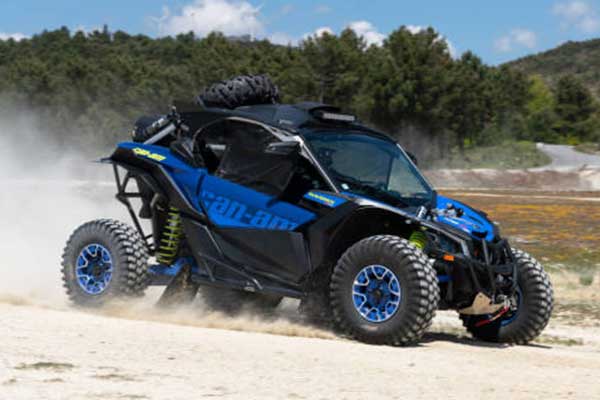
Replacing heavy steel rod ends on tie rods, radius rods and links saves unsprung weight, improving suspension responsiveness. PTFE-lined models protect the joint in dusty environments.
Recommended: ALJM(-T)/ALJF(-T) with PTFE for dust resistance.
Lightweight Racing
Ideal for shift & throttle linkage, pedal assemblies, and non-structural suspension links. Offers clean look and lightweight weight reduction in autocross and drag builds.
Recommended: AM/AF for budget; ALJM/ALJF for precision.
Aerospace & UAV
7075-T6 heritage makes these rod ends suitable for control linkages and light airframe mechanisms in drones and unmanned aerial vehicles where every gram matters.
Recommended: ALJM(-T) with PTFE for maintenance-free operation.
Robotics & Automation
Perfect for automated machinery, pick-and-place robots, and articulating mechanisms where lower moving mass increases speed and reduces actuator load.
Recommended: ALJM/ALJF or AM/AF with self-lubricating race.
Custom & Show Builds
Color-anodized ALJM/ALJF rod ends serve visual identification and provide a premium, high-end look on steering and control rod linkages for custom vehicles.
Recommended: Anodized red or black finish standard; others on request.
Cross-Reference
SYZ aluminum rod ends cross-reference to real competitor lines. Enter your competitor part number in the cross-search tool on each spec page to find the SYZ equivalent by dimensions.
Why SYZ
Why SYZ Aluminum
FAQ
Common Questions
Are aluminum rod ends strong enough for suspension?
What does “7075 rod end” mean?
What’s the difference between ALJM and AM series?
What does the “(-T)” suffix mean?
Can I get left-hand threads?
Are aluminum rod ends suitable for marine/saltwater?
Does the body gall when threaded into steel?
Factory Direct
Request a Quote
Tell us your series, part numbers and quantities. We respond within 24 hours with pricing and lead time.