Economy · CM / CM-M Rod Ends
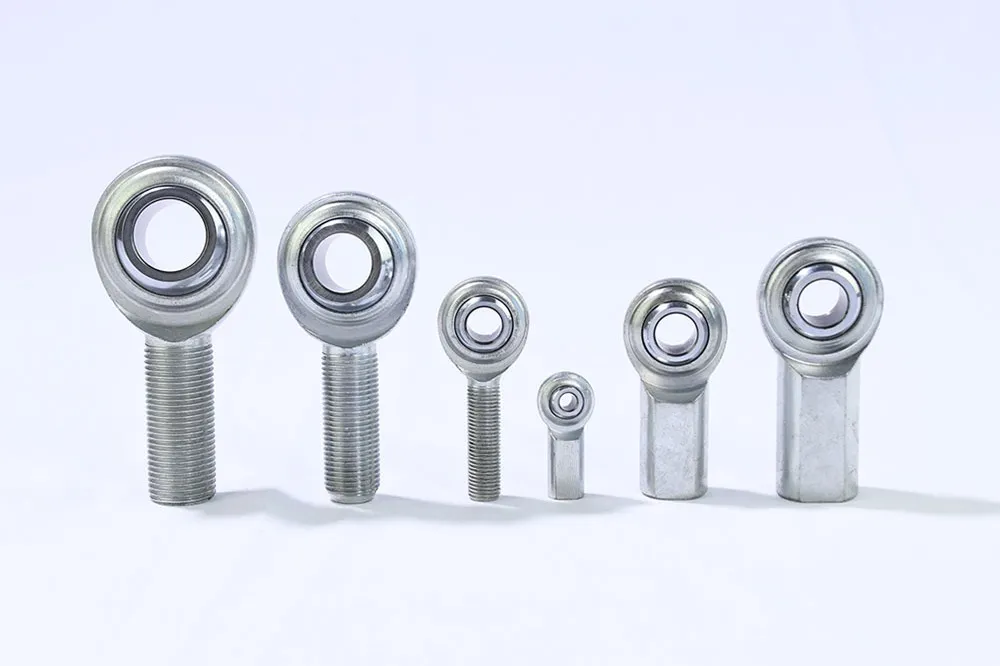
Two-piece commercial rod ends for cost-sensitive, moderate-load industrial and agricultural linkage.
Search by part number, series, material, application, or specification.
Press Enter to view all results Esc to close
Carbon Steel Rod Ends for Industrial, Agricultural & OEM Linkage
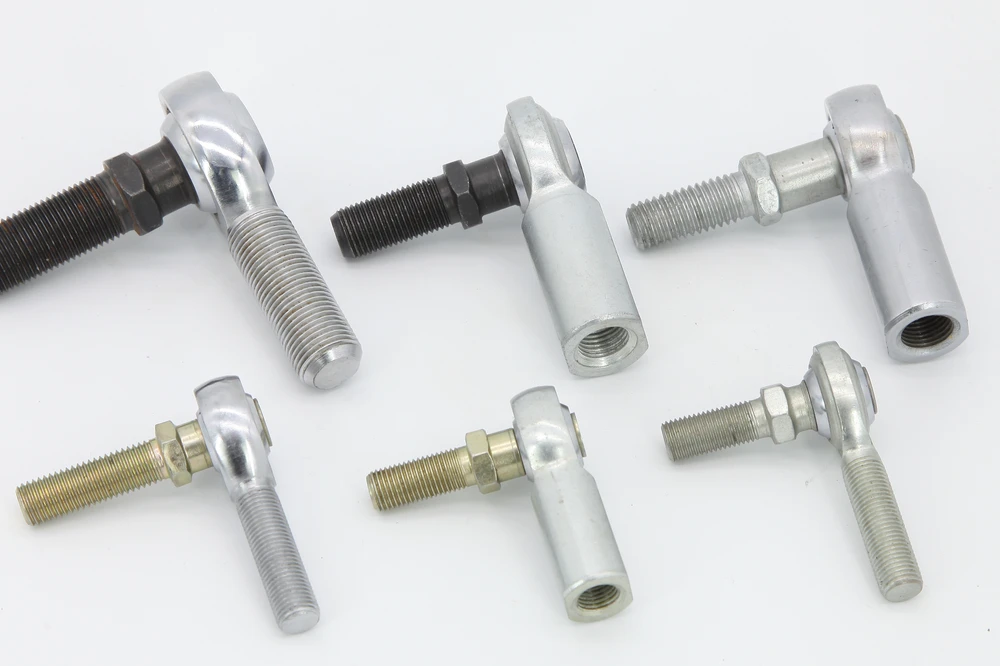
Carbon steel rod ends are zinc-plated heim joints with a 52100 steel ball — the cost-effective choice for industrial machinery, agriculture and volume OEM linkage. SYZ supplies 5 series and 169 inch and metric sizes, in 2-piece and 3-piece designs with PTFE-lined or greaseable options, from samples to container loads.
Overview
A carbon steel rod end (steel heim joint) uses a zinc-plated carbon steel body around a 52100 bearing-steel ball. It provides solid strength for general-purpose linkage at a lower price than chromoly or stainless — the right choice where loads are moderate, the environment isn’t severely corrosive, and cost control is a priority.
Carbon steel rod ends share thread standards and dimensional conventions with chromoly, so they’re economical drop-in substitutes wherever chromoly’s extra strength isn’t required.
Product Tiers
SYZ’s carbon steel range maps to three tiers:
| Tier | Series | Construction | Best for |
|---|---|---|---|
| Economy / commercial | CM(-T)/CF(-T), CM-M/CF-M | 2-piece, PTFE optional | General industrial, agriculture, light automation, volume OEM |
| Industrial precision | JM(-T)/JF(-T), JM-M/JF-M | 3-piece, alloy-steel race, PTFE optional | Tighter tolerance, higher load per bore, precision linkages |
| Self-lubricating / dirty environment | EXM/EXF | Extended shank, reinforced-nylon + PTFE race | Dusty/contaminated sites, limited grease access |
Moving from 2-piece to 3-piece buys tighter ball-to-race clearance and more load capacity per bore size; moving to EXM buys self-lubrication plus extra shank length.
Two-piece commercial rod ends for cost-sensitive, moderate-load industrial and agricultural linkage.
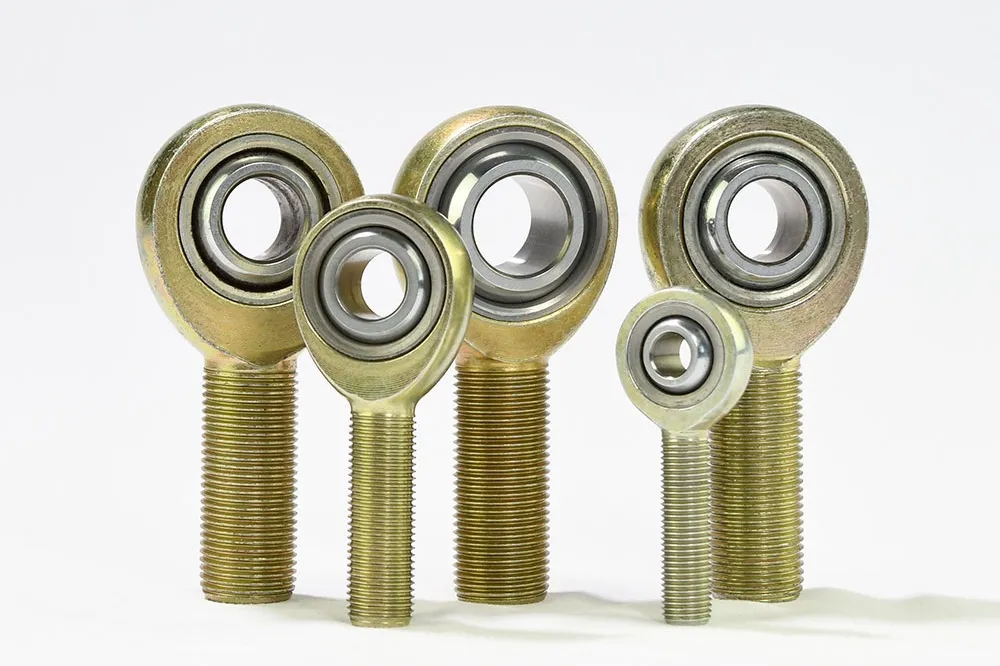
Three-piece designs with a separate alloy-steel race for tighter tolerance and higher load per bore.
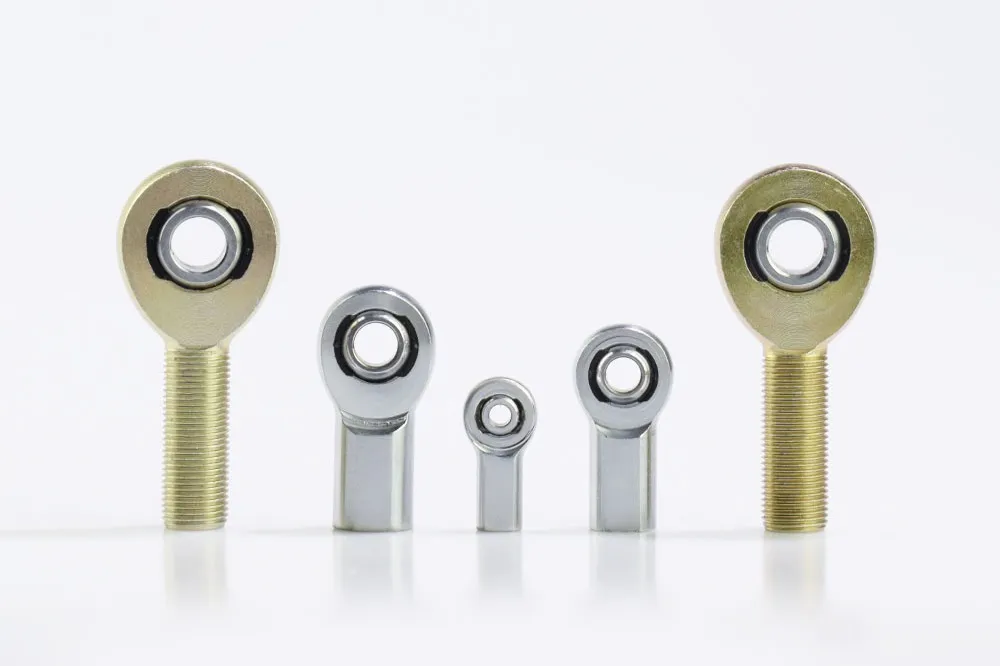
Extended-shank, molded-race rod ends for dirty environments and limited grease access.
Also carbon-steel bodied: bronze-race VM/VF, molded-race PM/PF and MPM/MPF, plus copper-PTFE SA/SI. These specialty series are organized under Specialty Rod Ends →.
Specifications
All carbon steel series use a 52100 bearing-steel ball (precision-ground, heat-treated, hard chrome plated). Body/race by series:
| Series | Body | Race / Liner | Thread | Cross-ref brands |
|---|---|---|---|---|
| CM(-T) / CF(-T) | Carbon steel, silver zinc plated, PTFE lined optional | 2-piece, PTFE optional | Inch UNF | FK, QA1 |
| CM-M / CF-M | Carbon steel, silver zinc plated, PTFE lined optional | 2-piece, PTFE optional | Metric | FK, Aurora, QA1 |
| JM(-T) / JF(-T) | Carbon steel, yellow zinc plated | Alloy steel; PTFE lined optional | Inch UNF | FK, Aurora, QA1 |
| JM-M / JF-M | Carbon steel, yellow zinc plated | Alloy steel; PTFE lined optional | Metric | FK |
| EXM / EXF | Carbon steel, yellow zinc plated | Injection-molded reinforced nylon + PTFE | Inch UNF | Aurora, QA1 |
Complete Range
The entry point where cost is the driver and loads are moderate, with a broad bore range and an optional PTFE liner (-T). Cross-ref FK, QA1.
A separate alloy-steel race gives tighter tolerance and higher load capacity per bore than the 2-piece — the most cross-referenced carbon series (FK, Aurora, QA1). For steering/suspension joints where play can’t be tolerated and for high-cycle machinery.
Extended shank with a self-sealing reinforced-nylon + PTFE race — keeps contaminants out and lubrication in, with extra thread length for thick brackets. For dusty/contaminated environments with limited grease access. Cross-ref Aurora, QA1.
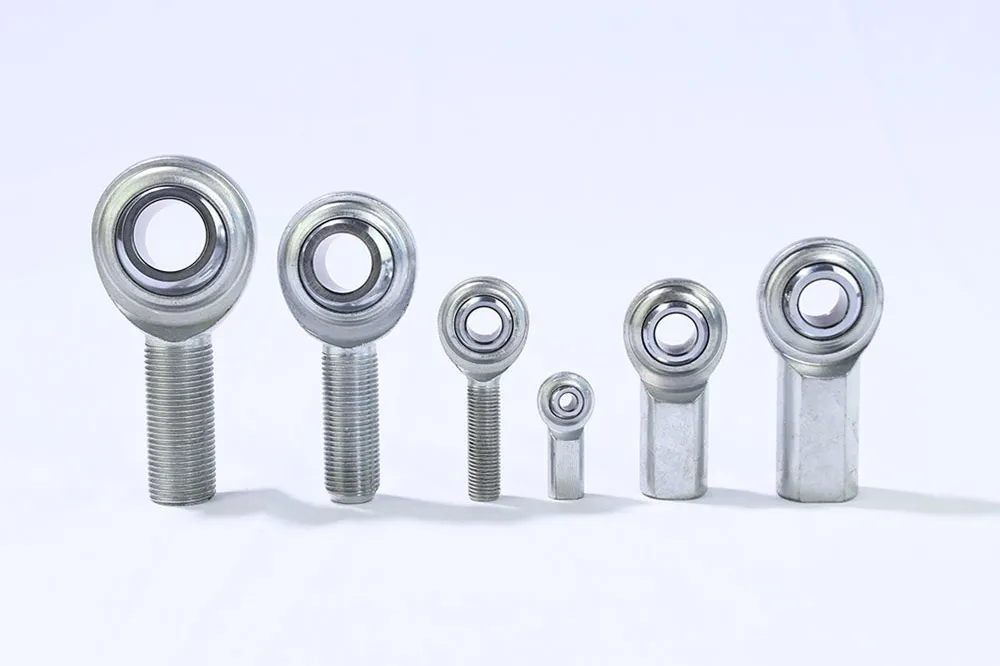
Metric 2-piece for ISO assemblies; PTFE option. Cross-ref FK, Aurora, QA1.
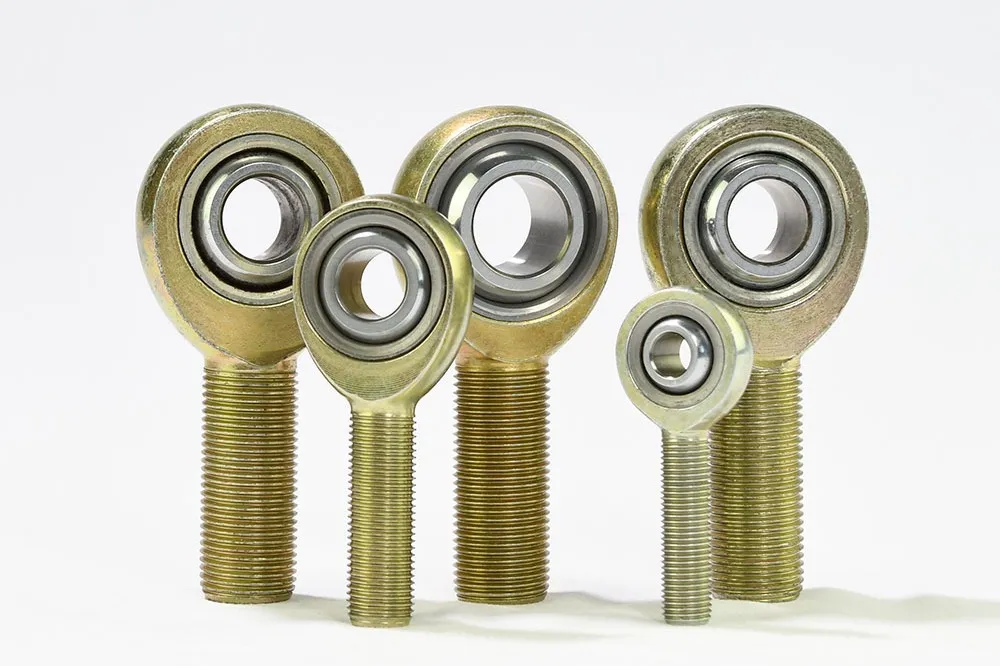
Metric 3-piece, alloy-steel race, PTFE option. Cross-ref FK.
Popular Sizes
Start with a live product record, then open the series page for the full size chart and cross-search.
| Part family | Bore | Thread / standard | Product |
|---|---|---|---|
| CMR8-10-T | 1/2″ | 5/8-18 | View product → |
| CMR12-T | 3/4″ | 3/4-16 | View product → |
| CFR8-T | 1/2″ | 1/2-20 | View product → |
| JMR8-10-T | 1/2″ | 5/8-18 | View product → |
| JMR12-14-T | 3/4″ | 7/8-14 | View product → |
| JFR12-T | 3/4″ | 3/4-16 | View product → |
| EXMR8-10 | 1/2″ | 5/8-18 | View product → |
| CMR16M | M16 | M16 × 2.0 | View product → |
| JMR16M | M16 | M16 × 2.0 | View product → |
OEM & Wholesale
Give us your annual volume and part list. We quote by volume tier, with the documentation and packaging your production line needs.
Choosing the Right Series
| Your Priority | Series |
|---|---|
| Lowest cost, moderate load, inch | CM(-T)/CF(-T) |
| Lowest cost, moderate load, metric | CM-M/CF-M |
| Tighter tolerance / higher load per bore, inch | JM(-T)/JF(-T) |
| Tighter tolerance / higher load per bore, metric | JM-M/JF-M |
| Dirty environment, extra shank, self-lube | EXM/EXF |
Carbon steel is right for the load & environment?
├─ Budget priority, moderate load → CM (inch) / CM-M (metric)
├─ Need tighter tolerance / more load per bore → JM (inch) / JM-M (metric)
└─ Dusty/contaminated + limited greasing → EXM/EXF (self-lube, extended shank)
PTFE (-T) vs metal-to-metal: PTFE for sealed/clean assemblies where greasing is impractical; greaseable metal-to-metal for exposed joints you can periodically purge to flush contaminants out. Exact bore, thread and load per part number are on each series spec page — confirm there before ordering.
Corrosion Protection
Applications
Industrial and agricultural buyers can start with the application, then confirm the bore, thread, race and load on the linked series page.
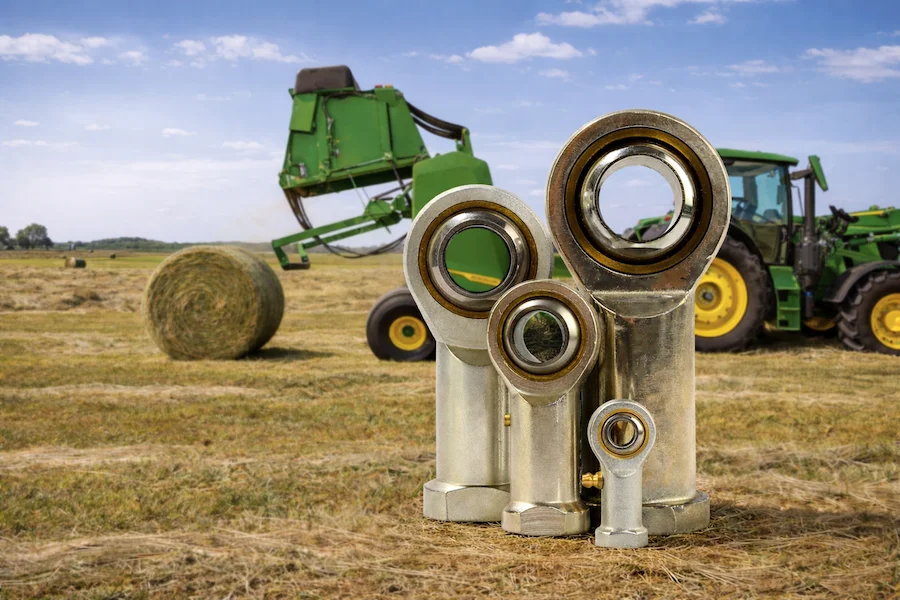
CM/CF for cost-sensitive implement linkages; EXM/EXF when dust and limited grease access matter.
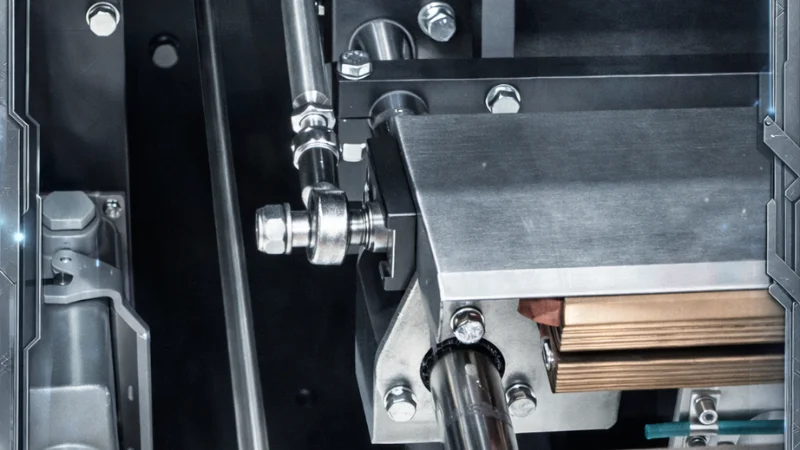
JM-T/JF-T for clean, high-cycle motion where PTFE-lined operation reduces routine greasing.

CM/CF and JM/JF cover moderate-load actuators, material handling and repeatable OEM linkages.
| Application | Series | Why |
|---|---|---|
| Agricultural implement linkages | CM/CF, EXM/EXF | Cost-effective; EXM self-seals against dust |
| Industrial conveyors & actuators | CM/CF, JM/JF | Moderate loads, highly serviceable |
| Packaging machinery (clean, high-cycle) | JM-T/JF-T | PTFE for grease-free operation |
| Construction equipment (non-critical) | EXM/EXF | Self-sealing for dusty sites |
| Volume OEM assemblies | CM/CF | Lowest cost per unit |
| Material handling / hitch linkages | JM/JF | Higher load than CM |
| Metric machinery | CM-M, JM-M | ISO threads |
Manufacturing & Quality
For OEM and replacement programs, consistency matters as much as the first sample.
Bore, thread, shank and key envelope dimensions are checked against the approved drawing and series specification.
Zinc-plated bodies are checked for finish coverage and corrosion-protection requirements appropriate to the application.
Incoming material certification, hardness checks and ERP lot traceability support repeat orders and batch documentation.
Complete the Link
FAQ
Engineering Tools
Factory Direct
Tell us your series, part numbers, annual quantity and application. We respond within 24 hours with pricing and lead time.