Skip to content

Industrial-Grade · OEM · Wholesale · Engineering Support

Spherical Plain Bearings

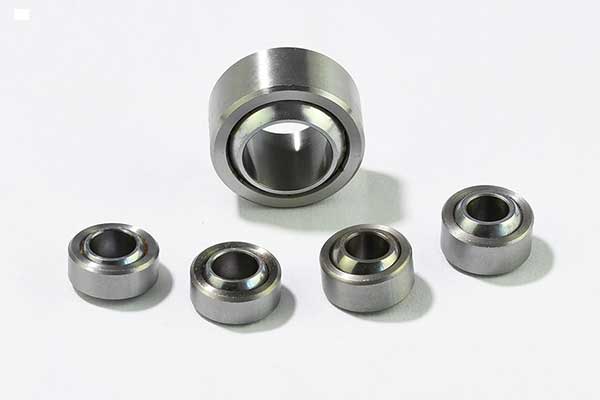
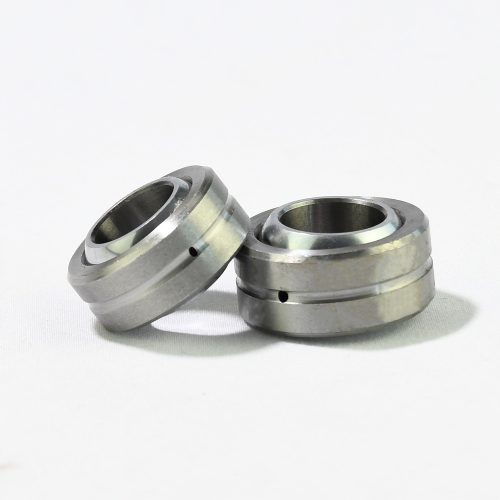
Also called a spherical bearing, spherical bushing or spherical uniball bearing — the articulating ball-in-race element at the heart of every rod end, but without the threaded housing, made to be pressed into a parent component. SYZ builds 10 series across chrome steel, alloy steel and stainless: metal-to-metal COM and COMA-M, stainless COM-SS, precision GEC/GEGC, fractured-race GEZ, self-lubricating SLB, wide-series WPB and high-misalignment YPB — PTFE-lined or metal-to-metal, inch and metric.
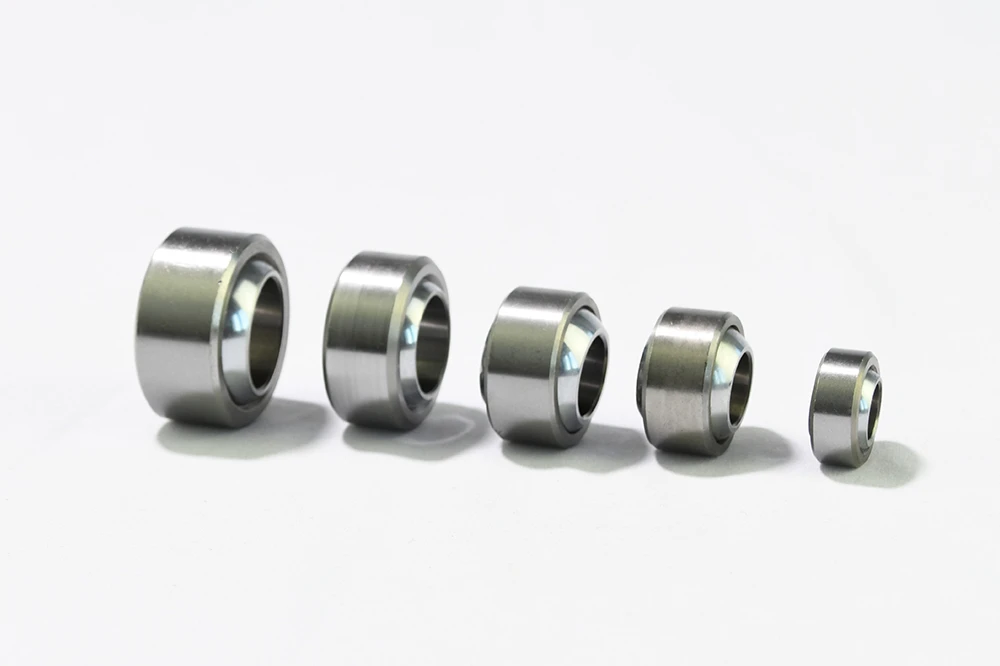
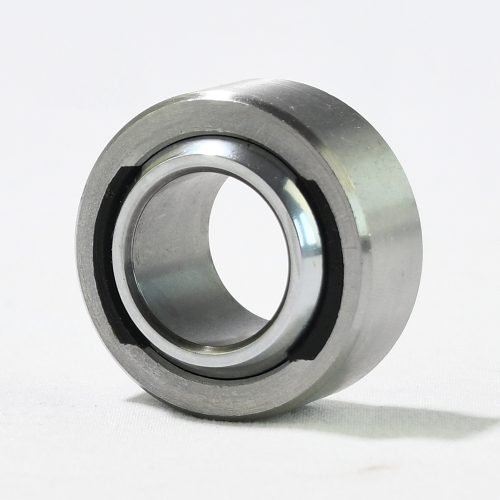
COM-T metal-to-metal spherical plain bearings, commercial series
10 Series
Inch + metric · PTFE or metal-to-metal
0.165″ – 5.984″
Bore range · metric 3 – 30 mm
to 1,146,400 lb
Static radial load (GEZ152ES)
1° – 24°
Misalignment angle range
ISO 9001:2015 Quality
Material Certs Available
MOQ 1 Piece for Samples
DDP Air or Sea to EU / US
Factory Direct Sourcing

Overview

What Is a Spherical Plain Bearing?

A precision-ground ball rotating inside a matched spherical outer race — the bearing element only, with no threaded shank or bore. It is designed to handle oscillating movement, misalignment and heavy load, and it is what you reach for when the bearing has to be press-fit into a parent component: a hydraulic cylinder end, a machinery housing, a clevis, or a pocket you machined yourself.

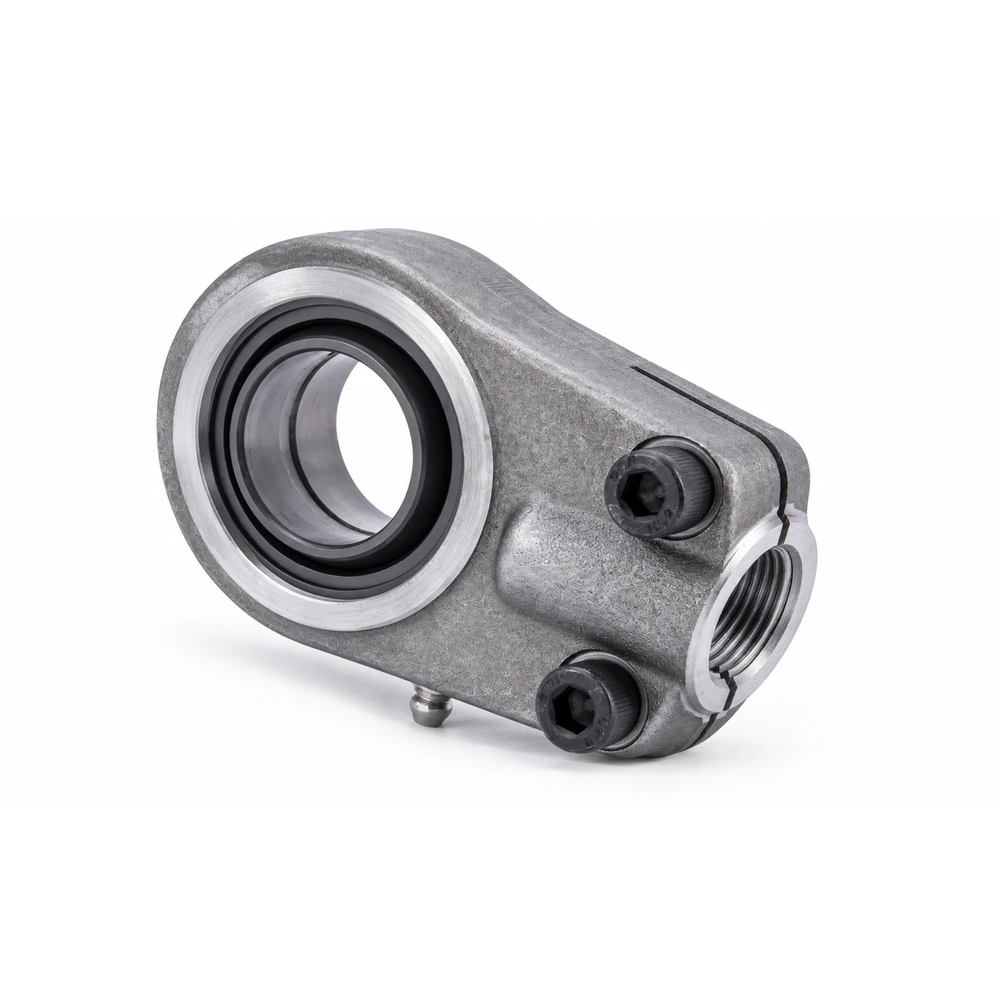
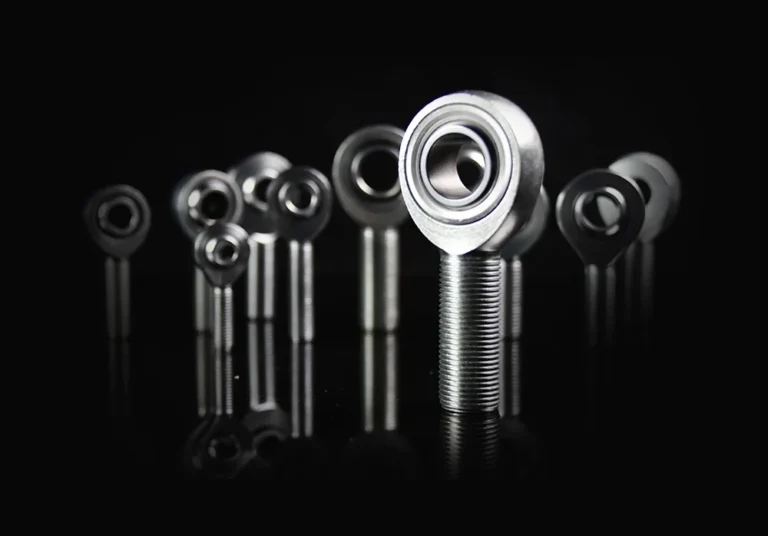
Versus a rod end: a rod end is this bearing plus an integral threaded housing, so it screws straight into a linkage. A spherical bearing is the element on its own and needs a separate housing or mount — which also means it can be replaced independently of the linkage around it.

You will see the same part called a spherical plain bearing, a spherical bushing or a spherical uniball bearing depending on the industry. They all describe this component.

Press-Fit Bearing Element
Use a spherical plain bearing when the joint has to live inside your own machined housing, arm or bracket rather than a threaded rod-end body. For weld-in housings see uniball cups.
Two Fundamentally Different Races
Metal-to-metal (COM, COMA-M, GEZ) carries the highest load and tolerates heat, but wants periodic lubrication. PTFE-lined (COM-T, GEC, SLB, WPB-T, YPB-T) runs maintenance-free at low friction, trading some peak load and temperature.
Material & Liner Range
Commercial inch, metric, stainless, PTFE-lined, fractured-race and high-misalignment families, so the bearing can match both the environment and the mounting design rather than forcing a compromise.

Why Source From Us

Why Source Spherical Bearings From SYZ?

The commercial terms matter as much as the spec sheet when you are qualifying a new bearing supplier. Here is where we stand.

Service Life
Outstanding wear and fatigue resistance for long-term reliability under heavy-duty working conditions.
Value Proposition
Cross-reference support for COM, GE, COM-SS and other bearing families, with dimensions and part-level data shown on the relevant spec page.
MOQ — 1 Piece
MOQ 1 piece for samples; production MOQ is typically 100–300 pcs per item. Confirm the current quantity and schedule in your quotation.
Shipping Terms
DDP by air or sea, covering major EU/US markets with full customs handling and door-to-door delivery.
Customization
OEM/ODM from drawings or samples — special sizes, materials and performance specifications.

Product Offerings

Series Breakdown

All ten series at a glance, with the two numbers that actually decide the selection: static radial load and misalignment angle. Click a series to open its full size chart.

SeriesBallRace / LinerStdBoreMis. AngleStatic Radial LoadNotable
COM(-T) / HCOM(-T)52100 chrome, hard chrome platedAlloy steel, oil coated · PTFE on -TInch0.165″ – 2.000″8° – 13.5°3,200 – 217,060 lbMetal-to-metal commercial workhorse; lube groove & hole; zinc race optional
COMA-M(T)52100 chrome, hard chrome platedAlloy steel, oil coated · PTFE on -MTMetric3 – 30 mm12.5° – 17°See spec pageMetric metal-to-metal commercial; OD 12 – 66 mm; zinc race optional
COM-SS440C stainless, hard chrome platedStainless steel, Teflon linedInch0.165″ – 1.000″8° – 13.5°3,200 – 83,000 lbFull corrosion resistance; race in 420 / 304 / 316 / 17-4 SS optional
FKS(-T)52100 chrome, hard chrome platedHeat-treated chromoly race · PTFE on -TInchQuoted per project—Quoted per projectThe chromoly-race option for COM geometry — high-impact and high-temperature duty
GEC52100 chromeCarbon steel, Teflon lined, zinc optionalMetric4 – 30 mm6° – 16°See spec pageCompact cylindrical outer race; OD 12 – 47 mm
GEGC52100 chromeCarbon steel, Teflon lined, zinc optionalMetric4 – 30 mmSee spec pageSee spec pageWider race than GEC for higher load in the same bore
GEZ (-2RS)52100, protective coated52100, protective coated · greaseable · 2RS seals optionalInch0.500″ – 5.984″1° – 6°9,217 – 1,146,400 lbFractured outer race, easy assembly; the highest-load series by a wide margin
SLB52100 (440C optional)Alloy steel + reinforced nylon race with PTFEInch0.500″ – 2.000″8.5° – 10°13,257 – 217,060 lbLoad-slot design; self-lubricating, maintenance-free; stainless / zinc options
WPB-T52100 (stainless optional)Alloy steel, Teflon lined, oil coatedInch0.250″ – 1.000″6° – 15°5,500 – 104,000 lbWide race for higher load and angle in a small bore
WPB-TG52100 (stainless optional)Alloy steel, Teflon lined, oil coatedInch0.250″ – 1.000″6° – 15°5,500 – 104,000 lbSame as WPB-T plus a staking groove for press-fit retention
YPB(-T)52100 (440C optional)Alloy steel, oil coated, Teflon linedInch0.250″ – 0.750″18° – 24°7,560 – 53,507 lbExtra-wide race; the widest articulation in the range

Static radial load and misalignment angle are the min–max across each series’ published size chart — the value for your specific bore is on the spec page. Metric series (COMA-M, GEC, GEGC) publish load in different units on their charts, so we have left those to the spec pages rather than converting. All chrome/alloy series use a 52100 bearing-steel ball unless noted; COM-SS uses 440C stainless.
Series at a Glance

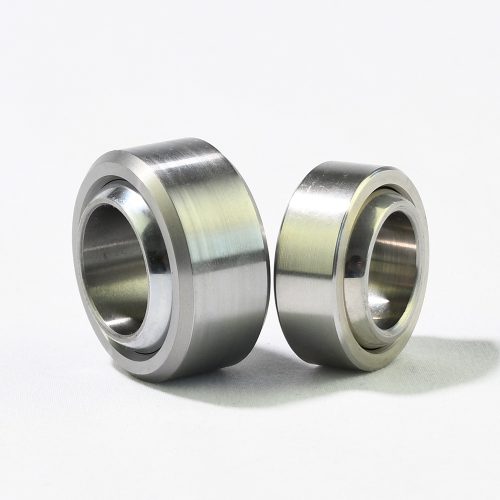
COM series metal-to-metal spherical bearing
COM Spherical Plain Bearing Series
Metal to metal, with lubrication holes and grooves in the race. The default general-industrial bearing and the widest size range we make.
Inch & metric · greaseable
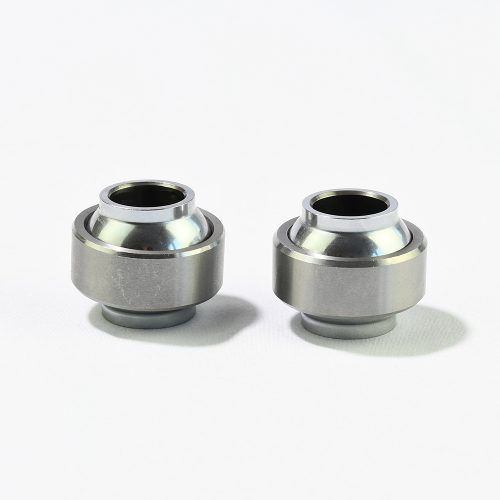
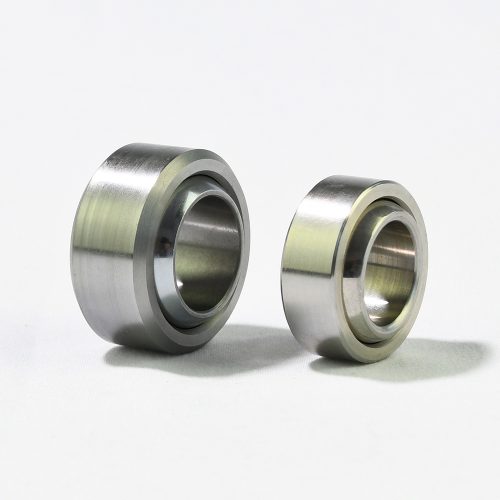
COM-T series PTFE-lined spherical bearing
COM-T Spherical Plain Bearing Series
The same body with a Teflon liner — “-T” means PTFE. Maintenance-free where regreasing access is limited.
Inch & metric · PTFE lined
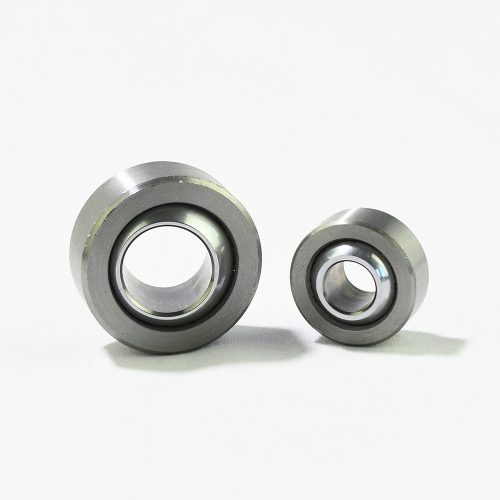
COM-SS stainless steel spherical bearing
COM-SS Spherical Plain Bearing Series
304/316 stainless race with a 440C stainless ball, 17-4 PH optional. Marine, washdown and chemical service.
Inch · Teflon lined
SLB series self-lubricating spherical bearing
SLB Spherical Plain Bearing Series
Load-slot construction with a reinforced nylon race and PTFE. Self-lubricating; stainless steel optional.
Inch · maintenance-free
YPB-T high misalignment spherical bearing
YPB-T Spherical Plain Bearing Series
High misalignment — up to 24°, the widest articulation in the range. Teflon lined; stainless optional.
Inch · 18° – 24°
WPB-T and WPB-TG wide series spherical bearings
WPB-T / -TG Spherical Plain Bearing Series
Wide series; “TG” means staking groove for press-fit retention. Teflon lined; stainless optional.
Inch · 6° – 15°
GEC series metric self-lubricating spherical bearing
GEC / GEGC Spherical Plain Bearing Series
Metric carbon-steel Teflon-lined. GEC has a compact cylindrical outer race; GEGC is wider for higher load.
Metric · 4 – 30 mm bore
GEZ 2RS heavy duty sealed spherical bearing
GEZ / -2RS Spherical Plain Bearing Series
Heavy duty, 52100 race and ball. “2RS” adds double rubber seals for sealed-for-life operation.
Inch · to 1,146,400 lb
FKS series chromoly race spherical bearing
FKS / -T Spherical Plain Bearing Series
COM geometry with a heat-treated chromoly race — the option for high-impact and high-temperature duty. “-T” means Teflon liner.
Inch · quoted per project
Uniball welding cup spherical bearing cup
Uniball Cup for Spherical Plain Bearings
The weld-in housing that turns a spherical bearing into a mounted joint. 4130 chromoly, stainless optional.
Inch & metric

Liner Technology

Metal-to-Metal vs PTFE-Lined Spherical Bearings

This is the first decision in the selection, and it is not a quality ranking — the two do genuinely different jobs.

Metal-to-Metal

A hardened steel ball running directly on a steel race. Highest static load capacity, highest temperature tolerance, and it shrugs off shock loading that would cold-flow a polymer liner. In exchange it wants lubrication — which is why the COM series race carries a lubrication groove and hole so you can get grease to the contact surface in service.

Specify metal-to-metal when the joint is greaseable and accessible, when peak load matters more than friction, or when the operating temperature is beyond what PTFE will take. Series: COM, COMA-M, GEZ, FKS.

PTFE-Lined (Self-Lubricating)

A PTFE liner bonded into the race eliminates metal-on-metal contact. The joint runs maintenance-free at low friction and damps vibration instead of transmitting it — which is exactly what you want in a sealed assembly, a high-cycle linkage, or anywhere a grease gun will never reach.

Add “-T” to a part number for the Teflon-lined variant. Series: COM-T, COM-SS, GEC/GEGC, SLB, WPB-T, YPB-T.

Our PTFE Liner System core of the GE and COM series design

  • Friction coefficient≤ 0.05 (dry friction)
  • Operating temperature−50 °C to +200 °C
  • LubricationSelf-lubricating, no grease needed
  • DampingShock absorption for damper systems
  • Wear compensationMicro-elastic recovery, better than bronze

Figures are for the SYZ PTFE liner system. Confirm against your duty cycle and temperature before committing on a safety-critical joint.

PTFE Liner vs Bronze Liner

MetricPTFE LinerBronze Liner
Maintenance cycleMaintenance-freeRequires regular greasing
Startup torqueLowHigher
Suitable environmentClean / dusty / humidWell-lubricated installations
Cost-performanceHighMedium
PTFE liner construction in a spherical plain bearing
PTFE liner bonded into the race — the layer that removes metal-on-metal contact.

Engineering Guide

Selection Guide

Five decisions, in this order. The series table above answers all five.

01
Confirm Mounting Method
Press-fit into a machined pocket → spherical bearing. Threaded rod or tube → a rod end instead. Weld-in housing → a uniball cup plus a bearing.
02
Specify Bore × OD × Width
Bore to your pin or bolt, OD to the housing pocket. Then check the static radial load in the table exceeds your calculated load with a safety factor.
03
Match the Environment
Dry indoor → COM / COMA-M. Corrosive or marine → COM-SS. Dirty and abrasive → SLB. High temperature or heavy impact → FKS chromoly race.
04
Liner & Maintenance
Greaseable metal-to-metal (COM, GEZ) vs maintenance-free PTFE (COM-T, SLB, GEC) vs sealed for life (GEZ-2RS). Decide by whether a grease gun can reach the joint in service.
05
Misalignment Angle
Wide articulation → WPB-T (to 15°) or YPB-T (to 24°). Standard joints → COM, GEC, SLB at 8–13.5°. Note GEZ trades angle for load — 1° to 6° only.
Not Sure Which Series?
Send the bore, the housing pocket dimension, your load and the environment — we will come back with a part number and the nearest alternatives.

Customization Services

Material & Surface Treatment Options

Beyond the standard series, ball, race, liner and finish are all specifiable — which is usually how a bearing gets qualified into an OEM program.

Material Options

ComponentOptionCharacteristic
BallGCr15 / 100Cr6 bearing steelHigh hardness (HRC 58–64), quenched, high strength, long fatigue life
BallStainless AISI 440C / 304 / 316Strong corrosion resistance for marine and chemical environments
BallChromoly steel (optional)High-temperature, high-impact applications
RaceLow carbon steel + surface hardeningIntegrally forged; suits high loads and shock loads
RaceStainless steel / copper alloyAnti-corrosion or thermally conductive solutions
LinerPTFE compositeSelf-lubricating, maintenance-free, low friction coefficient
LinerPTFE + bronze mesh compositeEnhanced support for high-frequency, small-angle vibration
LinerCopper alloyHigh shock loads, but requires lubrication
LinerPOM plastic (custom)Cost-effective option for light-load systems

Surface Treatment Options

TreatmentApplied ToPurpose
Phosphate coatingRace / ballImproves wear and corrosion resistance in general industrial environments
Zinc plating (white / yellow)RaceAesthetic finish, enhanced rust protection, suits long-term storage
Nickel / chrome platingBall / raceStronger corrosion resistance for humid, hot or chemical environments
Stainless steel polishingAll partsHigh-cleanliness, food-grade or marine environments
Oxidation / anodizingAluminum housingsMultiple colours; enhances identity and aesthetics
Spherical bearing material options
Spherical bearing surface treatment options
OEM / ODM from drawings or samples. Special sizes, materials and performance specifications are routine here — send the drawing or the bearing you are replacing. See services for the full customization workflow.

Industries

Serving Global Industries with Reliable Bearing Solutions

Eight sectors, and the specific joints in each where a spherical plain bearing is the right answer.

Motorcycle
Application
  • Swing arm pivot
  • Shock eye mounts, upper & lower
  • Steering stem joint
  • Adjustable linkage mechanisms
Handles frequent vibration and impact loads in a compact, robust construction.
ATV / UTV
Application
  • Rear suspension pivot
  • Shock absorber connection points
  • Steering linkage joints
  • Adjustable rod assemblies
Built to withstand off-road stress, constant movement and high impact in rugged terrain.
Automotive / Motorsports
Application
  • Suspension — control arm, trailing arm, sway bar link
  • Steering linkage — tie rod end, steering rack joint
  • Shock absorber mounts
  • Transmission & drivetrain connection points
  • Race car chassis and adjustable components
Withstands multi-directional load, absorbs vibration and angular misalignment, excellent wear resistance.
Construction & Heavy Machinery
Application
  • Boom linkage of excavators and loaders
  • Hydraulic cylinder ends
  • Linkage mechanisms for bulldozers, cranes and wheel loaders
Built for heavy impact loads; resistant to dust, dirt and corrosion — where GEZ earns its load rating.
Aerospace / Defense
Application
  • Landing gear joints
  • Flight control linkages
  • Servo mechanisms and mounting systems
Lightweight, high strength, temperature and corrosion resistant.
Agricultural Equipment
Application
  • Tractor steering links
  • Harvester linkages and suspension arm joints
  • Sprayer and plough swing connections
Designed for muddy or wet environments; strong and wear-resistant. See agricultural applications.
Industrial Equipment
Application
  • Robotic arm joints and automation mechanisms
  • Swing components in packaging or conveyor systems
  • Press machine and mould opening/closing linkages
  • Support points in textile and printing machines
High precision, low friction and smooth oscillation under small angular movement. See industrial automation.
Energy & Industrial Systems
Application
  • Wind turbine yaw and pitch systems
  • Valve actuator linkages in petrochemical equipment
  • Natural gas valve control rods
  • Seismic joints in building structures
Suits heavy loads, long-term operation and harsh or chemically active environments.

FAQ

Frequently Asked Questions

What is the difference between a spherical plain bearing and a rod end?
A spherical bearing is the ball-in-race element only; a rod end is that same bearing inside a housing with a threaded shank or bore. Bearings press into a housing you provide; rod ends thread directly into a mating part. SYZ manufactures both.
What is a metal-to-metal spherical bearing, and when should I use one?
A hardened steel ball running directly on a steel race, with no polymer liner between them. It gives the highest static load capacity and the widest temperature range and tolerates shock loading that would cold-flow PTFE, but it needs lubrication, which is why the COM race carries a grease groove and hole. Choose it when the joint is greaseable and accessible and peak load matters more than friction. SYZ metal-to-metal series are COM(-T), COMA-M, GEZ and FKS.
What does PTFE-lined or Teflon-lined mean?
A PTFE liner bonded to the race gives a low-friction, self-lubricating, maintenance-free surface, with a friction coefficient of 0.05 or lower dry and an operating range of minus 50 to plus 200 degrees Celsius. The trade-off against metal-to-metal is lower peak load and temperature. Add -T to a part number for the lined variant.
What is a fractured-race bearing (GEZ)?
Its outer race is intentionally split so the ball assembles in and the ring then closes, giving an almost uninterrupted spherical running surface without staking. That construction is why GEZ carries by far the highest static loads in the range, up to 1,146,400 lb, at the cost of a narrow misalignment angle of 1 to 6 degrees.
What is the GEZ 2RS option?
Two rubber lip seals, one per side, that keep factory grease in and contaminants out for sealed-for-life operation with no regreasing. Add -2RS to the suffix, for example GEZ38ES-2RS.
When should I use COM-SS stainless?
When the bearing sees saltwater, chemicals, washdown or outdoor weather. COM-SS pairs a 440C stainless ball with a stainless race and a Teflon liner; the race can be specified in 420, 304, 316 or 17-4 stainless.
How do I size a spherical bearing?
By bore, outside diameter and width: bore to your pin or bolt, outside diameter to the housing pocket. Then confirm the static radial load on the spec page exceeds your calculated load with a safety factor, and that the misalignment angle covers your worst-case articulation.
How can I estimate the service life of a bearing?
Life in oscillation cycles depends on load, oscillation angle, frequency and temperature. Precise prediction is complex, but the standard industry form gives a useful estimate: G = b1 x b2 x b3 x (C/P)^k x 10^6 cycles, where G is life in cycles, C is the dynamic load rating, P the equivalent dynamic load, the b terms are correction factors for temperature and lubrication, and k is a material exponent.
Are your spherical bearings suitable for racing suspension systems?
Yes. The GE and COM series are widely used in racing suspension assemblies, lower control arms, linkages and stabiliser bar connections. The low friction coefficient of 0.05 or lower and high responsiveness suit high-speed dynamic motion systems. SYZ has provided OEM support to racing suspension brands across Europe and the US, including motorsport tuners, rally car builders and kart manufacturers.
Do your bearings make noise under high-speed compression and rebound?
The PTFE self-lubricating liner eliminates metal-on-metal contact, which is what causes dry-friction noise, so operation stays smooth and quiet through compression-rebound cycles. SYZ internal testing showed no abnormal noise over one million cycles.
How do you keep quality consistent across production batches?
Raw material batch traceability with certificates of compliance for all steel and PTFE inputs; statistical process control during production with real-time monitoring of key parameters such as grinding dimensions against Cpk targets; standardised inspection by uniformly trained inspectors using calibrated equipment such as CMMs and profilometers; and process control disciplines built into our ISO 9001:2015 quality management system, emphasising prevention over detection. All products undergo 100% inspection before leaving the factory.
Can I order a single piece to evaluate?
Yes. Minimum order quantity is 1 piece for samples. Shipping is DDP by air or sea to major EU and US markets with full customs handling and door-to-door delivery.

Beyond the Part

Engineering, OEM & Delivery Support

From concept to container, the technical and commercial support that lets a bearing drop straight into your product.

Engineering & Design Support

Accelerate development with the technical data you need to integrate and validate with confidence.

  • PDF datasheets for every series and size
  • 3D STEP files for instant CAD integration
  • 2D CAD drawings (DWG, DXF) for detailing
OEM / ODM Customization

From concept to global delivery, in five stages.

  • Requirement analysis — application, performance metrics, target cost
  • Design & 3D modeling — ideas into CAD drawings and models
  • Prototyping & validation — rapid samples, fit and function testing
  • Tooling & mass production — approved sample to volume
  • Quality assurance — inspection at every stage
Packaging & Services

Products that arrive safe, secure and ready for your market.

  • White-label box packaging — clean, brand-ready
  • Multi-language manuals for global end users
  • Tailored logistics with reliable worldwide support
SYZ Rod Ends quality certifications including ISO 9001:2015

About SYZ Rod Ends

Precision Manufacturing Since 1999

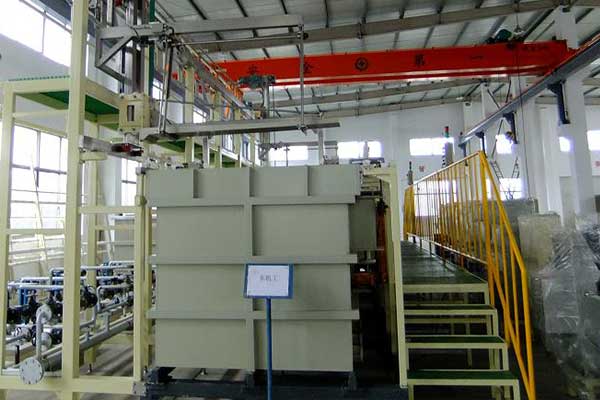
We specialise in durable, high-performance custom metal components for demanding industrial and automotive applications. Our own facility in Ningbo, together with two closely-affiliated production bases in Jiangsu, runs advanced CNC machining centres, heat-treatment lines and automated inspection systems, so every part meets strict performance, reliability and safety standards under ISO 9001:2015 certification (Cert. No. 11425Q49262R0S).
Also From SYZ

Engineering Tools

Calculators for This Product Family

Check pressure-velocity limits for plain bearing selection.
Estimate press-fit interference for a bearing and housing.
Calculate available bonus tolerance for a feature of size.

Buyer Guides

Spherical Bearing Guides

The ball-in-race element ready to press-fit into your own housing or clevis.

Factory Direct

More Details? Get a Reply in 24 Hours

Tell us the bore, housing pocket, load and environment — or just the part number you are replacing. We respond within 24 hours with pricing and lead time.

We respond within 24 hours · MOQ 1 piece for samples · DDP air or sea

Request a Quote

Please submit the form or email [email protected]

🍪
We Use Cookies