Executive Summary
Global container shipping is under severe strain, with port congestion reaching a record 4.3 million TEUs and trans-Pacific freight rates spiking to two-year highs, including $10,000 per 40-ft container on the India-US lane. This week's intelligence shows that the convergence of tariff-driven front-loading, typhoon disruptions in China, and vessel redeployments is creating a logistics bottleneck that directly impacts industrial component buyers, OEMs, and distributors worldwide. Concurrently, raw material markets are signaling new cost pressures: Toyota and Nippon Steel have agreed on the first steel price hike in four years, aluminum billet processing fees in China have plunged below cost lines, and rare earth supply chain diversification efforts are accelerating. Meanwhile, the US dollar's strength, driven by hawkish Fed signals, is adding another layer of complexity to global procurement strategies. This briefing analyzes these interconnected developments and their implications for the industrial parts ecosystem.
Record Port Congestion and the $10,000 Container

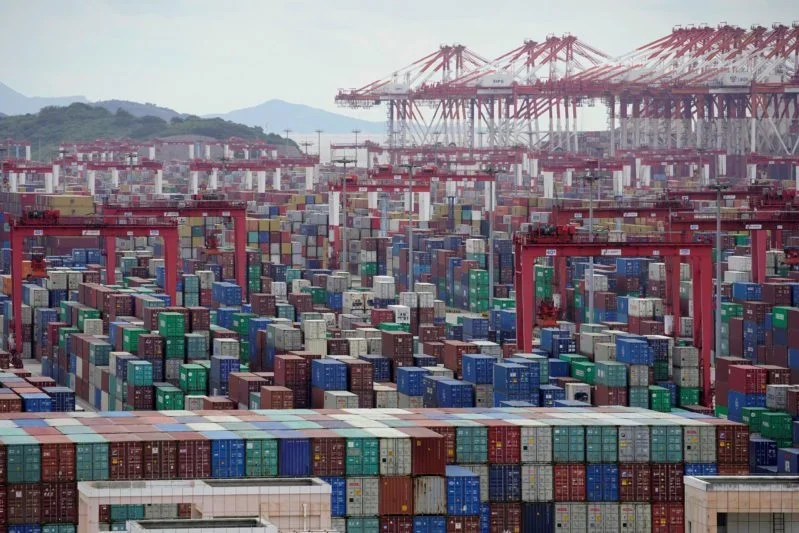
The global logistics network is facing a critical stress test. According to data from The Maritime Executive and Marine Insight, global port congestion has reached an unprecedented 4.3 million TEUs of vessel capacity waiting to berth, surpassing pandemic-era peaks. This is not merely a statistic; it represents weeks of delayed shipments, idle inventory, and disrupted production schedules for manufacturers across every sector. TradeWinds reports that container markets are being buoyed by this congestion, which is paradoxically supporting freight rates even as demand fluctuates.
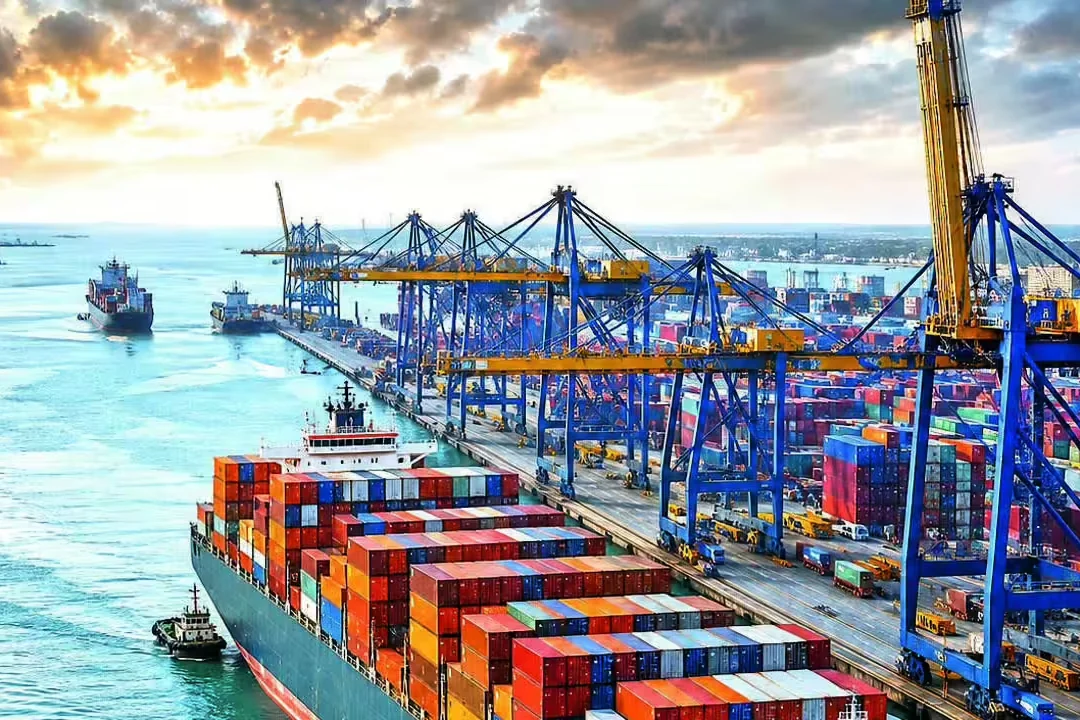
The impact is most acute on the trans-Pacific and Asia-Europe trade lanes. The Drewry World Container Index edged lower this week on a slight decline in trans-Pacific spot rates, but this masks a more volatile reality. The Times of India reports that ocean freight rates to the US have hit $10,000 per 40-foot container for Indian exporters, driven by vessel shortages and redeployments. This is a staggering cost increase that forces component buyers to re-evaluate inventory holding strategies and supplier relationships. The root causes are multifaceted: carriers are redeploying vessels to more profitable routes, while typhoon Saudel has piled additional pressure on China’s already congested ports, as noted by WWD.
For the industrial parts ecosystem, this means longer lead times and higher landed costs are becoming the new baseline. The era of just-in-time, low-inventory manufacturing is being tested by a just-in-case reality. As Kuehne+Nagel aptly puts it, port congestion is set to remain a “moving target” for shippers. This is not a temporary blip but a structural challenge that requires manufacturers and distributors to build more resilience into their supply chains, potentially through nearshoring, supplier diversification, or increased safety stock—all of which have their own cost implications.
Steel’s New Pricing Era: Toyota-Nippon Deal and Tariff Turbulence

In a significant development for raw material costs, Toyota and Nippon Steel have agreed on a steel price increase effective October 2026, marking the first such hike in four years, according to The Japan News and SteelRadar. This bilateral agreement between Japan’s largest automaker and its primary steel supplier is a bellwether for the broader industrial market. It signals that steel producers are successfully passing on higher input costs—including coking coal, energy, and logistics—to downstream manufacturers. For component buyers, this foreshadows potential price increases across a wide range of steel-intensive parts, from fasteners and bearings to heavy equipment structures.
Adding to the complexity is the ongoing trade policy turbulence. The US-Canada trade war continues to cast a long shadow, with Al Jazeera reporting fears of a Canadian recession and potential job losses. The uncertainty surrounding the USMCA is having a chilling effect on investment decisions. Honda has explicitly stated it may not build a new North American plant without USMCA extension, a sentiment echoed by Jalopnik. This is a critical signal for the industrial sector: prolonged trade uncertainty is delaying capital expenditure in manufacturing capacity, which will have downstream effects on demand for industrial machinery and components.
Meanwhile, US construction equipment OEMs are claiming millions more in tariff refunds, but Equipment World notes that “troubles remain.” The Section 232 tariffs on steel and aluminum, while providing some protection to domestic producers, are creating a patchwork of costs and compliance burdens for OEMs that rely on global supply chains. The recent imposition of Section 232 tariffs on drones and their parts, reported by Wiley Rein, further illustrates the expanding scope of trade measures affecting advanced manufacturing inputs.
Rare Earths: The Race to Break China’s Grip Intensifies
The strategic imperative to secure rare earth supply chains is moving from policy papers to concrete investments. CNBC’s inside look at Lynas Rare Earths highlights the company’s efforts to build supply chains beyond China, while Mining Weekly reports that US-focused recycler Cyclic Materials has secured another $75 million in funding for its plant rollout. These developments are critical for manufacturers of electric motors, wind turbines, and advanced electronics, who are heavily reliant on Chinese-processed rare earth elements.
However, the road to diversification is long and fraught with challenges. A South China Morning Post analysis warns that Brazil’s rare earths will not break China’s magnet grip at least until 2032. This is a sobering reality check. While new mines and processing facilities are being planned, the complex, multi-stage supply chain for permanent magnets remains deeply entrenched in China. The Guardian’s editorial on securing essential supply chains underscores the geopolitical and economic importance of this issue. For engineers and component buyers, this means that price volatility and supply security for rare earth-based components—such as servo motors and precision actuators—will remain a persistent risk. The recent cost pressures at Lynas, noted by Seeking Alpha, also indicate that non-Chinese production is currently more expensive, a cost that will inevitably be passed down the supply chain.
Aluminum Market Signals: Processing Fees Plunge in China

In China, the world’s largest aluminum market, a peculiar dynamic is unfolding. Shanghai Metals Market (SMM) reports that aluminum billet processing fees have plunged below the cost line in the Foshan market, even as the “September peak season” approaches. This suggests an oversupply of processing capacity relative to demand, leading to intense competition among extruders. While primary aluminum prices have been supported by demand from data centers and grid infrastructure, the downstream processing sector is facing margin compression.
This divergence has significant implications. For buyers of aluminum extrusions and components, it could mean more competitive pricing in the short term as processors fight for market share. However, it is an unsustainable situation. If processing fees remain below cost, capacity rationalization is inevitable, which could lead to supply disruptions and price spikes in the future. The broader trend of rising copper prices, driven by data center demand as reported by Yahoo Entertainment, further complicates the cost picture for electrical components and wiring. For industrial buyers, this is a reminder that raw material markets are not monolithic; different stages of the value chain can experience vastly different pricing pressures.
AI Infrastructure: The Unstoppable Demand for Power and Components

The AI boom continues to be the primary engine of industrial demand, particularly for energy infrastructure and high-tech manufacturing. Nvidia’s blockbuster Q2 results, with revenue topping $96 billion, have sent shockwaves through the market, reinforcing the scale of investment in AI data centers. This is not just a tech story; it is a massive industrial story. The Atlanta Journal-Constitution reports that Nvidia’s revenue more than doubled year-over-year, a clear indicator of sustained capital expenditure.
This spending is translating directly into demand for physical infrastructure. Georgia Power has won approval for a 3.2-GW power deal to supply an OpenAI project, as reported by Yahoo Entertainment. This single project represents an enormous demand for transformers, switchgear, busbars, and a host of other electrical components. The laminated busbar market is projected to grow to $2.13 billion by 2035, according to MarketsandMarkets, a niche but telling example of how AI is creating demand for specialized components. Hitachi Energy’s $300 million investment to expand grid infrastructure manufacturing capacity in East China, reported by TD World, is a direct response to this global demand surge.
For the industrial parts ecosystem, this means sustained, high-level demand for components used in power generation, transmission, and cooling systems. It also means that supply chains for these components will remain tight, with long lead times for specialized electrical equipment. The AI build-out is not just a software phenomenon; it is a hardware and infrastructure mega-project that will shape industrial demand for years to come.
Right to Repair: From State Laws to Federal Push

The “Right to Repair” movement is gaining significant legislative momentum, with implications for the aftermarket parts industry. Techdirt reports that state laws continue to surge, but enforcement remains a challenge. This week, Texas’s new Right to Repair law came into force, as noted by PIRG, and advocates are now turning their attention to Congress following successes in states like Washington, according to Cascadia Daily News. The movement has even reached the agricultural sector, with farmers winning the right to repair their own John Deere tractors, though more reform is sought.
This is a double-edged sword for the industrial parts market. On one hand, it empowers end-users and independent repair shops, potentially expanding the market for aftermarket components and reducing the monopoly of OEMs on repair parts. On the other hand, it raises concerns about quality, safety, and liability, particularly for complex machinery. The debate is playing out in real-time, with opposition in St. Paul, Minnesota, arguing that “Right to Repair is wrong,” as reported by the Pioneer Press. For distributors and manufacturers of industrial parts, this legislative trend represents both an opportunity and a risk, requiring careful navigation of evolving legal standards and market dynamics.
Currency Crosscurrents: Dollar Strength and Global Sourcing

The US dollar index rallied to a two-week high this week, driven by hawkish comments from Fed Chair Warsh, who signaled a potential September rate hike. As reported by FXStreet and Barchart, this dollar strength is having a broad impact on commodity prices and global trade dynamics. A stronger dollar makes US exports more expensive and imports cheaper, which can affect the competitiveness of US manufacturers. For global component buyers, a strong dollar can be a double-edged sword: it lowers the cost of imports from Asia and Europe but can also dampen demand from emerging markets where currencies are weakening.
The People’s Bank of China (PBOC) set the USD/CNY reference rate at 6.7811, significantly weaker than the estimated 6.7208, according to investingLive. This suggests a deliberate policy to manage the yuan’s value amid trade tensions and capital flows. For companies sourcing from China, this currency movement can provide some cost relief, offsetting some of the tariff and freight cost increases. However, it also signals underlying economic fragility. The interplay between the dollar, the yuan, and other major currencies is a critical variable in global supply chain economics, influencing everything from raw material costs to the final price of finished components.
Global Manufacturing: Divergent Paths in India, Europe, and Africa

Regional manufacturing data paints a picture of divergence. India’s manufacturing output growth slowed to 7.3% in July, easing from a two-year high, according to Moomoo and TradingView. While still robust, this moderation suggests that the initial post-pandemic rebound is cooling. However, India’s long-term trajectory remains positive, with government officials actively courting Japanese investment and companies like Waaree Energies consolidating manufacturing operations and upgrading plants in Arizona, as reported by BusinessLine and Sahi. The country is positioning itself as a key alternative manufacturing hub in the global supply chain reshuffling.
In Europe, the EU Industrial Production Index dipped to 100.2 in Q2 2026, according to Eurostat data cited by IndexBox. This stagnation reflects the ongoing energy crisis, high inflation, and the structural challenges facing European manufacturing. A China Academy analysis provocatively asks “How Shareholder Returns Undid European Manufacturing,” pointing to a focus on short-term financial engineering over long-term industrial investment. This contrasts sharply with the state-backed industrial strategies of China and the reshoring incentives in the US.
Africa presents a different set of challenges and opportunities. South African President Cyril Ramaphosa is urging the use of the country’s infrastructure plan to rebuild its industrial base, as reported by Yieh Corp. Meanwhile, new players like India, Gulf states, and Turkey are emerging in Africa’s infrastructure race, according to Capital FM Africa. The continent’s infrastructure deficit is immense, but so is its potential for growth. For industrial component manufacturers, Africa represents a long-term opportunity, but one that requires patience and an understanding of local conditions.
Sources
- The Maritime Executive – Port Congestion Sets New Record at 4.3M TEU in Stranded Volume
- The Times of India – Ocean freight rates to US hit $10,000
- TradeWinds News – Container markets buoyed as port congestion tops pandemic-era peaks
- The Japan News – Toyota, Nippon Steel Agree on Steel Price Hike from Oct.
- Equipment World – Construction Equipment OEMs Claim Millions More in Tariff Refunds, But Troubles Remain
- CNBC – Inside Lynas Rare Earths and the race to build supply chains beyond China
- South China Morning Post – Why Brazil’s rare earths will not break China’s magnet grip at least until 2032
- Shanghai Metals Market – Aluminum Billet Processing Fees Plunge Below Cost Line; Foshan Market Consolidates Weakly at Lows
- The Atlanta Journal-Constitution – Strong AI chip demand fuels Nvidia's Q2 results well beyond Wall Street's expectations
- Yahoo Entertainment – Georgia Power Wins Approval for 3.2-GW OpenAI Power Deal
- Techdirt – ‘Right To Repair’ State Laws Continue To Surge, But Enforcement Remains Nonexistent
- FXStreet – US Dollar Index rallies as Warsh puts September rate hike back on the table
- investingLive – PBOC sets USD/CNY reference rate for today at 6.7811
- Moomoo – India's Manufacturing Output Growth Slows to 7.3% in July
- IndexBox – Eurostat: EU Industrial Production Index Dips to 100.2 in Q2 2026
- Al Jazeera English – With the US and Canada locked in a trade war, fears of a recession lurk