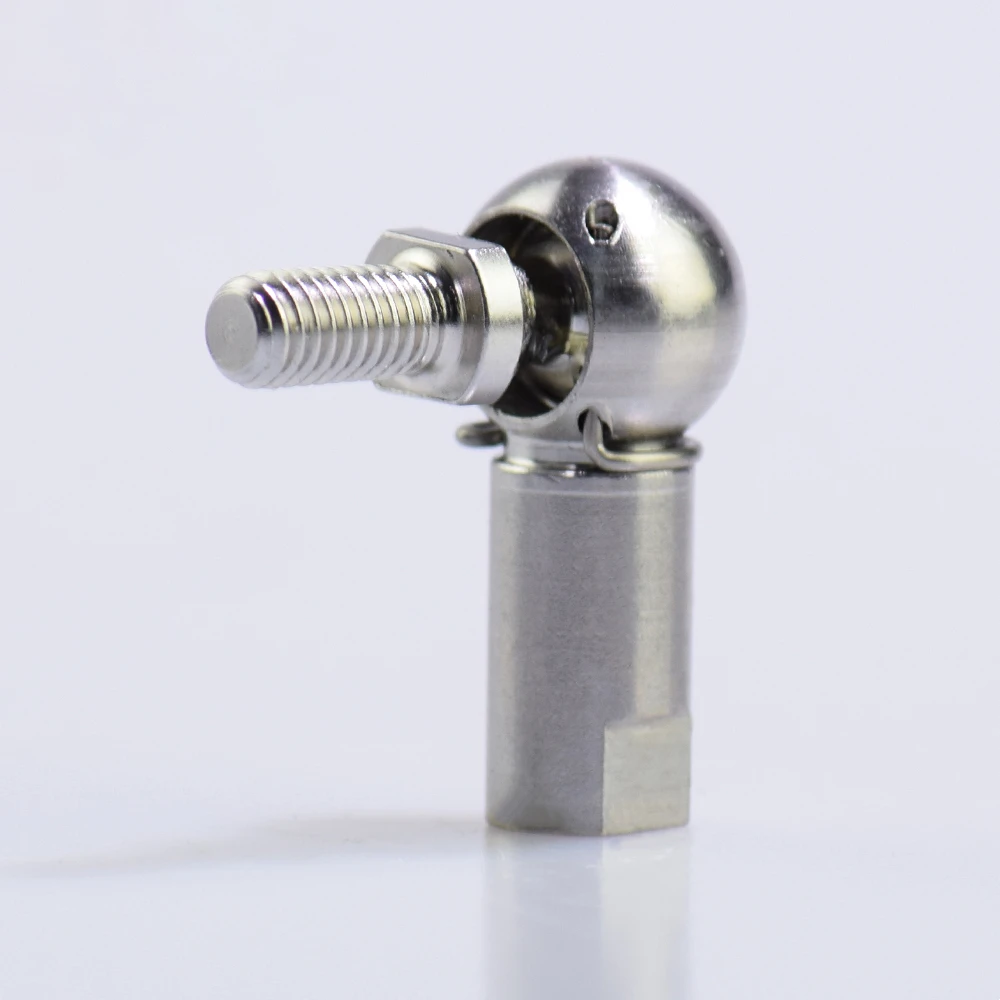
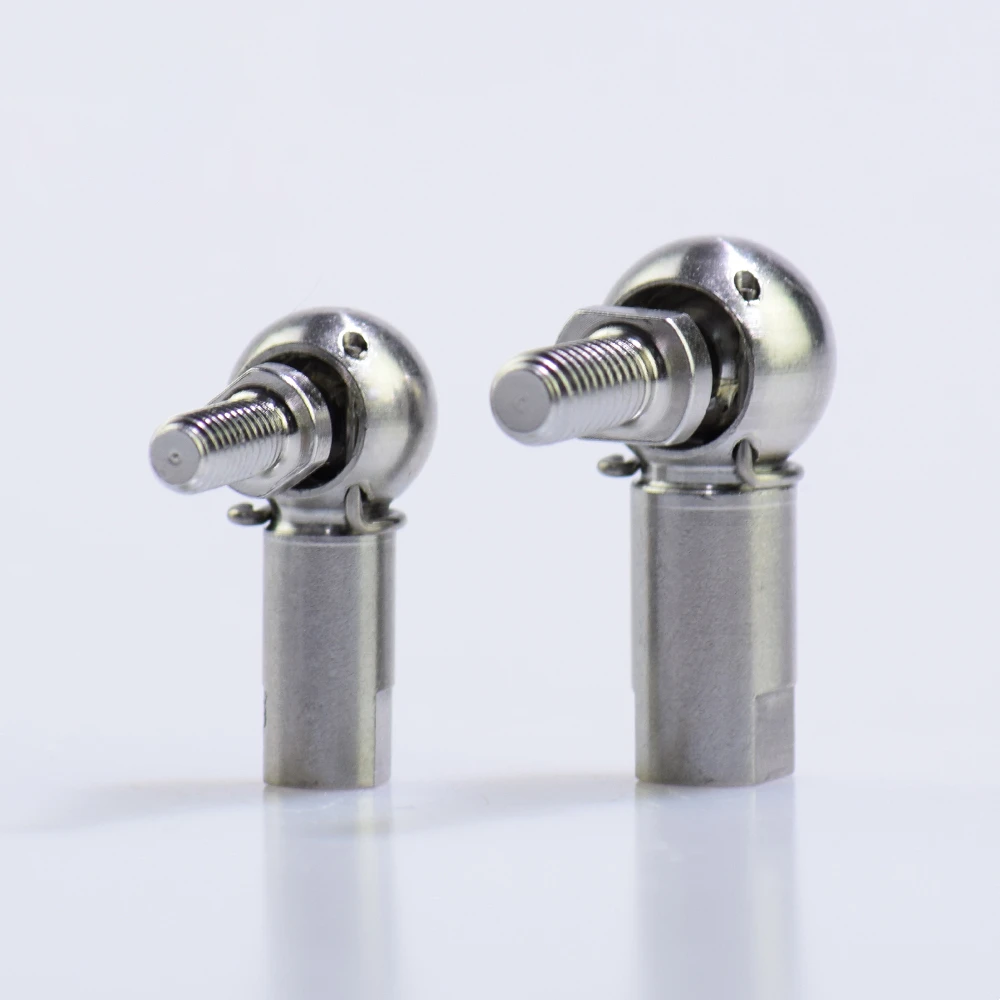
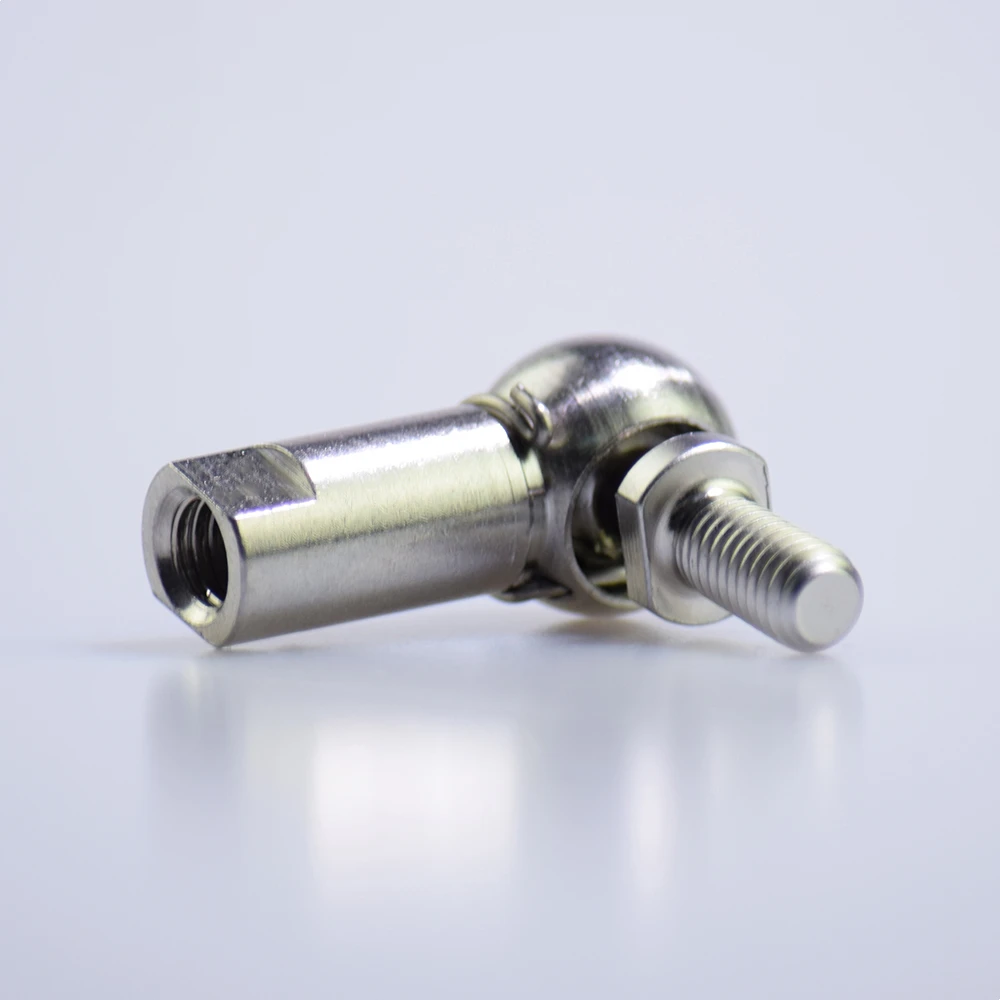
Ball Ø 16 / M12X1.75CSM12 M12X1.75 / M12X1.75 Carbon Steel Ball Joint (Metric)
BALL JOINTS CS Product Overview
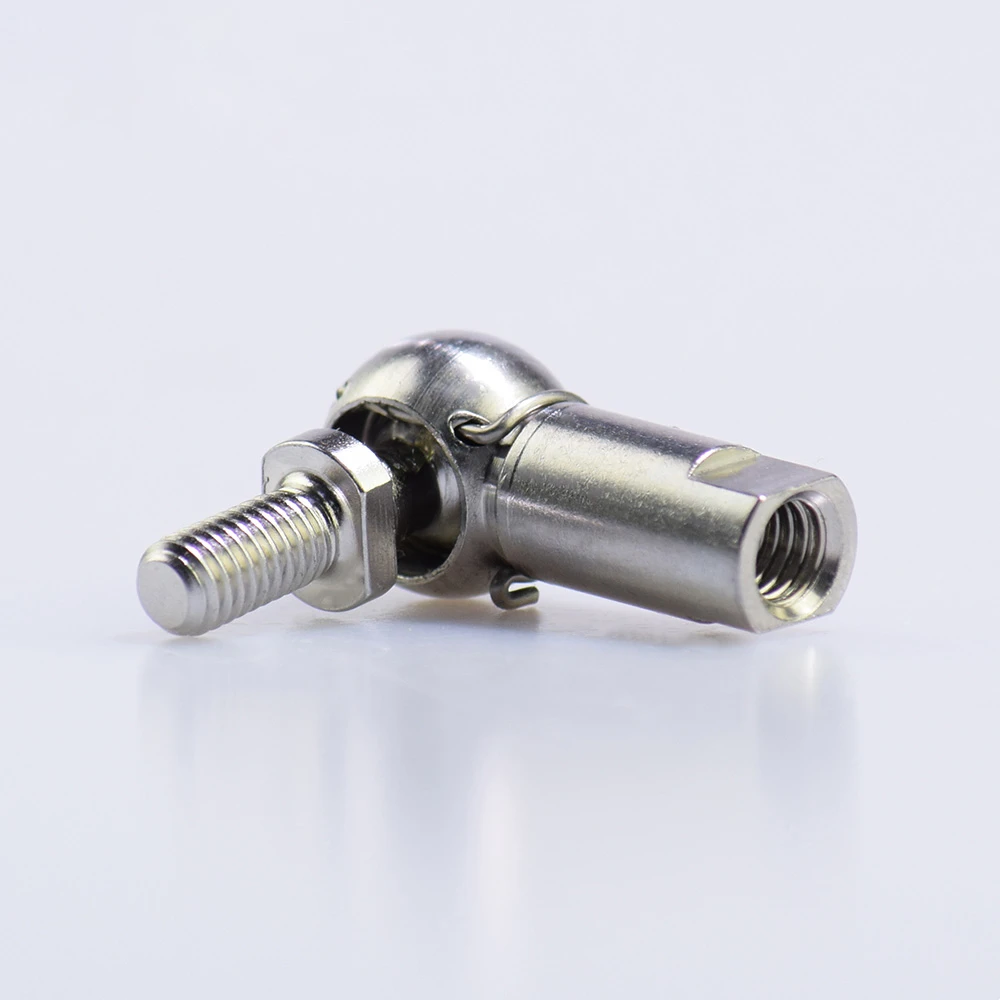
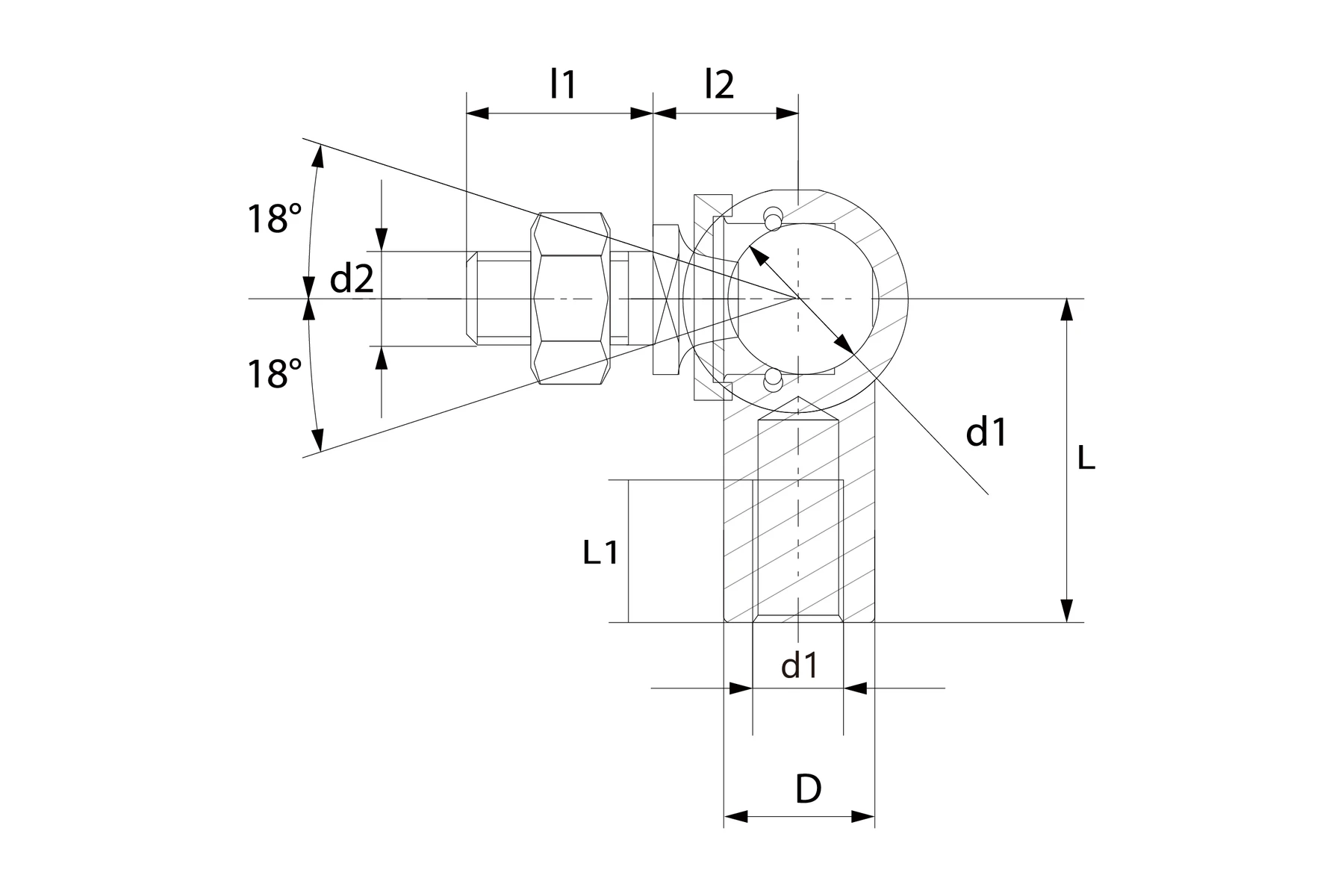
CSM12 is a compact metric ball joint with M12×1.75 thread at both ends and a 16 mm carbon steel ball stud. Overall length (L) is 35 mm; housing diameter (D) is 16 mm. Dimension L1 = 15.5 mm, l1 = 20.0 mm, l2 = 16 mm. Approximate weight: 103.8 g.
The CS series uses a carbon steel 1020 housing, a hardened carbon steel 1045 ball stud, and a spring-steel retaining clip. Surface treatment is silver or yellow zinc plating. An optional sealing cap is available when dust or splash protection is required. Suitable for steering linkages, ATV/UTV controls, agricultural adjustment levers, and compact industrial mechanisms that need metric-threaded ball-joint articulation.
Available with optional sealing cap (add ‘-CAP’ when ordering). Stainless steel version available with ‘S’ prefix (e.g., SCSM12). Left-hand thread version available by adding ‘LH’ suffix. Yellow zinc plating available on request.

BALL JOINTS CS Series — Full Size Range
All available sizes in the BALL JOINTS CS series. Can’t find your size? Contact us for custom dimensions.
| Part NO. | THREAD d1 | THREAD d2 | Ball Dia d1 | L +0.3 -0.3 | L1 +0.3 -0.3 | l1 +0.3 -0.3 | l2 +0.3 -0.3 | D | a° | APPROX WEIGHT (g) |
|---|---|---|---|---|---|---|---|---|---|---|
| CSM5 | M5X0.8 | M5X0.8 | 8 | 22 | 10.2 | 10.2 | 9 | 8 | 36 | 15.2 |
| CSM6 | M6X1.0 | M6X1.0 | 10 | 25 | 11.5 | 12.5 | 11 | 10 | 36 | 25.2 |
| CSM8 | M8X1.25 | M8X1.25 | 13 | 30 | 14.0 | 16.5 | 13 | 13 | 36 | 53.1 |
| CSM10 | M10X1.5 | M10X1.5 | 16 | 35 | 15.5 | 20.0 | 16 | 16 | 36 | 103.8 |
| CSM12 | M12X1.75 | M12X1.75 | 16 | 35 | 15.5 | 20.0 | 16 | 16 | 36 | 103.8 |
| CSM14 | M14X1.5 | M14X1.5 | 22 | 45 | 21.5 | 28.0 | 22 | 19 | 36 | 220.9 |
| CSM14x2.0 | M14X2.0 | M14X2.0 | 22 | 45 | 21.5 | 28.0 | 22 | 19 | 36 | 220.9 |
| CSM16 | M16X1.75 | M16X1.75 | 22 | 45 | 21.5 | 28.0 | 22 | 19 | 36 | 220.9 |
Every Unit Inspected Before Shipment
Raw Material Inspection
Material certifications verified. Composition confirmed by spectrometer before machining begins.
Thread Gauge Inspection
100% go/no-go gauge check on all threaded sections. Zero tolerance on dimensional non-conformance.
Load Capacity Test
Static and dynamic load tests run on representative samples from each production batch.
Dimensional Measurement
CMM verification of critical dimensions — ball diameter, bore, thread pitch, and body length.
Surface Inspection
Visual and tactile inspection for burrs, scratches, surface cracks, and plating defects.
Articulation Test
Misalignment angle and torque measured to confirm liner performance meets specification.
Heat Treatment Verify
Hardness tests confirm proper heat treatment on chromoly steel bodies and bearing balls.
Batch Documentation
Full traceability from raw material heat number to finished part. COC and inspection reports available.
Where BALL JOINTS CS Small Ball Joints Are Used
More from the BALL JOINTS CS Series
Request a Quote for the BALL JOINTS CS Series
Share your part number, required quantity, and any special material or packaging requirements. We respond within 24 hours.
BALL JOINTS CS Frequently Asked Questions
What is the CS series small ball joint used for?
The CS series is used in compact motion-transfer points such as steering, lever control, throttle linkages, and other assemblies that need a small articulated ball-joint connection.
What materials are used in the CS series?
The standard CS series uses a carbon steel 1020 housing, carbon steel 1045 ball stud, spring-steel clip, zinc-plated surface treatment, and an optional sealing cap.
Is the sealing cap included on every CS ball joint?
The sealing cap is optional. If your application needs added sealing protection, confirm the cap requirement when requesting a quote.
Are stainless versions available for CS ball joints?
Yes. Stainless-material versions are available by adding an S prefix to the part number, subject to production availability.
Can left-hand thread versions be supplied?
Yes. Left-hand versions are available by adding the LH designation to the applicable CS series part number.
How should I choose the correct CS part number?
Match the required thread sizes, ball diameter, overall length, and housing dimensions against the CS size chart. If you have installation constraints, send the target dimensions for selection support.