
Executive Summary
This week’s industrial landscape is defined by deepening trade uncertainty as the United States declines to renew the USMCA in its current form, triggering a round of annual reviews that threaten investment across North American automotive and manufacturing supply chains. At the same time, ocean freight rates have surged to levels not seen since 2022, propelled by an early peak season, port congestion in China exacerbated by an approaching super typhoon, and ongoing Red Sea disruptions despite Maersk’s return to the Suez Canal. In a landmark regulatory shift, the FTC reached a settlement with John Deere that grants farmers and independent repair providers access to diagnostic tools and software—reshaping aftermarket dynamics. On the materials front, the Pentagon injected $25 million into domestic rare-earth processing while China reported a drop in first-half exports, signaling an escalating global competition for critical minerals. Energy infrastructure is under strain as AI data center investments surpass $50 billion, forcing utilities to double down on legacy generation. Manufacturing technology investment continues to coalesce around robotics, predictive maintenance, and additive manufacturing. Across regions, India’s manufacturing push gains momentum, even as industrial production data from Japan, Italy, and Uruguay send mixed signals about near-term demand.
Trade Policy Shake-Up: USMCA, Section 232, and Tariff Maneuvers Threaten Supply Chain Stability

The biggest overhang for North American industrial supply chains this week is the U.S. decision not to renew the US-Mexico-Canada Agreement (USMCA) in its current form. The move, widely reported by Iowa Farm Bureau and others, triggers annual joint reviews that keep the pact in force but strip away the long-term certainty manufacturers had relied upon. Automakers quickly warned that the new review cycle threatens billions of dollars in committed investments and finely tuned cross-border supply chains. For component buyers and engineers, the immediate consequence is a planning horizon that has suddenly narrowed. Long-lead sourcing decisions—particularly in automotive, aerospace, and agricultural machinery—now must account for the possibility of shifting rules of origin, escalating tariffs, or new content requirements imposed year by year.
Compounding the trade-policy fog, President Trump announced new negotiations based on Section 232 findings covering commercial aircraft and engines, opening the door to tariffs on a sector already grappling with tight certification timelines and global competition. Meanwhile, a fight over Section 301 duties is heating up around Brazilian pig iron, where tariff stacking—layering ad valorem duties on anti-dumping margins—could raise input costs for U.S. foundries and steel fabricators. All of this lands at a moment when border economies are already feeling the pinch: lawmakers from both sides of the aisle are calling the current climate an “uncertainty” that is actively hurting investment. For industrial distributors and manufacturers, the prudent course is to review multi-source contingency plans and to anticipate a period of volatile landed costs for key metal and machinery imports.
Ocean Freight Rates Spike as Peak Season Collides with Geopolitical and Weather Disruptions
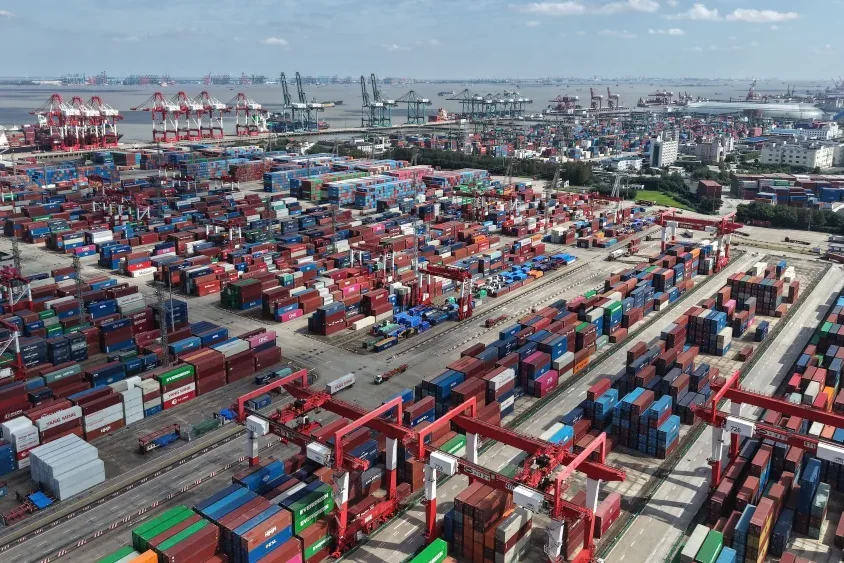
Global container shipping rates are climbing at a pace that freight forwarders describe as a return to the chaos of 2022. Transpacific spot rates have surged approximately 120 percent since the beginning of the early peak season, and Vietnam-to-U.S. boxes are now approaching $9,000 per forty-foot equivalent unit. Behind the spike is a confluence of pressures: vessel bunching at Chinese gateways, an unusually early rush to move goods ahead of tariff unknowns, and the looming threat of Super Typhoon Bavi, which is forecast to disrupt operations at the ports of Shanghai and Ningbo just as congestion reaches multi-year highs.
Maersk’s decision to resume Red Sea transits via the Suez Canal offers partial relief, but the security situation remains fragile. At the same time, the head of Flexport has publicly warned that an El Niño–driven drought could once again slash Panama Canal capacity, forcing more ships to take longer, costlier routes. These dynamics are not just a headache for logistics managers—they directly shape component availability and pricing. Manufacturers relying on imported raw materials, subassemblies, or finished goods should expect longer lead times and higher landed costs through at least the third quarter. Distributors with in-country buffer stock may find themselves better positioned to serve customers who cannot absorb extended delays.
Right-to-Repair Milestone: FTC–John Deere Settlement Reshapes Aftermarket Access

In one of the most significant regulatory developments for heavy equipment in years, the U.S. Federal Trade Commission reached a settlement with John Deere that requires the manufacturer to provide farmers and independent repair providers with the same diagnostic software, tools, and service information that authorized dealers receive. The agreement, reported by The New York Times and Manufacturing Dive, closes a long-running dispute that had become a flashpoint for the broader right-to-repair movement.
For the industrial parts ecosystem, the settlement is more than a legal headline. It signals a structural shift in how aftermarket maintenance and replacement parts flow through the equipment lifecycle. Independent repair shops and fleet operators will now have fewer technical barriers to performing complex repairs, which could widen the addressable market for high-quality replacement components—from rod ends and spherical bearings to hydraulic seals and electronic sensors. Equipment engineers designing for serviceability may also feel greater license to specify standard parts that can be sourced through multiple channels rather than being locked into proprietary dealer networks. While the settlement applies specifically to agricultural machinery, the precedent it sets is likely to accelerate similar demands in construction, mining, and forestry equipment segments. Small and mid-sized job shops and maintenance crews should watch for expanded access to diagnostic interfaces and for potential follow-on actions from state legislatures already pursuing their own right-to-repair bills.
Critical Minerals: Pentagon Investment and Global Jostling for Rare Earths Intensify
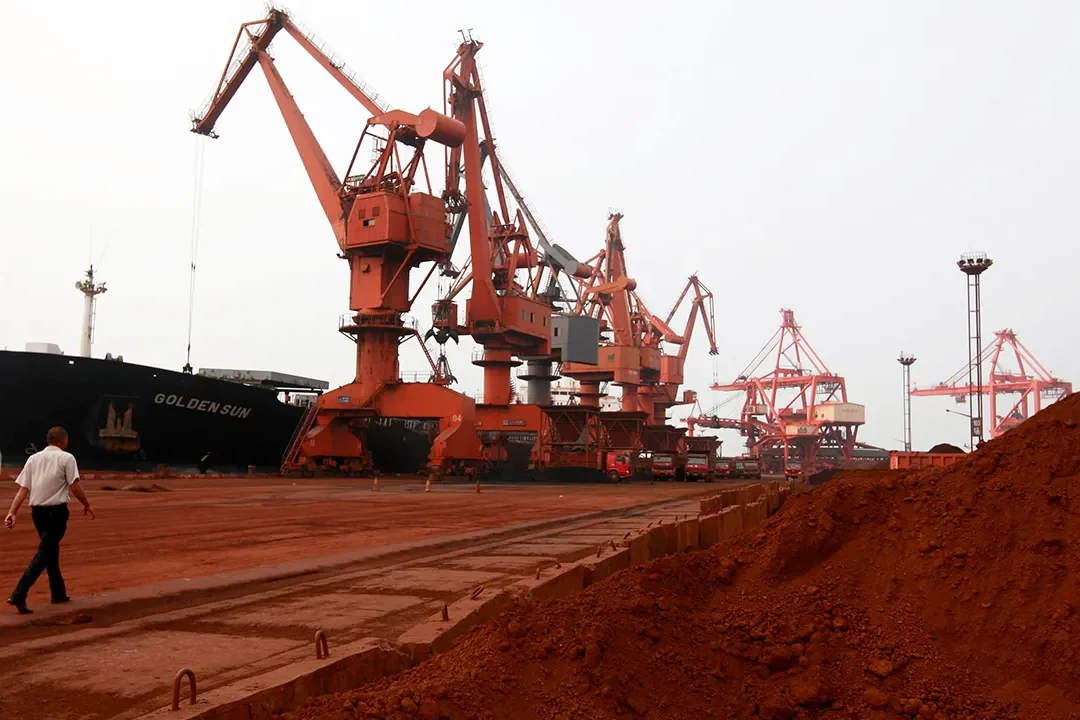
The competition to secure rare-earth and critical-mineral supply chains reached a new pitch this week. The U.S. Department of Defense announced a $25 million investment in ReElement Technologies, a startup focused on domestic rare-earth processing—part of a broader Trump administration strategy to blunt China’s dominance. At the same time, Chinese customs data showed that rare-earth exports fell to 30,482.8 tons in the first half of 2026, down significantly from the prior-year period, while Australia’s government moved to block China-linked shareholders from voting at Northern Minerals, a strategic rare-earth developer.
These moves matter directly to manufacturers of electric motors, precision actuators, sensors, and permanent magnets—components that rely on rare-earth elements for performance. Even a modest tightening of supply can ripple through pricing and lead times for motion-control components and high-efficiency drives. Engineering teams designing next-generation equipment should be aware that magnet and motor suppliers are already scouting second-source rare-earth feedstocks from projects in Australia, Brazil, and Greenland. The industrial aftermarket, too, may feel the effects as replacement motors and drives become more sensitive to raw-material availability. For global component buyers, the message is clear: the critical-minerals map is being redrawn in real time, and supply chain resilience increasingly requires monitoring the geopolitical chess moves around mining and processing capacity, not just the bill of materials.
Grid Strain: AI Data Center Boom Clashes with Outdated Electricity Infrastructure

Meta’s expansion of its Hyperion AI data center in Louisiana has pushed total investment past $50 billion, with attendant tax incentives and infrastructure spending. Yet the very scale of such projects is exposing a widening gap between the exponential power demand of artificial intelligence and the capability of the U.S. electrical grid. In a telling response, the nation’s largest public utility—the Tennessee Valley Authority—this week revised its energy plan to double down on coal, gas, and nuclear, sidelining solar and wind investments in accordance with federal directives.
Industry analysts and grid experts are describing the situation as a classic bottleneck: America has ample generation capacity in aggregate, but the transmission and distribution infrastructure cannot get the electricity to where data centers need it. Works in Progress noted that the grid, not generation, is the real constraint on the AI buildout, while Siemens Energy is betting heavily on grid infrastructure to counter fears of a peak-cycle slowdown. Analog Devices moved aggressively into the power-management space with its acquisition of Empower Semiconductor, targeting the entire AI power chain from grid to core computing.
For industrial manufacturers, these dynamics are a double-edged sword. On one side, the capital flowing into grid modernization—transformers, switchgear, high-voltage cable, and associated structural components—will drive demand for a wide range of industrial parts and assemblies. On the other side, construction lead times for new plant hookups may stretch out as utilities prioritize large hyperscale customers and allocate scarce interconnection capacity. Maintenance and reliability engineers at existing industrial facilities should also monitor the stress on local grids; voltage sags and frequency disturbances can become more frequent when outdated infrastructure is pushed to its limits.
Manufacturing Technology: Robotics, Predictive Maintenance, and Additive Manufacturing Drive Investment

A forward-looking survey by IMI’s industrial automation sector, published by Process and Control Today, confirms that robotics will lead automation investment over the next five years—but with an important caveat: interconnectivity across platforms and control systems is now seen as the critical enabler. This aligns with a broader mid-2026 inflection point identified by MarketScale, where physical AI, updated safety standards, and intralogistics consolidation are reshaping factory floors.
Predictive maintenance—often hailed but not always deployed—is gaining renewed traction as the economics of AI-powered condition monitoring improve. McObject’s eXtremeDB 9.0 update accelerates embedded AI workloads for predictive maintenance and computer vision, while TechTarget outlines the five core benefits: reduced downtime, extended asset life, lower spare-parts inventory, improved safety, and data-driven procurement. For component buyers, this trend means that condition-monitoring sensors, linear recirculating bearings, and robust connectors are increasingly being specified not as consumable afterthoughts but as integral elements of smart asset health systems.
Additive manufacturing is moving from prototyping into production-grade applications. Framatome inaugurated a new additive manufacturing center in France, targeting nuclear-grade components, and Coriolis Composites is preparing automated fiber-placement machine tools for the next generation of narrowbody aircraft. On the materials front, a Nature paper detailed a hierarchical nano-ordered medium-entropy alloy produced via additive manufacturing, achieving an unprecedented cryogenic strength-ductility combination. For design engineers, these advances point to a future where custom metal parts with extreme performance profiles can be printed closer to the point of use, potentially compressing supply chains for specialized aftermarket replacements and low-volume production runs.
Regional Spotlight: India’s Manufacturing Push Gains Momentum as Global Production Data Sends Mixed Signals

India’s industrial story continues to brighten. The Global Supply Chain Shift report from ASSOCHAM highlights that the country is gaining ground as a preferred manufacturing destination, fueled by free-trade agreement negotiations, a weaker rupee, and targeted policy support. On the shop floor, Tata Motors’ Kaushalya programme has trained more than 23,000 youth in automotive manufacturing skills, while the Vivo-Dixon joint venture marks a new phase in smartphone production that industry watchers see as a blueprint for export-oriented electronics manufacturing. Allcargo Logistics is expanding support for micro, small, and medium enterprises, effectively building the logistics backbone needed to connect India’s factory output to global markets.
Elsewhere, the production picture is less uniform. Japan’s industrial production inched up just 0.1 percent in May, failing to ignite strong demand forecasts. Italy’s industrial output contracted by 0.3 percent month-on-month, and Uruguay posted a decline that underscores the uneven recovery in Latin America. Even so, the European Bank for Reconstruction and Development invested $1.4 billion in Türkiye in the first half of 2026, signaling that targeted infrastructure and manufacturing bets can thrive despite regional headwinds.
For global industrial component buyers and distributors, this mixed landscape argues for a granular approach to market planning. Supply chains anchored in South and Southeast Asia are likely to see expanding order books, while demand in parts of Europe and Latin America may remain flattish through the second half of the year. Engineers specifying machinery for export should keep a close eye on regional standards, lead times, and the availability of qualified local service networks as manufacturing footprints continue to diversify.
Sources
- Iowa Farm Bureau – U.S. declines to renew USMCA trade pact
- Automotive Logistics – Automakers warn USMCA annual review threatens investment in North American automotive supply chains
- Steel Market Update – Brazilian pig iron, tariff stacking at center of Section 301 fight
- Thompson Hine Smartrade – President Trump Announces Negotiations Based on Section 232 Commercial Aircraft and Engine Findings
- Tuoi Tre News – Vietnam-US container freight rates surge to nearly $9,000 per container
- IndexBox – Transpacific Ocean Freight Rates Climb 120% in Early Peak Season
- WWD / Sourcing Journal – China’s Port Congestion Faces Fresh Test as Typhoon Bavi Approaches
- Global Banking & Finance Review – Maersk Resumes Red Sea Shipping Service via Suez Canal
- Biztoc – Flexport CEO on El Niño threat to Panama Canal shipping
- The New York Times – John Deere Farm Equipment Owners Have Right-to-Repair, F.T.C. Says
- Manufacturing Dive – Deere settles right to repair dispute with FTC
- Reuters – Pentagon invests $25 million into rare earths startup ReElement Technologies
- Global Times – China’s rare-earth exports drop to 30,482.8 tons in H1: customs data
- Bloomberg – Australia Curbs Rights of China Investors in Rare-Earths Miner
- Benzinga – Mark Zuckerberg’s Meta Just Supercharged Its Biggest AI Bet Yet, Expanding Its Hyperion Data Center Into a $50 Billion-Plus Project
- Grist – The nation’s biggest public utility just doubled down on coal, gas, and nuclear
- Works in Progress – What’s slowing down the AI buildout
- Process and Control Today – ROBOTICS LEADS AUTOMATION INVESTMENT OVER NEXT FIVE YEARS, BUT INTERCONNECTIVITY IS KEY
- KNN India – Global Supply Chain Shift Boosting India’s Manufacturing Prospects: Assocham Report
- TechCrunch – After Apple, India’s smartphone manufacturing boom enters new phase with Vivo JV
- Breakingthenews.net – Japan’s industrial production up 0.1% in May
- ING THINK – Italian industrial production posts a small contraction in May
- Hurriyet Daily News – EBRD invests $1.4 billion in Türkiye in first half of 2026