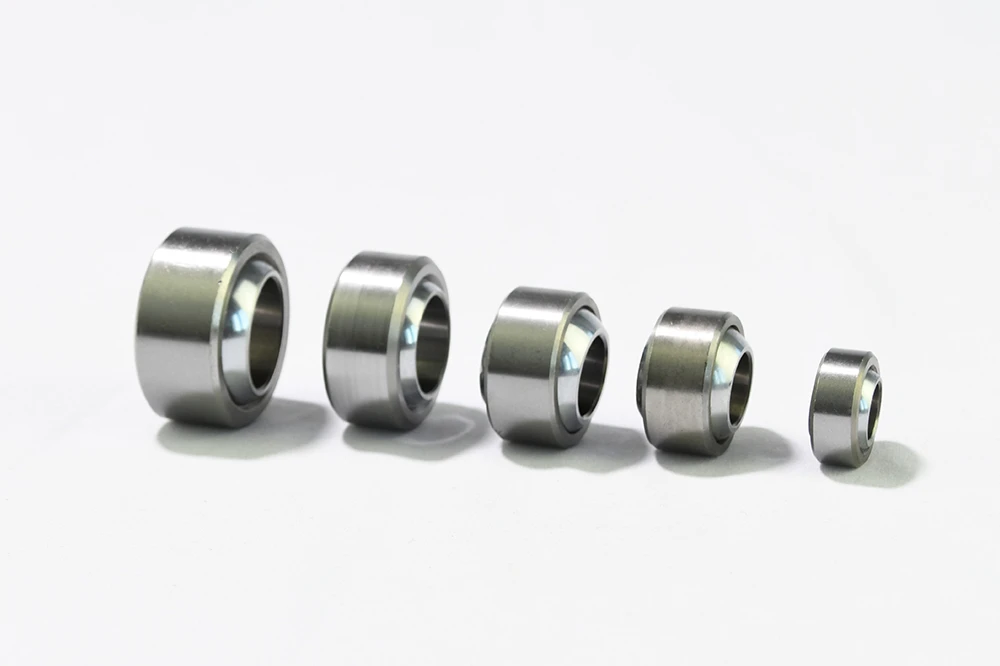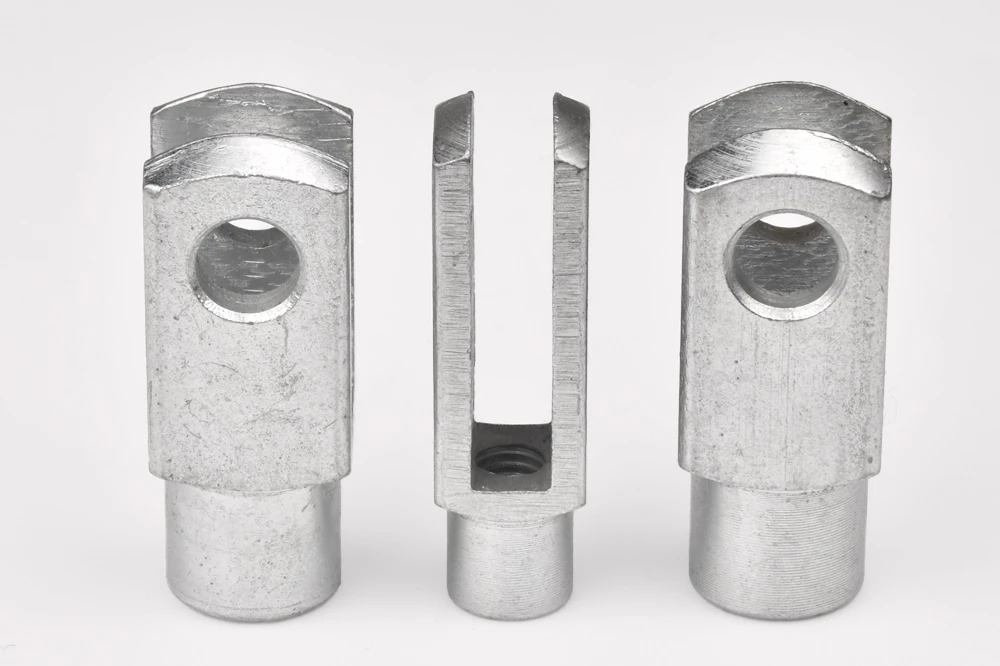

Executive Summary: This week the industrial components ecosystem finds itself at the intersection of three powerful forces: escalating Middle East tensions that threaten to choke key shipping lanes, a new round of U.S. tariffs reshaping global trade flows, and a landmark right-to-repair settlement that will recalibrate the aftermarket landscape. Meanwhile, flat U.S. factory output, a surge in oil prices alongside weakening industrial metals, and record AI-infrastructure spending on electrical grids are sending conflicting signals to engineers, buyers, and supply chain planners. Below, we unpack what each of these storylines means for the businesses that design, distribute, and maintain industrial motion and heavy equipment.
Ocean freight under dual pressure: tariff chill and Red Sea escalation

Container shipping is facing a sharp demand-drop this week, but the calm in spot rates masks a powder-keg that could detonate global supply chains. The Drewry World Container Index retreated as peak-season momentum weakened, driven by a sudden freeze in import orders, particularly into the United States. The culprit is not a normal demand cycle but a wall of trade-policy uncertainty. With the U.S. Trade Representative (USTR) holding public hearings on forced-labor tariffs covering 60 nations, and a new 25% Section 301 duty on all imports from Brazil taking effect on July 22, importers have slammed the brakes on new bookings. Container lines that had rushed to add emergency surcharges are now watching volumes evaporate.
At the same time, the military confrontation between the United States and Iran has entered a dangerous new phase. U.S. airstrikes expanded to bridges, railroads, and airports in southern Iran, prompting Tehran to instruct Yemen’s Houthi forces to prepare to close the Bab el-Mandeb Strait if Iranian power infrastructure is struck. The Houthis have demonstrated an ability to disrupt Red Sea shipping, and the OilPrice.com analysis this week showed Iran coordinating more tightly with the Houthis to threaten Saudi energy infrastructure and one of the world’s critical oil transit routes. Even the threat of a Bab el-Mandeb closure is enough to trigger force-majeure clauses, war-risk insurance spikes, and emergency rerouting around the Cape of Good Hope — all of which would add 10–14 days to lead times and multiply per-container costs.
For industrial component buyers and OEMs, the combination of a tariff-induced demand freeze and a credible Red Sea closure threat creates a treacherous planning environment. Short-term ocean freight rates may look attractive, but the risk of a sudden rate spike and availability crunch is real. Logistics managers should stress-test their supply chains for a scenario in which Asia–Europe and Asia–U.S. East Coast routes are simultaneously disrupted, while new tariff layers raise the landed cost of components from multiple origins. Already, Maersk has raised its Emergency Contingency Surcharge on India–Europe shipments from August 1, indicating that carriers are not feeling relaxed about the second-half outlook.
U.S. trade policy enters a new chapter: Brazil hit, forced-labor findings expand

The architecture of U.S. trade policy is shifting from temporary executive actions to a permanent, investigation-based tariff structure. On July 20, the USTR Notice of Action imposed 25% tariffs on all imports from Brazil, with limited exemptions for pig iron, rare earths, and a few other categories. The move follows a Section 301 investigation into Brazil’s digital trade policies, intellectual property protection, and environmental practices. Importantly, the White House developed a legal workaround after the Supreme Court struck down earlier tariff mechanisms; this new approach anchors the duties in statutory findings, making them harder to challenge in court.
The impact on the industrial supply chain is immediate. Brazil is a major supplier of aircraft parts, automotive components, steel, and industrial machinery to North America. While pig iron and rare earths were excluded, a wide range of metal products, fasteners, hydraulic components, and castings will now face a 25% cost adder. Distributors who source Brazilian-made positioning components, rod ends, or spherical bearings should expect price adjustments or substitution scrambles. The tariff also upends the calculus for manufacturers that have relied on Brazil as a nearshore alternative to Asian supply bases.
Simultaneously, the USTR has made forced-labor findings in its 60-nation Section 301 investigation, signaling that a new double-digit baseline duty structure will lock in before the temporary Section 122 fees expire. This layered approach — country-specific punitive tariffs alongside a broad forced-labor framework — creates a multi-tier tariff landscape that will challenge purchasing departments to classify goods by both origin and supply-chain footprint. Engineering and procurement teams need to be ready for a world in which a component’s tariff treatment depends not just on where it was assembled but on the entire value chain behind it.
Right to repair reshapes the equipment aftermarket

A settlement between John Deere and the U.S. Federal Trade Commission (FTC) has broken the logjam on right-to-repair for agricultural and heavy equipment, with ripple effects that will reach every corner of the industrial machinery sector. The agreement, announced this week, gives farmers and independent repair shops access to the diagnostic tools, software, and service information previously locked behind proprietary dealer networks. Multiple states including Ohio, Kansas, and Montana are heralding the deal as a victory that will lower farm operating costs and improve equipment uptime.
The significance for the broader industrial parts ecosystem is hard to overstate. For decades, manufacturers of construction equipment, off-highway vehicles, and even some industrial automation systems have tied repair and maintenance to authorized dealers through software locks and proprietary interfaces. The Deere settlement does not open every machine tomorrow, but it establishes a powerful precedent. Component buyers and maintenance engineers should anticipate that right-to-repair principles will expand beyond agriculture into construction, mining, and material handling. This will increase demand for standardized aftermarket parts, open-source diagnostic tools, and service documentation — and it will put pressure on OEMs to compete on parts availability and pricing rather than on exclusivity.
Parallel developments in the automotive world and the European Union’s right-to-repair framework — which now includes exemptions to user-serviceable battery rules — reinforce the trend. The EU added exemptions that acknowledge the practical difficulty of making every lithium-ion battery easily replaceable, but the overall direction is toward greater repairability. For industrial distributors, the message is clear: customers will increasingly expect parts availability, compatibility, and repair data to flow freely, and those who can deliver will gain loyalty at the expense of closed systems.
Oil climbs, industrial metals slide, and material costs diverge
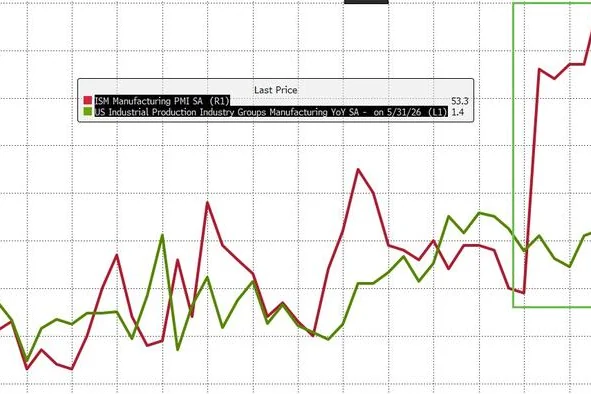
Commodity markets are telling two different stories this week, and both matter for the cost of producing industrial components. Crude oil prices jumped $3.50 per barrel as the U.S.-Iran conflict deepened and Houthi threats raised the specter of a Red Sea blockade. Higher oil prices feed directly into freight surcharges, plastics and resin costs, and the energy bills of foundries and forging operations. They also harden inflation expectations, which influences central bank policy and currency markets.
By contrast, industrial metals — copper, aluminum, zinc — fell as traders priced in the demand-destructive effects of a Middle East war and a slowing global economy. Alcoa reported second-quarter results that missed expectations and cut its full-year alumina production guidance. Aluminum prices have been under pressure from capacity additions that outstrip demand gains, and the premium that industrial buyers pay over LME prices has been insufficient to offset the bearish capacity picture. Copper, often seen as a barometer of industrial health, slid along with other base metals, undercut by a stronger U.S. dollar and risk-off sentiment.
For engineers and procurement professionals, this divergence creates a complex input-cost picture. Bearings, rod ends, hydraulic cylinders, and structural components that are steel- or aluminum-intensive may benefit from softening metal prices, while anything that is energy-intensive to manufacture or that relies on petrochemical-derived polymers, seals, and greases may see upward cost pressure. Additionally, the rare earths supply chain is in flux: Malaysia opened a parliamentary probe into Lynas Rare Earths’ $96 million Pentagon supply deal, the U.S. sought full access to Brazilian chemicals and rare earths, and American Rare Earths advanced its U.S. mine-to-magnet strategy. A fracturing global rare earth supply chain will keep magnet and precision motor costs elevated and unpredictable.
AI infrastructure spend hits $300 billion — and the grid is the new bottleneck

This week, Goldman Sachs warned that AI infrastructure spending has reached a cumulative $300 billion and questioned whether it will ever pay off. Markets registered the anxiety: SoftBank plunged 11%, Oracle fell on credit-rating downgrade fears, and semiconductor stocks sold off. Yet the spending itself is not slowing. TSMC boosted its U.S. infrastructure spending plans by $100 billion, and utilities are poised to invest $1.1 trillion in grid infrastructure as electrification accelerates. The AI trade is moving from chips to electricity, with power producers, grid builders, and cooling equipment suppliers becoming the new focal point.
For the industrial components sector, this pivot to grid infrastructure is a multi-decade demand driver. Transformers, switchgear, transmission towers, and substations demand a wide range of motion-control and structural components — rod ends, spherical bearings, clevises, and linkage parts. Data center construction alone, which is surging in Southeast Asia as Shopee’s parent pushes in-house server farms, requires massive HVAC, fire suppression, backup power, and physical security systems, all of which consume industrial hardware. The electrification of vehicle fleets adds a further layer: LiuGong this week launched its battery-electric heavy equipment portfolio in North America, joining a wave of electrified construction and material handling machines that rely on robust electrical connectors, thermal management, and high-voltage safety components.
The cautionary note is that the financial sustainability of this infrastructure boom is now in question. If AI service revenues fail to justify the buildout, a capital-spending pullback could stall orders for both factory automation equipment and the grid hardware that supports data centers. For now, however, industrial component manufacturers and distributors that serve the electrical T&D, power generation, and data center markets are in a structural growth channel.
India’s manufacturing ascent runs into duty and dumping headwinds

India’s factory output is rising on strong domestic demand, and the government’s “Make in India” push is drawing investment from companies like Spain’s INALSA, which is building a ₹50 crore plant in Sonipat. Nuvama initiated coverage on Siemens Energy India with a buy rating and a 21% upside, and the precision analytics market is expanding as manufacturers invest in quality control. India is undeniably one of the world’s most important growth stories for industrial demand.
However, a pair of reports this week warn that dumped imports and inverted duty structures are undercutting domestic manufacturers in key sectors. The U.S. tariff on Brazil also rattled New Delhi, as it highlighted the risk that India’s own trade negotiations could stumble over similar unilateral U.S. actions. For global component suppliers and distributors, India presents a dual reality: a rapidly growing market for quality bearings, hydraulic filters, connectors, and automation components, but also a market where pricing is intensely competitive and where local-content requirements and customs barriers can shift quickly. The inverted duty problem — where finished goods are taxed at lower rates than the raw materials or intermediate components used to make them — remains a structural drag on local manufacturing profitability, creating an incentive to import complete assemblies rather than build locally. This distortion directly affects the sourcing decisions of multinational OEMs with Indian operations.
Smart factory automation and robotics redefine the production floor
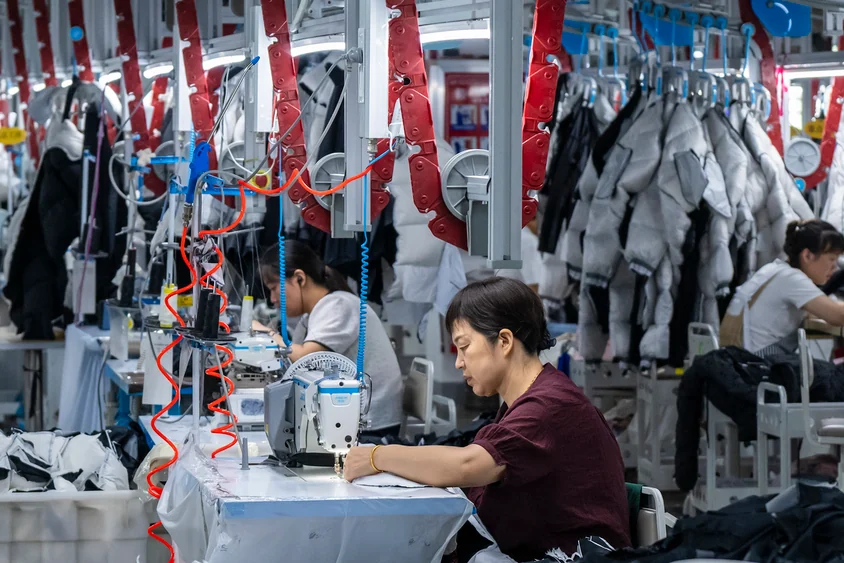
Market research published this week points to a sustained growth curve for industrial automation hardware. IndexBox forecasts point higher for relays, IO connectors, hydraulic and lube filters, and continuous hinge enclosures through 2035, driven by industrial automation and semiconductor capacity expansion. MarketsandMarkets projects strong smart factory market growth in Germany, Japan, Canada, and Australia. Markets are being shaped not just by the pursuit of efficiency but by the pressure of reshoring, labor shortages, and rising costs, which a Supply & Demand Chain Executive report notes are forcing manufacturers to adopt AI and automation at a faster clip.
On the technology front, Analog Devices made a detailed case for “physical intelligence” in industrial automation, arguing that the next frontier is not just connecting machines but embedding context-aware sensing and actuation at the edge. A MarketScale analysis identified five shifts defining factory floors in mid-2026: collaborative robots moving beyond pilot projects, vision-guided automated guided vehicles becoming standard, edge computing reducing latency in quality inspection, increased use of digital twins for line commissioning, and software-defined control architectures that allow more flexible reconfiguration of production cells.
For component buyers and engineers, these trends extend the already-visible demand for connectors, cable assemblies, precision bearings, and motion-control components that can handle higher cycle rates, more frequent reconfiguration, and more demanding sensing environments. Distributors that can provide technical selection support for automation-grade components — specifying the right load ratings, seal ratings, and materials for 24/7 robotic cells — will be well positioned as small and mid-sized manufacturers accelerate their smart-factory journeys.
Sources
- ABC17News.com – Ocean freight rates retreat as tariff uncertainty freezes import demand
- Container News – Drewry World Container Index slips as peak season momentum eases
- Fox News – Iran instructs Houthis to prepare to close the Bab el-Mandeb Strait
- OilPrice – Iran Instructs Houthis to Prepare Red Sea Shipping Attacks
- Federal Register – Notice of Action: Brazil’s Acts, Policies, and Practices
- EY – USTR issues Notice of Action imposing 25% Section 301 tariffs on imports from Brazil, effective 22 July 2026
- Farm Progress – John Deere settles right-to-repair case with FTC
- Cleveland.com – Right-to-repair farm equipment deal a major win for Ohio farmers
- Barchart – AA Stock Dips as Alcoa Cuts Aluminum Production Guidance
- Mining.com – Malaysia probes Lynas’ Pentagon rare earths supply deal
- MarketScale – Utilities set to invest $1.1 trillion in grid infrastructure as electrification accelerates
- Benzinga – Why Is Oracle Stock Falling Friday?
- boldnewsonline.com – India’s Manufacturing Sector Gains Momentum as Factory Output Rises on Strong Domestic Demand
- CNBC TV18 – Dumped imports, inverted duties hurting India’s manufacturing push across key sectors
- MarketScale – Robotics in manufacturing: five shifts defining factory floors in mid-2026
- IndexBox – Relays and Bases Market Demand to Accelerate by 2035, Driven by Industrial Automation and Renewable Energy Expansion