Skip to content
Manufacturing capability / CNC machining

Grinding

Grinding is what turning and milling hand off to when a tolerance or surface finish is beyond what a standard cutting tool can hold — and it is the process most commonly used to finish a part after it has been hardened. Our grinding capacity is concentrated at our affiliated production base in Wuxi, built into the same production line that turns and threads our rod end and ball joint studs.

5Automatic grinders at our affiliated Wuxi base
SGS-assessedWuxi production base · report No. 492475436_P+T
ISO 9001:2015Certificate No. 11425Q49262R0S · Ningbo production address
01 / Process fundamentals

What Is Grinding?


Grinding is an abrasive machining process that removes material with a bonded abrasive wheel rather than a single-point or multi-tooth cutting tool. Each abrasive grain removes a very small amount of material, which is what lets grinding hold tighter tolerances and finer surface finishes than turning or milling can achieve on their own.

Grinding is also the process most commonly reached for once a steel part has been hardened by heat treatment. A standard turning or milling tool may struggle against a hardened surface; depending on material, hardness, geometry, and tolerance, grinding is often the more practical way to bring a feature to final size and finish.

Grinding can be applied to an outside diameter, an inside bore, a flat face, a spherical surface, or a raceway. The exact wheel, machine, and setup depend on the feature rather than the word “grinding” alone.

The process is slower and more expensive per unit of material removed than turning or milling, so the useful rule is simple: grind only the surfaces whose fit, load, roundness, or finish actually needs it.

02 / Process selection

When Does a Part Actually Need Grinding?


SituationGrinding needed?
Standard-tolerance bore or OD, no hardeningUsually not — turning or milling may be enough
Tight-fit bore or precision spherical raceOften yes — grinding can hold a tighter tolerance band
Part will be heat treatedOften after treatment, when final size and finish must be restored
Sliding or oscillating mating surfaceDepends on the load, speed, fit, and specified surface requirement
Surface has a functional bearing or sealing fitReview the feature and datum scheme at quotation
The practical rule: if the feature must be brought to final size after hardening, or must carry a close fit against another precision surface, grinding is often the right finishing step. A standard tolerance feature may not need it.
03 / Production routes

Grinding at SYZ


Primary route

Wuxi, Jiangsu

Our affiliated production base in Wuxi runs 5 automatic grinders as part of the documented process sequence: raw material → machining → grinding → thread rolling → assembly → finished goods. This makes it the natural route for ground spherical features and hardened components in the rod end and ball joint line.

5Automatic grinders
In-lineWith turning and thread rolling
CMMCoordinate measurement available
SGSReport valid to 9 July 2027
Traceability: the documented Wuxi process has no outsourced steps and finished lots can be traced back to raw material under a written procedure.

The exact grinding type and feature route are confirmed against the drawing; the equipment list does not specify whether each machine is for OD, ID, centreless, or spherical work.
Secondary route

Ningbo, Zhejiang

Our own Ningbo facility operates one grinder for general-purpose work. A low-volume turned part or a secondary feature may stay on the Ningbo route where the part, tolerance, and capacity review support it; the site does not present this as a full dedicated grinding department.

1Grinder at our own facility
2,200 m²Ningbo production area
ISONingbo production address
ReviewFeature and tolerance first
Typical use: general-purpose grinding on a low-volume turned part or a feature that does not need the Wuxi in-line route.

Taixing does not have a grinding machine listed; a Taixing-milled part needing grinding is scoped individually at drawing review.

04 / Part functions

What Grinding Is Used to Make Possible


01

Ground bearing balls

Spherical surfaces that need a controlled running fit against a moulded or metal race.

02

Races and bores

Precision internal surfaces where roundness and fit affect articulation and load distribution.

03

Hardened pins and shafts

Features finished after heat treatment when conventional cutting alone is not the most practical route.

04

Precision fits

Outside diameters, faces, or bores that mate with another precision component under limited clearance.

05

Surface finish

Finer finishes on functional surfaces where the drawing and application justify the additional operation.

Materials commonly ground: 52100 bearing steel, carbon and alloy steels, 4130 chromoly components, and hardened steel features identified on the drawing.
05 / Product examples

Ground Components From Our Own Product Lines


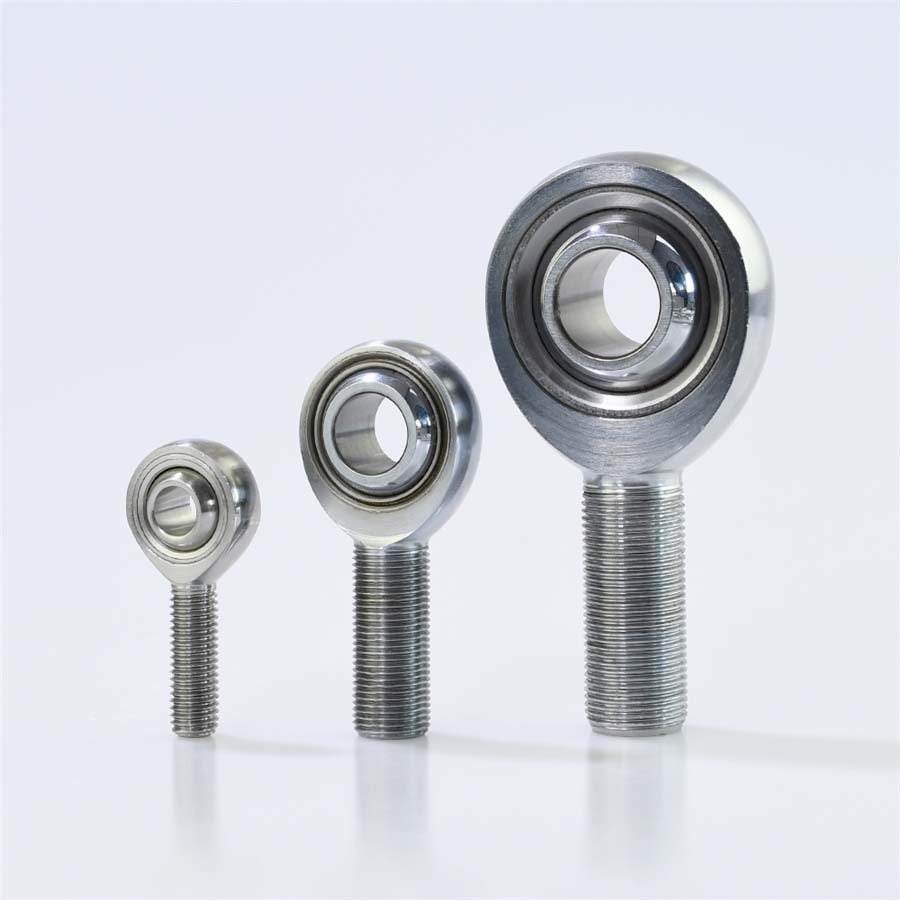
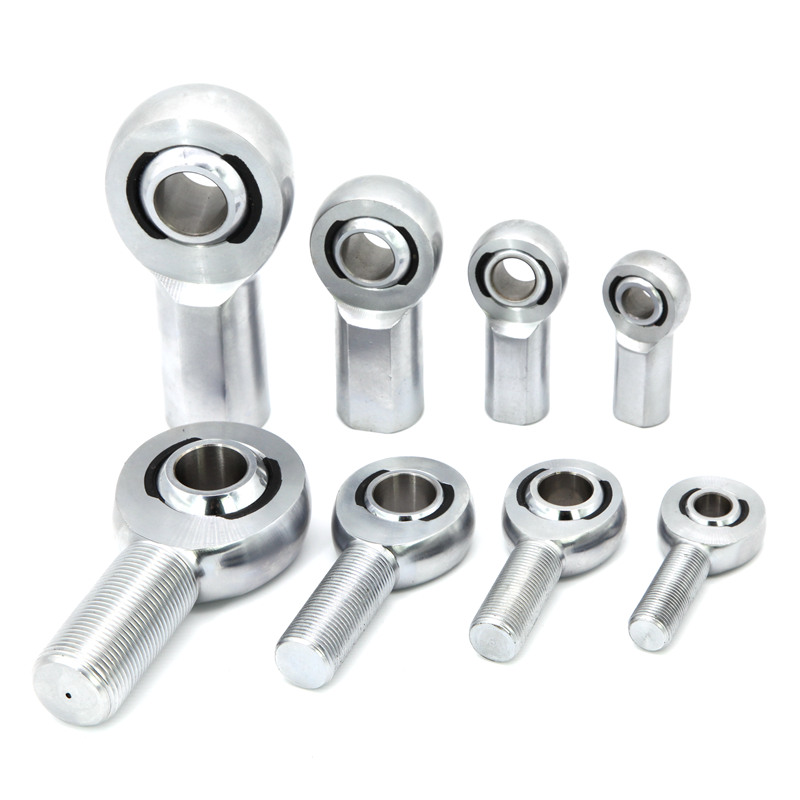
Rod endXM XF chrome moly rod ends with precision-ground 52100 bearing steel ball
Precision ball

XM/XF Rod Ends

The specification calls out a precision-ground, heat-treated 52100 bearing steel ball for the moulded race.

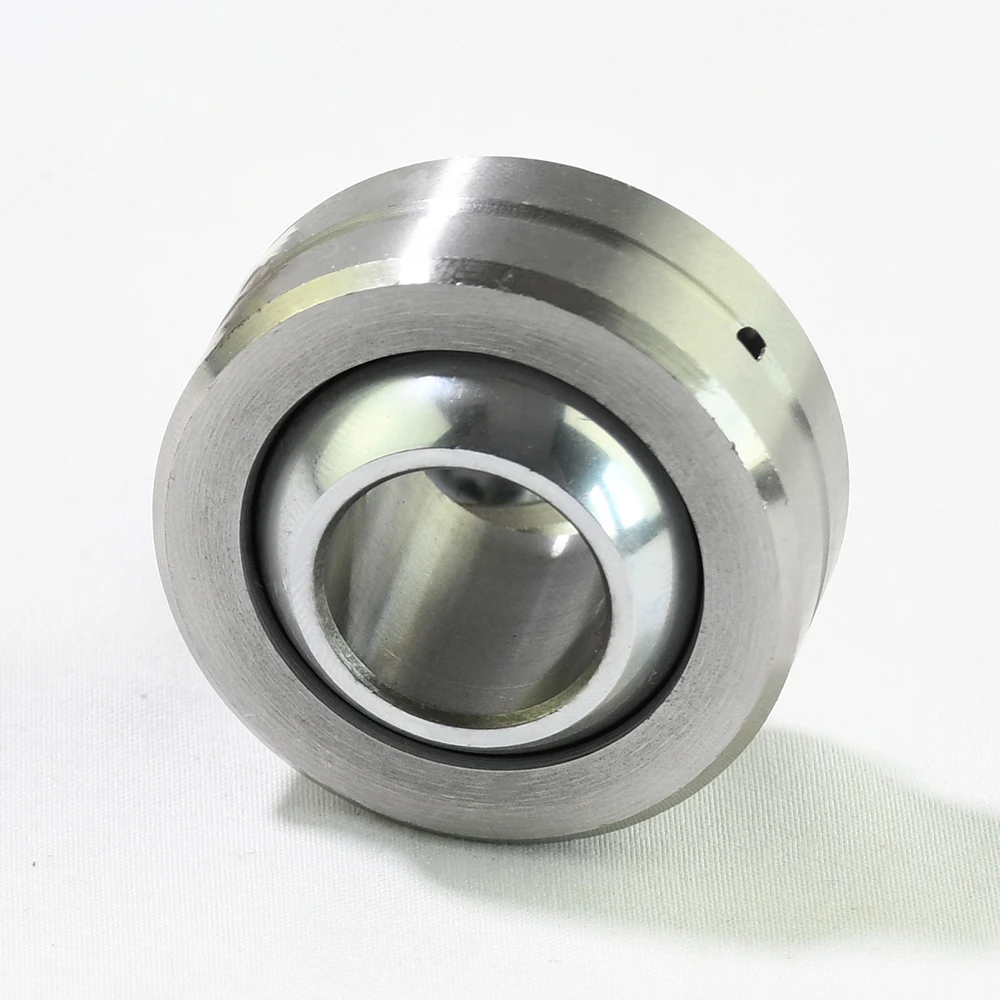
Spherical bearingGE20C self-lubricating spherical bearing with precision-ground ball
78 kN static radial load

GE20C Spherical Bearing

The 52100 bearing steel ball is precision ground and heat treated for the PTFE-lined running fit.

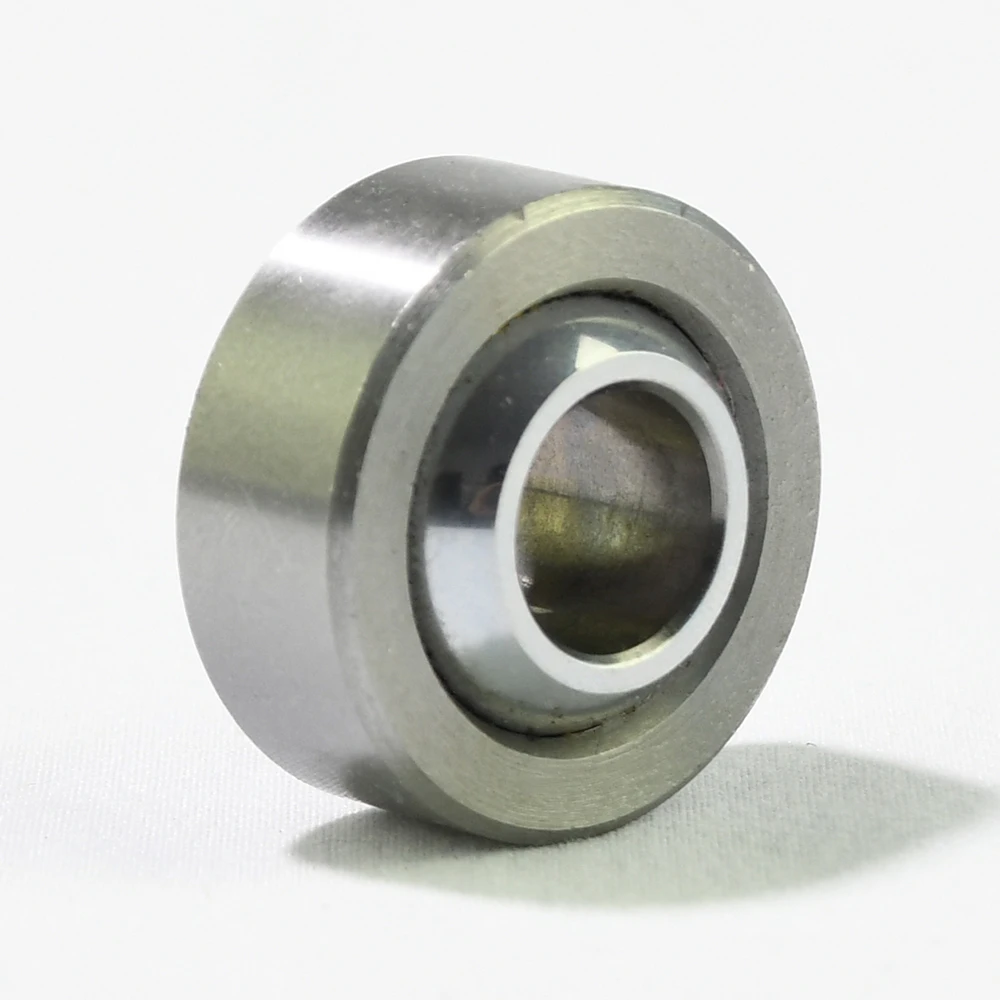
Metal-to-metalCOMA-M20T metal-to-metal spherical bearing with precision-ground ball
260,086 lb static radial load

COMA-M20(T) Spherical Bearing

With no liner between ball and race, the bearing depends on its precision-ground, heat-treated ball for its running fit.

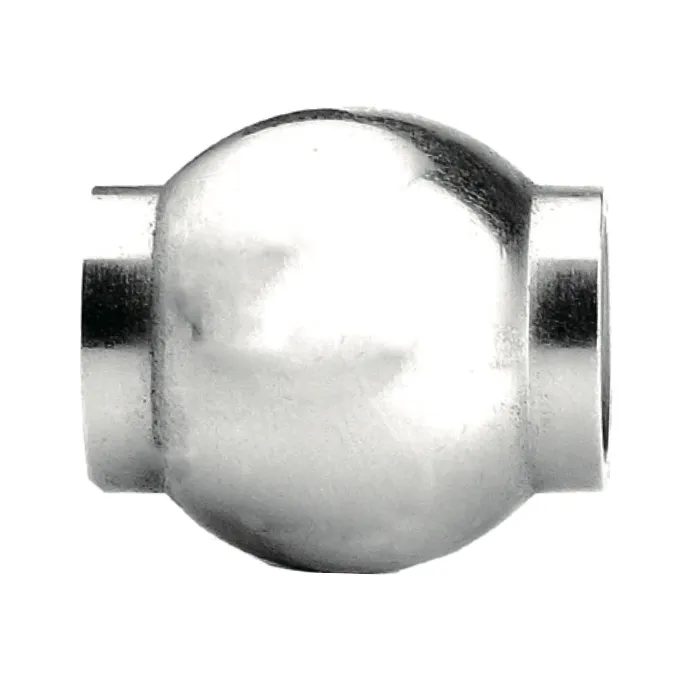
High misalignmentHMBL20MP high misalignment steel ball, precision ground
Spherical surface

HMBL20MP High Misalignment Steel Ball

The spherical surface is ground to a tight roundness tolerance so the joint can articulate without binding.

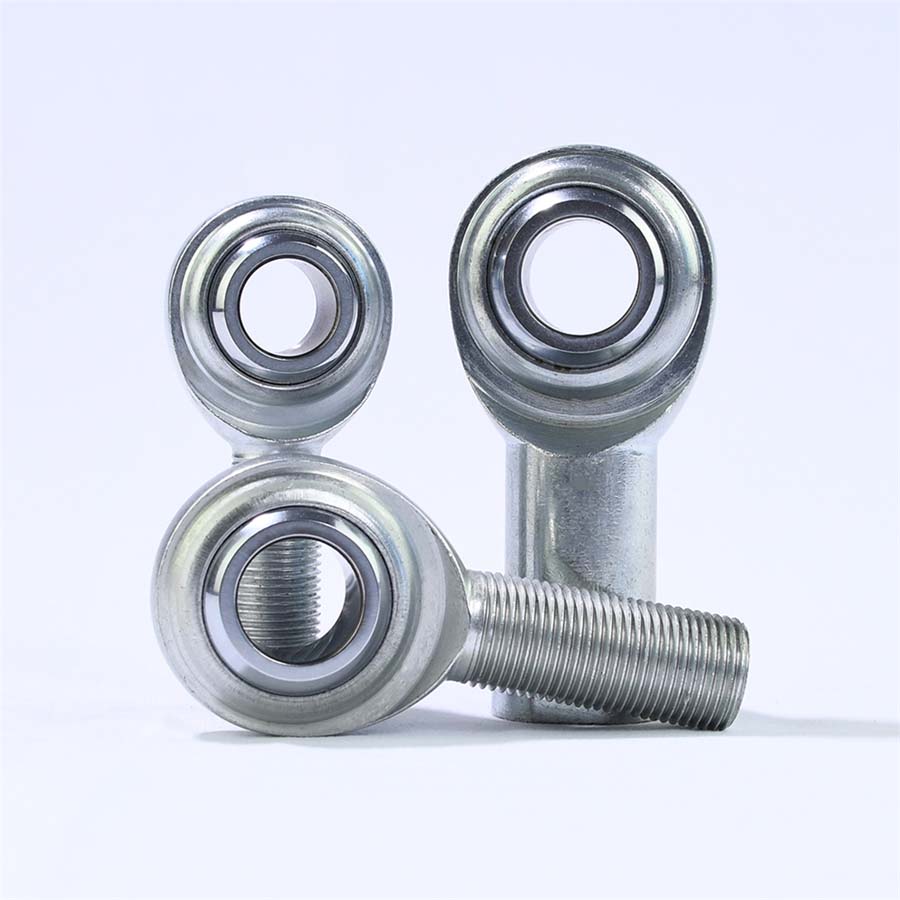
Heim jointJMX JFX 3-piece chrome moly heim joint with precision-ground 52100 bearing steel ball
3-piece bearing

JMX/JFX Heim Joint

The 52100 ball is specified as precision ground and heat treated ahead of the alloy steel race and 4130 chromoly body.

2-piece bearingCM CF 2-piece spherical rod end with precision-ground ball
Metal-to-metal fit

CM/CF 2-Piece Spherical Rod End

The 52100 bearing steel ball is specified as precision ground and heat treated against the carbon steel body.

Need a ground bore, ball, race, or hardened feature? Send us the drawing.

06 / Quality control

How Ground Features Are Controlled


Grinding is controlled around the functional feature: final size, roundness, surface finish, and how the feature relates to its datum.

01

Route and allowance

Parts destined for grinding are planned with enough machining allowance before heat treatment or the final abrasive pass.

02

First article

The first part off a new setup is checked against the drawing before the run is released.

03

In-process checks

In-process inspection confirms the feature remains within the required size and finish as the wheel and tooling condition change.

04

Final inspection

Depending on the product and order, finished goods go through 100% inspection, sampling, or a customer-specified plan.

07 / Design for manufacture

Designing Ground Features: What to Send, and What Drives Cost


What to send with an enquiry

  • Feature diameter, bore, flatness, or spherical geometry
  • Dimensional tolerance and roundness requirement
  • Surface finish requirement
  • Material and heat-treatment condition
  • Datum scheme and mating component
  • Quantity and target schedule
01

Functional tolerance

Grinding is slower than turning or milling, so identify the surfaces whose fit or load actually needs the tighter band.

02

Heat-treatment sequence

Hardened features are commonly machined oversized, treated, and ground to final size afterward.

03

Feature accessibility

Internal, external, flat, and spherical features need different machine access and process planning.

04

Surface finish

Specify the finish where it affects friction, sealing, bearing articulation, or fatigue rather than applying a fine finish everywhere.

05

Volume

Quantity affects fixture decisions, route selection, and how efficiently an in-line grinding operation can be scheduled.

Before and after grinding

Grinding commonly follows turning, heat treatment, and rough machining. It may be followed by threading, plating, or coating depending on the drawing.

Typical MOQ100–300 pieces per item.
Route-based timingTiming follows the primary production route and is confirmed with the quotation.
20+ countriesCustomers are served through SYZ Machine’s export team.
08 / Buyer questions

Grinding FAQ


Does every rod end or ball joint need a ground bore?

No. Standard-tolerance features may be achievable directly from turning or milling. Grinding is considered where a hardened feature, tight fit, roundness, or surface finish requires it.

Why does grinding come after heat treatment instead of before?

Heat treatment can change the part slightly and makes the material harder to cut. Machining allowance is left before treatment, then the feature is typically ground to final size afterward.

Is grinding done in-house or subcontracted?

Grinding is concentrated at our affiliated Wuxi base, which runs 5 automatic grinders. Our own Ningbo facility also operates one grinder for general-purpose work; the route depends on the part and tolerance.

What tolerance can grinding achieve that turning cannot?

There is no single blanket number. Grinding can hold tighter tolerance bands and finer finishes on suitable features, but the achievable result depends on geometry, material, machine, datum, and inspection plan.

What is your MOQ and lead time for a ground component?

Typical MOQ is 100–300 pieces per item. Lead time follows the route and whether the part includes external heat treatment or other finishing; timing is confirmed with the quotation.

Can you supply hardness records alongside a ground feature?

Hardness verification is available where confirmed for the order. Wuxi operates a Rockwell hardness tester, and the frequency and reporting scope are agreed with the quotation.

Which materials do you grind?

Our product lines include ground 52100 bearing steel balls, carbon and alloy steel components, and 4130 chromoly parts. The material and heat-treatment condition are confirmed against the drawing.

Can we audit the facility or arrange a third-party inspection?

Yes. Client visits and third-party inspections can be arranged for the relevant production site. The affiliated Wuxi base has been assessed by SGS under report No. 492475436_P+T, valid to 9 July 2027.

09 / Start a review

Need a Ground Feature to a Specific Tolerance?


Send the drawing with the functional tolerance, surface finish, material, and mating feature. We will confirm whether grinding is necessary and what route will make it.

Request a Quote

Please submit the form or email [email protected]

🍪
We Use Cookies