Skip to content
Manufacturing capability / CNC machining

Drilling

Almost no part we make has only one hole operation. A drilled feature is usually one step inside a turning or milling sequence — a cross-hole in a stud, a bolt pattern in a bracket, a bore that follows a turned diameter. We treat drilling as a precision requirement to be controlled inside that sequence, and back it with dedicated drilling capacity at our affiliated Wuxi base where volume calls for it.

4Dedicated drilling machines at our affiliated Wuxi base
SGS-assessedWuxi production base · report No. 492475436_P+T
ISO 9001:2015Certificate No. 11425Q49262R0S · Ningbo production address
01 / Process fundamentals

What Is Drilling?


Drilling is the process of cutting a round hole into a workpiece by feeding a rotating, multi-edge cutting tool along a single axis. The tool removes material only along the path it travels — unlike turning or milling, where the cutter sweeps across a surface, a drill advances straight into the material and stops.

Drilling is rarely a standalone manufacturing step. On a lathe, a hole on the part’s centreline is drilled as one operation within the turning sequence, using the same setup that holds the part for the surrounding cuts. On a machining centre, a hole off to one side — a bolt hole in a bracket, a cross-hole in a boss — is drilled using the same fixture that holds the part for milling.

What distinguishes a drilled hole from other round features is its axis: an on-centre hole in a turned part is a drilling operation integrated into the turning setup; an off-axis or cross-hole is typically drilled as part of a milling operation or on dedicated drilling equipment, because the workpiece must be held in a fixed orientation while the tool advances into it from a specific angle.

Related but distinct operations include reaming, which improves a drilled hole’s size and roundness; boring, which enlarges or trues an existing hole; and tapping, which cuts internal threads into a drilled pilot hole.

02 / Process selection

Integrated Drilling vs a Dedicated Drilling Operation


Most holes we produce are cut on the same machine that produces the surrounding geometry, not on a separate drill press. Knowing which route a hole needs is a routing decision, not a cosmetic one.

Integrated drilling happens on the lathe or machining centre that is already holding the part. A centreline hole in a turned bushing, or a mounting hole in a milled bracket, is drilled in the same setup as the surrounding cuts. This keeps the hole positioned accurately relative to everything else on the part.

A dedicated drilling operation is used where volume, hole count, or geometry make it more efficient to move the part to equipment built specifically for the job. Our affiliated Wuxi base runs 4 dedicated drilling machines for high-volume rod end and ball joint production where drilling is a repeated operation on an already-turned part.

Hole characteristicTypical route
On the part’s centreline, on an already-turned bodyIntegrated, on the lathe
Off-axis or angled, on an already-milled bracketIntegrated, on the machining centre
High volume of identical holes across a production runDedicated drilling equipment, where available
Deep hole, more than roughly 5× diameterProcess control regardless of machine
Hole intersecting an existing bore or featurePlan deburring after drilling
The practical takeaway: if your part is mostly a turned or milled shape with holes added to it, the hole is produced as part of the same operation that makes the rest of the part, with dedicated equipment brought in only where volume makes that the better choice.
03 / Production routes

Drilling at SYZ


Integrated route

Ningbo + Taixing

Our own facility in Ningbo drills on-centre and secondary holes as part of its CNC turning and milling operations. Our affiliated Taixing base runs 8 machining centres for brackets, plates, and housings; hole patterns on those parts are typically drilled and tapped as part of the same machining-centre operation.

CNCDrilling integrated with primary machining
Same setupWhen feature access permits
4Taixing production lines
Drawing reviewSequence confirmed per part
Typical use: centreline holes in turned parts, bolt patterns in milled brackets, and drilled-and-tapped features that can remain on the primary machine.

The exact sequence for a specific part is confirmed at drawing review rather than inferred from the product category.

Dedicated route

Wuxi, Jiangsu

Our affiliated production base in Wuxi runs 4 dedicated drilling machines alongside its 50 CNC precision lathes as part of its rod end and ball joint production line, where drilling volume can justify equipment dedicated to the operation rather than sharing time on the lathes.

4Dedicated drilling machines
50CNC precision lathes
SGSOn-site assessment
2027Report validity to 9 July
High-volume use: repeated drilling on already-turned rod end and ball joint bodies where a dedicated operation is the better production choice.

Report No. 492475436_P+T; the documented Wuxi process has no outsourced steps.

04 / Part functions

What Drilling Is Used to Make Possible


01

Retention and safety

Cross-holes for cotter pins, safety wire, or spring clips on studs and pins; grease-fitting holes on pivot points and bearing housings.

02

Fastening

Mounting bolt patterns, clearance and tapped holes for set screws and lock screws, and through-holes for pins and axles.

03

Lubrication paths

Cross-drilled oil and grease passages in shafts, pins, and bearing bodies.

04

Alignment

Dowel-pin holes that locate two parts relative to each other and witness holes that confirm assembly position.

05

Clearance

Lightening holes in brackets and plates and clearance holes that let one component pass through another.

Materials commonly drilled: carbon steel, 4130 chromoly alloy steel, 6061 aluminium, and 304/316 stainless steel. Drilling is applied to parts already produced from these materials rather than being a standalone material category.
05 / Product examples

Drilled Features on Our Own Product Lines


Pivot pinCustom heim ball joint pivot pin with cross-drilled retaining hole
Retention feature

Custom Heim Ball Joint Pivot Pin

A radial hole is cross-drilled through the turned pin body for a cotter pin or retaining clip.

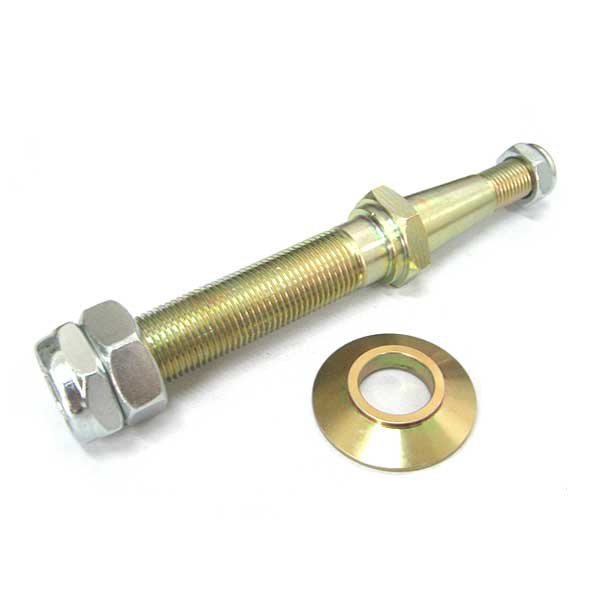
Adapter studAdjustable tie rod adapter stud with cross-drilled cotter pin hole near the tapered tip
Safety feature

Adjustable Tie Rod Adapter Stud

The tapered stud end is cross-drilled near the tip for a cotter pin or lock wire.

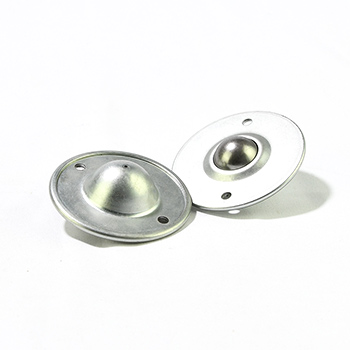
Ball transferBall transfer unit bearing housing with drilled mounting bolt pattern
Mounting pattern

Ball Transfer Unit Bearings

The mounting bolt pattern around the housing is drilled to match standard baseplate spacing.

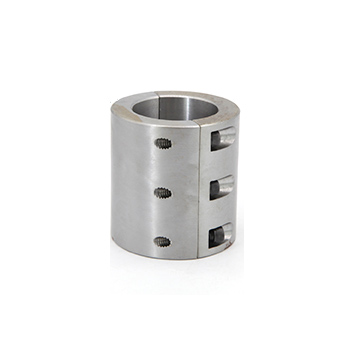
Tube clampChromoly steel tube clamp with drilled bolt clearance holes
Clearance holes

Heavy Duty Chromoly Steel Tube Clamp

Clearance holes through both clamp halves are drilled to match the clamping bolt size and position.

Quick releaseQuarter-turn quick release fastener stud with cross-drilled clip retention hole
Clip retention

1/4-Turn Quick Release Fastener

A small cross-drilled hole retains the spring clip that gives the fastener its quarter-turn release action.

Actuator kitRod extension kit for internal wastegate actuator with drilled and tapped lock-screw hole
Lock screw

Rod Extension Kit, Wastegate Actuator

A drilled and tapped radial hole takes a lock screw that fixes the extension length after adjustment.

Need a hole pattern, cross-hole, or lock feature that is not in the catalogue? Send us the drawing.

06 / Quality control

How Drilled Features Are Controlled


A drilled hole can be round and clean but still be off-position, undersized, or not perpendicular to the face it enters. Control focuses on position and orientation.

01

First article

The first part off a new setup is checked against the drawing, including hole position, diameter, depth, and perpendicularity where specified.

02

In-process checks

Patrol inspection during a production run confirms hole diameter and position as tooling wears, particularly on high-volume runs.

03

Deburring

A cross-hole that intersects a bore leaves a burr at the intersection. Deburring is treated as a required step where assembly or bearing fit depends on it.

04

Final inspection

Depending on the product and order, finished goods go through 100% inspection, sampling, or a customer-specified plan.

07 / Design for manufacture

Designing Drilled Features: What to Send, and What Drives Cost


What to send with an enquiry

  • Hole diameter, depth, and position referenced to a clear datum
  • Through or blind hole
  • As-drilled, tapped, or reamed requirement
  • Perpendicularity or true-position tolerance
  • Deburring or edge-break requirement
01

Depth-to-diameter ratio

Holes beyond roughly 5 times diameter need slower feeds, peck-drilling cycles, or a different tool strategy.

02

Edge distance

A hole too close to an edge or another feature can break through or leave too little material to carry load.

03

Intersecting features

Cross-holes and intersecting bores create an interrupted cut and a burr that must be planned for.

04

True position vs individual tolerances

A true-position callout often reflects the fit requirement of a bolt pattern more accurately than separate X/Y tolerances.

05

Tapped vs clearance holes

A tapped hole needs a pilot size, thread class, and full-thread depth; a clearance hole needs the correct fastener diameter.

06

Counterbores and countersinks

Specify the diameter and depth when a fastener head must sit flush or below the surface.

Before and after drilling

Drilling is a feature added to a part, not a starting point. The part is usually turned or milled first, then drilled in the same setup or as a follow-on operation.

Typical MOQ100–300 pieces per item; stock items may be available in smaller quantities.
Route-based timing20-day samples / 30-day production on Ningbo turning; 45-day samples / 60-day production on Taixing milling.
20+ countriesCustomers are served through SYZ Machine’s export team.
08 / Buyer questions

Drilling FAQ


Do you have a dedicated drilling department?

Mostly no. Most holes are drilled as part of the turning or milling operation that makes the rest of the part, on the same machine and in the same setup. Our affiliated Wuxi base additionally runs 4 dedicated drilling machines for high-volume drilling on already-turned rod ends and ball joints.

Can you hold tight position tolerance on a hole pattern?

Yes, depending on the feature and fixture. A hole drilled in the same setup as the surrounding geometry holds position more reliably than one requiring a separate fixture. Where a programme needs true-position verification, routing and reporting scope are confirmed with the quotation.

What is a cross-hole, and why does it need special attention?

A cross-hole is drilled at an angle to a part’s main axis, such as a hole through a turned pin for a cotter pin. It is more sensitive to fixturing accuracy than an on-centre hole and may leave a burr where it intersects an existing bore.

Can you tap threads into a drilled hole?

Yes. Tapping is done as a follow-on step to drilling where practical. Tell us the thread size, class, full-thread depth, and whether the hole is through or blind.

What is your MOQ and lead time for a drilled feature?

Drilling follows the part it is part of. Typical MOQ is 100–300 pieces per item. Timing depends on whether the hole is produced on the Ningbo turning route or the Taixing milling route.

Which materials do you drill?

Carbon steel, 4130 chromoly alloy steel, 6061 aluminium, and 304/316 stainless steel appear across our own product lines. Material is confirmed against the drawing and application.

Do you deburr drilled holes?

Yes, as a required step where a hole intersects an existing bore or feature, or where an unremoved burr could affect assembly or bearing fit.

Can we audit the facility or arrange a third-party inspection?

Yes. Client visits and third-party inspections can be arranged for the relevant production site. The affiliated Wuxi base has been assessed on-site by SGS under report No. 492475436_P+T, valid to 9 July 2027.

09 / Start a review

Need a Hole Pattern, Cross-Hole, or Lock Feature?


Send the drawing with hole diameter, depth, position, datum, and any thread or deburring requirement. We will confirm the route and what it will take to make it.

Request a Quote

Please submit the form or email [email protected]

🍪
We Use Cookies