
Clevis Rod Ends Buyers’ Guide
A clevis rod end is a U-shaped fork with a cross-hole — a strong, simple single-axis pivot for cylinders and linkage. This guide explains clevis construction, the DIN 71752 / 71751 standards, when a clevis beats a rod end, and how to choose across SYZ’s CR/CL and G-series.
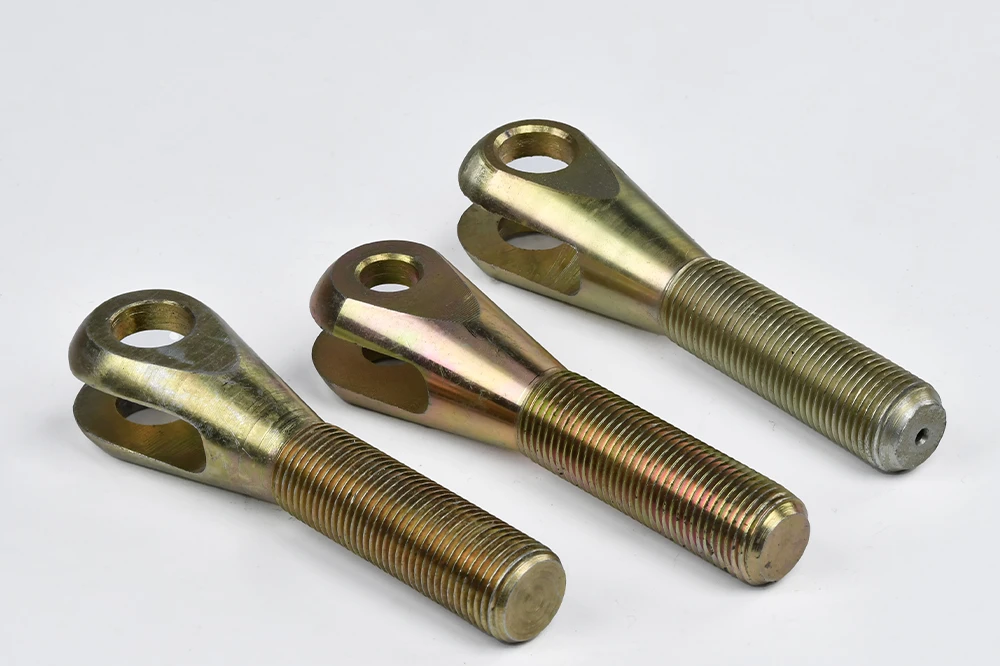
What Are Clevis Rod Ends & Clevis Joints?
DefinitionA clevis rod end is a U-shaped fitting with a clevis eye and cross-hole: a clevis pin passes through the fork and the mating tab, creating a strong axis of rotation for linkage that moves in one plane. Compared with a spherical rod end, a clevis is simpler, rigid and easier to assemble when the mechanism only needs single-axis motion.
SYZ manufactures rod clevises, yoke clevises, swivel clevises, DIN 71752 clevis rod ends and DIN 71751 clevis components — plus custom clevis parts — from carbon steel, stainless steel, aluminum, chromoly steel or titanium. Selection rule: use a clevis when the load path and pivot motion stay in one plane; use a rod end when the linkage needs multi-axis articulation.
- Also called
- Rod clevis · fork end · yoke end
- Core function
- Single-axis pin pivot for linkage/cylinders
- Standards
- DIN 71752 (rod ends) · DIN 71751 (clevis)
- Size range
- 12 inch + 49 metric standard sizes
Anatomy of a Clevis Rod End
StructureThree functional elements — simplicity is the clevis’s engineering value.
Clevis Fork
The U-shaped body with two parallel prongs and cross-holes — it straddles the mating tab or rod eye and carries the load in single-axis bending.
Clevis Pin
The pin through fork and mating part creates the pivot; retained by a clip or cotter. Pin diameter sets the shear and bearing loads.
Threaded Shank
The shank (RH or LH, inch CR/CL or metric G-series) threads into the cylinder rod, linkage tube or adjuster — the interface to the rest of the mechanism.
Clevis Joint
When load and motion stay in one plane, a clevis is stronger per size, cheaper and assembly-friendly — the standard on cylinder rods and machinery linkage.
No spherical element to wear; the pin and bushing/bore are the only wear points.
Rod End
When the linkage needs angular misalignment or multi-axis articulation — suspension links, steering, any geometry that moves out of plane — a spherical rod end is the correct joint.
Forcing a clevis into an out-of-plane mechanism binds the pin and loads the fork in torsion.
What a Clevis Does in a Mechanism
FunctionFour engineering jobs — each maps to a selection decision.
Carry single-axis load
The fork and pin carry push-pull load in one plane with high stiffness — choose pin diameter for the shear/bearing load and the mating tab thickness.
Allow quick connection
Clevis pins drop in and clip — assemblies open and close for service without threading or pressing, which is why cylinders standardize on clevis ends.
Adapt to the driver
Threaded shanks (RH/LH, inch/metric) interface with cylinder rods, tube adapters and adjusters — matching the thread hand keeps adjustability consistent.
Stay rigid
No spherical play: the pivot is defined by the pin-to-bore fit — the right choice where precise, backlash-light single-axis motion matters.
Where clevises fail in the field
- Forced into out-of-plane mechanisms — pin binding and fork twist.
- Undersized clevis pins for the shear and bearing loads.
- Unsecured pins — missing clips let the joint disassemble.
- Thread-hand mismatch with the mating adjuster or rod.
Choose the Material
MaterialsClevises are available from economical carbon steel to exotic custom materials — match to environment and load.
Carbon Steel (CR/CL, G)
Zinc-plated standardThe standard material for both inch CR/CL and metric G-series — strong, economical, zinc plated for corrosion protection.
Stainless Steel
Corrosion serviceStainless construction for washdown, marine and chemical environments — custom and series options.
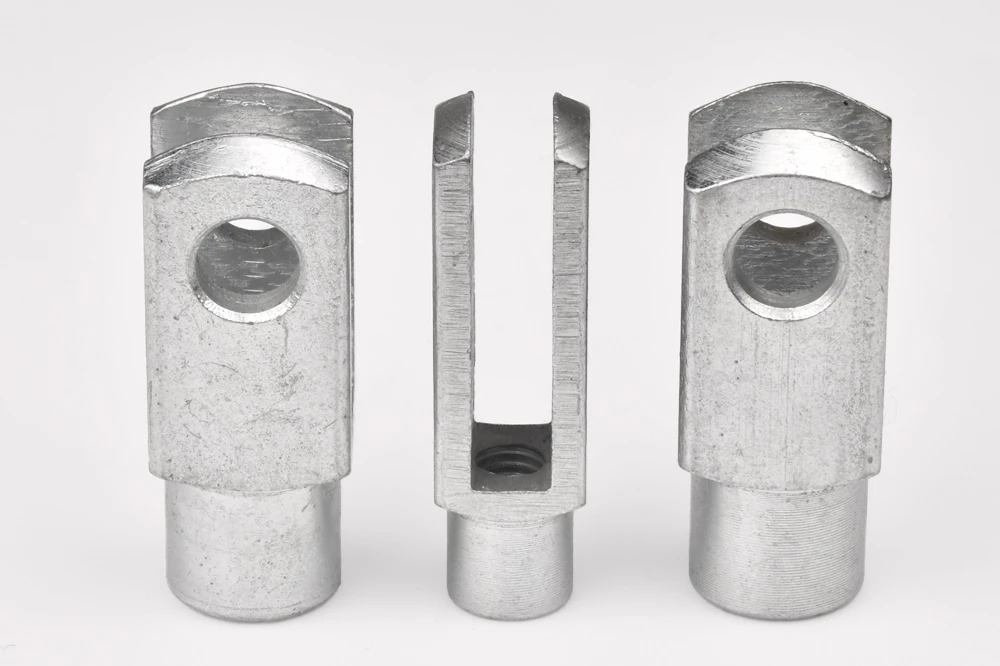
G-Series Metric
DIN 71751 familyThe metric clevis joint family — 49 standard sizes covering cylinder rods and machinery linkage across Europe-standard dimensions.
Chromoly · Aluminum · Titanium
Custom to drawingFor performance and specialty builds, SYZ manufactures custom clevis parts to drawing in 4130 chromoly, aluminum and titanium.
Materials and Finishes
Surface treatmentFinish follows material — plating on steel, bare on the exotics.
| Treatment | Applied to | Series examples | What it does |
|---|---|---|---|
| Zinc plating | Carbon steel bodies | CR/CL, G-series | Sacrificial corrosion protection, standard across both series. |
| Stainless, bare | Stainless bodies | On request / series options | No plating — alloy is the corrosion strategy. |
| Anodizing (custom) | Aluminum custom clevises | Custom builds | Protective and cosmetic finish on aluminum specials. |
| Bare machined | Chromoly / titanium customs | Custom builds | Finish at fabrication for welded or coated assemblies. |
Size charts for every part are on the series pages — CR/CL inch and G-series metric. Custom clevises to drawing are a core SYZ service.
Where Clevises Perform
ApplicationsAnywhere a strong single-plane pin joint makes the mechanism simpler.
Hydraulic & Pneumatic Cylinders
Rod-end clevises on cylinder rods — the standard interface for linear actuators.
CR/CLG-seriesControl Linkage
Machinery control rods and levers with quick, repeatable pin connections.
CR/CLMachinery Pivots
Single-plane pivots on process and packaging equipment where stiffness matters.
G-seriesCustom Fork-End Assemblies
Performance and OEM clevis parts to drawing in specialty materials.
CustomHow to Choose: 5 Steps, Then the Series Table
Selection referenceConfirm the Motion Plane
Single-plane load and motion → clevis. Any out-of-plane articulation → rod end.
Size the Pin
Pin diameter sets shear and bearing capacity — match to the mating tab and working load.
Match the Standard
Inch machinery → CR/CL. Metric / DIN cylinders → G-series (DIN 71752/71751).
Choose the Thread
RH or LH shank, sized to the cylinder rod or adjuster; keep thread-hand logic consistent with the linkage.
Pick the Material
Carbon steel zinc for standard service; stainless or custom materials for environment and performance.
| Series | Standard | Size range | Thread | Specs |
|---|---|---|---|---|
| Clevis rod ends & joints | ||||
| CR / CL | Inch clevis rod ends | 12 standard sizes | RH & LH | View |
| G-Series | Metric clevis joints (DIN 71751/71752 family) | 49 standard sizes | RH & LH | View |
| Custom Clevis | To drawing | Per drawing | Per drawing | View |
Need multi-axis motion instead? Use the rod end range. Connecting clevises into adjustable links? See linkage rods and tube adapters.
Get Selection HelpClevis Buyers’ Questions
FAQQ1Clevis vs rod end — which should I use?
Q2What do DIN 71752 and DIN 71751 cover?
Q3What sizes are available?
Q4Can clevises be made in stainless or chromoly?
Q5How is a clevis pin retained?
Selecting Clevis Rod Ends?
Send us the pin load, standard and thread — or your drawing for a custom clevis. SYZ engineers reply with the right series and factory-direct pricing.