
Jam Nuts Buyers’ Guide
A jam nut locks a rod end, jack screw or turnbuckle at its set position so vibration can’t change it. This guide covers how jam nuts lock, the RH/LH groove-marking system, materials and SYZ’s 13-size range.
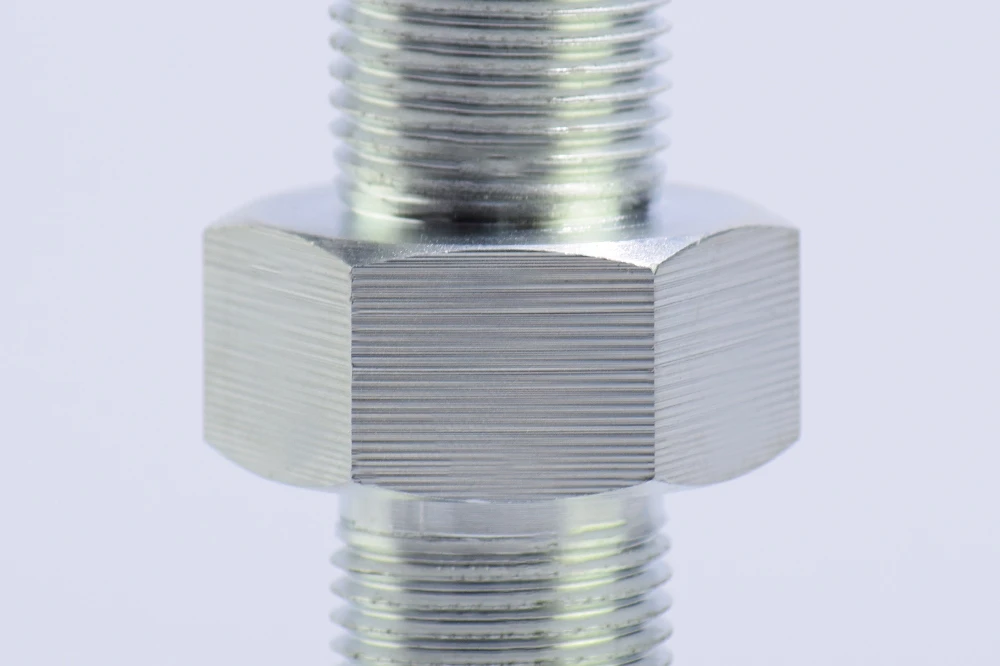
What Is a Jam Nut?
DefinitionA jam nut (lock nut) is a thin nut tightened against a rod end or adjuster to lock the threaded joint, preventing the setting from changing under vibration. Adjustable linkages use a jam nut on each end — one RH, one LH — to match the rod-end thread hands.
Because left-hand and right-hand hex profiles are impossible to tell apart at a glance, LH jam nuts are marked with a groove or yellow zinc plating — a simple visual cue that prevents installation errors on the build bench. Carbon steel zinc plated as standard, with an aluminum option for weight-critical builds, from 10-32 to 1-1/4″-12 in 13 sizes.
- Also called
- Lock nut · check nut
- Core function
- Lock threaded adjustment against vibration
- Thread range
- 10-32 UNF → 1-1/4″-12
- LH marking
- Dual circumference grooves
Anatomy: How a Jam Nut Locks
StructureA jam nut is simple — its engineering value is in how it is used.
Thin Nut Body
The low-profile hex body tightens against the mating part (rod end, jack screw, turnbuckle, bung nut) rather than clamping a bolt.
Thread Preload
The lock comes from thread preload: jamming the nut against the joint loads the threads in opposing directions, so vibration cannot rotate them.
RH / LH Hands
One RH and one LH nut per adjustable end — matching the thread hands of the rod ends or adjuster threads they lock.
LH Groove Marking
Dual grooves on the flats mark every left-hand nut — instant visual identification prevents cross-installation errors.
Carbon Steel, Zinc Plated
The standard jam nut across all 13 sizes — zinc-plated carbon steel for sacrificial corrosion protection in general service.
The default for rod ends, jack screws, turnbuckles and adjusters in machinery and vehicle linkage.
Aluminum Option
Aluminum jam nuts for weight-critical builds — racing links where rotating mass matters and the clamping loads are moderate.
Pair with the appropriate thread sizes on performance builds.
How to Use a Jam Nut Correctly
FunctionThe lock comes from thread preload — follow the rules and the joint never backs out.
Lock the adjustment
Tightened against the rod end or adjuster, the nut loads the threads so the set length cannot change — the whole point of the part.
Match the thread hand
RH nuts on RH threads, LH nuts on LH threads — the groove marking makes the LH side unmistakable at the bench.
Work in pairs on adjustable links
One RH + one LH jam nut per link end pair — consistent with the turnbuckle thread logic of the assembly.
Protect the finish and threads
Use the correct wrench on the hex; cross-threading or over-torque damages the very preload the nut provides.
Where jam nut installations fail
- LH nut installed on an RH thread — it won’t seat and won’t lock.
- Under-torque — the preload never develops, vibration wins.
- Relying on the jam nut as the only retention in extreme shock service.
- Aluminum nuts torqued like steel — stripped threads.
Choose the Material
MaterialsTwo material options across all 13 sizes.
Carbon Steel
Zinc-plated standardThe standard jam nut for every linkage application — strong, economical, corrosion-protected.
Aluminum
Weight-criticalAluminum bodies for racing and performance links where rotating mass counts.
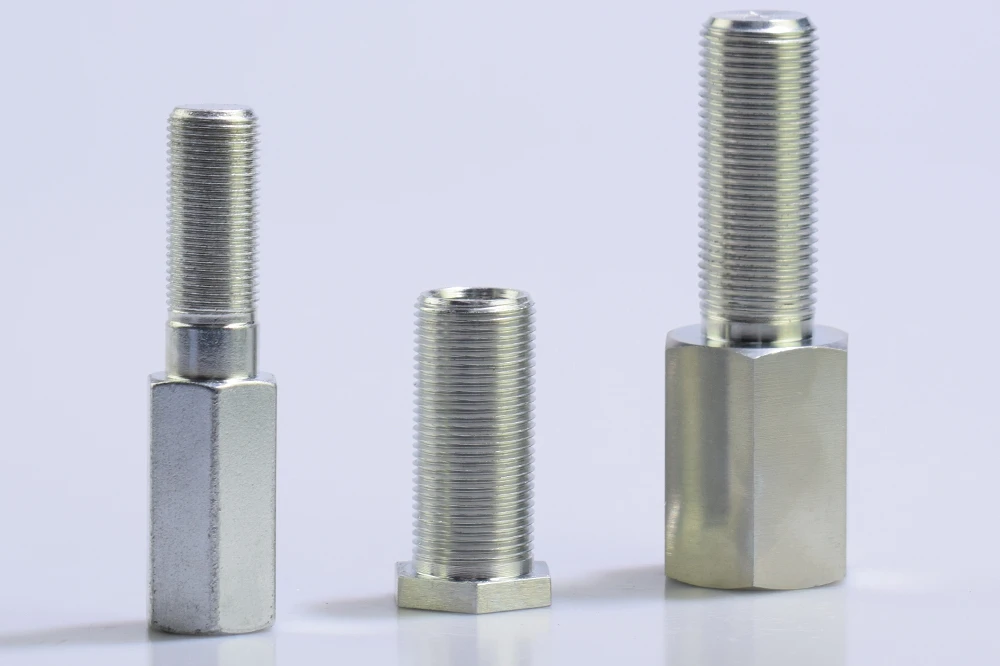
Pairs With
Adjusters & rod endsEvery adjustable component in the SYZ system — rod ends, jack screws, turnbuckles, bung nuts and adjusters — uses these nuts as its locking hardware.
Materials and Finishes
Surface treatmentOne finish standard, one material option.
| Treatment | Applied to | Series examples | What it does |
|---|---|---|---|
| Zinc plating | Carbon steel nuts | All 13 sizes | Sacrificial corrosion protection. |
| Aluminum, anodized/bare | Aluminum nuts | Weight-critical option | Light weight for racing; torque to aluminum values. |
| Groove marking | LH nuts | All LH sizes | Groove or yellow zinc plating for instant identification. |
The full thread and pitch chart is on the jam nuts spec page.
Where Jam Nuts Perform
ApplicationsAny adjustable threaded joint in the SYZ system — and most outside it.
Rod Ends
Lock male rod ends into adapters and bungs at their set position.
SteelAluminumJack Screws & Adjusters
Lock jack screw, bung nut and linkage adjuster settings.
SteelTurnbuckles
Lock hex bar settings on steering and suspension links.
SteelAluminumCustom Fabrication
Any RH/LH threaded mechanism that must hold its setting under vibration.
All sizesHow to Choose and Use: Then the Size Chart
Selection referenceMatch the Thread
Confirm thread diameter and pitch against the part being locked — 13 sizes from 10-32 UNF to 1-1/4″-12.
Match the Hand
RH for right-hand threads, groove-marked LH for left-hand — check the grooves at the bench.
Tighten Against the Part
Run the nut down and jam it firmly against the rod end or adjuster face — preload is the lock.
Pair RH + LH on Links
Adjustable links need one of each hand, matching the turnbuckle thread logic.
Torque Sensibly
Steel nuts take standard torque; aluminum nuts take reduced torque — strip risk is real.
| Attribute | Specification | Notes | Specs |
|---|---|---|---|
| SYZ jam nuts | |||
| Thread range | 10-32 UNF → 1-1/4″-12 | 13 sizes | View |
| Handedness | RH + LH | LH groove-marked | View |
| Materials | Carbon steel (zinc) + Aluminum option | Weight-critical builds | View |
| Marking | Dual circumference grooves | LH identification | View |
Which adjusters do these lock? Rod ends, jack screws, turnbuckles, bung adjuster nuts and linkage adjusters — the whole SYZ adjustable system.
Get Selection HelpJam Nut Buyers’ Questions
FAQQ1How does a jam nut lock the joint?
Q2How do I tell left-hand jam nuts apart?
Q3What sizes are covered?
Q4Are aluminum jam nuts available?
Q5Which parts do they fit?
Selecting Jam Nuts?
Send us your thread sizes and hands — SYZ engineers reply with the right nuts and factory-direct pricing from sample to full-container quantities.