
Linkage Rods Buyers’ Guide
A linkage rod is a complete, ready-to-install adjustable link: tubing, welded tube adapters, rod ends and jam nuts assembled to your center-to-center length. This guide explains the turnbuckle effect, the three structural options, and how SYZ builds suspension and steering links to length.
What Is a Linkage Rod?
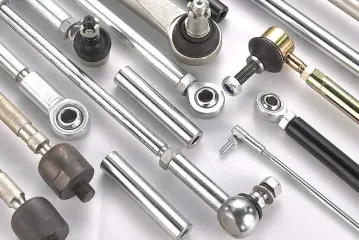
DefinitionA linkage rod (suspension link, adjustable link, threaded rod assembly) connects two pivot points while allowing precise length adjustment. A typical SYZ linkage rod includes: tubing cut to length, two tube adapters welded into the tube ends (one RH, one LH thread), two rod ends threaded into the adapters, and two jam nuts to lock the setting.
The turnbuckle effect: opposing thread directions let you lengthen or shorten the assembly by rotating the central tube — alignment tuning (caster, camber, toe) without disconnecting either pivot end from the vehicle.
- Also called
- Suspension link · adjustable link
- Core function
- Adjustable connection between two pivots
- Build
- Complete or components-only
- Adjustment
- Rotate the tube — no disassembly
Anatomy of a Linkage Rod
StructureFour components make up the standard adjustable assembly — understanding each makes the configuration options readable.
Tubing
The central structure, cut to your center-to-center length: DOM steel or 4130 chromoly, in round or hex profile, sized for the load and the adapters it must accept.
Tube Adapters (RH + LH)
Weld-in adapters at each tube end — one right-hand, one left-hand thread so the assembly adjusts turnbuckle-style. Chromoly adapters match SYZ rod-end threads.
Rod Ends
The pivots at each end — any SYZ series, from economy CM to high-misalignment JMX, male or female to suit the mount.
Jam Nuts
Two lock nuts (RH + LH) tightened against the adapters to hold the set length against vibration.
Tube + Weld Bungs
Structural tubing welded to insert adapters — the best strength-to-weight ratio and fully custom lengths. The standard construction for off-road suspension arms and motorsport links.
Requires welding at fabrication, then adjusts turnbuckle-style in place.
Solid Rod / Hex Bar
Solid threaded rod threads directly into female rod ends — the most compact, heaviest option for short links. Hex bar adds wrench flats for short steering and suspension tie-rods.
Choose these when space is tightest and the link is short — throttle, shifter and short steering links.
What a Linkage Rod Does in a Vehicle
FunctionJudged from the engineering side, an adjustable link has to do four jobs — and each maps to a configuration choice.
Carry suspension and steering loads
The tube structure and rod ends carry the working and shock loads — 4130 chromoly tubing with high-strength JMX-class rod ends for off-road duty; DOM with CM/JM series for general links.
Provide in-place length adjustment
The RH/LH turnbuckle effect lets alignment and preload be set with the link still mounted — the reason opposing threads are standard on steering and suspension links.
Hold its setting
Jam nuts on both ends lock the threads so vibration cannot walk the length out of adjustment.
Match the mount
Rod-end style (male/female), bore and misalignment angle are chosen for the bracket and the travel — misalignment spacers extend the range where needed.
Where linkage rods fail in the field
- Ordering length without defining center-to-center vs overall length.
- Mismatched thread hands (RH/RH) killing the turnbuckle adjustment.
- Under-sized tubing or rod ends for the shock load they see.
- Forgetting misalignment spacers, so the rod end binds on the tabs.
Tubing and Component Materials
MaterialsThe structure and the hardware set the rod’s capability — these are the material choices SYZ builds from.
4130 Chromoly Tubing
Performance standardHigher tensile and fatigue capability at lower weight — the default for off-road suspension arms, racing links and anything load-critical.
DOM Steel Tubing
Economical standardDrawn-over-mandrel carbon steel tubing — uniform wall and clean weldability for general links and industrial actuators.
Rod Ends
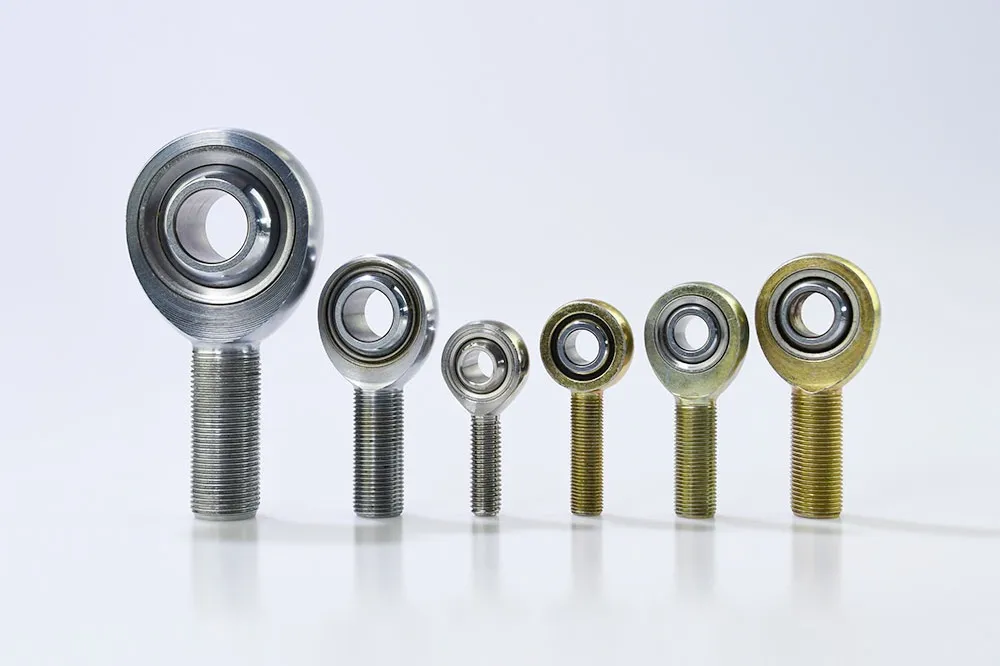
Chromoly or carbon steelAny SYZ series — chromoly JMX-class for high-shock off-road use, carbon steel CM/JM for general links; male or female, sized to the mount.
Aluminum Hex Bar
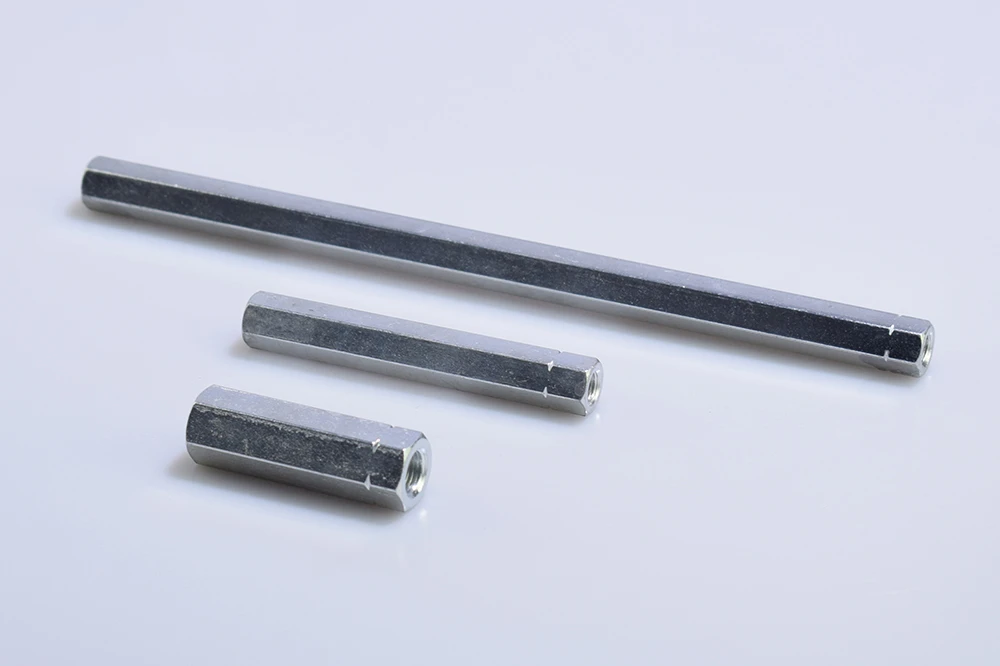
Short linksSolid hex bar with threads tapped directly into the ends — light and compact for short steering and suspension tie-rods.
Materials and Finishes
Surface treatmentThe link’s corrosion strategy is set by its components’ finishes.
| Treatment | Applied to | Series examples | What it does |
|---|---|---|---|
| Zinc plating | Adapters, rod ends, jam nuts | Standard build | Sacrificial protection on the threaded hardware. |
| Chromoly / DOM tube finish | Tubing | By fabrication | Tube is typically finished after welding — paint or coat the completed link. |
| Aluminum anodizing | Hex bar / aluminum parts | Aluminum builds | Anodized finish on aluminum components where used. |
Component finishes follow each part’s spec page — see tube adapters and rod ends for details.
Where Linkage Rods Perform
ApplicationsConfigured for off-road suspension, racing control links and industrial actuators.
Off-Road Links
Tie rods, control arms, sway-bar links and panhard/track bars — 4130 chromoly with high-strength rod ends.
JMXXM/XFPCMMotorsports
Weight-optimized pushrods, steering links and 4-link systems built from aluminum or chromoly.
ALJMJMXHex barSteering Systems
Custom tie rods and drag links with RH/LH adjustment and heavy-duty ends.
HJMXTie rod pathIndustrial Actuators
Actuator and cylinder linkage rods in DOM with general-duty rod ends.
CMJMComponent Supply
Order complete assemblies or the components — tubing, adapters, ends and nuts separately.
ComponentsKitsHow to Choose: 5 Steps, Then the Configuration Table
Selection referenceDefine the Length
Specify center-to-center length and the adjustment range you need around it — this is the first question on every build.
Pick the Structure
Tube + adapters for suspension; solid rod or hex bar for short, compact links.
Choose Tubing Material
4130 chromoly for shock and fatigue duty; DOM for general linkage on a budget.
Select the Ends
Rod-end series by load and misalignment; ball joints or clevises where the mount suits them.
Set the Thread Logic
RH + LH for turnbuckle adjustment; confirm jam nuts, and misalignment spacers where the travel demands them.
| Build path | Components | Best for | Config |
|---|---|---|---|
| Adjustable heim-joint link | |||
| Rod ends + tube adapters + jam nuts | Any SYZ series | Off-road and motorsport links | View |
| Specialty paths | |||
| Ball joint linkage | Ball joint linkages / small ball joints | Compact ball-stud linkage | View |
| Clevis & yoke ends | CR/CL + G-series | Single-axis pin joints | View |
| Turnbuckle / hex bar / jack screw | Female-female hex bar | Short fine-adjust links | View |
Configuring an assembly? Send center-to-center length, adjustment range, tubing material, OD & wall, profile, rod-end series and thread hands. See the linkage rods page for the full build path, or browse tube adapters to build it yourself.
Get Selection HelpLinkage Rod Buyers’ Questions
FAQQ1What information do you need to build a linkage rod?
Q2Why RH and LH threads on one link?
Q3Can I order without the rod ends installed?
Q4Which tubing should I use — DOM or 4130 chromoly?
Q5Do the links come with jam nuts?
Configuring a Linkage Rod?
Send us your center-to-center length, tubing choice and end fittings — SYZ builds complete adjustable links to length, or supplies the components, at factory-direct pricing.