
Rod Eyes Buyers’ Guide
A rod eye is a solid forged eye end with a threaded shank — a simple, rugged single-axis pivot for cylinders, springs, shocks and basic linkage, without a spherical bearing. This guide covers construction, the RER/REL range and how to choose.
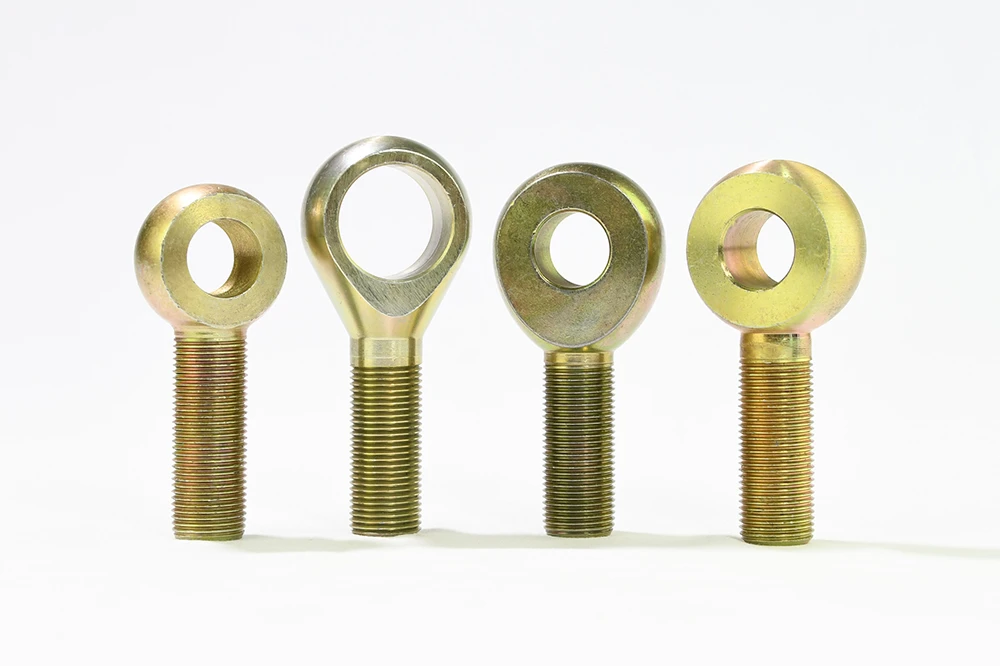
What Is a Rod Eye?
DefinitionA rod eye (eye end) is a one-piece forged fitting with a circular eye (for a pin or bolt) and an integral threaded shank. Unlike a rod end, it has no spherical bearing — it provides a simple single-axis pivot.
It is the economical choice for cylinder rods, spring/shock mounts and basic linkage where multi-axis articulation isn’t needed. SYZ rod eyes are carbon steel, zinc plated, in right-hand (RER) and left-hand (REL) thread, bore 0.500″–0.750″; threads 1/2-20, 5/8-18 and 3/4-16, six sizes.
- Also called
- Eye end · threaded eye
- Core function
- Simple single-axis forged pivot
- Thread logic
- RER (RH) + REL (LH)
- Range
- 0.500″–0.750″ bore · threads 1/2-20, 5/8-18, 3/4-16 · 6 sizes
Anatomy of a Rod Eye
StructureThree elements — the simplicity is the value.
Forged Eye
The one-piece circular eye for a pin or bolt — forged for grain strength, with no bearing to wear or service.
Cross-Hole
The eye’s bore takes the pin or bolt; its diameter (0.500″ to 0.750″) matches the mating pin and the load.
Threaded Shank
The integral RH (RER) or LH (REL) shank threads into the cylinder rod, spring mount or linkage member.
Rod Eye
One-piece, forged, economical: when the mechanism’s load and motion stay in one plane — cylinder rods, spring and shock mounts, basic linkage — the eye is the rugged low-cost answer.
No bearing means no bearing service — the eye and pin are the only wear points.
Rod End
When the linkage needs angular misalignment or multi-axis articulation, a spherical rod end is required — forcing an eye into an out-of-plane mechanism binds the pin.
Choose by the mechanism, not by price alone.
What a Rod Eye Does in the Assembly
FunctionFour engineering jobs — each maps to a selection check.
Provide a rugged pin pivot
The forged eye and pin carry single-plane loads with high stiffness — no bearing elements, nothing to service.
Thread into the driver
The integral shank connects to cylinder rods, spring hardware or linkage — RH/LH options keep thread logic consistent with the rest of the build.
Resist corrosion in service
Zinc plating protects the forged steel in normal environments.
Keep the build economical
Where a spherical bearing adds nothing, the eye is the economical joint — the right part for the job.
Where rod eyes fail in the field
- Forced into out-of-plane mechanisms — pin binding and eye distortion.
- Undersized pin or cross-hole for the working load.
- Thread-hand mismatch with the mating member.
- Missing pin retention — clips and cotters are part of the joint.
Material and Thread Options
MaterialsOne material, two thread hands, six sizes.
RER — Right Hand
Forged carbon steelRight-hand threaded forged eyes for cylinder rods, spring mounts and linkage.
REL — Left Hand
Turnbuckle pairsLeft-hand counterparts for adjustable assemblies — keeping RH/LH logic consistent across the linkage.
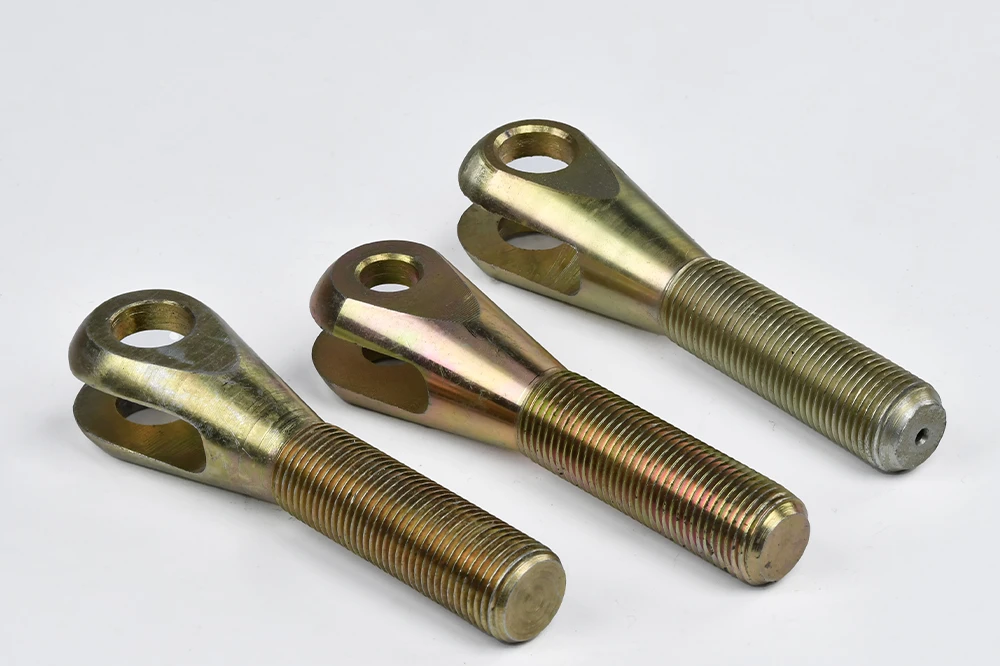
Clevis Alternative
Openable single-axisIf the joint needs to open and close around the mating part, a clevis rod end is the single-axis alternative to an eye.
Materials and Finishes
Surface treatmentOne standard finish across the range.
| Treatment | Applied to | Series examples | What it does |
|---|---|---|---|
| Forged carbon steel | Body | All 6 sizes | Forged for grain strength. |
| Zinc plating | Body | All 6 sizes | Sacrificial corrosion protection for normal environments. |
| Pin retention | Assembly level | All builds | Clips/cotters secure the pin — part of the joint. |
Bore/thread pairings for all 6 sizes are on the rod eyes spec page.
Where Rod Eyes Perform
ApplicationsAnywhere a simple, strong threaded eye beats a bearing joint.
Cylinder Rods
Eye ends on hydraulic and pneumatic cylinder rods — the classic interface.
RERRELSpring & Shock Mounts
Threaded eye mounts for springs and shocks on single-plane pivots.
RERRELBasic Linkage
Machinery and equipment linkage where multi-axis articulation is not needed.
RERRELHow to Choose: 4 Steps, Then the Size Table
Selection referenceConfirm the Motion
Single-plane pivot → rod eye. Any multi-axis articulation → rod end.
Match the Pin
Eye bore 0.500″ to 0.750″ to the mating pin and load.
Match the Thread
Shank bore 0.500″–0.750″; threads 1/2-20, 5/8-18 or 3/4-16, in RER (RH) or REL (LH) to fit the assembly.
Plan the Retention
Clip or cotter for the pin — the joint includes its retention.
| Attribute | Specification | Notes | Specs |
|---|---|---|---|
| SYZ rod eyes | |||
| Construction | One-piece forged eye end | No spherical bearing | View |
| Material & finish | Carbon steel, zinc plated | Corrosion protection | View |
| Thread hands | RER (RH) + REL (LH) | System-consistent pairing | View |
| Bore/thread range | 0.500″–0.750″ bore · threads 1/2-20, 5/8-18, 3/4-16 | 6 sizes | View |
Need articulation? Use the rod end range; for openable single-axis joints see clevis rod ends.
Get Selection HelpRod Eye Buyers’ Questions
FAQQ1What is the difference between a rod eye and a rod end?
Q2When should I use a rod eye instead of a rod end?
Q3What do RER and REL mean?
Q4What sizes are covered?
Q5What material are they?
Selecting Rod Eyes?
Send us the pin size and thread — SYZ engineers reply with the right eye and factory-direct pricing from sample to production quantities.