
Jack Screws Buyers’ Guide
A jack screw is a double-male threaded adjuster — thread a female rod end onto each end and turn the body to set length, turnbuckle-style. This guide covers the JSI (carbon steel) and JSX (chromoly) families in inch and metric, and how to choose.
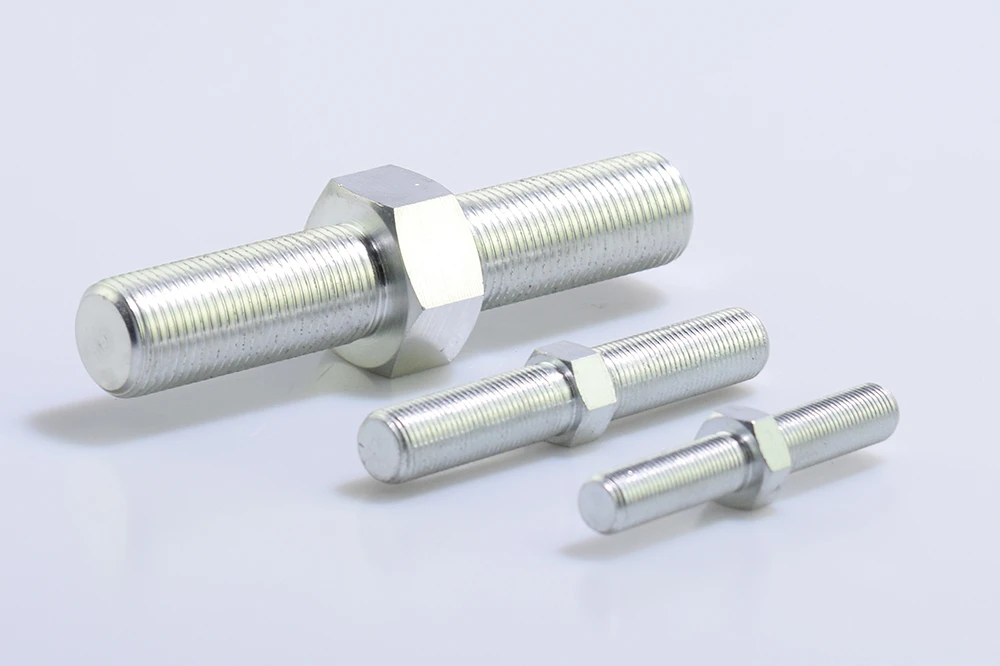
What Is a Jack Screw?
DefinitionA jack screw is a double-male threaded adjuster used to fine-tune the length of a rod-end linkage: a female-threaded rod end goes onto each male end (locked with jam nuts), and turning the body lengthens or shortens the assembly — a compact alternative to a full turnbuckle for precise preload and alignment.
The turnbuckle effect: one right-hand and one left-hand threaded end means rotating the central body moves both rod ends simultaneously — rapid adjustment while the linkage stays mounted. SYZ offers carbon steel (JSI / JSI-M) and chromoly (JSX / JSX-M) in inch 10-32 to 1-12 and metric M5 to M16, with RH/LH options.
- Also called
- Male-male adjuster · threaded adjuster
- Core function
- In-place length/preload adjustment
- Families
- JSI steel · JSX chromoly (± M)
- Range
- Inch 10-32–1-12 · metric M5–M16
Anatomy of a Jack Screw
StructureOne machined body, two male threads, one adjustment logic.
Male Thread (RH)
One end carries right-hand UNF or metric thread into a female rod end — this side’s position is the reference.
Male Thread (LH)
The opposite end carries left-hand thread — so rotating the body threads both rod ends in or out simultaneously.
Body
The central hex/cylindrical body — its length sets the adjustment travel; the flats give the wrench grip to turn it under load.
Jam Nut Pair
Two jam nuts (RH + LH) lock each rod end against the body after setting — mandatory in vibrating service.
JSI / JSI-M — Carbon Steel
Zinc-plated carbon steel bodies: JSI in inch (10-32 to 1-12, 30 sizes) and JSI-M in metric (M5 to M16).
The standard choice for general linkage preload and alignment where loads are moderate.
JSX / JSX-M — Chromoly
Heat-treated chromoly bodies in the same sizes for high-load or vibration applications — stronger threads and body where a steel adjuster would fatigue.
Choose these for suspension links and machinery where the adjuster is a structural member.
What a Jack Screw Does in a Link
FunctionFour engineering jobs — each maps to a selection decision.
Set link length precisely
Fine thread pitch gives precise length or preload adjustment — finer than a full turnbuckle body of the same size.
Adjust in place
RH/LH thread logic moves both rod ends at once — adjustment without removing the link from the machine.
Carry the linkage load
The body is a structural member in the load path — chromoly JSX where shock and vibration live.
Hold the setting
Jam nuts at both ends lock the threads; the adjuster keeps its length under vibration.
Where jack screws fail in the field
- Missing jam nuts — the adjustment walks out under vibration.
- Steel bodies on shock-loaded suspension instead of chromoly.
- No thread engagement margin left at either end of travel.
- Turning the body without relieving side load — galled threads.
Choose the Material
MaterialsTwo material tracks, both in inch and metric.
JSI / JSI-M — Carbon Steel
Zinc-plated standardThe economical standard bodies for general linkage preload and alignment — inch and metric.
JSX / JSX-M — Chromoly
High-load optionChromoly bodies for high-load or vibration applications — suspension and machinery where the adjuster is structural.
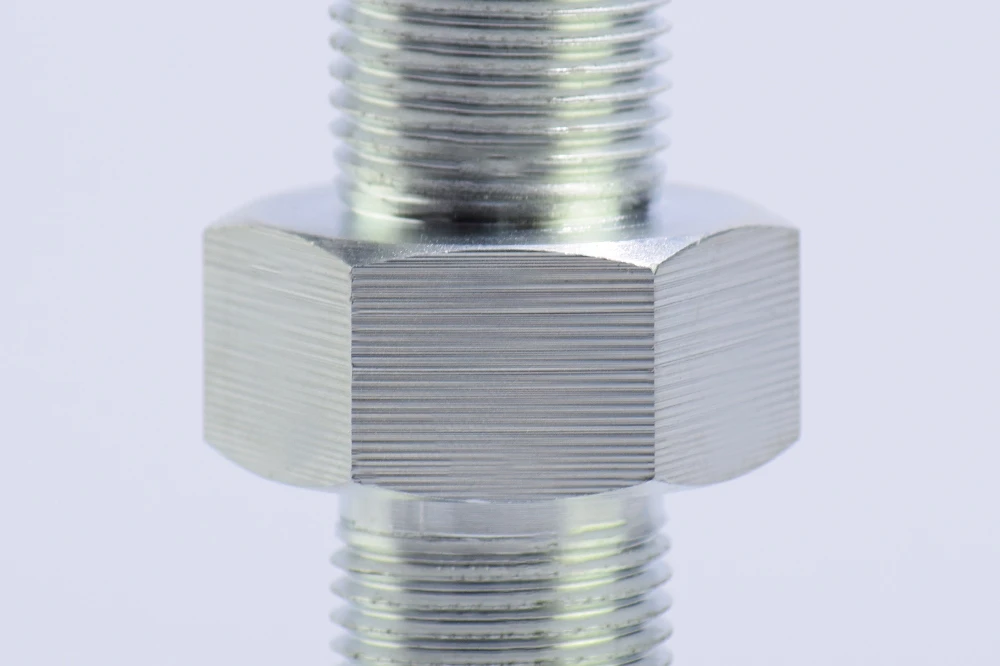
Pair with Jam Nuts
Locking hardwareRH/LH jam nuts are the mandatory companion — they hold whatever the jack screw sets.
Materials and Finishes
Surface treatmentFinish follows material — plating on steel, bare on chromoly.
| Treatment | Applied to | Series examples | What it does |
|---|---|---|---|
| Zinc plating | JSI / JSI-M bodies | Carbon steel family | Sacrificial corrosion protection for general service. |
| Heat-treated chromoly | JSX / JSX-M bodies | Chromoly family | Strength first; finish at fabrication for coated assemblies. |
| Thread protection | Threads | All bodies | Keep threads clean and protected until assembly. |
Thread sizes and body lengths for every configuration are on the jack screw spec page (inch) and metric page.
Where Jack Screws Perform
ApplicationsAnywhere a compact, precise length adjustment between two female rod ends is needed.
Rod-End Linkage
Preload and alignment adjustment on heim-joint links — the compact turnbuckle.
JSIJSXSuspension Links
High-load and vibration service with chromoly bodies.
JSXJSX-MMachinery & Actuators
Fine adjustment of actuator and control linkage lengths.
JSIJSI-MMetric Machinery
M5–M16 metric bodies for European-standard equipment.
JSI-MJSX-MHow to Choose: 5 Steps, Then the Series Table
Selection referenceConfirm the Rod Ends
Jack screws need female rod ends on both sides — confirm their threads first.
Set the Travel
Choose body length for the adjustment range; leave engagement margin at both ends.
Pick the Material
Carbon steel for general duty; chromoly where the adjuster sees shock, vibration or structural load.
Match the Standard
Inch 10-32 to 1-12 (JSI/JSX) or metric M5 to M16 (JSI-M/JSX-M).
Plan the Locking
Add RH/LH jam nuts at both ends — no exceptions in vibrating service.
| Series | Material | Standard | Range | Specs |
|---|---|---|---|---|
| Jack screw families | ||||
| JSI | Carbon steel, zinc plated | Inch | 10-32 → 1-12 · 30 sizes | View |
| JSX | Chromoly, heat treated | Inch | 10-32 → 1-12 | View |
| JSI-M | Carbon steel, zinc plated | Metric | M5 → M16 | View |
| JSX-M | Chromoly, heat treated | Metric | M5 → M16 | View |
Completing the adjustment? Add jam nuts, or compare with turnbuckle hex bars and linkage adjusters for other adjustment styles.
Get Selection HelpJack Screw Buyers’ Questions
FAQQ1What is a jack screw used for?
Q2JSI or JSX — which material?
Q3Do I need jam nuts with a jack screw?
Q4What sizes are covered?
Q5How does the turnbuckle effect work here?
Selecting Jack Screws?
Send us your rod-end threads and adjustment range — SYZ engineers reply with the right series and body length at factory-direct pricing.