
Tie Rod Ends Buyers’ Guide
A tie rod end is the wear joint connecting a steering tie rod or drag link to the knuckle or steering arm. This guide explains the OEM-style and heim-joint steering paths, how adjustable sleeves work, and how to spec either route for OEM replacement, agriculture or off-road fabrication.
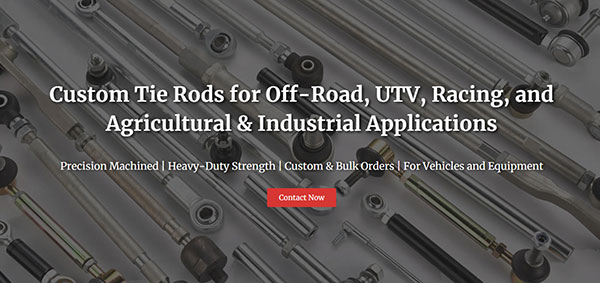
What Is a Tie Rod End?
DefinitionA tie rod end is the steering linkage joint at the end of a tie rod or drag link. OEM-style tie rod ends use a tapered ball stud, castle/lock nut, grease boot and threaded shank — the wear joint designed to be replaced in service. Custom off-road steering often replaces them with heavy-duty rod ends (heim joints) plus misalignment spacers and drilled steering arms.
SYZ supports both paths — plus the threaded sleeves, jam nuts, spacers and tube adapters that complete a steering system. Send taper, thread and center-to-center length for a quote on either route.
- Also called
- Steering tie rod end · drag link end
- Core function
- Steering linkage wear joint at the knuckle
- Two paths
- OEM tapered stud · heim-joint conversion
- Adjustment
- RH + LH threaded sleeves
Anatomy: Two Steering Constructions
StructureThe two steering paths use different hardware — understanding each construction makes the choice readable.
Tapered Ball Stud (OEM)
The OEM wear element: a tapered ball stud seats in a matched knuckle or arm taper, retained by a castle nut and cotter pin, with a grease boot sealing the joint.
Threaded Shank
The stud’s threaded shank screws into the tie rod or adjusting sleeve; LH and RH threads on opposite ends give the classic toe-adjustment turnbuckle.
Heim-Joint Conversion
The off-road path: a chromoly spherical rod end bolted through a drilled steering arm, with high-misalignment spacers preserving steering travel and a chromoly/DOM tube between.
Sleeves & Adjusters
Tube adapters, weld bungs, linkage adjusters or turnbuckle sleeves provide the toe/length adjustment without removing the ends.
OEM-Style Tie Rod End
Tapered ball stud with boot and castle nut — direct OEM compatibility for tractors, ATVs, UTVs, lawn equipment, trucks and machinery. Greasable and sealed, sized by taper and thread.
The right path for replacement service and any build that must use stock knuckles and arms.
Heim-Joint Steering
A bolt-through spherical rod end with misalignment spacers on a chromoly/DOM tube — rebuildable, very strong, and adjustable through tube adapters and jam nuts.
Requires drilled or custom steering arms; the trade for strength and serviceability in fabricated off-road steering.
What a Tie Rod End Does in the Steering System
FunctionFour engineering jobs — each maps to a hardware decision.
Transmit steering force
The joint carries the push-pull steering load from the rack or pitman arm to the knuckle — size the stud/taper or heim by the vehicle’s steering loads.
Absorb angular movement
Suspension travel swings the knuckle through an arc while the tie rod stays nearly straight — the ball stud or heim absorbs that changing geometry.
Set and hold toe
Threaded sleeves and RH/LH ends set toe alignment; jam nuts or sleeve clamps lock it against road shock.
Survive as a wear item
OEM joints are designed to wear and be replaced — boots and greasing extend life; heim joints trade boots for rebuildable, high-load spherical bearings.
Where tie rod ends fail in the field
- Ordering by vehicle model without confirming taper size and direction.
- Mixing LH/RH threads so the sleeve cannot adjust.
- Heim conversions without misalignment spacers — binding and bent studs.
- Running torn boots — contamination destroys the tapered joint quickly.
Materials Across Both Steering Paths
MaterialsMaterial choice follows the path: forged steel for OEM studs, heat-treated chromoly for the heim conversion.
OEM-Style Studs
Forged replacementForged steel tapered-stud joints to OEM geometry — cross-referenced by part number, taper and thread for direct replacement service.
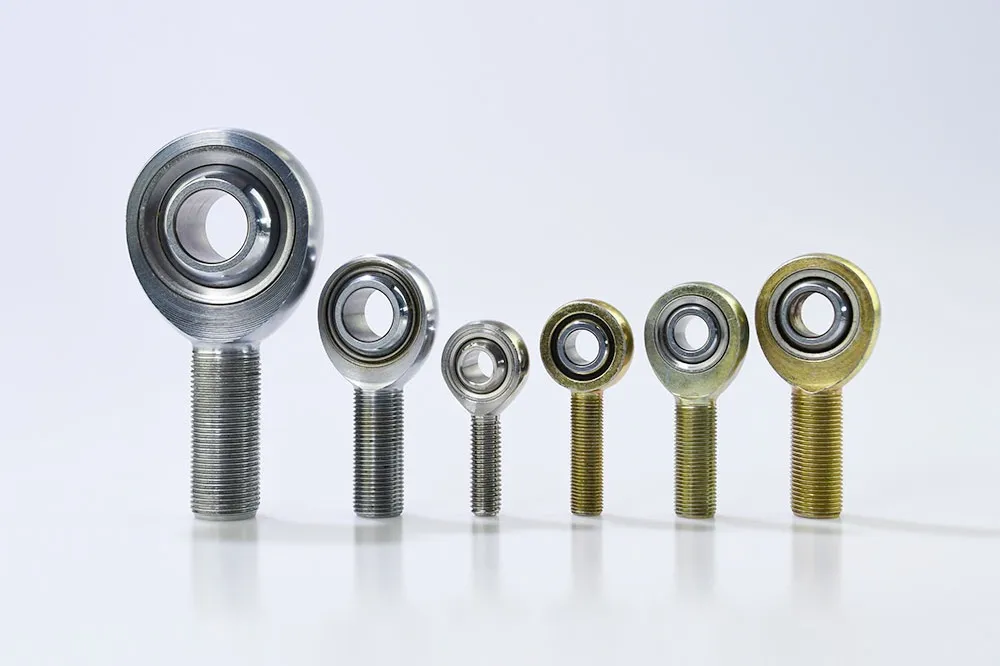
4130 Chromoly Heim
Off-road conversionHeat-treated chromoly rod ends (JMX/HJMX class) for fabricated steering — high load capacity and rebuildable service.
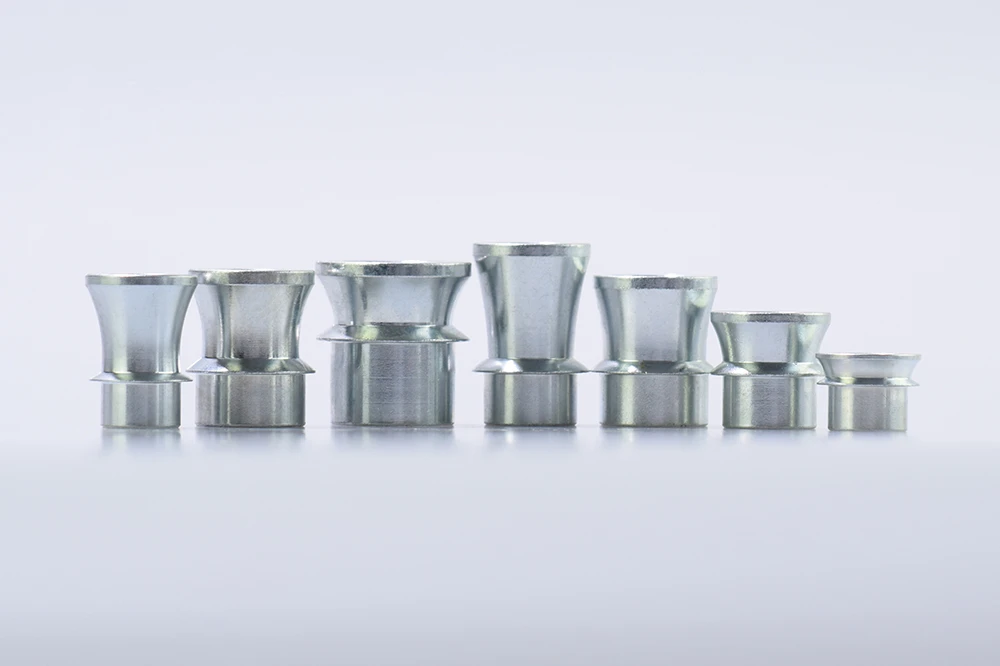
Misalignment Spacers
Steering travelStainless or carbon steel spacers extend the working angle and center the heim in drilled arms — required hardware on the conversion path.
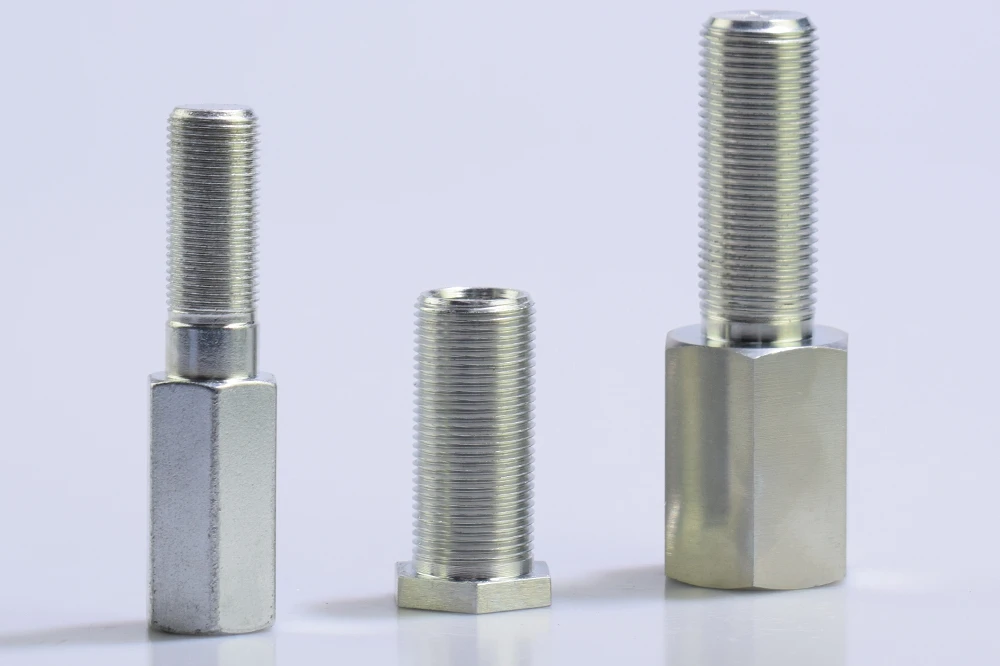
Sleeves & Adjusters
Toe adjustmentTube adapters, linkage adjusters and turnbuckle sleeves provide the RH/LH toe adjustment without removing the ends.
Materials and Finishes
Surface treatmentSteering hardware lives outdoors — finishes follow each component family.
| Treatment | Applied to | Series examples | What it does |
|---|---|---|---|
| Zinc plating | OEM studs, sleeves, adjusters | OEM path | Sacrificial corrosion protection on replacement steering hardware. |
| Chromoly, heat-treated | Heim joints, adapters | Conversion path | Heat-treated 4130 for strength; finish at fabrication. |
| Stainless spacers | Misalignment hardware | Conversion path | Stainless SG spacers for corrosion-prone climates. |
| Boots & grease | OEM ball studs | OEM path | The sealing system on tapered joints — inspect and grease in service. |
Component finishes follow each part’s spec page — see rod ends and spacers for details.
Where Tie Rod Ends Perform
ApplicationsBoth steering paths, from OEM replacement to full custom fabrication.
OEM & Agricultural Steering
Tractors, ATVs, UTVs, lawn equipment, trucks and machinery — cross-referenced by part number or full dimensions.
OEM studsOff-Road / Fabricated Steering
Custom tie rods and drag links: chromoly/DOM tubing, weld bungs, jam nuts, large chromoly heim joints.
JMXHJMXSpacersTie Rod Sleeves & Adjusters
Toe and length adjustment without removing the ends — confirm RH/LH arrangement for the pair.
LBATurnbucklesComplete Steering Kits
Rod or drag link + ends + jam nuts + spacers, assembled to center-to-center length.
Linkage rodsHow to Choose: 5 Steps, Then the Path Table
Selection referencePick the Path
Stock-arm replacement → OEM tapered studs. Fabricated off-road steering → heim-joint conversion with chromoly ends and spacers.
Confirm the Geometry
OEM: taper diameter & direction, thread, stud length. Heim: bore, bolt size and arm thickness for the drilled joint.
Set the Adjustment
Choose sleeves/adjusters with RH/LH arrangement so toe can be set in place; plan jam nuts or clamps to lock it.
Size the Tube
For fabricated links: chromoly/DOM tubing sized for load, with one RH and one LH weld adapter.
Plan for Service
OEM joints are wear items — boots and grease. Heim joints are rebuildable — spec spacers so travel isn’t lost.
| Buyer need | Recommended path | Hardware | Where |
|---|---|---|---|
| Steering solution paths | |||
| OEM-style replacement | Tapered ball stud joints | Cross-reference by part number / taper / thread | View |
| Off-road heim steering | Chromoly rod ends + misalignment spacers + tube adapters | JMX / HJMX class | View |
| Tie rod adjusting sleeve | Tube adapters / linkage adjusters / turnbuckles | RH + LH pairs | View |
| Complete steering link kit | Tie rod / drag link + ends + jam nuts + spacers | Built to length | View |
| Compact steering ball joint | Ball joints / ball joint linkages | Light-duty circuits | View |
Building the full link? See linkage rods for complete adjustable assemblies, and rod end spacers for the steering-travel hardware.
Get Selection HelpTie Rod End Buyers’ Questions
FAQQ1What measurements do you need to quote a tie rod end?
Q2Should I use OEM-style or heim-joint steering?
Q3Why do tie rods use RH and LH threads?
Q4Do heim-joint conversions need spacers?
Q5Are heim joints stronger than OEM tie rod ends?
Selecting Tie Rod Ends or Steering Hardware?
Send us your taper, thread and center-to-center length — or the full heim-conversion parts list. SYZ engineers reply with the right steering path and factory-direct pricing.