
Turnbuckle Hex Bar Buyers’ Guide
A turnbuckle hex bar is the fast way to build an adjustable link: a female-female threaded body — one RH end, one LH end — that joins two male rod ends or clevises. Rotate the hex body to set length. This guide covers the 161-configuration range in steel and aluminum.
What Is a Turnbuckle Hex Bar?
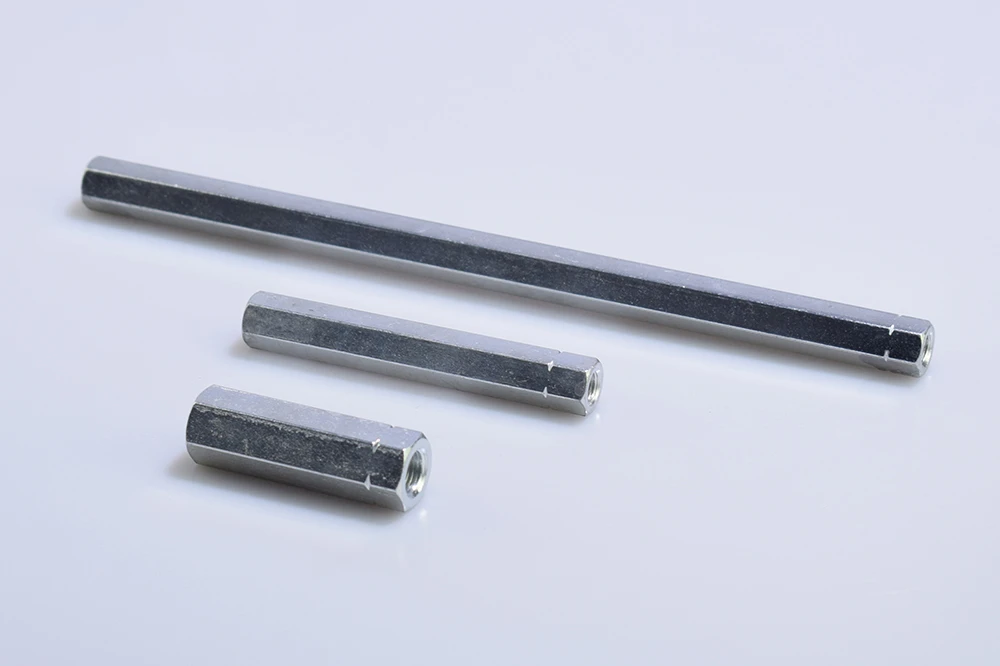
DefinitionA turnbuckle hex bar is a female-female threaded body — one RH end, one LH end — that joins two male rod ends or clevises into an adjustable link. Rotating the hex body lengthens or shortens the assembly without disconnecting the ends: the core value in alignment and preload work.
The hex profile is there for real serviceability: clean wrench flats to tighten or fine-adjust after installation. SYZ covers thread 10-32 to 3/4″-16 in 161 configurations and multiple lengths, in steel and aluminum bodies.
- Also called
- Hex bar turnbuckle · adjuster bar
- Core function
- Female-female adjustable link body
- Thread logic
- One RH end + one LH end
- Range
- 10-32 → 3/4″-16 · 161 configs
Anatomy of a Turnbuckle Hex Bar
StructureThree elements — the body and its two opposed threads.
Female Thread (RH)
One end threads onto a male rod end or clevis — this side anchors the adjustment reference.
Female Thread (LH)
The opposite end’s left-hand thread makes rotation move both joints — the turnbuckle mechanism.
Hex Body
The hex profile gives wrench flats for turning under load and the body length sets the adjustment travel.
Steel Hex Bar
Steel bodies carry the highest link loads — steering tie rods, suspension links and industrial adjusters.
The default where the turnbuckle is a structural member in the load path.
Aluminum Hex Bar
Aluminum bodies cut weight on racing and performance links where the loads are moderate and every gram counts — black anodized for finish.
Choose where the bar is short, the load is moderate and the mass is unsprung or reciprocating.
What a Turnbuckle Hex Bar Does in a Link
FunctionFour engineering jobs — each maps to a selection decision.
Join two male ends into one link
The female-female body is the link’s spine: two male rod ends or clevises plus one bar completes an adjustable assembly with minimum parts.
Adjust length in place
RH/LH threads move both ends simultaneously — set alignment and preload with the link still installed.
Give a real wrench surface
The hex flats exist for service: a wrench turns the body under load where a round body cannot be held.
Span thread sizes and lengths
161 configurations cover 10-32 to 3/4″-16 in multiple body lengths — the travel and strength the link needs.
Where turnbuckle bars fail in the field
- No jam nuts — the bar walks its setting out under vibration.
- Insufficient thread engagement at either end of travel.
- Aluminum bodies chosen for structural steel-duty links.
- Turning the bar under full side load — galled threads.
Choose the Body Material
MaterialsTwo body materials across the range — same thread logic throughout.
Steel
Strength dutySteel bodies for steering tie rods, suspension links and industrial adjusters — the structural default.
Aluminum
Weight-criticalLight bodies for racing links where the turnbuckle is short-loaded and mass matters — anodized for finish.
Pair with Jam Nuts
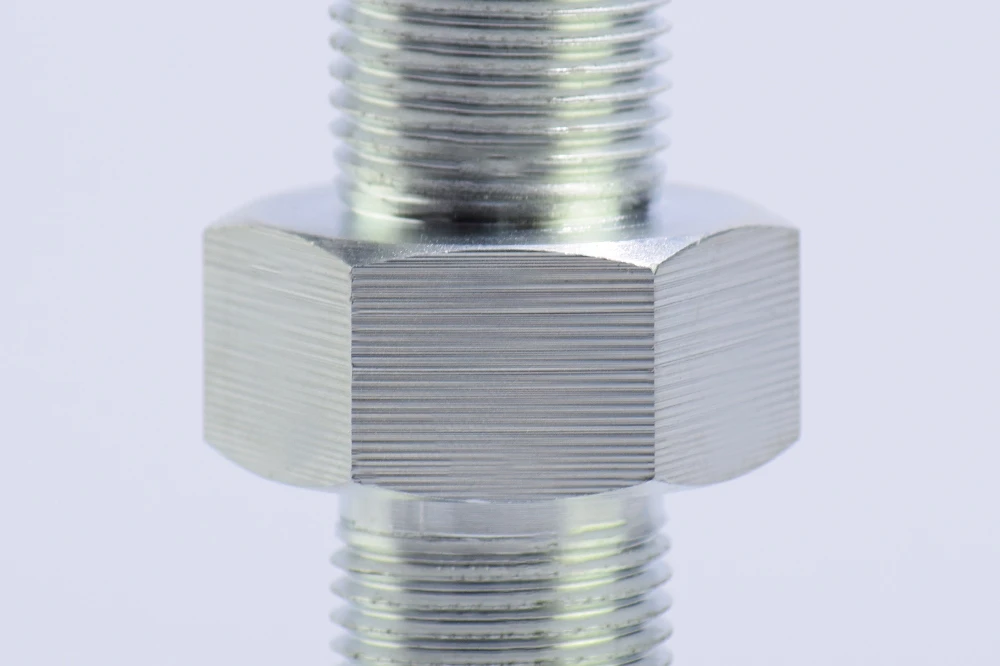
Locking hardwareRH/LH jam nuts at both ends hold whatever the bar sets — mandatory in service.
Materials and Finishes
Surface treatmentFinish follows material.
| Treatment | Applied to | Series examples | What it does |
|---|---|---|---|
| Zinc plating / bare steel | Steel bodies | Steel range | Corrosion protection per the application. |
| Black anodizing | Aluminum bodies | Aluminum range | Protective and cosmetic finish. |
| Thread protection | Threads | All bodies | Keep threads clean and protected until assembly. |
Thread and length configurations for all 161 parts are on the turnbuckle hex bar spec page.
Where Turnbuckle Hex Bars Perform
ApplicationsAnywhere two male ends need to become one adjustable link.
Steering Tie Rods
Short steering links where in-place toe adjustment is essential.
SteelSuspension Links
Preload and length adjustment on performance suspensions.
SteelAluminumRacing Links
Weight-sensitive adjustable links with aluminum bodies.
AluminumIndustrial Adjusters
Machine linkage length adjustment with rod ends or clevises.
SteelHow to Choose: 4 Steps, Then the Config Table
Selection referenceConfirm the Ends
Both mating parts must be male-threaded (rod ends or clevises) — that is what the bar’s female threads receive.
Match the Threads
Both thread sizes at 10-32 to 3/4″-16 UNF; RH + LH logic is built in.
Set the Travel
Choose the body length for the adjustment range you need.
Pick the Material
Steel for structural duty; aluminum where weight is the priority and loads are moderate.
| Family | Type | Thread range | Material | Specs |
|---|---|---|---|---|
| Female-female hex bar turnbuckles | ||||
| Hex bar — steel | Female-female turnbuckle | 10-32 → 3/4″-16 | Steel | View |
| Hex bar — aluminum | Female-female turnbuckle | 10-32 → 3/4″-16 | Aluminum | View |
Completing the link? Pair with rod ends or clevises and lock with jam nuts. For male-male adjustment see jack screws.
Get Selection HelpTurnbuckle Hex Bar Buyers’ Questions
FAQQ1What does a turnbuckle hex bar do?
Q2Steel or aluminum body?
Q3Why is the body hexagonal?
Q4What thread range is covered?
Q5Do I still need jam nuts?
Selecting Turnbuckle Hex Bars?
Send us your threads and adjustment travel — SYZ engineers reply with the right bar, material and length at factory-direct pricing.