
Rod End Studs Buyers’ Guide
A rod end stud is the threaded stud that mates with a female rod end or mounts a bearing to a bracket — precision hardware completing a linkage where the fixed side needs a male thread. This guide covers the 8-size UNF range and how to choose.
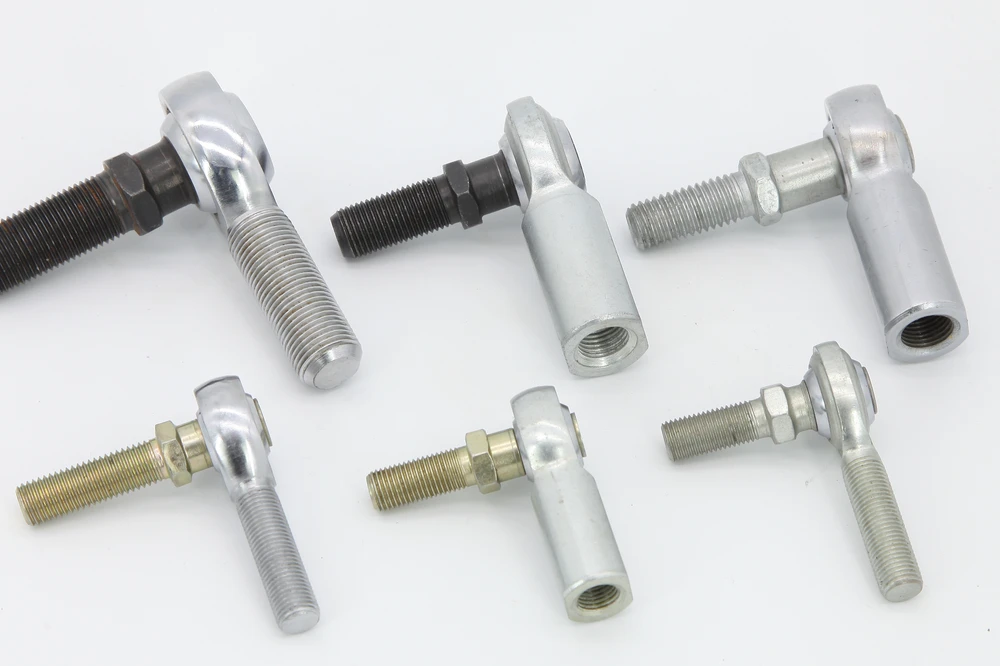
What Is a Rod End Stud?
DefinitionA rod end stud is a threaded stud used to mount or mate with a rod end — typically threading into a female rod end or securing a bearing/rod end to a bracket or arm. It is precision mounting hardware that completes a linkage where a male thread is needed on the fixed side.
SYZ rod end studs cover bore 3/16″–3/4″ with UNF threads 10-32 to 3/4-16 across 8 sizes, in carbon, alloy or stainless steel, with options for corrosive use; we run 100% inspection plus sampling, or to customer requirements.
- Also called
- Mounting stud · bearing stud
- Core function
- Fixed-side male thread for female rod ends
- Range
- UNF 10-32 → 3/4-16 · 8 sizes
- Material
- Steel · carbon/alloy/stainless optional
Anatomy of a Rod End Stud
StructureThree functional elements — simple, but each matters.
Rod-End Thread
The UNF external thread that screws into the female rod end or bearing — sized to the bore it serves (3/16″ bore pairs with 10-32, up to 3/4″ with 3/4-16).
Mounting Feature
The opposite end or body feature that fixes the stud to the bracket, arm or structure — the fixed side of the pivot.
Shoulder / Body
The precision body that sets the installed stack height and keeps the joint aligned — machined, not cut from generic fastener stock.
Steel Studs
Alloy steel studs — the standard for general linkage where the fixed side needs a precision male thread.
Eight sizes covering the common female rod-end bores from 3/16″ to 3/4″.
Stainless Studs
Stainless option for marine, washdown and corrosive environments — material-level corrosion resistance instead of plating.
Same sizes and threads as the steel range.
What a Rod End Stud Does in the Link
FunctionFour engineering jobs — each maps to a selection check.
Complete the female rod end
Female rod ends have no male thread of their own — the stud provides the fixed-side male interface that makes the joint installable.
Mount bearings to brackets
Spherical bearings in brackets often need a stud interface — the stud bridges bearing bore to the mounting structure.
Hold precision alignment
Machined bodies (not cut-down bolts) keep the joint’s stack height and alignment true.
Survive the environment
Steel for standard service; stainless where washdown, salt or chemicals would eat plated hardware.
Where rod end studs fail in the field
- Generic bolts substituted — poor thread fit and soft bodies.
- Thread engagement too shallow in the female rod end.
- Plated steel in corrosive service instead of stainless.
- Over-torque distorting the female housing’s swage.
Choose the Material
MaterialsTwo material tracks across all 8 sizes.
Steel
Standard dutyPrecision-machined steel studs, with inspection plus sampling — the standard for general linkage.
Stainless
Corrosive dutyStainless studs for marine, washdown and chemical environments — material-level corrosion resistance.
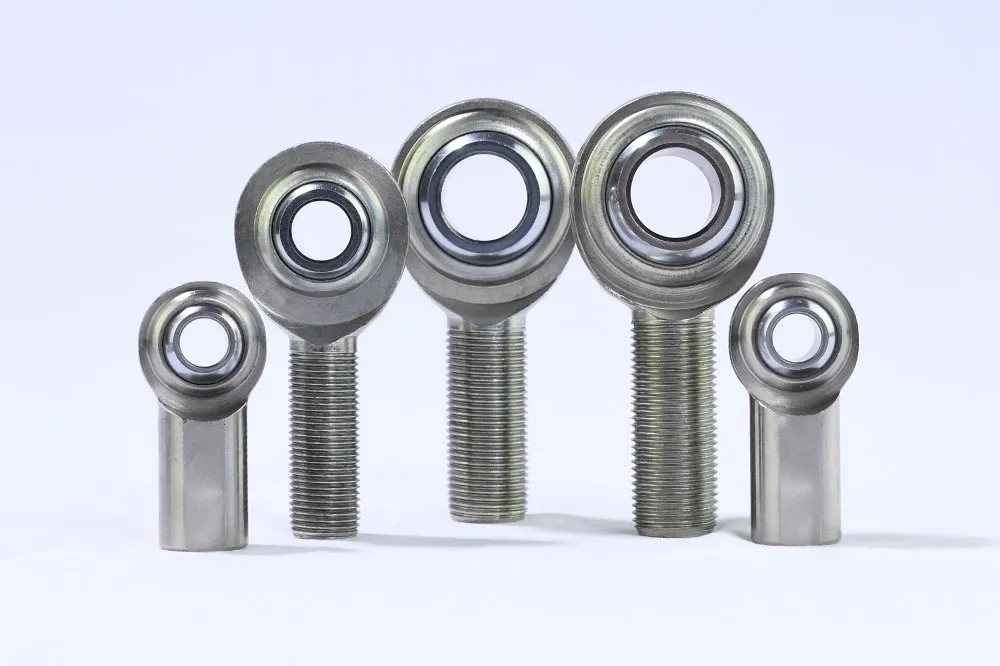
Pairs With
Female rod endsThe stud’s natural partner: female rod ends (SCF/JF/CF/F-class) and pressed bearings needing a fixed male thread.
Materials and Finishes
Surface treatmentFinish follows material.
| Treatment | Applied to | Series examples | What it does |
|---|---|---|---|
| Steel finish | Standard studs | All 8 sizes | Protective finish for general service. |
| Stainless, bare | Stainless studs | On request | Material-level corrosion resistance. |
| 100% inspection | Threads & dimensions | All studs | Thread correctness and dimensional integrity checked on every part. |
Bore-to-thread pairings for all 8 sizes are on the rod end stud spec page.
Where Rod End Studs Perform
ApplicationsAnywhere a female rod end or bearing needs a precision fixed-side thread.
Female Rod-End Joints
Completing female rod-end pivots on machinery and vehicle linkage.
SteelStainlessBearing Mounts
Mounting spherical bearings to brackets and arms.
SteelMarine & Washdown
Stainless studs in corrosive environments.
StainlessOEM Assembly
Precision mounting hardware for production linkage.
SteelHow to Choose: 4 Steps, Then the Size Table
Selection referenceMatch the Bore
Start from the female rod end’s or bearing’s bore — 3/16″ to 3/4″ across the range.
Confirm the Thread
UNF thread pairs with the bore (3/16″ → 10-32 up to 3/4″ → 3/4-16).
Pick the Material
Steel for standard service; stainless for marine, washdown and chemical exposure.
Check Engagement
Confirm sufficient thread engagement in the female housing — shallow engagement is a failure point.
| Attribute | Specification | Notes | Specs |
|---|---|---|---|
| SYZ rod end studs | |||
| Bore range | 3/16″ – 3/4″ | Matches female rod-end bores | View |
| Thread range | UNF 10-32 → 3/4-16 | 8 sizes | View |
| Material options | Steel · stainless | Corrosive service covered | View |
| Quality | Inspection + sampling | Precision hardware | View |
Which female ends do these fit? See the stainless & specialty range and the full rod end hub.
Get Selection HelpRod End Stud Buyers’ Questions
FAQQ1What is a rod end stud used for?
Q2What sizes are covered?
Q3Are stainless studs available?
Q4Why not just use a standard bolt?
Q5Do they fit every female rod end?
Selecting Rod End Studs?
Send us the bore and thread — SYZ engineers reply with the right stud and factory-direct pricing from sample to production quantities.