Skip to content
Manufacturing capability / sheet metal fabrication

Bending

A laser-cut blank is still flat. Bending gives it a final shape: a press brake folds sheet and plate along a straight line, while a tube bender forms tube along a curve without collapsing its wall. Our affiliated Taixing production base runs both alongside laser cutting and welding.

2Press brakes at our affiliated Taixing base
3Tube bending machines at our affiliated Taixing base
SGS-assessedTaixing production base · report No. 482195455_P+T
01 / Process fundamentals

What Is Bending?


Bending reshapes metal along a defined line or curve without removing material. A press brake forms flat sheet or plate between a punch and die; a tube bender forms round, square or profile tube along a curve.

Tube bending is more demanding than folding flat stock because the hollow wall can collapse or wrinkle on the inside of a tight radius. The process may use internal support such as a mandrel where the equipment and part require it.

Both processes have springback: the material relaxes slightly after the force is released. The tooling and setup therefore compensate by overbending to reach the finished angle or radius shown on the drawing.

02 / Machine selection

Press Brake Bending vs Tube Bending


QuestionPress brake bendingTube bending
StockFlat sheet or plateRound, square or profile tube
OutputFolded flanges, L- and U-brackets, box shapesCurved runs along the tube length
Key riskCracking or springback if radius and material are mismatchedWall collapse or wrinkling if radius is too tight
Typical prior stepLaser cutting or punching creates the flat blankTube is cut to length, sometimes with a profile feature
Typical next stepWelding or direct installationWelding into a frame, roll cage or linkage
The practical rule: a flat pattern with folded flanges needs bend allowance. A curved tube needs a radius, wall thickness and cross-section that the forming route can hold without damaging the section.
03 / Production route

Bending at SYZ


Primary route

Affiliated Taixing base

The base runs 2 press brakes for sheet and plate and 3 tube bending machines for tube stock, alongside laser cutting, punching and robotic welding. The actual cross-section, diameter, wall and maximum length are confirmed from the drawing.

2Press brakes
3Tube bending machines
60 / 45Standard / sample days on route
SGSAffiliated base assessment
Route context: the base occupies 5,313 m² with 32 staff across 4 production lines and is assessed under SGS report No. 482195455_P+T.
Secondary route

Our own Ningbo facility

Ningbo lists bending among its in-house process capability alongside sawing, turning, milling and punching, but the equipment count does not show a dedicated bending department. Minor bend features may remain in Ningbo; a larger sheet-metal or tube component is typically reviewed for the Taixing route.

In-houseProcess capability listed in Ningbo
Small scaleFeature-level work reviewed individually
TaixingDedicated brake and tube equipment
ReviewRoute confirmed per part
Scope boundary: no dedicated Ningbo machine count is presented here; the page keeps the smaller capability distinct from Taixing’s documented equipment.
04 / Application fit

What Bending Is Used to Make


01

Formed brackets

L-brackets, U-channels and multi-flange mounts folded from laser-cut or punched flat stock.

02

Tube frames

Frame rails, support hoops and curved structural or linkage components bent from tube stock.

03

Panels and enclosures

Folded flanges on cover panels and enclosure walls add rigidity and usable mounting edges.

04

Suspension hardware

Stabilizer and sway bars and other curved profiles where the bend geometry is part of the application fit.

Material boundary: current examples are described as mild, carbon or high-strength steel. The exact grade, temper and stock form for a bending order are confirmed from the drawing; no blanket spring-steel claim is made here.
05 / Product examples

Bent Components From Our Product Lines


High-strength steelHeavy duty custom steel stabilizer bar for ATV and UTV suspension
Suspension hardware

Heavy Duty Custom Steel Stabilizer Bar

A high-strength steel bar is formed into the profile that gives the application its body-roll resistance and mounting geometry.

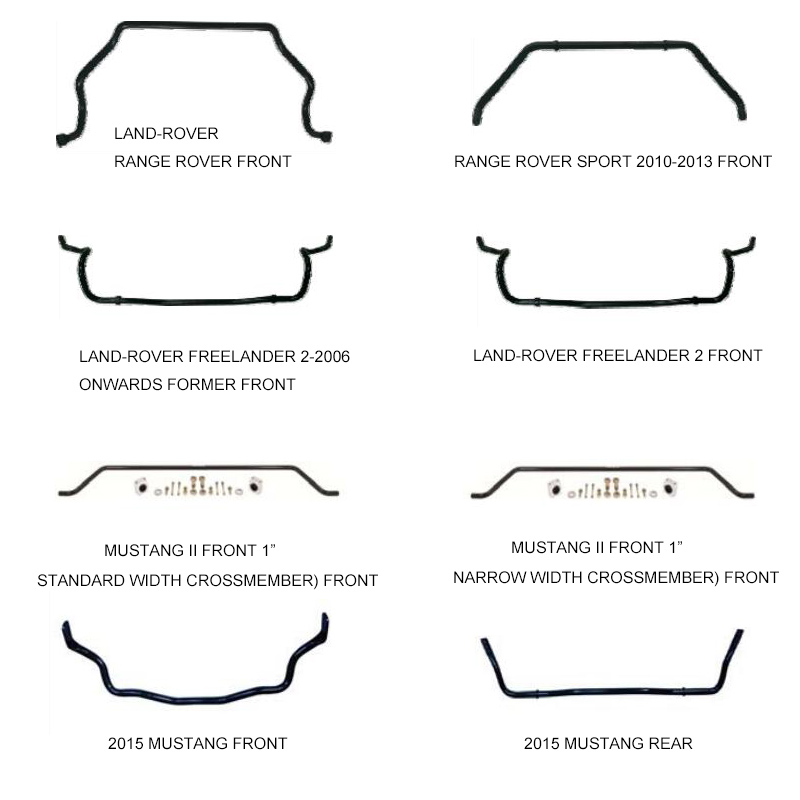
Fitment profileFront and rear sway bar for Land Rover, Range Rover and Mustang fitment
Vehicle fitment

Land Rover / Range Rover / Mustang Sway Bar

Front and rear versions use the radius and end-loop geometry each chassis application requires.

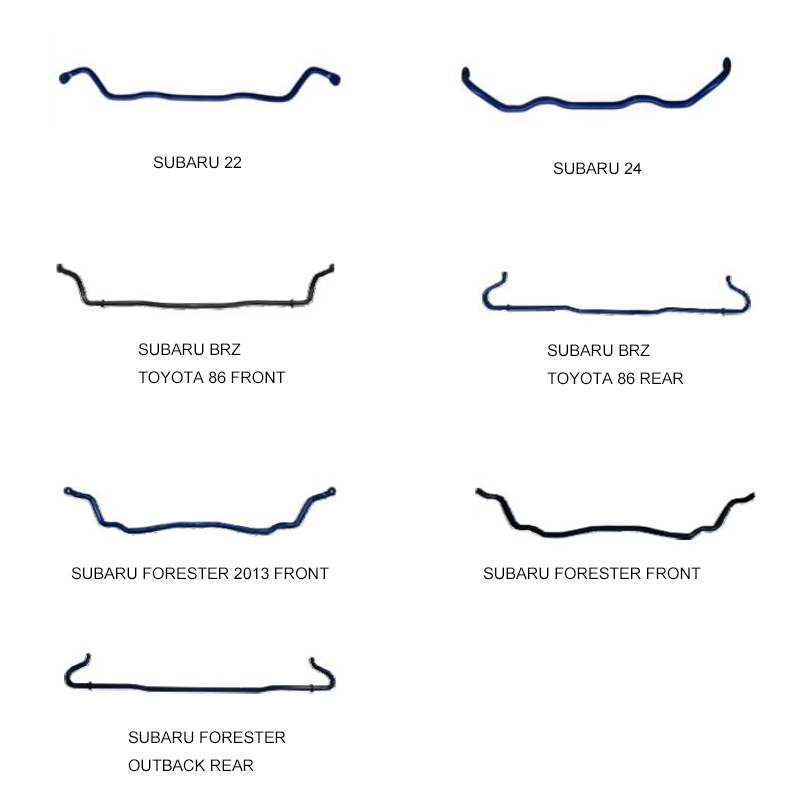
Fitment profileSubaru stabilizer bar sway bar
Vehicle fitment

Subaru Stabilizer Bar

The bend profile is matched to the mounting geometry of the specific Subaru chassis application.

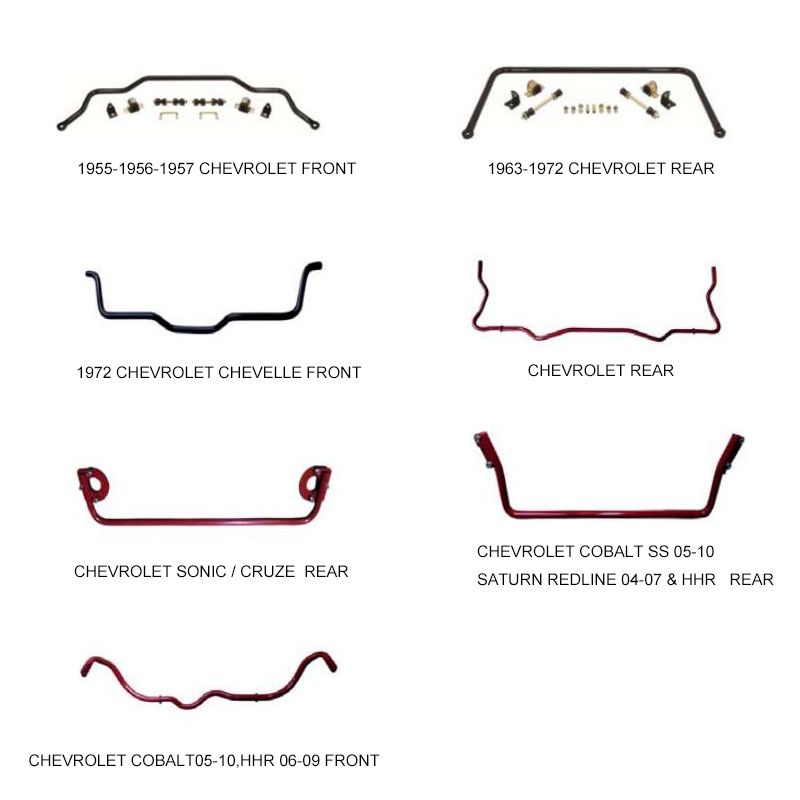
Fitment profileChevrolet front and rear sway bar
Vehicle fitment

Chevrolet Front and Rear Sway Bar

A further fitment-specific bend profile covering multiple Chevrolet chassis generations.

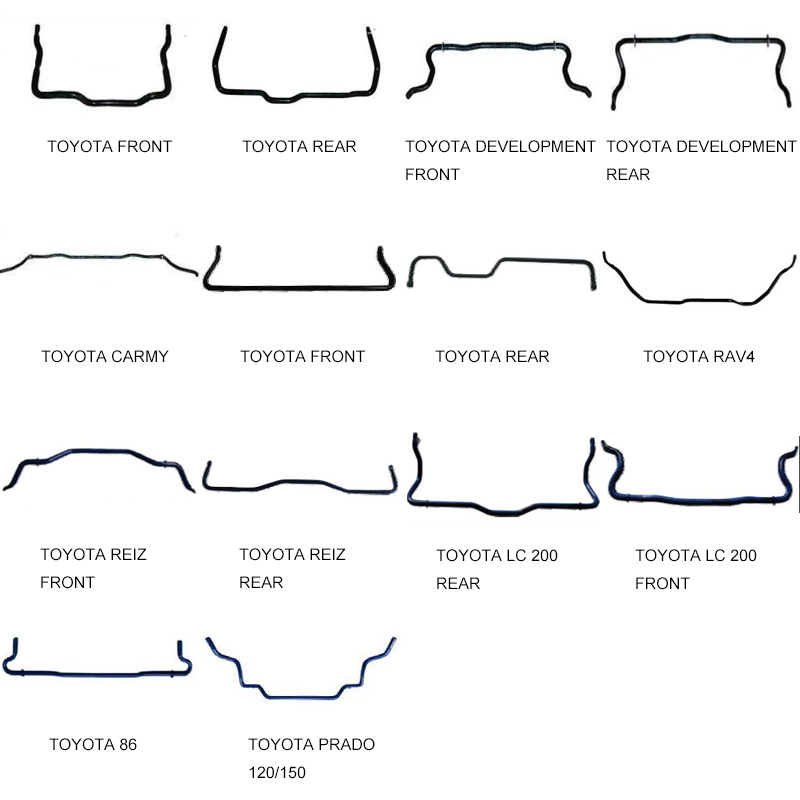
Fitment profileFront and rear sway bar for Toyota vehicles
Vehicle fitment

Toyota Front and Rear Sway Bar

Front and rear bars are supplied to Toyota-specific mounting geometry across multiple model applications.

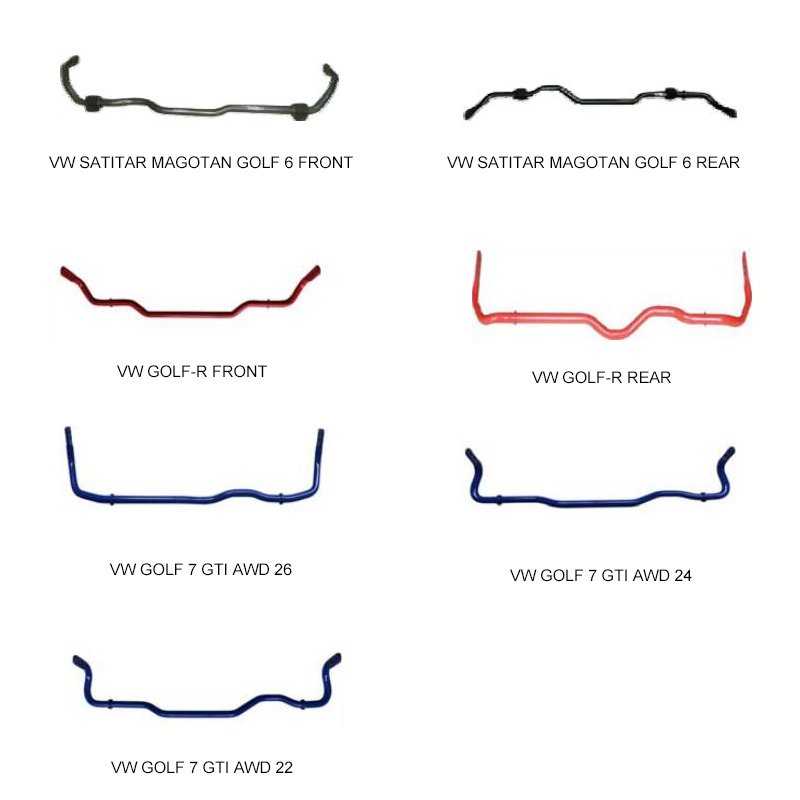
Fitment profileFront and rear sway bar for VW Golf 6, Golf-R and Golf 7 GTI
Vehicle fitment

VW Golf 6 / Golf-R / Golf 7 GTI Sway Bar

The curved fitment profile covers multiple VW Golf generations in the same product family.

Need a formed sheet blank, tube bend or fitment-specific bar? Send us the drawing and stock details.

06 / Quality control

How Bent Parts Are Controlled


Bending control is about the final angle, radius and position — and about keeping the material from cracking, wrinkling or collapsing.

01

Stock and allowance

Material, thickness or tube wall, bend allowance and the finished datum are reviewed before the programme is released.

02

First article

Angles, radii, flange dimensions, tube position and end features are checked against the drawing.

03

Forming condition

Cracks, wrinkles, flattening and springback are monitored where the material and radius make them relevant.

04

Final inspection

Finished parts follow 100% inspection, sampling or a customer-specified plan before welding or release.

07 / Design for manufacture

Designing for Bending


Send this with your enquiry

  • Flat pattern or finished 3D drawing
  • Material grade and thickness or wall
  • Bend angle and inside radius
  • Tube diameter, section and cut locations
  • Weld sequence or mating geometry
  • Quantity and inspection requirements
01

Bend allowance

A flat pattern needs allowance for the material that moves through the bend. Starting from the finished dimensions alone can produce the wrong blank.

02

Radius vs material

Sheet thickness, tube wall and material ductility determine whether a radius can be formed without cracking or collapsing the section.

03

Fitment is downstream

Laser cutting, welding and coating may follow bending. Review the whole sequence so the formed part lands on the correct assembly datum.

08 / Questions

Bending FAQ


Do you bend sheet, plate or tube?

The affiliated Taixing base runs 2 press brakes for sheet and plate and 3 tube bending machines. The right machine depends on the stock and finished geometry.

Can you bend a flat laser-cut blank?

Yes, a common route is laser cutting or punching followed by press-brake bending. The flat pattern and bend allowance are reviewed together.

Can you bend a tube without collapsing it?

Tube bending is reviewed from diameter, cross-section, wall thickness and bend radius. The actual machine and support method are confirmed for the part.

Do you make sway bars and stabilizer bars?

Current catalogue examples include fitment-specific sway and stabilizer bars. They are shown as representative bent components; the exact stock and route are confirmed per order.

Do you use spring steel for sway bars?

The product copy describes the examples as high-strength steel. The exact grade and temper are confirmed from the drawing; no blanket spring-steel claim is made here.

What are your maximum bend length and tube size?

The current capability record does not publish those upper limits. Send the stock, radius, length and quantity and we will confirm the equipment fit.

What should I send for a bending quote?

Send the finished drawing or flat pattern, material, thickness or tube wall, bend angles and radii, mating geometry and target volume.

Flat blank to finished form

Need a Bent Component?


Send the drawing, stock details, bend radii and target volume. We will confirm press-brake or tube-bending fit and the downstream route.

Request a Quote

Please submit the form or email [email protected]

🍪
We Use Cookies