Skip to content
Manufacturing capability / sheet metal fabrication

Laser Cutting

Many structural and sheet-metal parts start with a laser-cut profile. Our affiliated production base in Taixing runs both sheet/plate laser cutting and 3D laser cutting equipment, so flat blanks and more complex profile or contour cuts can move into bending, welding or forming from the same production base.

3Sheet/plate laser cutting machines (SLCF-L20) at our affiliated Taixing base
23D laser cutting machines at our affiliated Taixing base
SGS-assessedTaixing production base · report No. 482195455_P+T
01 / Process fundamentals

What Is Laser Cutting?


Laser cutting uses a focused, high-power beam guided along a CNC-controlled path to melt, burn or vaporize material along a programmed profile. It is non-contact, so there is no cutting tool physically pushing against the part and no dedicated die required for the profile.

That flexibility makes laser cutting useful for straight edges, curves, internal cutouts and fine detail from the first part. Sheet/plate laser cutting feeds flat stock and produces brackets, plates and flat blanks. 3D laser cutting adds axes to the beam or workpiece and can support features on tube, profile stock or already-formed three-dimensional parts, depending on the equipment configuration.

The exact stock type and machine configuration for a particular part are confirmed at drawing review; “3D laser cutting” is used here without assuming that every machine is a dedicated tube-laser system.

02 / Configuration choice

Sheet Laser Cutting vs 3D Laser Cutting


QuestionSheet / plate laser cutting3D laser cutting
StockFlat sheet or plateTube, profile stock or contoured/already-formed parts, depending on configuration
Typical outputFlat blanks, brackets, gussets and cover platesFeatures cut at an angle or on a non-flat surface
Typical next stepBending, forming or weldingWelding, forming or another part-specific operation
Best fitAny part that starts as a flat profileA feature a flat 2D setup cannot reach directly
The practical distinction: a flat outline with holes and slots usually points to sheet/plate cutting. A feature on a curved, angled or contoured surface may need 3D laser cutting; the actual equipment fit is confirmed from the drawing.
03 / Production route

Laser Cutting at SYZ


Affiliated Taixing base

Flat and 3D cutting in one fabrication route

The base runs 3 SLCF-L20 sheet/plate laser cutting machines and 2 3D laser cutting machines alongside punching, forming, welding and coating. The specific stock and feature type for each machine are confirmed at drawing review.

3SLCF-L20 sheet/plate machines
23D laser cutting machines
5,313 m²Documented base area
32Documented staff count
Route context: the affiliated base has been assessed by SGS under the Alibaba.com Verified Supplier programme, report No. 482195455_P+T, valid to 17 November 2026.
Other production routes

Ningbo and Wuxi

Our own Ningbo facility routes laser cutting to qualified external suppliers. The affiliated Wuxi base uses wire EDM for a different cutting purpose and does not present sheet or tube laser cutting equipment. A part otherwise routed through Ningbo can be coordinated through the external network or reviewed for the Taixing route.

NingboExternal laser route when required
WuxiWire EDM, not sheet laser
60 / 45Standard / sample days on Taixing route
ReviewStock and equipment confirmed per part
Affiliation boundary: Taixing is described as an affiliated production base with its own equipment, not as the Ningbo facility or a shared certification entity.
04 / Application fit

What Laser Cutting Is Used to Make


01

Structural bracket blanks

Mounting brackets, gusset plates, reinforcement plates and flat profiles ready for bending or welding.

02

Tube and frame features

Mounting holes, notches and weld-prep features on tube or profile stock, subject to the machine configuration.

03

Cover and access panels

Enclosure panels, access covers and cutout profiles for equipment housings.

04

Prototype and short runs

No dedicated die makes laser cutting practical when a design is changing or volume is not yet high enough for stamping tooling.

Materials in the product examples: mild and carbon steel, 4130 chromoly alloy steel, 6061 aluminium and 304/316 stainless steel. Power, gas and machine fit are confirmed from material and thickness.
05 / Product examples

Laser-Cut Components From Our Product Lines


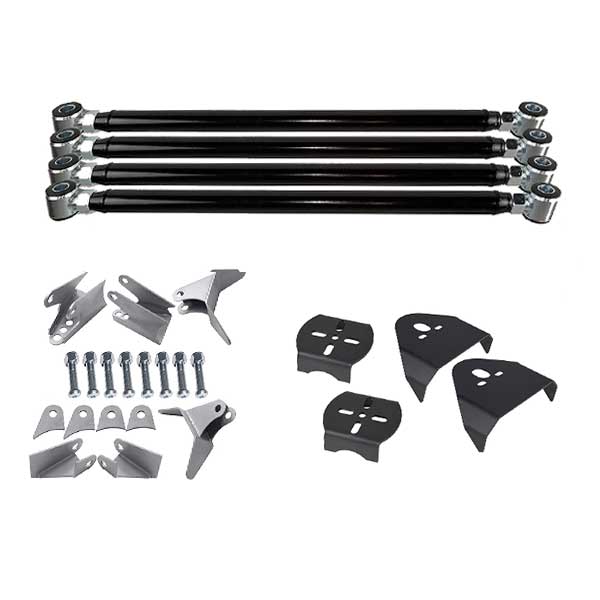
Flat bracket4 link suspension kit with laser-cut steel air bag mounting brackets
Suspension kit

4 Link Kit

The steel air-bag brackets start as a laser-cut flat profile before bending and machining finish the shape.

Weld-on mount4 link suspension kit with laser-cut weld-on frame and axle mounts
Frame fabrication

4 Link Suspension Kit

Frame mounts, side mounts and axle-tube mounts are cut to profile so weld joints land in the intended position.

Bracket blankCustom alternator mounting bracket with heim joint tensioning rod
Engine bracket

Custom Adjustable Tensioning Rod Bracket

The bracket outline and mounting-hole pattern start as a laser-cut flat profile before the heim-joint pivot bore is machined.

Slotted profileAdjustable heim joint alternator mounting bracket
Adjustment bracket

Adjustable Heim Joint Alternator Bracket

The flat profile is laser cut first, keeping the slotted adjustment path consistent across a production run.

Clevis profileAdjustable camber clevis bracket with laser-cut profile
Suspension clevis

Adjustable Camber Clevis

The clevis profile and mounting holes are laser cut before the pin bore is finished for the assembly fit.

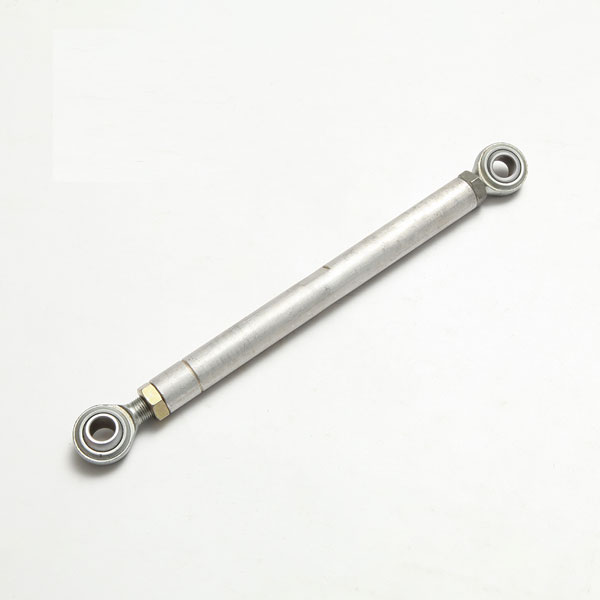
Link armCustom adjustable camber link arm with laser-cut flat profile
Camber link

Custom Adjustable Camber Link

The arm’s flat profile is cut to length and width before the mounting bores at each end are machined.

Need a bracket blank or 3D profile feature not shown here? Send us the drawing or DXF.

06 / Quality control

How Laser-Cut Parts Are Controlled


A clean-looking cut can still be out of position or carry an edge condition that causes a problem downstream. Control covers both the profile and the edge.

01

Material and programme

Stock, thickness and the programmed profile are checked before the run is released.

02

First article

Profile dimensions, hole sizes and, where relevant, feature position or cut angle are checked against the drawing.

03

Edge condition

Dross, heat-affected edge and deburring requirements are considered where a weld joint or precision fit depends on a clean edge.

04

Final inspection

Finished goods follow 100% inspection, sampling or a customer-specified plan according to the product and order.

07 / Design for manufacture

Designing for Laser Cutting


Send this with your enquiry

  • 2D drawing, DXF or DWG profile
  • Material and thickness
  • Hole, slot and edge requirements
  • Tube or profile stock details, if applicable
  • Finish and downstream operation
  • Quantity and target timing
01

Nesting and material use

Parts arranged efficiently on the same sheet share material more effectively. Multiple part numbers can sometimes improve utilisation across a run.

02

Cut length and pierces

Total cut length and the number of internal pierces influence cycle time, not only the overall footprint of the part.

03

Feature size and thickness

Very fine holes or slots in thick stock may need a different process. Material reflectivity and 3D feature geometry are reviewed with the equipment configuration.

08 / Questions

Laser Cutting FAQ


Do you cut sheet metal, tube or both?

In general, both configurations are available through the affiliated Taixing base: 3 sheet/plate SLCF-L20 machines and 2 3D laser cutting machines. The exact stock and machine fit are confirmed at drawing review.

Is laser cutting cheaper than punching?

It depends on volume. Laser cutting avoids dedicated tooling and is often practical for prototypes or short runs; punching or stamping can reduce per-piece cost at high volume once a die is amortised.

Can you cut stainless steel and aluminium?

These materials appear in our product examples and require process parameters suited to their reflectivity and thickness. We confirm the actual equipment and settings from the drawing.

Do laser-cut edges need finishing?

Depending on material and thickness, an edge may carry dross or a heat-affected zone. Deburring or edge cleanup is planned where a fit or weld depends on it.

Can you cut a compound angle into a tube?

The affiliated base runs 3D laser cutting equipment that may support such a feature, depending on the stock and configuration. Send the angle, diameter and wall thickness for review.

What is your laser-cutting MOQ and lead time?

Laser cutting has no dedicated-die minimum. Typical product-line MOQ is 100–300 pieces per item; project-specific MOQ is confirmed with the quotation. The Taixing route documents 60-day standard and 45-day sample lead times.

Which materials do you laser cut?

Current examples include mild and carbon steel, 4130 chromoly, 6061 aluminium and 304/316 stainless steel. Material and thickness determine the route.

Can we arrange a third-party inspection?

Client visits and third-party inspections can be arranged for the relevant site. The affiliated Taixing base has an SGS assessment under report No. 482195455_P+T.

Turn a profile into a part

Have a Laser-Cut Requirement?


Send the drawing or DXF with material, thickness, stock type and quantity. We will confirm the cutting route and next operation.

Request a Quote

Please submit the form or email [email protected]

🍪
We Use Cookies