Skip to content
Manufacturing capability / sheet metal fabrication

Punching / Stamping

Punching cuts a shape or hole from sheet stock with a die; stamping forms sheet stock into a three-dimensional shape, and a progressive die can combine both operations. At volume, the route can beat laser cutting on cost per piece. Our capacity spans small-scale punching at our own Ningbo facility and a larger punching and hydraulic-forming operation at our affiliated Taixing base.

20Punch presses at our affiliated Taixing base
5Hydraulic forming presses at our affiliated Taixing base
5Punch presses at our own Ningbo facility
01 / Process fundamentals

What Is Punching, and What Is Stamping?


Punching is shearing: a punch and matching die close on sheet or plate and cut a shape or hole in a single stroke. It removes material mechanically rather than with a laser, and once the die exists it can cut a repeated part quickly.

Stamping is forming: a die presses sheet into a bend, rib, emboss, drawn cup or other three-dimensional shape without removing the material. A progressive die can combine piercing, outline cutting and forming across several stations.

A hydraulic press applies an adjustable force through the stroke and can suit certain forming or drawing operations. The tonnage and actual fit of any press depend on the specific machine and part, not simply on the word “hydraulic”. Both punching and stamping depend on tooling, so volume and design stability are central to the route decision.

02 / Route selection

Punching / Stamping vs Laser Cutting


QuestionPunching / stampingLaser cutting
ToolingDedicated die for the partNo dedicated die
Cost to startHigher due to die design and buildLower; programming starts the route
Cost per piece at volumeLower after tooling is amortisedMore nearly constant per part
Best fitSimple repeated shapes and formed parts at volumePrototype, low volume or complex/variable profiles
Forming in the same stepYes, with a progressive die or forming pressNo; profile cutting is followed by another operation
The practical rule: a changing design or short run usually points to laser cutting first. A stable shape at high volume can justify punching or stamping tooling and lower the piece cost.
03 / Production route

Punching and Stamping at SYZ


Small-scale punching

Our own Ningbo facility

Our own facility in Ningbo runs 5 punch presses alongside turning, milling and grinding. This route is typically suited to smaller punched components such as washers, spacers and simple bracket features; the assigned part and scale are confirmed at drawing review.

5Punch presses in Ningbo
In-houseOwn facility process capability
Small scaleWashers, spacers and features
ReviewPart and volume assigned per order
Typical fit: simple flat hardware or a punched feature on a part otherwise produced through the Ningbo machining route.
Volume punching and forming

Affiliated Taixing base

The affiliated Taixing base runs 20 punch presses and 5 hydraulic forming presses alongside laser cutting, bending, robotic welding and coating. Its own structural OEM lines include oil tanks, control arms, rear axles and chassis components; those lines are separate from the syzrodends catalogue.

20Punch presses
5Hydraulic forming presses
SGSAffiliated base assessment
Per toolTonnage and forming scope confirmed
Scope boundary: Taixing’s heavier structural programmes are not shown as catalogue products here; the route is scoped directly against the equipment and tooling requirement.
04 / Application fit

What Punching and Stamping Are Used to Make


01

Washers and spacers

Misalignment washers, shims, spacers, retaining clips and snap rings cut from flat stock.

02

Bracket hardware

Punched bracket blanks, mounting tabs and simple formed brackets combining an outline with a bend or feature.

03

Structural forming

Chassis reinforcement plates, control-arm blanks, tank shells and other formed components at production volume.

04

Progressive-die parts

Parts that combine cut outlines, holes and formed ribs or bends across repeated die stations.

Material context: current product examples are primarily carbon or mild steel hardware, often finished after forming. Material and finish are confirmed against the load and corrosion environment.
05 / Product examples

Punched Components From Our Product Lines


Flat washerZinc plated misalignment washers for rod ends in inch and metric sizes
Rod-end hardware

Zinc Plated Misalignment Washers

A flat washer profile like this is normally punched from sheet stock in a single die stroke for repeatable volume production.

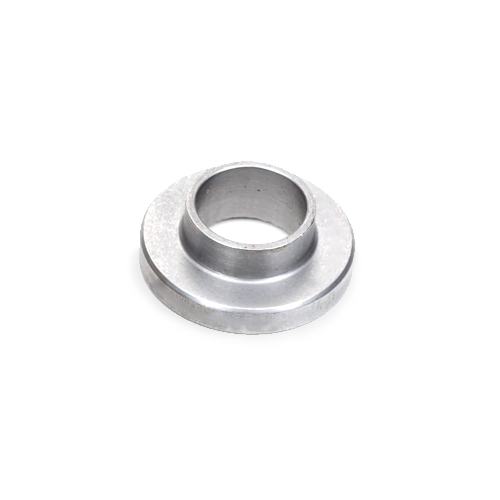
SpacerWasher style rod end spacer, flat profile
Flat profile

Washer Style Rod End Spacer

The round flat profile and bore are the kind of simple geometry normally punched in one operation.

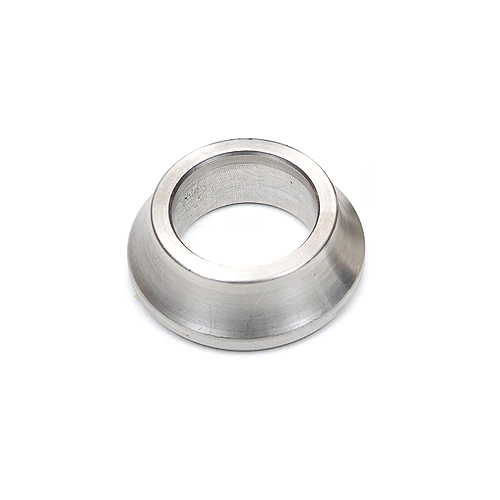
RetentionSafety washer for rod end bearing retention
Safety washer

Safety Washer for Rod End Bearing

The wider flat flange is sized to retain the bearing race it backs up, a profile suited to punching from sheet stock.

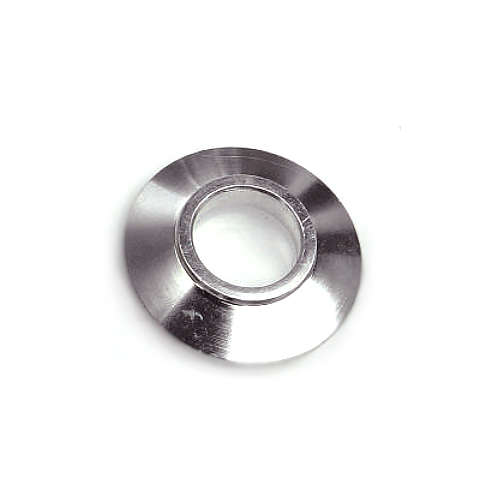
Washer + spacerHeim joint rod end safety washer and misalignment spacer combination
Misalignment hardware

Heim Joint Safety Washer / Spacer

A combined flat washer and spacer profile of this kind is normally punched as a simple repeatable part.

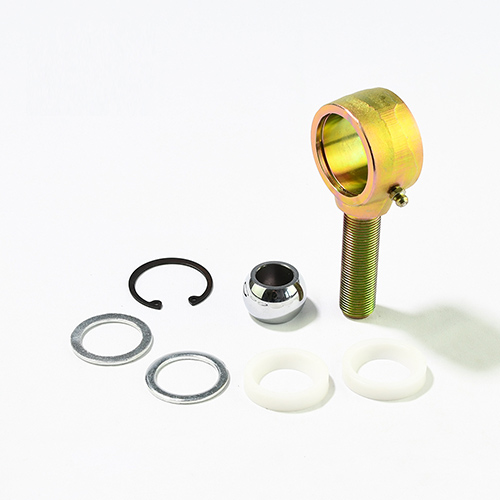
Kit hardwareRebuildable flex joint johnny joint kit with side washers and snap ring
Flex joint kit

Rebuildable Flex Joint Kit

The kit’s flat side washers and retaining hardware are the type of components normally punched or formed alongside the machined and moulded parts.

Need a punched washer, spacer or formed blank? Send us the drawing and target volume.

06 / Quality control

How Punched and Stamped Parts Are Controlled


The die defines the repeatability of a punched or formed part. Inspection therefore covers the tool, flat profile and any formed geometry.

01

Tool and material review

Material, thickness, die condition and forming sequence are checked before the run is released.

02

First article

Outline, bore, hole position, bend or formed height are checked against the drawing before volume production.

03

In-process checks

Repeated checks monitor burr, feature position and dimensional drift as the die and material run through production.

04

Final inspection

Finished parts follow 100% inspection, sampling or a customer-specified plan, including finish checks where relevant.

07 / Design for manufacture

Designing for Punching and Stamping


Send this with your enquiry

  • Flat pattern or finished formed drawing
  • Material and thickness
  • Hole, slot and edge requirements
  • Formed height, angle or draw depth
  • Target volume and annual demand
  • Finish and inspection requirements
01

Tooling vs volume

Die design and build add upfront cost. Stable geometry and meaningful volume are what let the lower piece cost repay the tooling.

02

Material and thickness

Stock grade, thickness, grain direction and bend or draw geometry influence burr, cracking, springback and press selection.

03

Progressive sequence

When cutting and forming happen in one die, station order, carrier strips and part removal need to be considered at the start.

08 / Questions

Punching / Stamping FAQ


What is the difference between punching and stamping?

Punching shears a hole or profile from sheet stock. Stamping forms the sheet into a three-dimensional feature. A progressive die can combine both operations.

Do you have your own punch presses?

Yes. Our own Ningbo facility runs 5 punch presses. The affiliated Taixing base runs 20 punch presses and 5 hydraulic forming presses for a different, larger production scale.

Should I use punching or laser cutting?

Laser cutting is usually more flexible for prototypes, short runs and changing profiles. Punching or stamping can be more economical for a stable high-volume shape once die cost is amortised.

Can you form a deep-drawn or heavy-gauge part?

The Taixing base has hydraulic forming presses, but the actual tonnage, material and geometry are reviewed for each programme. We do not publish an unsupported universal thickness limit.

What products are punched in your catalogue?

Documented examples include misalignment washers, rod end spacers, safety washers and flat kit hardware. The exact machine and die route for a particular SKU is confirmed during review.

What is the MOQ for a stamped part?

MOQ depends on die cost, material and volume. Send the target quantity and part drawing so we can compare tooling with a laser-cut or machined alternative.

What should I send for a quote?

Send the flat or finished drawing, material, thickness, formed dimensions, target volume and finish or inspection requirements.

Tooling and volume review

Need a Punched or Stamped Part?


Send the drawing, material, thickness and target volume. We will compare die tooling with laser cutting and confirm the best production route.

Request a Quote

Please submit the form or email [email protected]

🍪
We Use Cookies