Skip to content
Manufacturing capability / sheet metal fabrication

Welding

Welding appears in our network in two distinct ways. Our affiliated Taixing production base uses robotic welding in its structural fabrication line. Separately, much of our catalogue hardware is machined to be welded by your fabricator: a shouldered ball-joint fitting, weld-in bung or weld-on wrench hex with the geometry a clean joint depends on.

2Robotic welding machines (FD-V6) at our affiliated Taixing base
SGS-assessedTaixing production base · report No. 482195455_P+T
Weld-prep machinedPrecision-turned fittings designed for customer fabrication
01 / Process fundamentals

What Is Welding, and What Do We Actually Do?


Welding joins metal by creating a fused joint as material melts and cools, often with filler metal. It turns cut and formed sheet, tube and machined fittings into a structural assembly.

Robotic welding at the affiliated Taixing base uses programmable FD-V6 robots to repeat a path and parameter set across a production run. The result depends on accurate upstream parts and a fixture that holds them in the intended position. The specific welding process used for a particular order is confirmed at drawing review.

Weld-ready machining is different. Ball-joint cups, tube adapters and wrench hexes in our catalogue are normally supplied as precision-machined fittings for the customer’s fabricator to install and weld. Our role is to produce the shoulder, bore or bevel geometry the joint depends on; the final weld is normally performed by the fabricator.

02 / Joining route

Robotic Welding vs Manual Welding


QuestionRobotic weldingManual welding
ConsistencySame programmed path, speed and parameters when fixture and process are controlledVaries with welder, shift and joint conditions
Best fitRepeated joint geometry at production volumeOne-off, prototype or highly variable geometry
Setup requirementAccurate fixture and repeatable incoming partsFixturing helps but can be more adaptable
Where this is documentedAffiliated Taixing base for structural assembliesFinal weld normally performed by the customer’s fabricator for catalogue fittings
The practical rule: decide first whether you need a finished welded assembly or a precision fitting for your own weld. That scope changes the fixture, process and inspection conversation completely.
03 / Production route

Welding at SYZ


Robotic structural route

Affiliated Taixing base

The base runs 2 FD-V6 robotic welding machines alongside laser cutting, punching and bending. Its own structural OEM programmes include oil tanks, control arms, rear axles and chassis components; these are not syzrodends catalogue products.

2FD-V6 robotic welding machines
5,313 m²Documented base area
32Documented staff count
SGSAffiliated base assessment
Route context: the Taixing base is affiliated, with its own equipment and assessment under SGS report No. 482195455_P+T, valid to 17 November 2026.
Weld-ready machining route

Ningbo and Wuxi fittings

Our own Ningbo and affiliated Wuxi routes produce precision-machined fittings such as shouldered ball-joint cups, weld-in bungs, adapters and wrench hexes. Welding is normally performed by the fabricator installing the fitting into a frame, control arm or linkage tube.

BoreMatched to the mating tube or bearing
ShoulderControls weld-in depth or joint position
BevelSpecified where the fabricator needs it
Per orderFitting scope and material confirmed
Scope boundary: “weld-on” or “weld-in” in a product name does not mean the weld is completed before shipping.
04 / Application fit

What Welding and Weld-Ready Machining Are Used to Make


01

Robot-welded structures

Tube frames, chassis reinforcement, formed brackets and structural OEM assemblies on the Taixing route.

02

Weld-in fittings

Ball-joint cups, tube bungs, adapters, spherical-bearing cups and clevis mounts prepared for customer welding.

03

Weld-on hardware

Wrench hexes, clevises and tube-end fittings with a bore, shoulder or flat that supports the fabricator’s joint.

04

Material-specific review

Carbon steel, 4130 chromoly and 304/316 stainless appear in the component families; the final welding procedure belongs to the qualified fabricator for the joint.

Important distinction: this page does not publish generic MIG, TIG, preheat or filler recommendations. The applicable welding procedure depends on the material, thickness, joint and the party performing the final weld.
05 / Product examples

Weld-Ready Components From Our Product Lines


ShoulderShouldered industrial weld-on ball joint with 1.25 inch pin and 4 inch retainer OD
Weld-on joint

Shouldered Industrial Weld-On Ball Joint

The shoulder is machined to a defined diameter and depth so a fabricator can weld it into a matching control-arm or linkage-tube bore.

Wrench hexWeld-on wrench hex for 2 inch tubing with 2 1/4 inch wrench size
Tube-end fitting

1865-113 Weld-On Wrench Hex

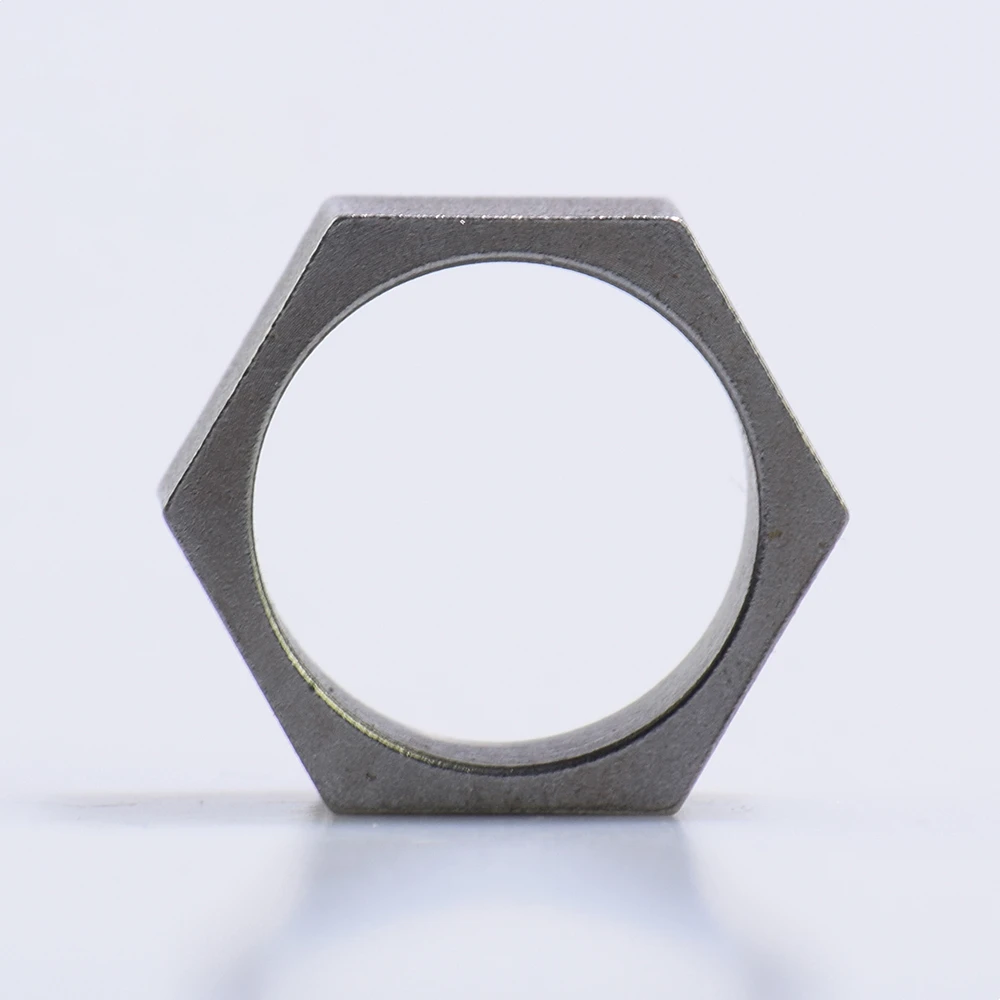
The bore matches 2-inch tubing and the hex provides a wrench flat after the fitting is welded to the tube end.

Bearing cupUniball welding cup for spherical bearing mounting in suspension and chassis fabrication
Weld-in cup

Uniball Welding Cup

The bearing bore is machined for a precision fit while the outside profile is shaped for welding into a control arm or bracket.

Spherical cupSpherical bearing weld cup for suspension and chassis fabrication
Weld-in bearing mount

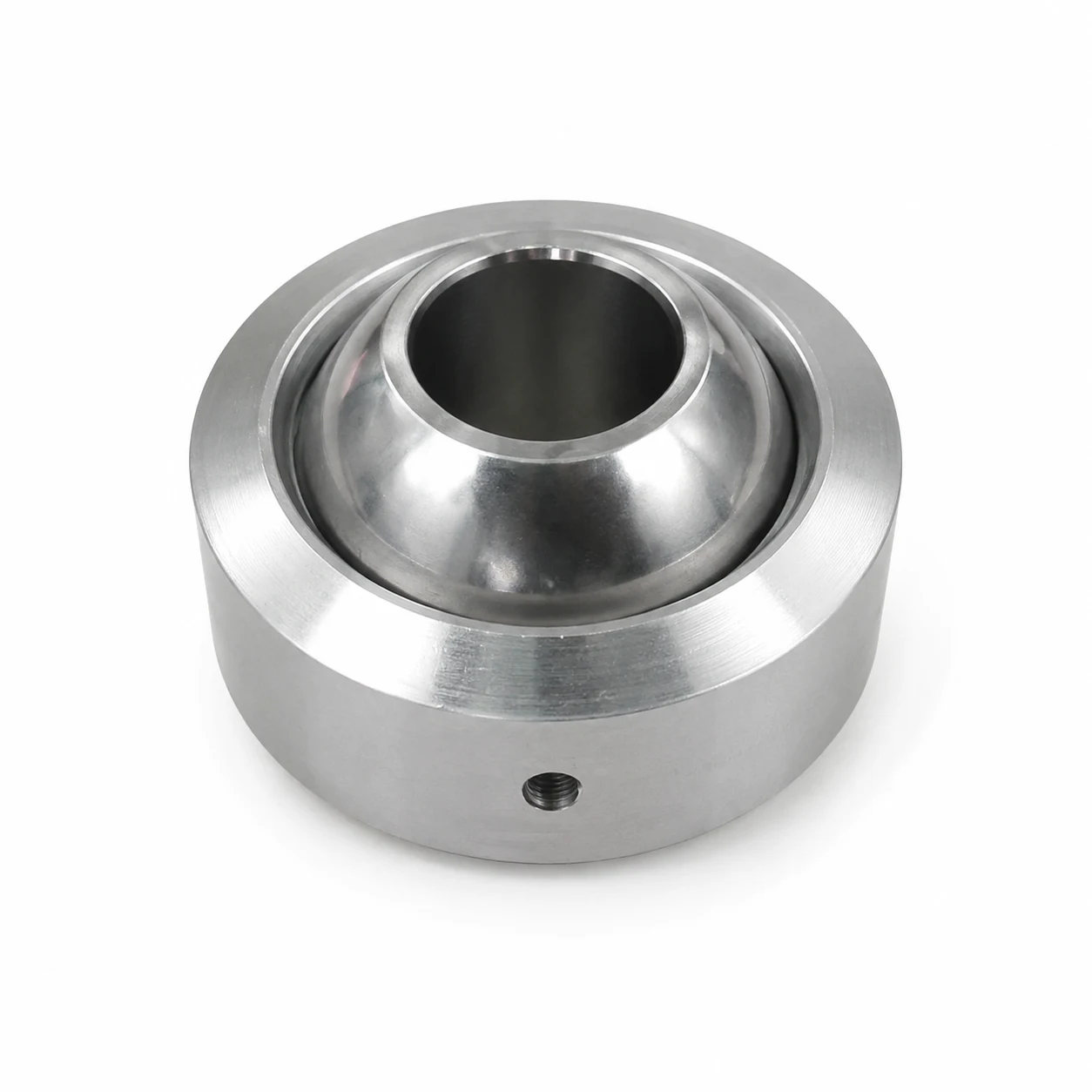
Spherical Bearing Weld Cup

The cup provides a precision bearing fit on one side and a weld-ready outside profile on the other.

Clevis mountTube clevis mount with weld-in slot clevis end
Tube fitting

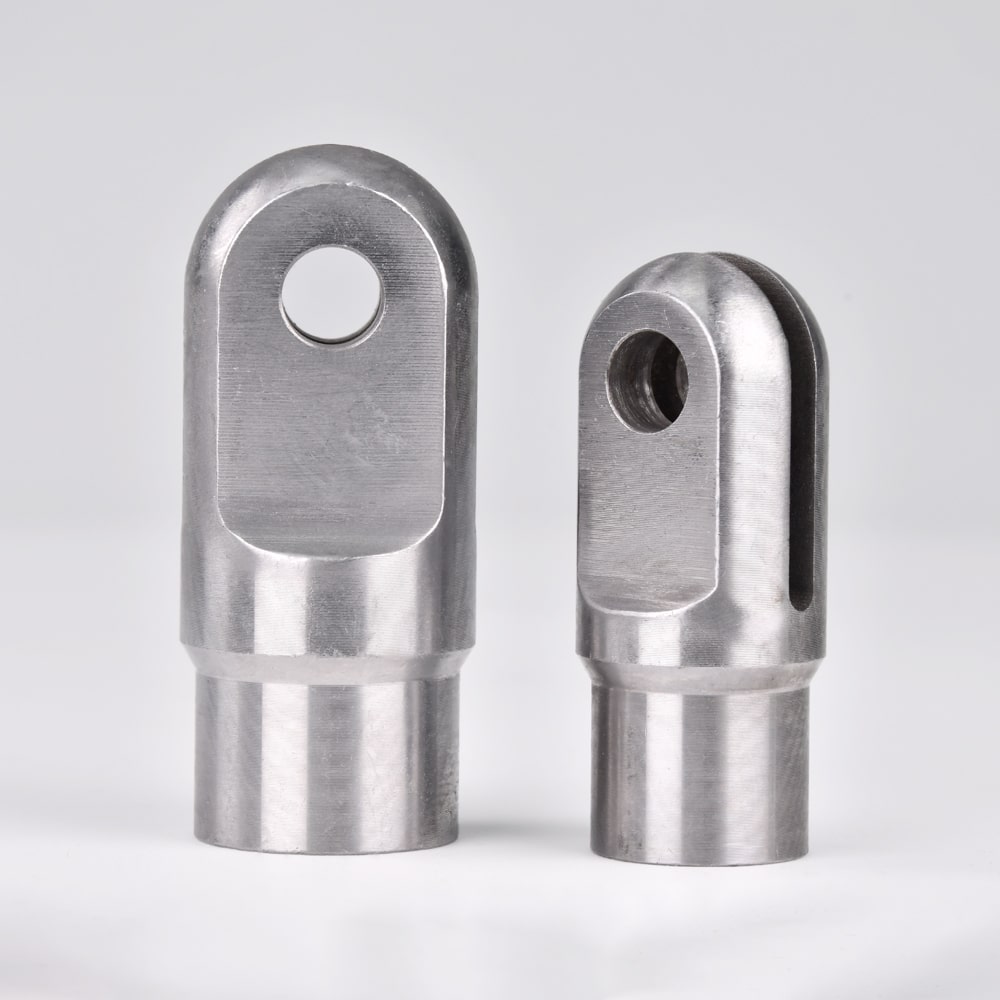
Tube Clevis Mount

The tube-diameter shank is machined for insertion, with the clevis slot and pin bore finished before the customer’s weld.

Tube adapterWTF series weld-in bung tube adapter with hex profile
Weld-in bung

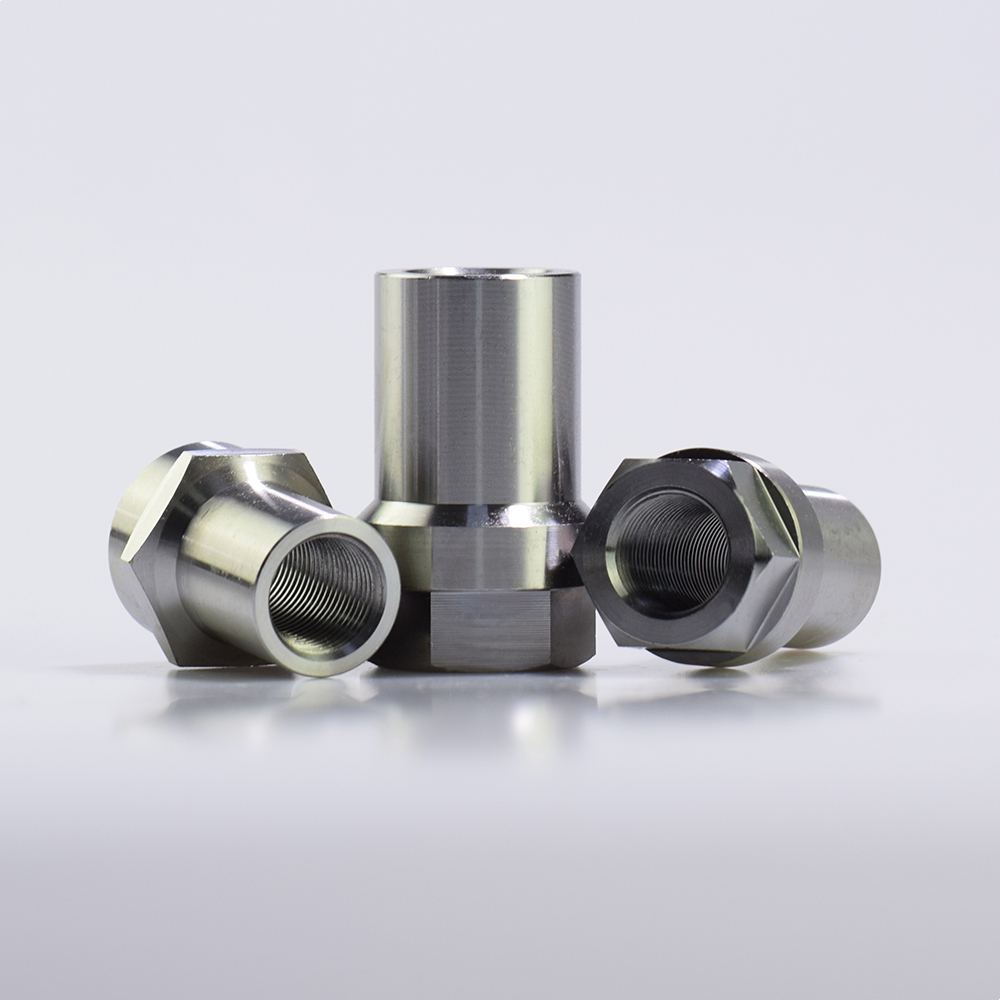
WTF Series Weld-In Bung

The shank is sized to the tube ID and the hex above the weld line provides a wrenching surface after installation.

Need a weld-ready fitting or a finished welded assembly? Send us the drawing and clarify the scope.

06 / Quality control

How Welded and Weld-Ready Parts Are Controlled


The two routes have different quality questions: fixture and joint repeatability for a welded assembly, dimensional weld-prep control for a machined fitting.

01

Fixture and first article

For robotic welding, fixture position and visual weld quality are checked before a production run is released.

02

Upstream accuracy

Laser-cut, punched and bent components need to arrive within the fixture’s intended geometry so the robot repeats the correct joint.

03

Weld-prep dimensions

For customer-welded fittings, shoulder, bore and bevel dimensions are checked like any other critical machined feature.

04

Final inspection

Assemblies and fittings follow 100% inspection, sampling or a customer-specified plan, with additional weld inspection agreed per programme.

07 / Design for manufacture

Designing for Welding


Send this with your enquiry

  • Finished weldment or weld-ready fitting scope
  • Material, thickness and mating tube or bore
  • Joint geometry and weld access
  • Fixture and assembly datum requirements
  • Weld inspection standard, if applicable
  • Quantity and target timing
01

Fitting vs assembly

A machined fitting and a finished weldment require different tooling, labour and inspection. Define the scope before quoting.

02

Joint accessibility

A robot or manual torch needs access to the joint. Review the sequence and fixture before a complex assembly is committed.

03

Material and distortion

Material-specific welding procedures and heat input affect distortion. We do not give generic preheat or filler advice without the actual joint.

08 / Questions

Welding FAQ


Do catalogue weld-on fittings arrive already welded?

By default, no. They are precision-machined fittings designed for your fabricator to weld into a frame, control arm or linkage tube. If you need a finished weld, tell us at drawing review.

Can you supply a fully welded assembly?

Yes, through the affiliated Taixing route where robotic welding is coordinated with laser cutting and bending. This is a different scope from a catalogue weld-ready fitting.

What is the difference between robotic and manual welding?

Robotic welding repeats a programmed path at production volume when the fixture and incoming parts are controlled. Manual welding is more adaptable for one-off or highly variable geometry.

What material should I choose if I will weld the fitting myself?

Carbon steel, 4130 chromoly and stainless appear in the component families. The correct welding procedure depends on the actual grade, thickness, joint and process; confirm it with the qualified fabricator.

What is the MOQ for weld-ready fittings?

Typical catalogue hardware MOQ is 100–300 pieces per item. A custom welded assembly is scoped individually against the fixture and production requirement.

Can you make structural products like chassis or tank assemblies?

The affiliated Taixing base has those structural OEM product lines and the relevant fabrication equipment. They are not syzrodends catalogue products; a custom programme is reviewed directly against the equipment.

Can you provide weld inspection records?

First-article, in-process and final inspection scope is agreed per programme. More rigorous inspection such as sectioning or non-destructive testing is confirmed for the actual assembly.

Can we arrange a third-party inspection?

Client visits and third-party inspections can be arranged for the relevant site. The affiliated Taixing base has an SGS assessment under report No. 482195455_P+T.

Fitting or finished assembly

Need a Weld-Ready Part or Welded Assembly?


Tell us which scope you need and send the drawing. We will review the material, joint, fixture, machining and inspection route with you.

Request a Quote

Please submit the form or email [email protected]

🍪
We Use Cookies