Rod-End Misalignment and Clearance
Spacers position a rod end between mounting tabs while adding clearance around the spherical ball and fastener. Select the spacer width, bore, and shoulder geometry to preserve the required angular travel.
Search by part number, series, material, application, or specification.
Press Enter to view all results Esc to close
 related-product-inch
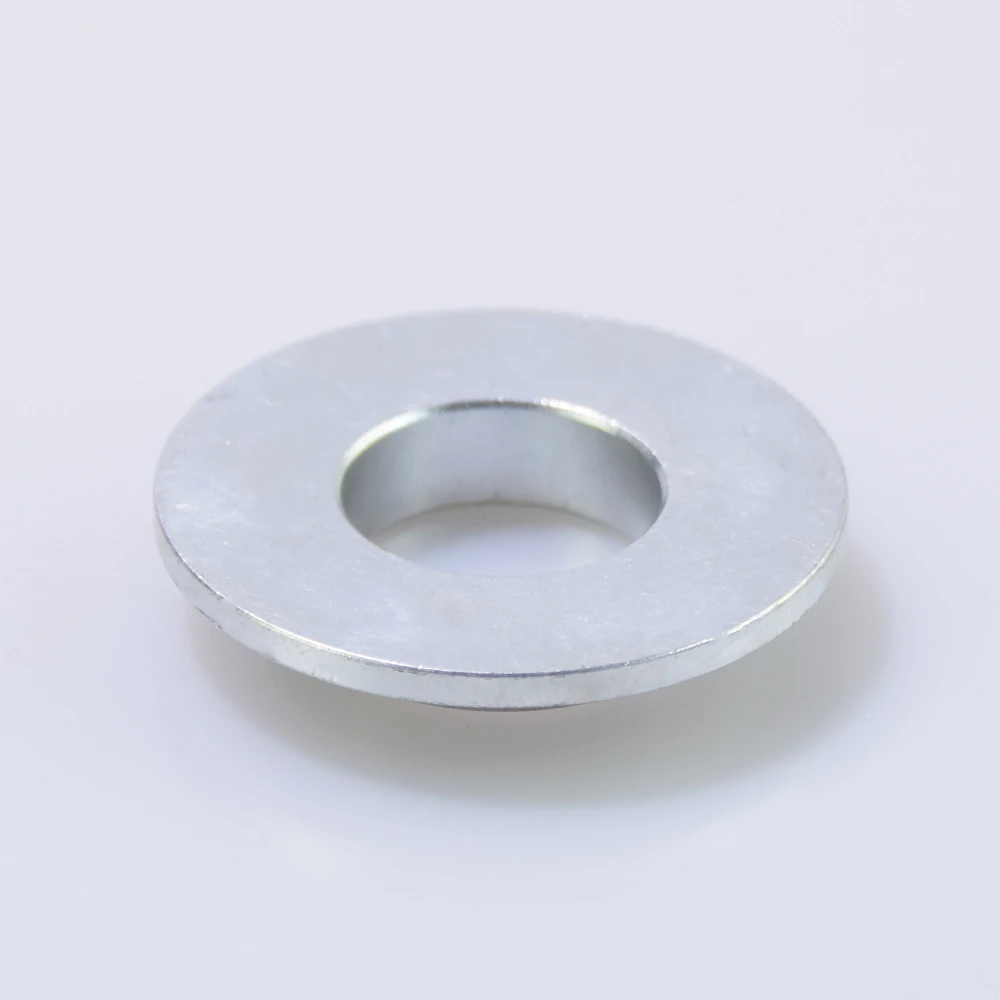
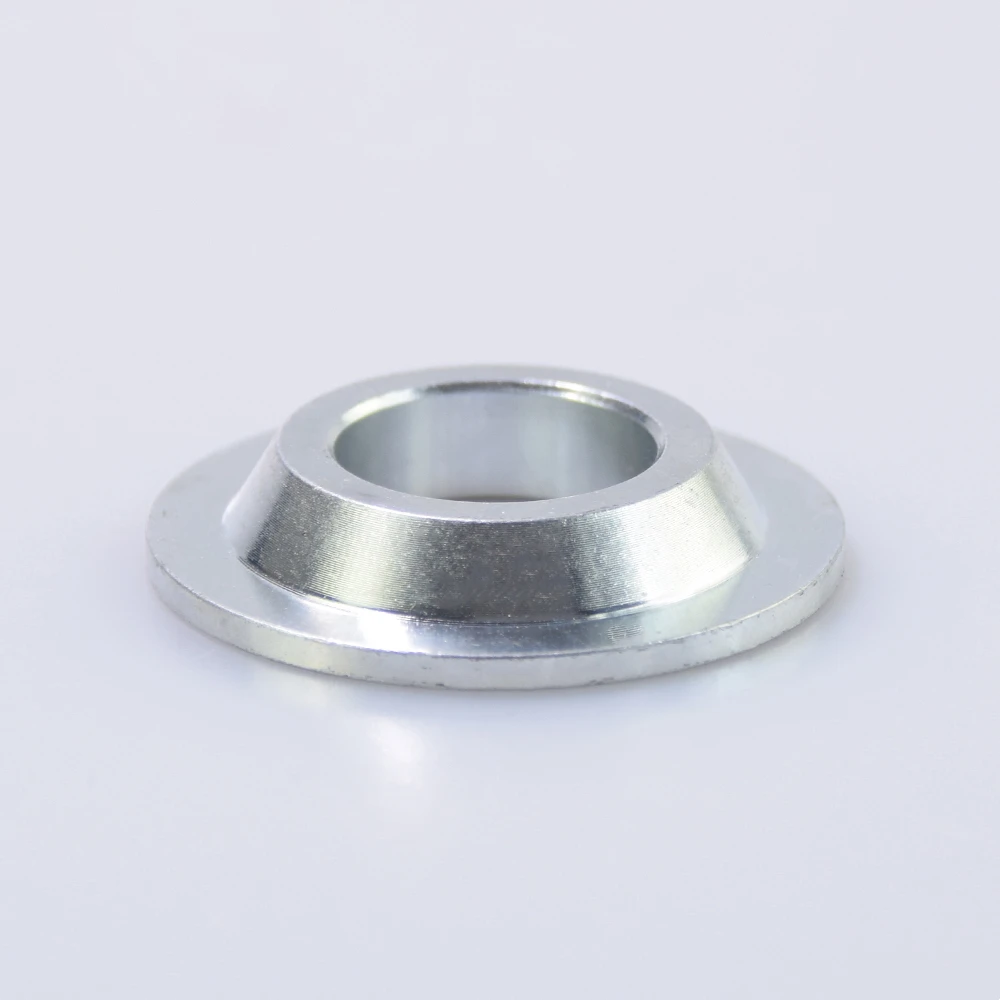
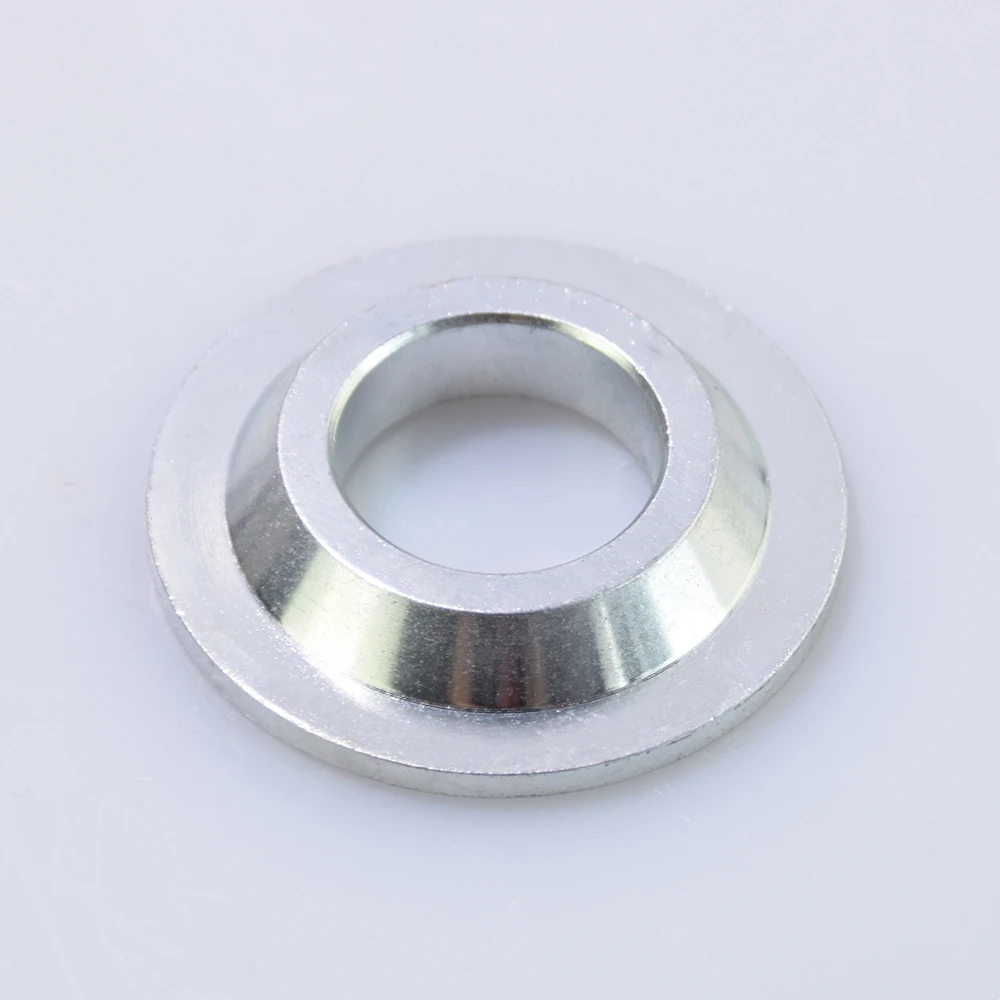
SCW-10 / CW-10 is a 5/8″ nominal rod end spacer. Outer flange OD (A) = 1.42″, bore (B) = 0.626″, spacer body OD (C) = 0.839″, flange thickness (D) = 0.27″.
SCW (stainless steel) and CW (zinc plated carbon steel) rod end spacers are used to fill the gap between the rod end body and a clevis or bracket, centering the rod end in the mounting slot and preventing side loading. Install one spacer on each side of the rod end inside the clevis fork. Available in various widths to match different clevis slot depths and rod end body widths.
Stainless: SCW-10. Carbon steel (zinc plated): CW-10. Cone spacers for tapered pin assemblies: SCNS/CNS series. High-misalignment spacers: SG/HMS series.
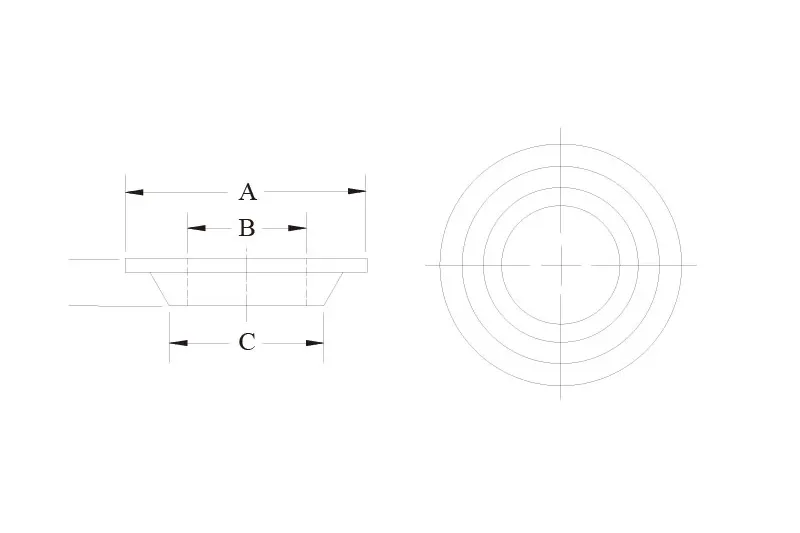
All available sizes in the ROD END SPACERS SCW / CW series. Can’t find your size? Contact us for custom dimensions.
| Stainless Steel | Carbon Steel | Nominal Size +.000 -.001 | A +.005 -.005 | B +.003 -.000 | C +.005 -.005 | D +.005 -.005 |
|---|---|---|---|---|---|---|
| SCW-8-2 | CW-8-2 | 1/2 | 0.870 | 0.510 | 0.684 | 0.230 |
| SCW-6-1 | CW-6-1 | 3/8 | 0.651 | 0.376 | 0.515 | 0.186 |
| SCW-4 | CW-4 | 1/4 | 0.700 | 0.251 | 0.331 | 0.142 |
| SCW-5 | CW-5 | 5/16 | 0.828 | 0.313 | 0.445 | 0.168 |
| SCW-6 | CW-6 | 3/8 | 0.930 | 0.376 | 0.515 | 0.184 |
| SCW-7 | CW-7 | 7/16 | 1.050 | 0.438 | 0.586 | 0.220 |
| SCW-10 | CW-10 | 5/8 | 1.420 | 0.626 | 0.839 | 0.270 |
| SCW-12 | CW-12 | 3/4 | 1.630 | 0.751 | 0.978 | 0.300 |
| SCW-8-1 | CW-8-1 | 1/2 | 0.750 | 0.510 | 0.684 | 0.230 |
| SCW-14 | CW-14 | 7/8 | 1.875 | 0.876 | 1.033 | 0.3125 |
| SCW-10-1 | CW-10-1 | 5/8 | 0.994 | 0.626 | 0.839 | 0.272 |
| SCW-12-1 | CW-12-1 | 3/4 | 1.141 | 0.751 | 0.978 | 0.302 |
| SCW-16 | CW-16 | 1.00 | 2.250 | 1.001 | 1.273 | 0.375 |
| SCW-8 | CW-8 | 1/2 | 1.240 | 0.501 | 0.684 | 0.228 |
Material certifications verified. Composition confirmed by spectrometer before machining begins.
100% go/no-go gauge check on all threaded sections. Zero tolerance on dimensional non-conformance.
Static and dynamic load tests run on representative samples from each production batch.
CMM verification of critical dimensions — ball diameter, bore, thread pitch, and body length.
Visual and tactile inspection for burrs, scratches, surface cracks, and plating defects.
Misalignment angle and torque measured to confirm liner performance meets specification.
Hardness tests confirm proper heat treatment on chromoly steel bodies and bearing balls.
Full traceability from raw material heat number to finished part. COC and inspection reports available.
Share your part number, required quantity, and any special material or packaging requirements. We respond within 24 hours.
The SCW-10 / CW-10 is a 5/8" nominal rod end spacer used to fill the gap between a rod end body and a clevis or bracket, centering the rod end in the mounting slot and preventing side loading. One spacer is installed on each side of the rod end inside the clevis fork.
Outer flange OD (A) is 1.420", bore (B) is 0.626", spacer body OD (C) is 0.839", and flange thickness (D) is 0.270", for a 5/8" nominal size.
SCW-10 is the stainless steel version and CW-10 is the zinc-plated carbon steel version of the same 5/8" nominal spacer — same dimensions, different material and finish, so the choice comes down to corrosion resistance versus cost.
Install one spacer on each side of the rod end inside the clevis fork so the 0.626" bore centers over the rod end's bore and the 1.420" flange OD seats against the clevis fork face — this keeps the rod end centered in the mounting slot and stops it from side-loading against the clevis.
Yes. Beyond the standard SCW-10 / CW-10 flanged spacer, SYZ also offers cone spacers for tapered pin assemblies (SCNS/CNS series) and high-misalignment spacers (SG/HMS series) — pick the family that matches your pin/clevis geometry.
Yes. The SCW-10 / CW-10 is available in various widths to match different clevis slot depths and rod end body widths — confirm your required flange thickness (D) and bore (B) against your clevis fork dimensions when requesting a quote.