Skip to content
Manufacturing capability / CNC machining

Threading

Threading covers three different methods that all produce a helical ridge: rolling, cutting, and tapping. At SYZ, external thread rolling is concentrated at our affiliated Wuxi base, while internal tapping is supported by dedicated machines at our own Ningbo facility and integrated milling operations at Taixing.

Thread rollingCold-formed at our affiliated Wuxi base, in-line with turning and grinding
2Dedicated tapping machines at our own Ningbo facility
ISO 9001:2015Certificate No. 11425Q49262R0S · Ningbo production address
01 / Process fundamentals

What Is Threading? Three Methods, Not One Process


Threading covers three genuinely different manufacturing methods that all produce a helical ridge, and they are not interchangeable.

Thread rolling forms the thread by pressing a hardened die into the workpiece as it rotates, displacing metal into the thread shape rather than cutting it away. The grain structure follows the thread form, which can improve fatigue performance for a suitable material and geometry.

Thread cutting removes material to form the thread, either with a single-point tool on a lathe or with a die. It is flexible for non-standard pitches, threads close to a shoulder, and low-volume work.

Tapping cuts an internal thread using a tap advanced into a pre-drilled pilot hole. It is the standard method for many internal threads where rolling or single-point internal cutting is impractical.

02 / Process selection

Rolled, Cut, or Tapped: Choosing the Right Thread Method


Thread rollingThread cuttingTapping
External threadsExternal threadsInternal threads
No material removed; metal is displacedMaterial is removedMaterial is removed from a pilot hole
Suitable for production volume where material and geometry suit itFlexible for low volume, unusual pitch, or close shoulderStandard method for many internal threads
Wuxi, in-line with turning and grindingLathe, as part of a turning setupNingbo dedicated tapping or Taixing milling route
The practical rule: if an external thread is running at production volume and the material and geometry suit rolling, it is worth considering. For a one-off, unusual pitch, or thread close to a shoulder, cut it on the lathe. Internal threads are generally tapped; the method for a specific part is confirmed at drawing review.
03 / Production routes

Threading at SYZ


External thread route

Wuxi, Jiangsu

Our closely affiliated production base in Wuxi runs 2 dedicated thread rolling machines as an explicit step in its documented sequence: raw material → machining → grinding → thread rolling → assembly → finished goods. This is the route for rod end studs and ball joint studs at production volume where the material and geometry suit rolling.

2Dedicated thread rolling machines
50CNC precision lathes
In-lineAfter machining and grinding
SGSReport valid to 9 July 2027
Best fit: external threads on rod end and ball joint studs at production volume, where the material and geometry allow the rolling die to reach the blank.

The method for a specific part is confirmed at drawing review, not assumed from volume alone.

Internal and custom route

Ningbo + Taixing

Our own facility in Ningbo runs 2 dedicated tapping machines for internal threads and can cut external threads on the lathe for lower-volume or custom work. At our affiliated Taixing base, internal threads on brackets, plates, and housings are typically drilled and tapped as part of the same machining-centre operation.

2Dedicated tapping machines in Ningbo
8Taixing machining centres
CutCustom external thread on the lathe
TapInternal thread in the suitable setup
Typical use: internal threads, one-off external threads, non-standard pitch, or a thread too close to a shoulder for rolling.

The exact tapping setup and sequence are confirmed against the drawing and required thread class.

04 / Part functions

What Threading Is Used to Make


01

Rod end hardware

Rod end studs, ball joint studs, tie rod adapters, threaded adjuster sleeves, and jam nuts.

02

Adjustment hardware

Turnbuckles, jack screws, threaded couplers, inserts, bungs, and standoffs.

03

Fasteners

Bolts and studs outside standard catalogue sizes, shoulder screws, set screws, and coupling nuts.

04

Locking features

Threaded bores for lock screws, grease fittings, sensors, and adjustable linkage systems.

05

Handed adjustment

Right- and left-hand thread combinations for turnbuckles, adjuster sleeves, and linkages.

Materials commonly threaded: carbon steel, 4130 chromoly alloy steel, 6061 aluminium, and 304/316 stainless steel. Material and thread method are confirmed together at drawing review.
05 / Product examples

Threaded Components From Our Own Product Lines


InsertThreaded rose joint inserts in right and left hand thread, inch and metric sizes
Internal thread

Threaded Rose Joint Inserts

Internal threads from M6–M14 and standard inch sizes are tapped to size, with right- and left-hand options.

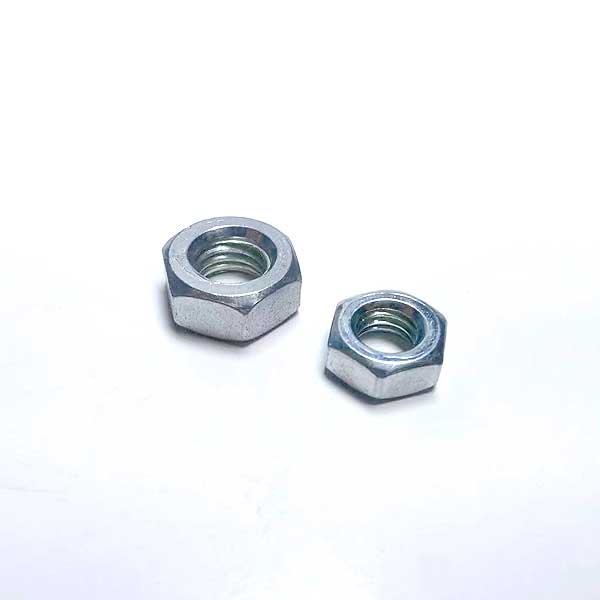
Jam nutCarbon steel hex jam nuts with right and left hand internal threads
Locking hardware

Carbon Steel Hex Jamb Nuts LH/RH

The internal thread is tapped after the hex profile is formed, in both right- and left-hand versions.

TurnbuckleZinc plated turnbuckle jack screw with left and right hand external threads and lock nuts
Opposite-hand threads

Zinc Plated Turnbuckle Jack Screw

Opposite-hand external threads let the body draw both rod ends together or apart as it is rotated.

StudStainless steel double ended stud bolts with external threads on both ends
External thread

Stainless Steel Double-Ended Studs

External threads on both ends are a rolling candidate at production volume, or can be cut for low-volume and non-standard work.

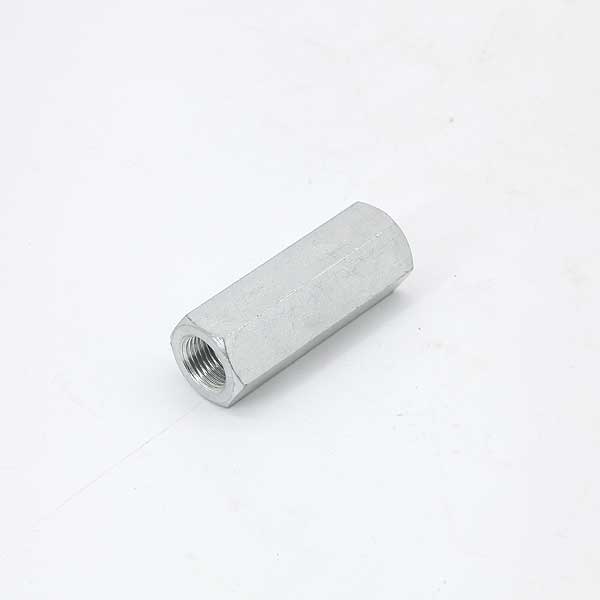
Connector nutHex stud connector nut joining two threaded bars
Coupling hardware

Hex Stud Connector Nut

Internal threads on both ends match the studs being joined, while the hex profile gives a wrench flat.

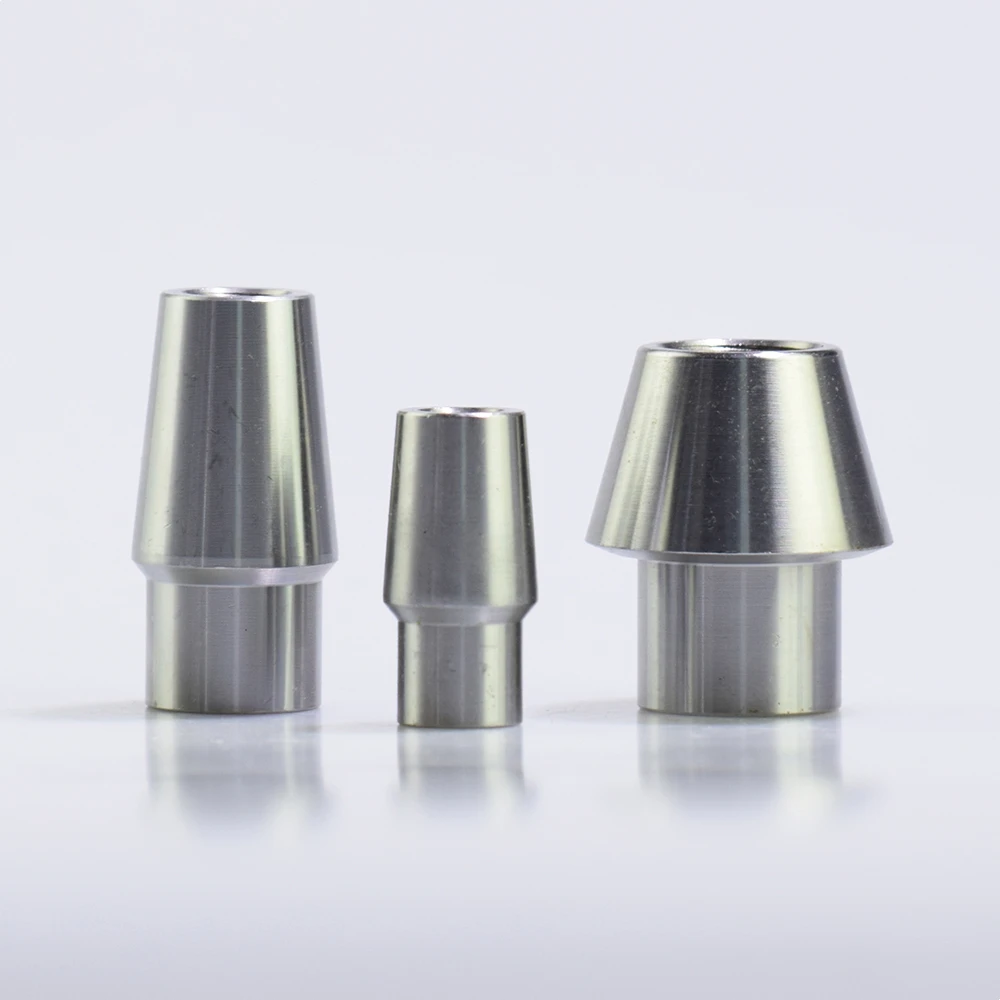
Tube insertCustom threaded tube insert with left and right hand internal thread options
Tube adapter

Custom Thread Tube Insert

The outside diameter is turned to match the tube bore, then the internal thread is tapped to match the mating rod end.

Need a thread specification that is not in the catalogue? Send us the drawing.

06 / Quality control

How Threaded Features Are Controlled


A thread that looks correct can still fail a gauge check. Control focuses on the thread form, pitch diameter, hand, and fit.

01

Material and blank

Material certificates are checked before bar stock is released, since thread rolling depends on consistent material behaviour.

02

First article

The first threaded part off a new setup is checked with go/no-go thread gauges before the run is released.

03

In-process checks

Patrol inspection confirms thread gauging is holding as dies and cutting tools wear.

04

Final inspection

Depending on the product and order, finished goods go through 100% inspection, sampling, or a customer-specified plan.

07 / Design for manufacture

Designing Threaded Features: What to Send, and What Drives Cost


What to send with an enquiry

  • Thread size, pitch, and class
  • Rolled, cut, tapped, or recommendation requested
  • Right- or left-hand thread
  • Full-thread length and relief/runout
  • Quantity and target schedule
01

Volume vs tooling

Rolling requires a die for the exact thread; cutting is often more practical for one-offs or small custom batches.

02

Proximity to a shoulder

A rolling die needs approach clearance. A thread close to a shoulder may need to be cut instead.

03

Thread hand

Turnbuckles and double-ended adjusters need the hand of each end called out unambiguously.

04

Blank diameter

A rolled thread is formed by displacing metal from a correctly sized blank; the blank dimension must support the finished major diameter.

05

Material ductility

Rolling depends on the material deforming cleanly. Other materials and most internal threads are cut or tapped.

Before and after threading

Threading is applied to a part already turned, milled, or drilled to its main shape.

Typical MOQ100–300 pieces per item; stock items may be available in smaller quantities.
Route-based timingTiming follows the route the thread is produced on and is confirmed with the quotation.
20+ countriesCustomers are served through SYZ Machine’s export team.
08 / Buyer questions

Threading FAQ


Should my part have a rolled thread or a cut thread?

For an external thread on a load-bearing part at production volume, rolling is generally worth considering where the material and geometry suit it. For a one-off, custom pitch, or thread close to a shoulder, cutting on the lathe is often the practical choice.

Do you tap internal threads, or only cut external ones?

Both. Internal threads are commonly tapped at Ningbo or as part of a milling operation at Taixing. External threads at production volume may be rolled at Wuxi or cut on the lathe at Ningbo.

What is the difference between a rolled and a cut thread?

A rolled thread displaces material into the form rather than cutting it away and can improve fatigue performance for a suitable material and geometry. A cut thread is more flexible for unusual pitches and access conditions.

Can you produce left-hand threads?

Yes, on rolled and cut external threads and tapped internal threads where the equipment and geometry support it. Tell us which end needs which hand, referenced clearly to the drawing.

What is your MOQ for a custom threaded part?

Typical MOQ is 100–300 pieces per item. For a first custom rolled-thread order, confirming a sample before committing to tooling and volume is usually practical.

Which materials do you thread?

Carbon steel, 4130 chromoly alloy steel, 6061 aluminium, and 304/316 stainless steel appear across our own product lines. Material and method are confirmed together at drawing review.

Can you provide thread gauge inspection records?

Yes, where required. Threaded parts are checked with go/no-go gauges at first article and according to the agreed inspection plan. Dimensional reports can be supplied according to the product and order.

Can we audit the facility or arrange a third-party inspection?

Yes. Client visits and third-party inspections can be arranged for the relevant production site. The affiliated Wuxi base has been assessed by SGS under report No. 492475436_P+T, valid to 9 July 2027.

09 / Start a review

Have a Threaded Part to Specify?


Send the drawing with thread size, pitch, class, hand, and volume. We will confirm whether it runs as a rolled, cut, or tapped thread.

Request a Quote

Please submit the form or email [email protected]

🍪
We Use Cookies