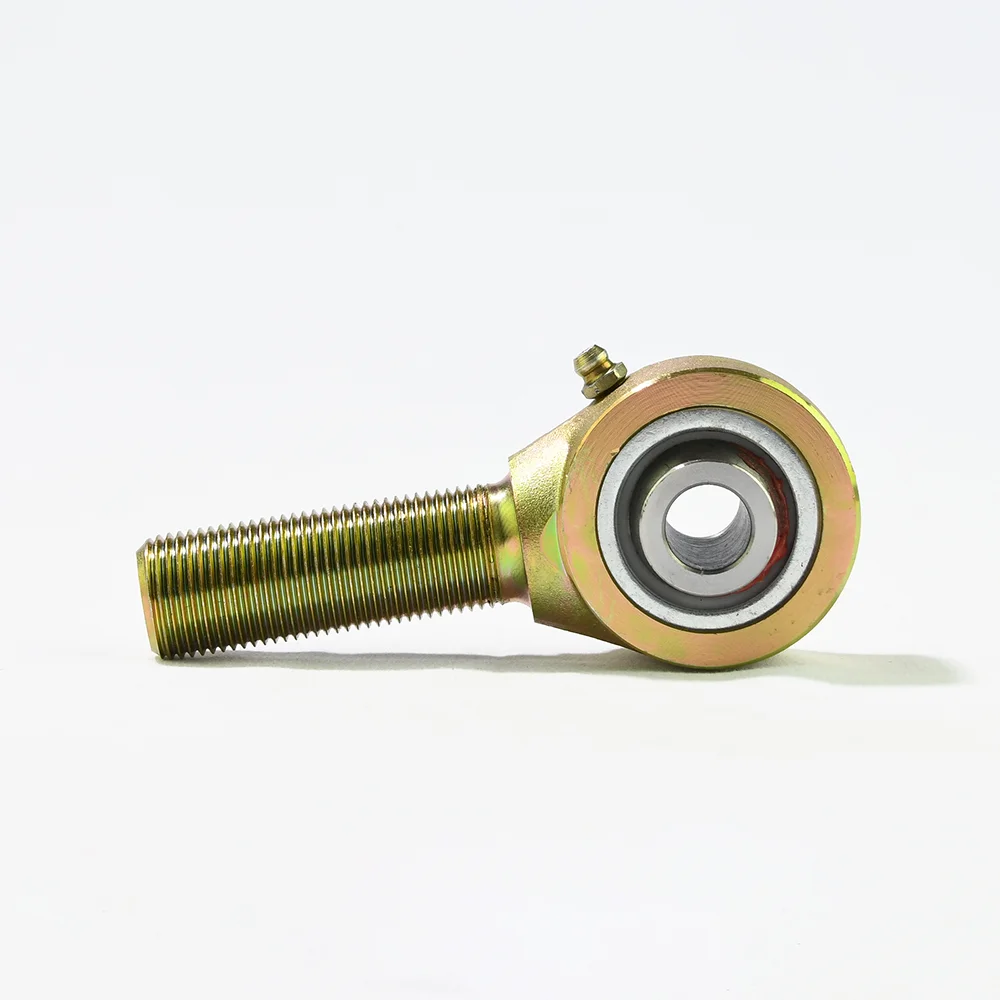
Most Johnny Joint (Rebuildable Flex Joint) failures trace back to a small number of causes — and several of them are directly tied to maintenance habits already documented on this site’s own rebuild and grease guides. This walks through the seven most common causes, what each looks like, and how it connects to the assembly, materials, and maintenance guidance covered elsewhere in this collection.
The 7 Failure Modes
1Bushing Wear and Compression Set
Looks LikeThe ball rotating too easily inside the housing, noticeable play, or strange noises from the suspension — the same symptoms
How To Rebuild a Johnny Joint? identifies as the signal it’s time for a rebuild.
Root CauseThe pair of polyurethane (or Delrin, depending on part number) bushings that surround the ball absorb vibration and secure the sphere under load — over time and cyclic articulation, they wear and take a compression set, losing their snug fit around the ball.
PreventionThis is expected wear on a rebuildable joint, not a defect — the fix is a scheduled rebuild with fresh bushings rather than prevention outright. See
How To Rebuild a Johnny Joint? for the kit and tools, and watch for the play/noise symptoms as your trigger to act.
2Wrong Grease Type
Looks LikeAccelerated bushing wear and reduced joint life that shows up faster than the normal service interval would predict.
Root CauseHow Often and How to Grease a Johnny Joint is explicit on this: moly-based grease is recommended for Johnny Joints, and full-synthetic lithium-based grease “can be too harsh,” leading to premature wear and potential damage. Using the wrong grease is a self-inflicted failure mode, not a materials defect.
PreventionUse moly-based grease specifically — not lithium-based — per the existing grease guide’s own recommendation.
3Over-Greasing Damage
Looks LikeBushing or snap ring damage that seems to appear despite (or because of) frequent maintenance attention.
Root CauseMore grease isn’t better here. The existing grease guide states directly that too much grease “can cause damage to the bushings or snap rings, potentially leading to failure” — over-greasing pressurizes the assembly in a way a small, correct amount doesn’t.
4Snap Ring Failure or Improper Reinstallation
Looks LikeThe assembly coming loose or the ball working its way out of the housing — a serious failure mode since the snap ring is what locks the whole assembly together.
Root CauseThe snap ring can loosen from over-greasing damage (see #3 above), corrosion, fatigue over repeated rebuild cycles, or improper reinstallation during a DIY rebuild if it isn’t fully seated in its groove.
PreventionUse snap ring pliers (not improvised tools) during rebuild, confirm the ring is fully seated in its groove before returning the joint to service, and inspect it for damage or deformation at every rebuild — replace it if it looks worn rather than reusing a questionable one.
5Spanner Nut Galling or Loosening (SYZ-F015–F020 Only)
Looks LikeDifficulty threading or unthreading the spanner nut, visible galling on the threads, or a nut that works loose in service.
Root CauseSYZ-F015 through SYZ-F020 use a stainless threaded spanner nut design, distinct from the other 14 part numbers’ standard construction (see
Rebuildable Flex Joint spec page). Stainless-on-stainless threads have a higher tendency toward galling compared with plated steel threads, especially when assembled dry or over-tightened. Thread damage or insufficient preload can also contribute to spanner nut loosening under repeated suspension loads.
PreventionIf your part number is in the F015–F020 range, apply anti-seize to the stainless threads during assembly and tighten to the specified torque rather than relying on feel.
6Ball Surface Wear from Inadequate Regrease Interval
Looks LikeRoughness or notchy movement through the joint’s range of motion, distinct from the looser, play-related symptoms of bushing wear (#1).
Root CauseThe hard chrome-plated ball surface depends on grease film at the ball-bushing interface; missing the regrease interval lets that film break down, allowing more direct contact and accelerated wear at the ball surface itself.
7Offset-Angle Mismatch
Looks LikeBinding, uneven bushing wear, or a joint that doesn’t articulate cleanly through its expected range in the assembled linkage.
Root CauseOnly SYZ-F001 through SYZ-F004 have a documented offset angle (0°, 10°, 0°, and 9° respectively) — the other 16 part numbers have no published offset value (see
Rebuildable Flex Joint spec page). Specifying a standard, non-offset part number where the linkage geometry actually needs an offset housing (or the reverse) creates a fit mismatch that shows up as binding or uneven wear rather than a clean failure.
PreventionConfirm whether your linkage geometry requires an offset housing before ordering, and don’t assume a part number outside F001–F004 has zero offset just because no value is published —
contact us to confirm if geometry is critical to your build.
Two Worked Examples
Illustrative scenarios built from this collection’s documented product and maintenance data — not customer case histories.
IllustrativeScenario A — Wrong Grease Compounding Over-Application
A builder services their 4-link Johnny Joints at every oil change using a full-synthetic lithium grease already on hand in the shop, and applies a generous amount each time “to be safe.” Within a season, the bushings show accelerated wear and the snap rings show early damage — both documented risks (see #2 and #3 above) rather than a manufacturing defect. Switching to a moly-based grease in the correct, small quantity at the documented interval resolves the repeat failure.
IllustrativeScenario B — Offset-Angle Mismatch
A fabricator orders a standard SYZ-F Rebuildable Flex Joint for a custom 4-link mount, assuming all the housings in the line are functionally interchangeable. The linkage geometry actually calls for an offset housing to clear the frame rail without binding. Running the standard part produces uneven bushing wear and a joint that never articulates cleanly. Switching to the correct offset configuration (or a custom-reviewed housing) — confirmed against the real, limited offset-angle data rather than assumed — resolves the binding.
Failure Mode Quick Reference
| Failure Mode | Primary Symptom | Root Cause | Primary Prevention |
|---|
| Bushing wear / compression set | Ball rotates too easily, play, noise | Normal cyclic wear on polyurethane/Delrin bushings | Scheduled rebuild with fresh bushings |
| Wrong grease type | Accelerated bushing wear | Lithium-based grease used instead of moly-based | Use moly-based grease per the grease guide |
| Over-greasing damage | Bushing or snap ring damage | Excess grease pressurizing the assembly | Small amount, correct interval |
| Snap ring failure | Assembly loosens, ball works free | Over-greasing, corrosion, fatigue, improper reinstallation | Proper tools, full seating, inspect at rebuild |
| Spanner nut galling/loosening | Hard to thread, visible galling, loose nut | Stainless threads over-torqued or run dry (F015–F020 only) | Anti-seize, torque to spec |
| Ball surface wear | Roughness, notchy movement | Grease film breakdown from missed interval | Stick to documented regrease schedule |
| Offset-angle mismatch | Binding, uneven wear | Wrong part number for linkage geometry | Confirm offset requirement before ordering |
FAQ
What’s the earliest sign a Johnny Joint needs attention?
The ball rotating more easily than it should, or noise from the suspension — both documented in the existing rebuild guide as the trigger to inspect or rebuild, before the joint fails outright.
Can over-greasing really damage a Johnny Joint?
Yes — this site’s own grease guide is explicit that too much grease can damage the bushings or snap ring, potentially leading to failure. More isn’t better; use the recommended small amount at the documented interval.
Does the spanner nut galling risk apply to all Johnny Joint part numbers?
No — only SYZ-F015 through SYZ-F020 use the stainless threaded spanner nut design. The other 14 part numbers use a different construction and aren’t exposed to this specific risk.
How do I know if my part number has an offset housing?
Only SYZ-F001 through SYZ-F004 have a published offset angle (0°–10°). For any other part number, the offset value isn’t documented — don’t assume it’s zero if your geometry is offset-sensitive; contact us to confirm.
Is bushing wear a defect I should return the part for?
No — bushing wear is expected, normal service wear on a rebuildable joint, not a manufacturing defect. That’s the entire premise of the rebuildable design: replace the bushings (and ball, if worn) rather than the whole joint. See How To Rebuild a Johnny Joint?.
Danny Ni is an engineering-focused technical writer at SYZ Machine, specializing in mechanical components, linkage systems, and real-world application engineering. His work covers aftermarket vehicle parts, industrial joints, and mechanical principles, translating complex engineering concepts into practical insights for engineers, fabricators, and industry buyers.