
Executive Summary
The escalating US-Canada trade dispute, now set for a September 8 retaliation date, is forcing a hard reset on North American industrial supply chains, with agricultural equipment, steel, and electronics in the crosshairs. Simultaneously, global logistics networks are straining under a 4% weekly jump in container rates, persistent Red Sea disruptions, and record port congestion in Asia. This week's intelligence also highlights a decisive shift toward electrification in heavy mining equipment, new momentum in the right-to-repair movement for off-road machinery, and a widening gap between AI infrastructure investment and near-term industrial demand.
North American Trade War: The September 8 Retaliation Deadline

The trade relationship between the United States and Canada has deteriorated sharply. Following Washington’s imposition of 50% tariffs on nearly $20 billion worth of Canadian goods, Prime Minister Mark Carney announced that Canada will enact dollar-for-dollar retaliatory tariffs beginning September 8. The Canadian response explicitly targets steel, dairy, appliances, agricultural equipment, pulp and paper, and electronics—sectors that form the backbone of cross-border industrial supply chains.
For component buyers and manufacturers, the inclusion of agricultural equipment is particularly significant. The sector relies on integrated North American production networks, with components crossing the border multiple times before final assembly. A 50% tariff on finished goods, followed by retaliation on the same category, effectively doubles the cost friction for any manufacturer with facilities on both sides of the border. The collapse of last-ditch negotiations in Washington on Friday has removed near-term hopes for a quick resolution, and the reference to USMCA by President Trump as irrelevant (“I do not care about USMCA”) suggests a prolonged period of uncertainty.
The broader implications extend to the reshoring narrative. While some analysts argue that US industrial stocks could benefit from a permanent shift of production back across the border, the immediate reality for engineers and procurement teams is one of cost volatility and supplier uncertainty. The tariff structure now penalizes the very cross-border integration that has defined the sector for decades, forcing a reevaluation of sourcing strategies for everything from hydraulic fittings to electronic control modules.
Freight & Logistics: Rates Surge as Congestion and Geopolitics Collide
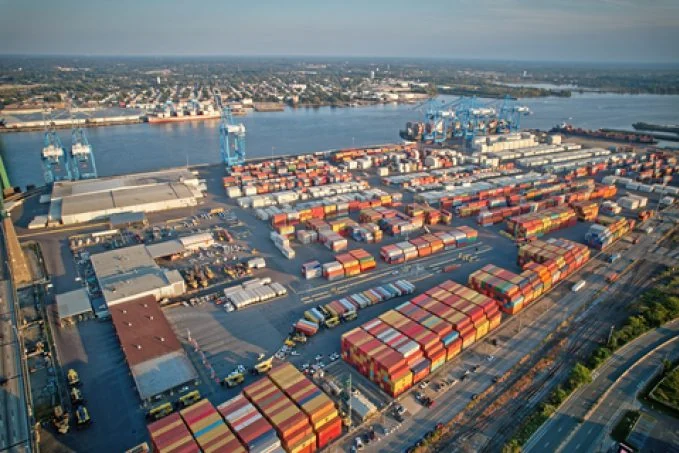
Global container shipping is experiencing a renewed bout of price pressure. The Drewry World Container Index rose 4% to $4,526 per FEU, with Transpacific routes leading the surge as carriers cut capacity. This is not a demand-driven rally; rather, it is a supply-side squeeze. Global port congestion is keeping an estimated 1.7 million TEU of capacity out of the market, with new hotspots emerging in Singapore, Turkey, and Mumbai, while Chinese ports grapple with the aftermath of Typhoon Dolphin.
The Red Sea situation remains a critical factor. Houthi missile and drone threats continue to disrupt shipping, and the recent shutdown of the port of Mocha tests Yemen’s ability to secure its coastline. Kuehne+Nagel’s assessment that port congestion and Red Sea risks keep container shipping under pressure aligns with T3ex’s forecast that freight rates will stay elevated through at least September. For industrial buyers, this translates into extended lead times for imported components and higher landed costs, particularly for goods moving from Asia to North America and Europe.
In a notable development, South Korea is testing the Northern Sea Route as an alternative to traditional lanes, a move that could eventually offer a faster, albeit geopolitically complex, link between Asia and Europe. Meanwhile, Maersk’s new Tangier-Casablanca rail link in Morocco offers a regional solution to port congestion, signaling that logistics providers are actively seeking multimodal alternatives to ease bottlenecks.
Mining Electrification: The 350-Ton Battery-Powered Behemoth
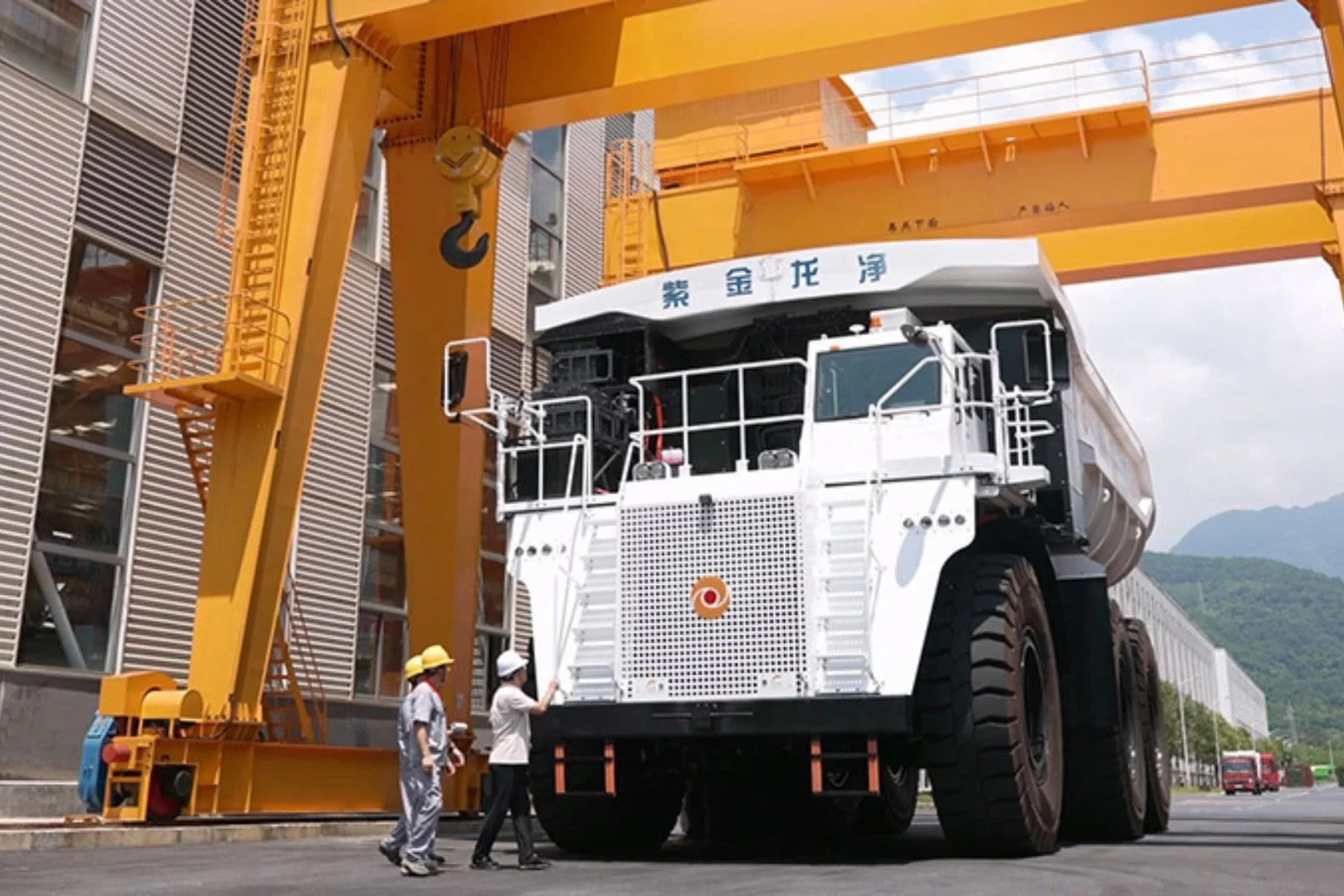
The mining sector is witnessing a step-change in equipment electrification. Zijin Longking has launched the ZL230E, a 350-ton electric mining truck equipped with a colossal 1,400 kWh battery, claiming a 10-90% charge in just 25 minutes. This is not merely an incremental improvement; it represents a viable path to eliminating diesel from the highest-emission segment of surface mining operations.
For engineers and maintenance teams, the implications are profound. The shift from mechanical drivetrains to high-voltage electrical systems requires a new skill set for maintenance crews and a new supply chain for components—from specialized cabling and connectors to thermal management systems and battery cell modules. The fast-charging capability, if realized in practice, could enable near-continuous operation, fundamentally altering shift patterns and maintenance schedules.
This development aligns with broader industry trends. Komatsu South Africa’s achievement of TRL4 certification as the first surface mining equipment OEM signals a formalized approach to technology readiness in the sector. The combination of these factors suggests that the mining industry is moving beyond pilot projects toward the scaled deployment of electric haulage solutions, creating new opportunities for component suppliers who can meet the stringent reliability and safety requirements of high-voltage systems.
Right-to-Repair: From Dealer-Only to Owner-Operated

The right-to-repair movement is gaining significant legal and political traction, with direct implications for the off-road and agricultural equipment sector. A new FTC agreement with John Deere is providing farmers and independent shops with access to diagnostic tools, a development hailed as a “long-overdue win” for rural producers. This is complemented by a $99 million John Deere settlement moving toward approval, which would formalize the terms of access to software, firmware, and documentation.
The movement is not confined to agriculture. Congress is debating a broader right-to-repair bill to expand car repair access, and a Denver repair network has filed suit against two tech companies over state law compliance. The Michigan Public’s advice not to fear warranty voidance reflects a growing legal consensus that independent repair does not inherently invalidate warranties.
For distributors and aftermarket parts suppliers, this is a structural shift. The opening of diagnostic data and tools breaks the OEM-dealer monopoly on complex repairs, potentially expanding the addressable market for third-party parts and service. However, it also raises the bar for technical competence, as independent shops will need to invest in training and tooling to handle software-defined equipment. The trend toward repairability, exemplified by Fairphone’s US debut, suggests that consumer expectations are beginning to influence industrial design philosophy, favoring modularity and serviceability over sealed, throwaway units.
The AI Infrastructure Gap: Spending Without Demand

A significant divergence is emerging between capital expenditure on AI infrastructure and the revenue it generates. Goldman Sachs estimates that infrastructure spending is running far ahead of the revenue available to support it, a gap that has profound implications for the broader industrial economy. Alibaba’s 75% fall in quarterly net profit after ramping up AI capex is a stark illustration of this dynamic, as is Nebius’s pricing of $5 billion in convertible notes for a $20-25 billion capital plan spanning GPUs and data centers.
For the industrial components sector, this spending boom is a double-edged sword. On one hand, it drives demand for power infrastructure, cooling systems, and precision manufacturing capacity. The IndexBox forecast for disc insulator replacement units, driven by aging grid infrastructure, and the surge in demand for ceramic shaft sleeves due to semiconductor fab nearshoring, are direct beneficiaries. On the other hand, the financial fragility highlighted by Forbes and the record 30-year Treasury yield suggest that a correction in AI valuations could rapidly translate into canceled orders and deferred projects.
The US power grid’s vulnerability, as highlighted by warnings of potential 18-month blackouts, underscores the physical infrastructure deficit that AI expansion is exacerbating. The tension between the pace of digital infrastructure buildout and the capacity of the physical grid to support it is becoming a critical constraint, one that will require massive investment in transformers, switchgear, and grid monitoring equipment—a long-term tailwind for industrial suppliers, provided the financial bubble does not burst first.
Materials & Rare Earths: Diversification Pressures and Price Signals
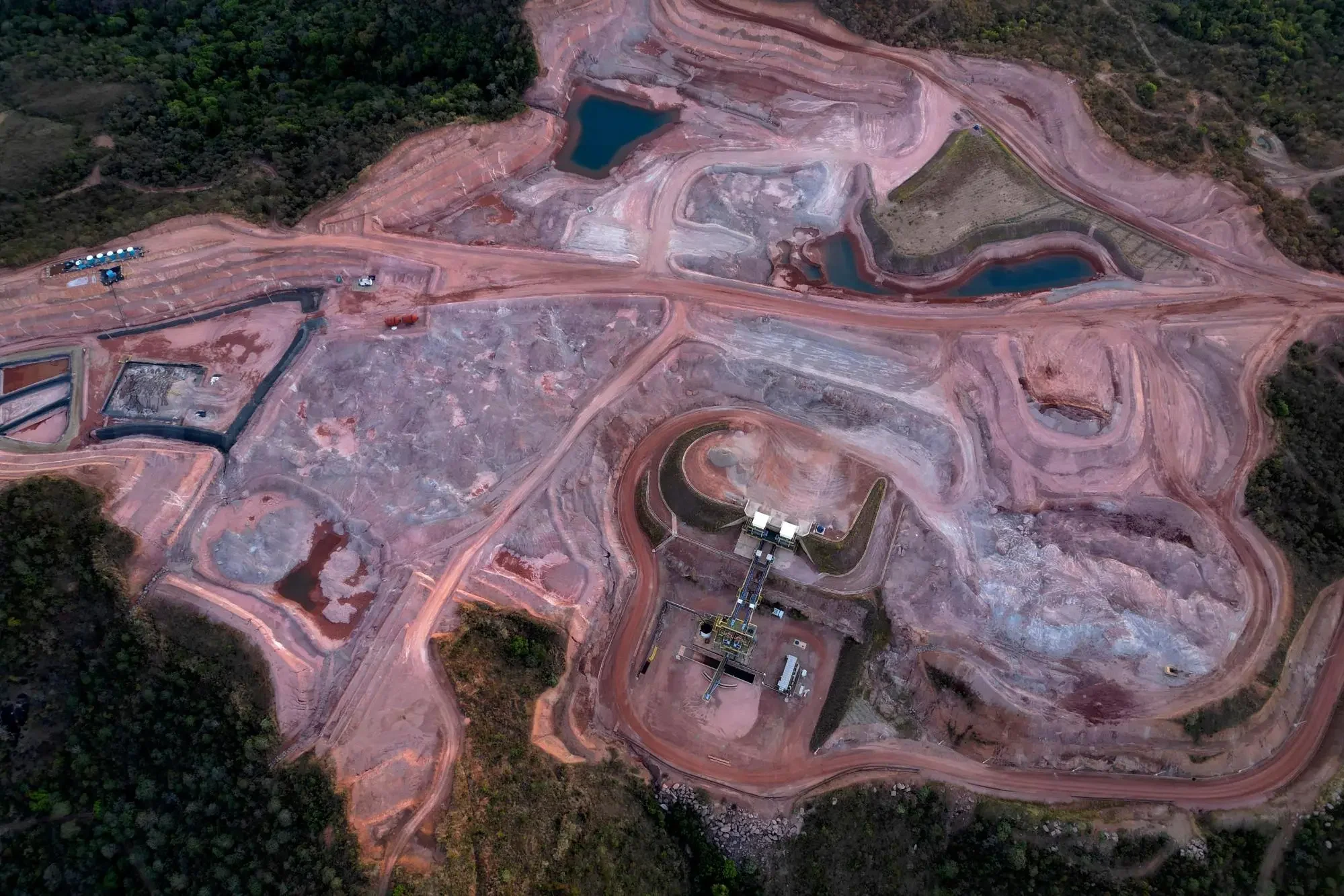
The race to secure rare earth supplies outside China is intensifying, with significant environmental and economic trade-offs. The US is now extracting rare earths from coal mine wastewater, while Brazil has emerged as a key battleground for new mining projects. Nikkei Asia’s question—who bears the environmental cost of this push—highlights the regulatory and reputational risks facing miners and their equipment suppliers.
In base metals, copper prices are trading near record highs, with Freeport-McMoRan’s market value gaining $7.8 billion on expectations of an $870 million boost to cash flow. Investor’s Business Daily notes that copper miners are topping buy points amid a supply-demand crunch, a signal that the electrification theme is translating into tangible demand for wiring, motors, and connectors. Conversely, aluminum billet inventory in China has hit a 5-year high, with processing fees rising amid a price decline—a sign of regional oversupply that could benefit component manufacturers sourcing aluminum extrusions.
The steel price trends are also being watched closely, with Continental’s stock drawing interest as steel price trends hint at margin relief potential. For manufacturers of heavy equipment and machinery, steel is the primary input cost, and any sustained decline in prices would provide a welcome buffer against the rising costs of freight and tariffs.
Global Manufacturing PMI: A Mixed Picture of Expansion

The latest flash PMI data paints a nuanced picture of global manufacturing health. The US S&P Global Flash Manufacturing PMI came in at 53.2 in August, below the 53.9 estimate, indicating a slowdown in the pace of expansion. Japan, however, beat expectations with a reading of 55.1, up from 54.5, suggesting robust demand in the Asian industrial powerhouse. The Eurozone also surprised to the upside, with a Manufacturing PMI of 52.8 against a consensus of 51.8.
India presents a more complex scenario. The composite PMI rose to 54.6, but this masks a divergence: services are driving the recovery, while manufacturing growth slowed to its weakest pace in five years, with the manufacturing PMI falling for the third consecutive month to 52.9. This slowdown occurs against a backdrop of a widening trade gap, as India’s manufacturing boom increases imports of intermediate goods. The government’s notification of a ₹62,500 crore mobile phone manufacturing scheme, with incentives for domestic sourcing of key components, is a direct policy response to this import dependency.
For global supply chain managers, these PMI readings suggest that while no major economy is in contraction, the momentum is uneven. The US slowdown, coupled with the tariff uncertainty, warrants caution in inventory planning. Japan’s strength offers a counterpoint, while India’s services-led growth may not translate into immediate demand for industrial components.
Emerging Trade Routes: Africa and the New Scramble for Infrastructure

Africa’s infrastructure market is becoming a contested arena, with India, Gulf states, and Turkey challenging China’s dominance. This diversification of funding sources and construction consortia has significant implications for equipment suppliers. The Lagos-Kano rail project in Nigeria, for instance, is engaging Climate Focus for its carbon program, indicating that environmental compliance is becoming a prerequisite for infrastructure finance.
Meanwhile, the US is targeting transshipment as a key vulnerability in its tariff enforcement, with nearly 40 countries flagged for aiding China tariff evasion. This crackdown will complicate logistics strategies for multinational manufacturers who have used third-country transshipment to optimize costs. The Section 301 probe nearing a decision on drones, and the White House’s focus on transshipment, signal that trade enforcement will remain a high-priority issue, adding another layer of compliance complexity for importers and exporters alike.
The India-Mexico preferential trade agreement, with terms of reference finalized, represents a new axis of South-South trade that could offer alternative sourcing routes for manufacturers looking to diversify away from China. Similarly, Africa’s push to leverage China tariff cuts for industrial growth suggests that the continent is seeking to position itself as a beneficiary of the ongoing trade realignment, rather than a passive bystander.
Sources
- Al Jazeera – Carney: Canada will enact retaliatory US tariffs starting September 8
- Washington Examiner – Carney says US 'attacked' Canada with tariffs and promises retaliation
- gCaptain – Transpacific Container Rates Surge as Carriers Cut Capacity
- The Loadstar – Global port congestion keeping 1.7m teu of capacity out of the market
- Kuehne+Nagel – Port congestion and Red Sea risks keep container shipping under pressure
- TechRadar – 350-Ton Longking ZL230E electric mining rig packs colossal 1,400 kWh battery
- International Mining – Komatsu South Africa first surface mining equipment OEM to achieve TRL4 certification
- Western Ag Network – John Deere $99 Million Right-to-Repair Settlement Moves Toward Approval
- Albuquerque Journal – NM farmers deserve the right to repair their own equipment
- Yahoo Finance – The Trillion-Dollar AI Capex Gap: Why Too Much Hardware Could Be Nvidia’s Trap
- Reuters – Alibaba profit falls 75% after ramping up AI infrastructure spending
- Nikkei Asia – Who bears environmental cost of push for rare earths beyond China?
- Investor's Business Daily – These Copper Miners Top Buy Points Amid Supply, Demand Crunch
- CNBC – S&P Global Flash Manufacturing PMI comes in at 53.2 in August
- Business Standard – Services drive recovery in India's pvt sector activity in August: Flash PMI
- RT – Major Asian exporter tests Russian Arctic shortcut to Europe
- Logistics Update Africa – Maersk unveils Tangier-Casablanca rail link to ease port congestion