
Skip to content

Metric · Hydraulic Cylinder Linkages · OEM · Wholesale

Hydraulic Cylinder Rod Ends

A hydraulic cylinder rod end is a rod end bearing — a spherical plain bearing in a forged or cast eye housing — that connects a cylinder piston rod or base to the machine while absorbing misalignment. SYZ supplies 7 metric HCR series, 96 sizes from 10 to 200 mm, in forged St 52-3, C45 and GS400 cast housings.
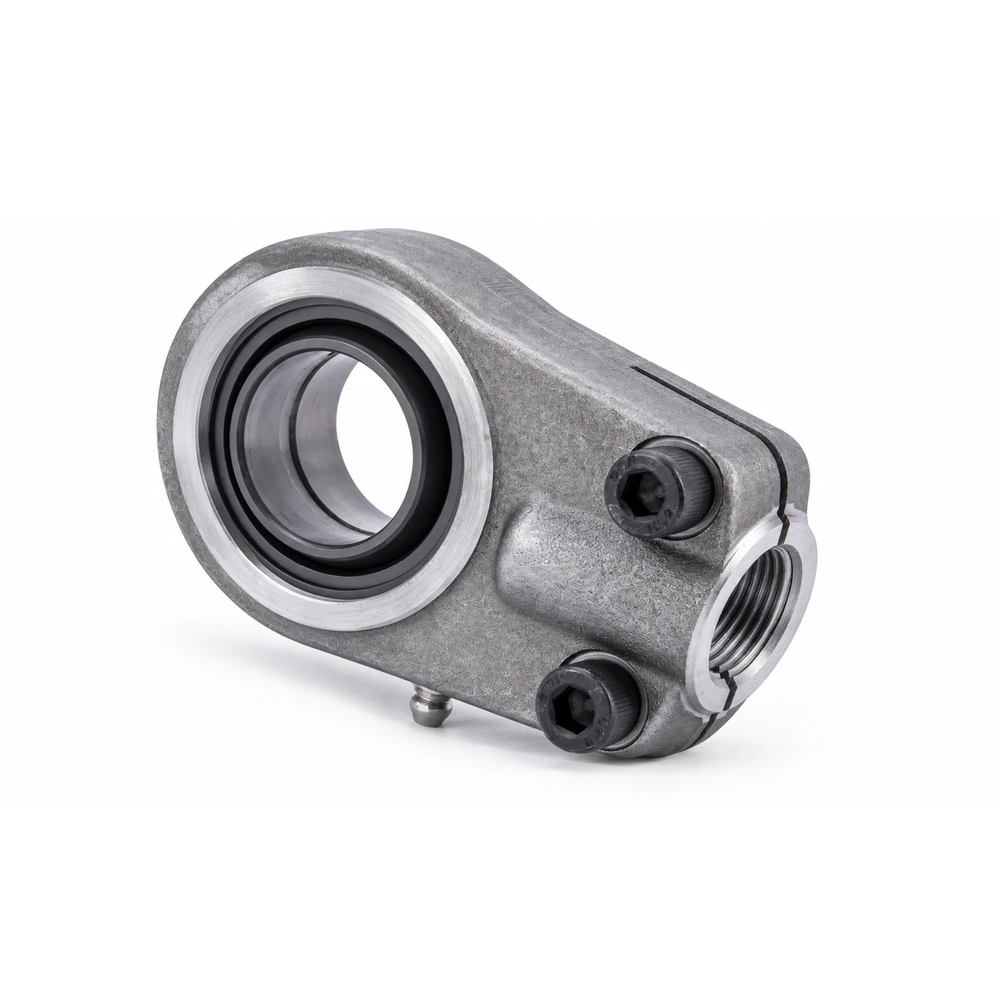
HCR20U hydraulic cylinder rod end bearing
7 Series
HCR metric families
96 Sizes
Published across the range
10–200 mm
Published bore range
−50 to +150°C
Common catalogue temperature range

Application Overview

Rod End Bearings for Hydraulic Cylinder Linkages

Hydraulic cylinder rod ends transfer force between the piston rod and the machine linkage while allowing the angular movement created during the stroke. The HCR range is organized around the variables that matter in a cylinder connection: bore size, housing material, race and inner-ring material, grease access, misalignment and available installation space.

Each HCR series page carries the published size table for that family, including bore, load data, tilt, weight and other available dimensions. Use the series cards below as the first filter, then confirm the exact size against your drawing and operating conditions.

Forged and Nodular Housings
The catalogue includes forged St 52-3, forged C45 / AISI 1045 and GS400 nodular cast iron housing options by series and size.
Metric Selection Data
Every HCR series page links to a size-specific table with dynamic/static load, tilt and weight data. Confirm the working load and joint geometry before release.
Lubrication and Service
Some families include DIN 71412 grease-nipple provisions; availability is series- and size-dependent. The HCR20U family also lists a GE..LO bearing option on request for applicable sizes.

HCR Product Families

Choose the Hydraulic Cylinder Rod End Series

Open the relevant category for the complete product list and size-level specification. The ranges below are catalogue ranges, not a substitute for application validation.

15 SKUs · 10–80 mm. Forged St 52-3 housing; 100Cr6 / AISI 52100 race and inner ring; phosphate + MoS2 treatment.
16 SKUs · 12–200 mm. Forged C45 / AISI 1045 housing, with GS400 option on the published range; RH thread.
10 SKUs · 12–100 mm. Forged C45 or GS400 housing options, with series-specific grease access.
17 SKUs · 15–120 mm. Forged St 52-3 housing; DIN 71412 grease nipple provision.
13 SKUs · 20–120 mm. C45 forged or GS400 housing by size; DIN 71412 lubrication provision.
13 SKUs · 20–120 mm. C45 forged or GS400 housing; GE..LO spherical plain bearing option on request where applicable.
12 SKUs · 25–160 mm. GS400 nodular cast iron housing with DIN 71412 lubrication provision.

Selection Matrix

Compare Housing, Lubrication and Range

Use this matrix to narrow the family, then confirm the exact load table and drawing on the linked series page.

SeriesHousing materialLubrication / bearing detailPublished rangePublished count
HCR10CForged St 52-3Phosphate + MoS2; size-dependent provision10–80 mm15
HCR12CEForged C45 / AISI 1045; GS400 optionSize-dependent provision; RH thread12–200 mm16
HCR12SForged C45 or GS400Size-dependent grease access12–100 mm10
HCR15NForged St 52-3DIN 71412 grease-nipple provision15–120 mm17
HCR20NC45 forged or GS400DIN 71412 lubrication provision20–120 mm13
HCR20UC45 forged or GS400DIN 71412 provision; GE..LO option on request20–120 mm13
HCR25DGS400 nodular cast ironDIN 71412 lubrication provision25–160 mm12

Selection Guide

What to Confirm Before Ordering

1. Bore and Thread
Start with the cylinder rod or pin interface. Confirm metric bore, thread direction and the available nut, washer or locking arrangement.
2. Load and Motion
Compare the catalogue dynamic and static load data with the cylinder force, duty cycle, oscillation and any shock loading in the linkage.
3. Housing and Lubrication
Select forged steel or GS400 according to the series and geometry. Confirm grease access, temperature and contamination controls for the actual installation.

Applications

Built Around the Cylinder Connection

HCR series are intended for metric hydraulic-cylinder linkage decisions where the bore, load, tilt and housing construction must be checked together. Typical review requests come from mobile equipment, agricultural machinery, construction equipment and industrial cylinder assemblies; final application suitability should be confirmed from the size data and drawing.

For an existing connection, send the old part number or a clear photo with bore, thread, overall length, load and articulation. This gives engineering a usable starting point for matching.

Manufacturing & Quality

Specification-Led Supplier Support

The HCR catalogue records housing material, bearing material, lubrication provision, static/dynamic load, tilt and weight at the series or size level. SYZ can review drawings, samples and replacement parts for OEM and wholesale sourcing.

Do not assume a general ISO or DIN compliance claim from a material or grease-nipple reference. DIN 71412 in this range identifies the grease-nipple provision where listed; request the exact drawing and documentation for your application.

Related Components

Compare Other Joint Configurations

Forged eye ends for pinned cylinder and linkage connections.
Forked rod-end configurations for clevis-mounted linkages.
Press-fit bearing elements when the housing is part of your own component.

FAQ

Hydraulic Cylinder Rod End Questions

What is the difference between a hydraulic rod end and a standard heim joint?
A hydraulic rod end is selected for a cylinder connection and is typically reviewed with metric bore, cylinder-side geometry, load data, tilt and housing construction. A standard heim joint is a broader threaded linkage component; the correct substitute depends on the load, articulation and mounting design.
Which housing material should I choose?
Choose from the material options published for the required series and size: forged St 52-3, forged C45 / AISI 1045 or GS400 nodular cast iron. The decision should consider load, shock, environment, geometry and the exact size drawing.
Do HCR rod ends need greasing?
Lubrication provisions are series- and size-dependent. Several HCR families list a DIN 71412 grease-nipple provision, while other sizes use a different or no external provision. Verify the selected product page before setting a service interval.
What temperature range is listed?
The common catalogue range is −50°C to +150°C. Actual application limits also depend on load, speed, oscillation, lubricant and surrounding seals; request a review for conditions outside the published range.
Can you match my existing cylinder rod end?
Yes. Send the old part number or a photo plus bore, thread, overall length, load, articulation, quantity and any drawing. SYZ can compare it against the HCR series and confirm the closest available size.
What is the MOQ and lead time?
MOQ depends on the series, size and whether the order is a sample or production run. A typical production lead-time reference is 25 days after specification and order confirmation; request a current quote for the exact part and quantity.

Engineering Tools

Calculators for This Product Family

Estimate pressure, sliding velocity and PV for preliminary oscillating-duty review.
Check a preliminary static load safety margin for a rod-end linkage.
Review press-fit interference when a spherical bearing is installed in a housing.

Buyer Guides

Related Selection Guides

Compare forged eye-end geometry for cylinder and pinned-link applications.
Review fork width, pin interfaces and clevis mounting choices.
Understand press-fit spherical bearing selection and race options.

Factory Direct

Need a Hydraulic Cylinder Rod End Quote?

Send the series, bore, load, quantity or replacement part number. We respond with the closest standard option, pricing and lead time.

We respond within 24 hours · MOQ 1 piece for samples · DDP air or sea

Request a Quote

Please submit the form or email [email protected]

🍪
We Use Cookies