Executive Summary
Executive summary. Autonomous heavy equipment moved from pilot project to funded reality this week: Gravis Robotics closed a $200 million Series A led by SoftBank — the largest such round in construction equipment history — while Bedrock Robotics, founded by Waymo veterans, said its self-operating excavators are already working across three sites in Texas and Nevada. In freight, Maersk's chief executive described port congestion as a "structural part" of global supply chains, and Asia–US East Coast container rates hit a 2026 peak. BHP posted a 30% profit jump on record copper prices, right-to-repair advocates scored major wins for US farmers, and Washington expanded Section 232 tariffs to drones and polysilicon as the USMCA review intensified. A softer dollar and mixed Asian output data completed the picture.
Executive summary. Autonomous heavy equipment moved from pilot project to funded reality this week: Gravis Robotics closed a $200 million Series A led by SoftBank — the largest such round in construction equipment history — while Bedrock Robotics, founded by Waymo veterans, said its self-operating excavators are already working across three sites in Texas and Nevada. In freight, Maersk’s chief executive described port congestion as a “structural part” of global supply chains, and Asia–US East Coast container rates hit a 2026 peak. BHP posted a 30% profit jump on record copper prices, right-to-repair advocates scored major wins for US farmers, and Washington expanded Section 232 tariffs to drones and polysilicon as the USMCA review intensified. A softer dollar and mixed Asian output data completed the picture.
Autonomous Equipment Moves From Pilot Projects to Funded Reality
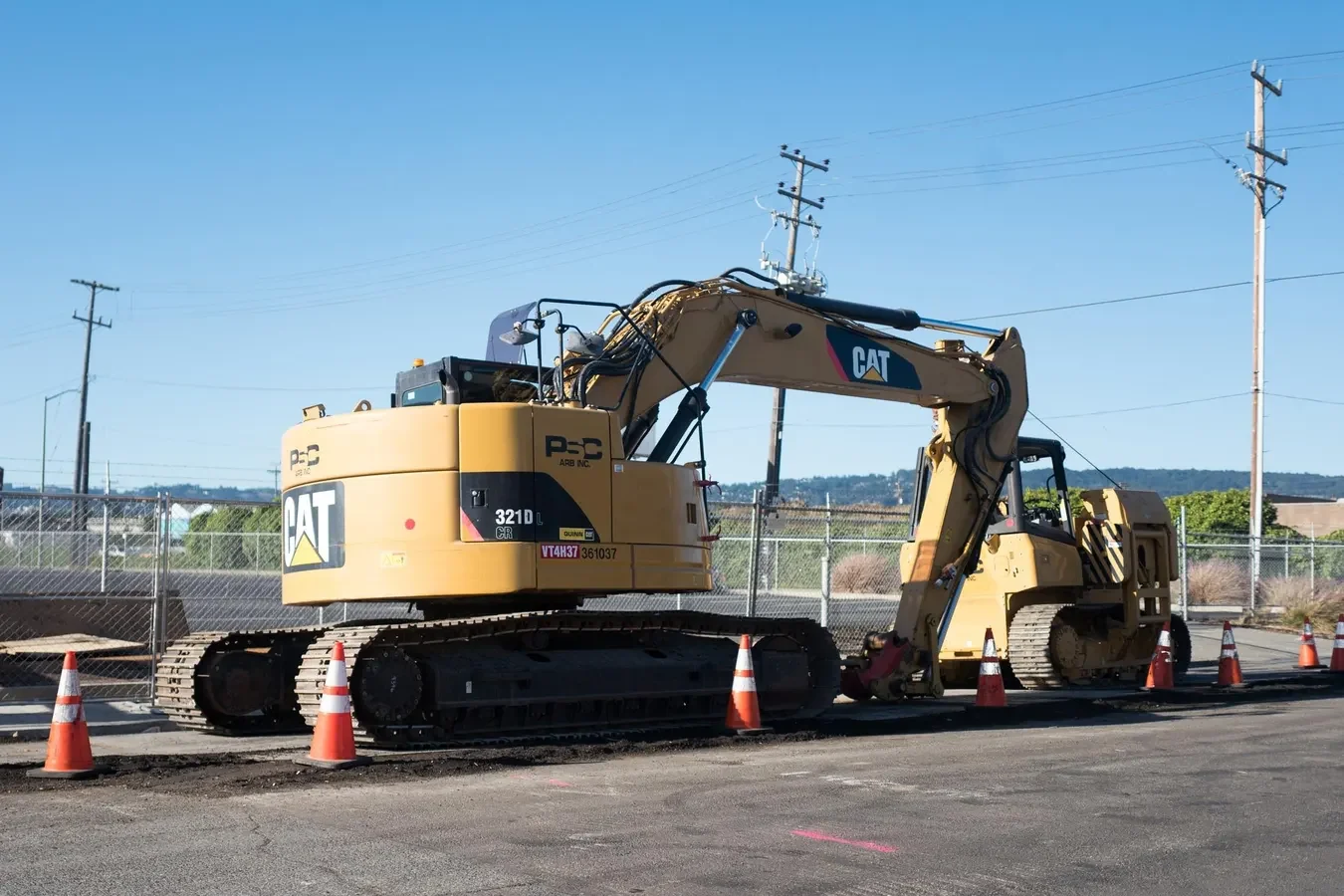
The clearest signal came from Gravis Robotics, which announced on Monday that it raised $200 million in Series A funding from SoftBank to expand its autonomous heavy equipment platform. Forbes reported that the round is the largest Series A in construction equipment history. Gravis is effectively adding an AI “brain” to excavators and other heavy machines, enabling them to perform complex digging and material handling tasks with diminishing human intervention.
The funding validates a segment that is maturing faster than many in the industry expected. Bedrock Robotics, a startup founded by former Waymo engineers, told Business Insider that its autonomous excavators are operating without human operators on three job sites in Texas and Nevada. The company has adapted self-driving car technology to the slower but far less structured environment of a construction site, where terrain, soil conditions, and obstacles change constantly.
The trend is global. EACON Mining, a Chinese autonomous haulage specialist, signed an overseas cooperation agreement with XCMG, one of the world’s largest construction and mining equipment manufacturers. XCMG separately said it is accelerating equipment deliveries for road construction, lifting, aerial access, and mining projects in Angola, Southeast Asia, South America, and Mozambique — markets where autonomous and semi-autonomous systems are being introduced alongside conventional fleets.
For component suppliers and distributors, the shift has two practical implications. Autonomous machines are sensor-rich and software-dependent: they demand more precision hydraulics, encoders, cameras, lidar, and ruggedized electronics than conventional equipment. At the same time, the retrofit opportunity is real. Much of the global excavator fleet is still conventional, and systems like Gravis’s and Bedrock’s are designed in part to be layered onto existing machines, potentially extending the economic life of older equipment while creating a new aftermarket for upgrade components, connectivity modules, and calibration services.
Port Congestion Moves From Disruption to Structural Reality

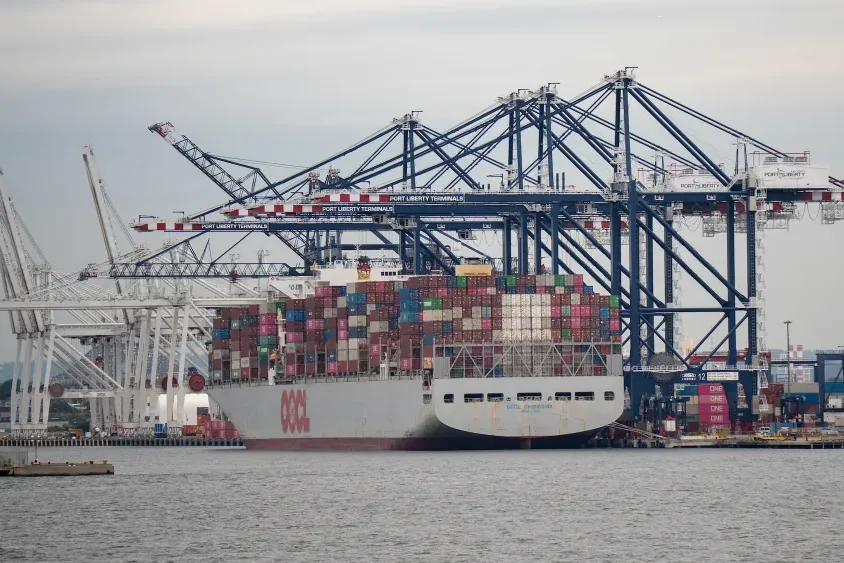
Maersk’s chief executive told the Journal of Commerce that port congestion is now a structural part of global supply chains, not a temporary disruption. The Danish carrier raised its 2026 earnings outlook for the second time this year after second-quarter revenue grew by double digits, and it is not alone in converting gridlock into profit. Lloyd’s List reported that port congestion is absorbing an estimated 1.7 million TEU of effective vessel capacity — ships waiting at anchor are ships that cannot be loading or unloading cargo.
Rates are responding accordingly. Asia–US East Coast spot freight rates hit their highest level of 2026 this week, according to WWD, driven by resilient demand and new Panama Canal surcharges. Drewry’s World Container Index rose for a second straight week, led by higher transpacific rates as carriers tightened capacity. Asian container freight rates are up 6% to a six-week high, and the rally is raising questions about how much more cost importers can absorb before it shows up in end-product pricing.
The Red Sea continues to complicate the picture. Houthi attacks targeted the port of Mokha in Yemen, and a UN envoy warned that the country is facing escalation. Saudi Arabia formally launched a maritime defense coalition to protect navigation in the Red Sea and Gulf of Aden, while the UN separately called for an end to shipping disruptions in the region. Together, the security and congestion factors have pushed transit times and freight costs well above pre-crisis levels.
For industrial buyers, the implications are concrete. Longer transit times and premium rates mean inventory buffers need to grow, freight must be priced into landed cost calculations, and suppliers may need to hold more stock closer to end customers. The structural label Maersk used is a warning that this is not a return to pre-pandemic logistics — it is a new operating environment.
Copper’s Record Run and the Push for Critical Minerals
BHP, the world’s largest miner, reported a 30% jump in full-year profit on the back of record copper prices and record iron ore output. The result underscores how strongly electrification and data center demand are feeding through to upstream commodity markets. Freeport-McMoRan shares also gained as copper sentiment strengthened, and analysts are debating just how durable the bullish case is.
Copper’s rally is directly relevant to industrial component economics: it is the conductive material in motors, cable, connectors, busbars, and virtually every electrical system on a machine or factory floor. When copper prices set records, manufacturers of electrical components eventually pass those costs to buyers. Zinc, another key input for galvanized steel and die casting, has also reached multi-year highs on supply interruptions and dwindling stockpiles, adding to cost pressure on fasteners, brackets, and structural parts.
On the supply side, efforts to diversify critical minerals are accelerating. American Rare Earths and Novex signed a memorandum of understanding to boost US rare earth oxide and sintered magnet production — a step toward reducing US dependence on Chinese processed rare earths, which are essential for servo motors, robotics, and electric drivetrains. Peru’s mining investment rebounded to $3.3 billion, though industry analysts note the country still awaits clearer regulatory reforms before committing to the next wave of projects.
The takeaway for component buyers is that raw material costs remain a dominant variable. Structural demand for copper and rare earths — from EVs, grid equipment, robotics, and data centers — suggests sustained upward pressure on input costs for electrical and magnetic components, even if individual commodity prices fluctuate week to week.
Right-to-Repair Victories Reach the Farm Belt
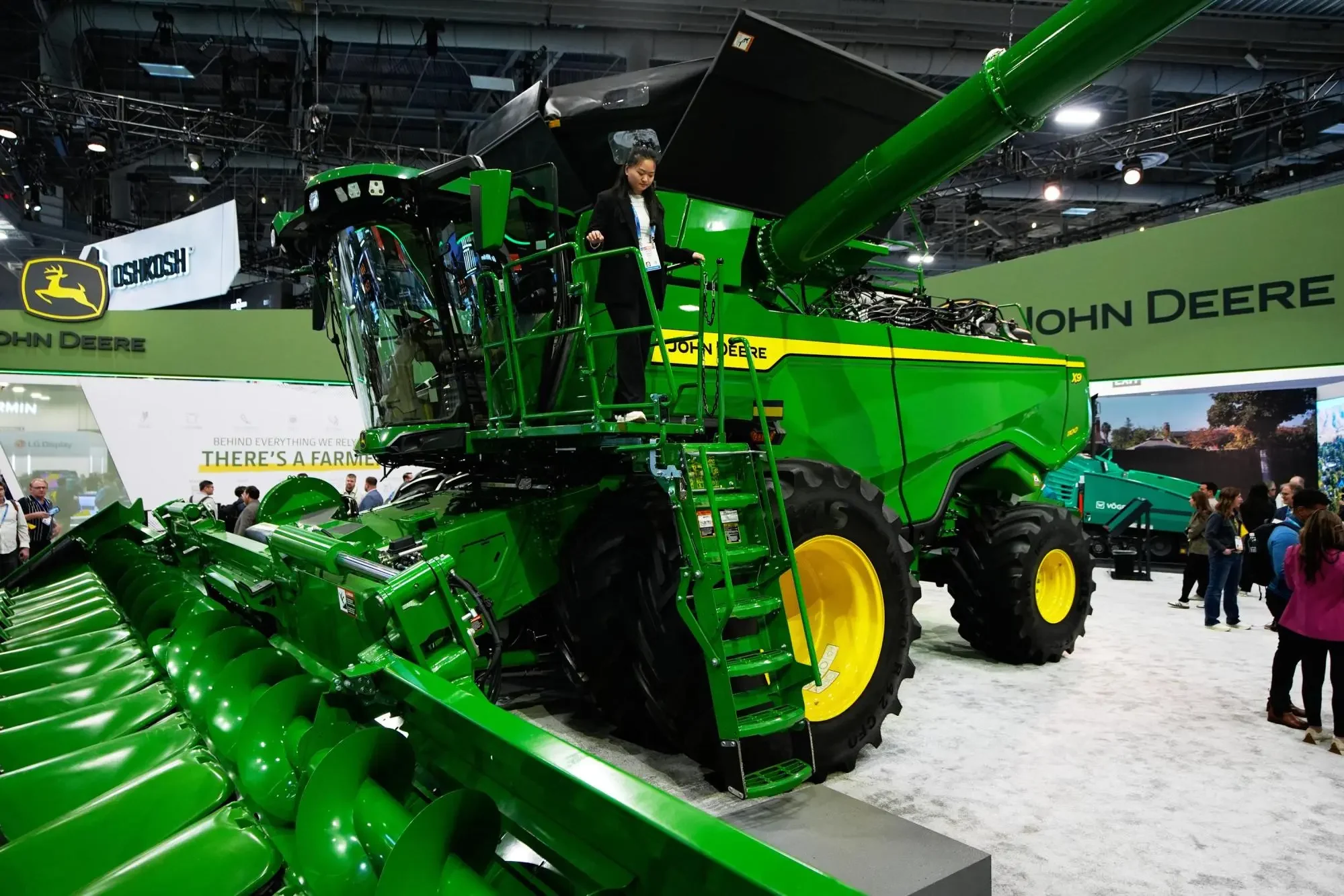
Right-to-repair laws are spreading across the United States, and this week the movement claimed notable victories in the agricultural heartland: farmers in Virginia and Iowa won the right to repair their own equipment, according to columns in the Daily Press and The Gazette. The wins follow a settlement with Deere & Company, though advocates caution that a catch remains — the settlement’s terms may not fully resolve questions about software access and diagnostic data, which are central to repairing modern machines.
The movement has expanded well beyond agriculture. Maine legislators reintroduced a right-to-repair bill for electronics, and Rhode Island is debating similar measures. The National Federation of Independent Business has joined the conversation, with its Florida director discussing the issue on a statewide radio program. An agricultural trade publication framed the practical stakes directly: right-to-repair changes could reduce farm equipment downtime.
For the industrial aftermarket, the implications are significant. Equipment that can be repaired locally tends to stay in service longer, and longer service life typically translates into steady demand for replacement components — bearings, seals, hoses, filters, hydraulic parts — even as it tempers demand for complete new machines. Software access is the next battleground; without diagnostic data, independent repair shops, distributors, and fleet maintenance teams cannot fully service modern equipment.
USMCA Review and Section 232 Actions Redraw the Trade Map

Trade policy dominated the week in North America. The 2026 USMCA review is intensifying: Detroit automakers warned that changes to the agreement could add billions of dollars in costs, while agriculture groups say billions in farm exports ride on the outcome. Mexico Business News reported that Canada faces new tariff pressure even as Mexico consolidates its position within the agreement. DHL has flagged the review as a critical issue for shippers, given the deep integration of North American automotive and industrial supply chains.
Washington also expanded its Section 232 tariff authority into new sectors. New tariffs on uncrewed aircraft systems and components drew a formal response from AUVSI, the UAS industry trade group. Separate Section 232 measures on polysilicon and derivatives could influence semiconductor and solar manufacturing expansion plans in the US, and US solar manufacturer First Solar publicly applauded the action.
The tariff environment is creating less visible complexity as well. Washington has accused more than 40 countries, including several US allies, of helping China evade US tariffs by routing exports through third nations, and the EU pushed back against the renewed pressure. US tariff-rate convergence is also eroding the cost advantage of moving supply chains out of China, undercutting some reshoring incentives, according to the Washington Examiner.
For industrial distributors and buyers, the message is to treat country-of-origin compliance as a dynamic task rather than a once-a-year review. USMCA rule changes could shift sourcing decisions within North America, while Section 232 actions affect everything from UAS components to polysilicon feedstock for electronics.
Dollar at Nine-Week Low as Asian Output Data Sends Mixed Signals

The US dollar index fell to a nine-week low this week, breaking key support levels as softer-than-expected US economic data dialed back expectations of further Federal Reserve rate hikes. The dollar index broke below the 99.32 breakdown zone, according to Investing.com, and Action Forex reported that key supports had given way. The weaker dollar has lifted gold and contributed to a record high for emerging-market currencies as global capital flows shift toward higher-yielding economies.
The currency moves carry practical implications for industrial trade. A softer dollar makes US-manufactured exports more price-competitive but raises the dollar cost of imported components and raw materials. In China, the People’s Bank of China set the USD/CNY reference rate at 6.7873 on Monday — only marginally firmer than the previous 6.7878 fixing but well above the 6.7382 that market participants had estimated. The signal is that policymakers are comfortable with a softer yuan, a factor that keeps Chinese exports price-competitive in global markets.
Asian output data was mixed. China’s July industrial production slowed more than expected, adding to concerns about the country’s demand outlook. Japan offered a stronger data point: final June industrial production came in at 1.9% month-on-month, beating the 1.3% consensus forecast. US July industrial production figures are scheduled for release this week and will provide the next read on North American manufacturing momentum.
Additive Manufacturing Reaches Industrial Scale as Smart Factories Spread

BMW Group has taken additive manufacturing to industrial scale, according to Metrology and Quality News — a sign that 3D printing has graduated from prototyping to production-grade applications in the automotive sector. The implications for spare parts and tooling are significant: additively manufactured components can be produced on demand, reducing the need for physical inventory while enabling geometries that cannot be cast or machined.
Manufacturing technology momentum is visible across regions. LG Electronics opened a new smart factory in Paraná, Brazil — its second production hub in the country — to support regional supply chain resilience. The facility highlights a broader trend toward regionalized manufacturing, with implications for component suppliers serving Latin American markets. At the same time, Hitachi Energy announced a $300 million investment in China to expand manufacturing capacity for critical grid infrastructure, a reminder that Chinese production remains central to global supply chains for transformers, switchgear, and high-voltage equipment even as companies pursue regional diversification.
The energy angle connects directly to the data center boom. Roughly half a trillion dollars in AI infrastructure spending is straining local power grids in the US, and analysts are increasingly focused on whether transformer capacity and grid components can keep pace. Investors are beginning to shift attention from infrastructure spending to monetization, but the physical buildout — and the components required — will continue for years.
Emerging Markets Compete for the Next Manufacturing Wave

Thailand’s Eastern Economic Corridor topped a ranking of Southeast Asia manufacturing hubs, according to Borneo Bulletin, as multinational firms continue to diversify production across the region. The EEC is competing directly with Vietnam, Indonesia, and Malaysia for electronics, automotive, and advanced manufacturing investment, and its top ranking signals that infrastructure readiness and policy support are increasingly decisive factors.
India’s manufacturing ambitions remained a central theme in regional coverage. Industry executives welcomed the government’s focus on manufacturing following the prime minister’s Independence Day address, while analysts debate whether Indian industry can close the country’s trade deficit through production growth. Engineering education is a recurring concern: a column in I-Connect007 argued that India’s manufacturing future depends on engineers who understand world-class production systems, not just theoretical design.
In South Africa, infrastructure spending plans are being framed as potential engines for skills and jobs, with construction sector representatives pushing for public works programs to revive demand. In West Africa, energy infrastructure is the focus: experts argue that a regional energy market could unlock $3 trillion in wealth by 2035, though progress depends on regulatory coordination and cross-border investment. For component suppliers, these emerging markets represent both growth opportunities and new competitive pressures — each requires local distribution, technical support, and aftermarket service, while also introducing new suppliers into the global market.
Key sources this week
- Forbes – Excavators, Meet AI: Gravis Nabs $200 Million From SoftBank To Give Construction Equipment Brains
- Business Insider via NewsBreak – First Came Self-Driving Cars. Now, Waymo Veterans Are Building Autonomous Construction Equipment
- International Mining – EACON Mining signs overseas cooperation deal with mining equipment major XCMG
- Journal of Commerce – Port congestion now a structural part of global supply chains: Maersk CEO
- Lloyd's List – Port congestion swallows 1.7m teu in structural rate shift
- WWD – Asia-US East Coast Freight Rates Hit 2026 Peak. Can the Rally Continue?
- Arab News – Why Houthi attacks on Mokha raise the stakes for Red Sea shipping
- Bloomberg – BHP Profit Jumps On Higher Copper Prices, Record Iron Ore Output
- Mining.com – American Rare Earths, Novex to boost US magnet production
- BNamericas – Peru's mining investment rebounds to US$3.3bn, awaits reforms
- The Guardian – 'Preserve the stuff we own': how right-to-repair laws are surging across the US
- Civic Media – Deere settlement is a win for the Right to Repair. But advocates say there's a catch
- Mexico Business News – Canada Faces New Tariffs; Mexico Consolidates Its USMCA Advantage
- Troutman Pepper Locke – Cleared for Tariffs: What the New Section 232 Drone Tariffs Mean for the UAS Industry
- Investing.com – China industrial production slows more than expected in July
- Metrology and Quality News – BMW Group Takes Additive Manufacturing to Industrial Scale
- Hitachi Energy – Hitachi Energy invests $300 million in China to bolster global manufacturing capacity for critical grid infrastructure
- Borneo Bulletin – Thailand's EEC tops Southeast Asia manufacturing hub ranking