
Executive Summary
Industrial buyers entered mid-September facing a rare convergence of pressures. Saudi Arabia shut its East-West oil pipeline after a drone attack while Houthi advances threatened Red Sea shipping, pushing energy and freight risk higher. Copper touched record highs on AI-driven demand and tariff uncertainty, even as rare-earth supply chains gained new processing and recycling capacity in Brazil and the United States. In manufacturing technology, AI moved deeper into the plant floor — from robot drilling accuracy to additive-manufacturing design — while the EU's right-to-repair regime and a US solar duty decision added fresh compliance and sourcing questions. Regional demand signals diverged: India's manufacturing leasing boom and Hyundai's North American local-sourcing target pointed to structural investment, while Türkiye's industrial output slipped. This briefing covers the storylines most likely to affect component pricing, lead times, and sourcing decisions in the weeks ahead.
Red Sea Risk Returns: Pipeline Closure and Houthi Advances Raise Freight and Energy Stakes

Saudi Arabia temporarily shut down its East-West pipeline after a drone attack that Riyadh and Baghdad attributed to Iraq-based, Iranian-backed militias, according to Reuters and multiple outlets. The closure came as Houthi forces seized positions near the entrance to the Red Sea, tightening their grip on a corridor that carries a substantial share of Europe-Asia container traffic.
The immediate effect is energy-market uncertainty: the pipeline is a key bypass route that lets Saudi crude reach the Red Sea without transiting the Strait of Hormuz. With the conduit offline and Hormuz still subject to Iranian disruption, the buffer against a broader supply shock has narrowed. For industrial buyers, the transmission path runs through fuel and bunker costs, then freight rates, then delivered component prices.
Container shipping had already been strained. Splash247 reported that global port congestion has pushed beyond pandemic-era peaks, driven by a “perfect storm” of rerouting, typhoon disruption in China, and schedule unreliability. The Loadstar and ChemAnalyst both noted that typhoon-related congestion in Chinese ports is keeping intra-Asia rates elevated and capacity tight, with Golden Week approaching. A renewed Red Sea threat compounds that picture: longer routings around the Cape of Good Hope absorb vessel capacity, and any escalation that pushes more traffic away from Suez would tighten the global fleet further.
For distributors and OEMs, the practical implication is that ocean lead times — already extended — may not normalize soon. Buffer inventory decisions made in the first half of 2026 may need revisiting, particularly for components sourced from Asia into Europe and North America.
Copper’s Record Run Meets a Sharp Pullback

Copper prices hit all-time highs this week before retreating, a swing that captures the tension in industrial metals markets. CNN Business reported that tightening global supply, robust AI-related demand, and tariff uncertainty combined to drive the red metal to record levels. Barron’s then noted copper prices tumbling alongside Freeport and other mining stocks, and ADVFN reported US-listed copper miners falling as the metal pulled back from its peak.
The underlying demand story remains intact. Data-center construction, grid upgrades, and electrification all consume large volumes of copper, and supply growth has lagged for years. Tariff uncertainty adds a speculative layer: buyers front-loading orders ahead of potential duties can amplify price spikes, while any resolution can trigger sharp corrections.
For component manufacturers, copper is not just a commodity headline — it is a direct input into motors, windings, busbars, connectors, and hydraulic fittings. Volatility of this magnitude complicates quoting and contract pricing. Buyers who locked in fixed prices earlier in the year may find themselves advantaged; those buying spot face a wider range of outcomes. The aluminum market offers a partial contrast: SMM’s weekly review noted China continuing to destock with recovering peak-season demand, and prices expected to consolidate at highs with an upward bias — a steadier but still elevated picture.
Rare Earths: New Capacity in Brazil and Arizona, and a Recycling First

Two developments this week suggest the rare-earth supply chain is slowly diversifying, even if the shift remains incremental. Brazilian developer IMC produced its first mixed rare-earth carbonate and reported high terbium recovery rates, according to Mining Weekly — an early-stage but meaningful step for a jurisdiction that has attracted growing attention as an alternative source. Separately, a rare-earth recycler opened its first US facility in Arizona, Waste Dive reported, adding domestic recovery capacity for materials critical to magnets used in motors, actuators, and sensors.
On the technical side, American Rare Earths appointed Dr. Sanja Miskovic as chief technical advisor to advance processing at its Halleck Creek project, per Yahoo Finance and AL Circle. The appointment signals a focus on metallurgy and processing — historically the hardest part of the rare-earth value chain to scale outside China.
These are long-cycle projects. None will alter near-term magnet availability. But they matter for the medium term because rare-earth magnets sit inside a wide range of motion components, and buyers have spent several years seeking supply options beyond a single dominant producer. The International Crisis Group framed the broader stakes bluntly: rare earths are now central to both the green transition and rearmament, and outsourcing that supply carries strategic risk.
Manufacturing AI Moves From Pilot to Plant Floor

Several items this week point to AI’s migration from demonstration projects into production processes. Lockheed Martin and Xaba reported a tenfold gain in robot drilling accuracy using the xCognition system, per MarketScale — a concrete result in a high-tolerance aerospace application. Bioengineer.org reported that AI can now read metal microstructures, potentially accelerating additive-manufacturing design cycles by predicting how printed parts will behave.
The friction points are also becoming clearer. MarketScale reported that industry voices flag data labeling and AI relabeling as persistent plant-floor hurdles — the unglamorous work of making sensor and process data usable. Cognizant pitched a “central nervous system” for factories, and Augury introduced an industrial profile for Google Cloud’s Open Knowledge Format, aimed at capturing worker knowledge and sensor-trust rules for plant-floor AI agents.
For engineers and maintenance teams, the practical question is less whether AI arrives than how it changes documentation, diagnostics, and spare-part identification. Systems that learn from vibration, thermal, and acoustic data can shift maintenance from scheduled to predictive — a change that alters aftermarket demand patterns over time.
Additive manufacturing drew capital as well: Impossible Objects raised a $40 million Series B to scale industrial 3D printing, and HeyGears targeted post-processing — support removal, washing, curing — as the persistent bottleneck between a finished print and a usable part. Both signal that the industry is attacking the steps around the printer, not just the printer itself.
Right to Repair: EU Enforcement Gaps and US Legislative Delay

A year into the EU’s ecodesign rules for smartphones and tablets, iFixit reviewed 2,334 EPREL records and found that only about 18% actually point to spare parts — meaning more than 80% of devices still lack required repair information. Euronews reported that spare parts and services remain too expensive for the rules to deliver their intended consumer savings, estimated at up to €12 billion on appliance repairs.
In the United States, right-to-repair efforts stalled: the National Independent Automobile Dealers Association noted that House adjournment delayed action, though the REPAIR Act advanced out of committee earlier in the year and a narrower version is tied to a highway funding bill. Repair shops told local outlets they face “inconvenience and delay” without access to diagnostic data and parts.
The relevance to industrial components is indirect but real. Repair-access rules shape how long equipment stays in service, who can service it, and how spare parts flow through channels. If repairability mandates expand from consumer electronics toward industrial and automotive equipment — as some proposals suggest — the aftermarket could shift toward independent service networks and away from manufacturer-controlled parts distribution. That is a structural question for anyone in the replacement-parts business.
Trade Policy: Solar Duties Finalized, USMCA Signals, and an India-EU Opening
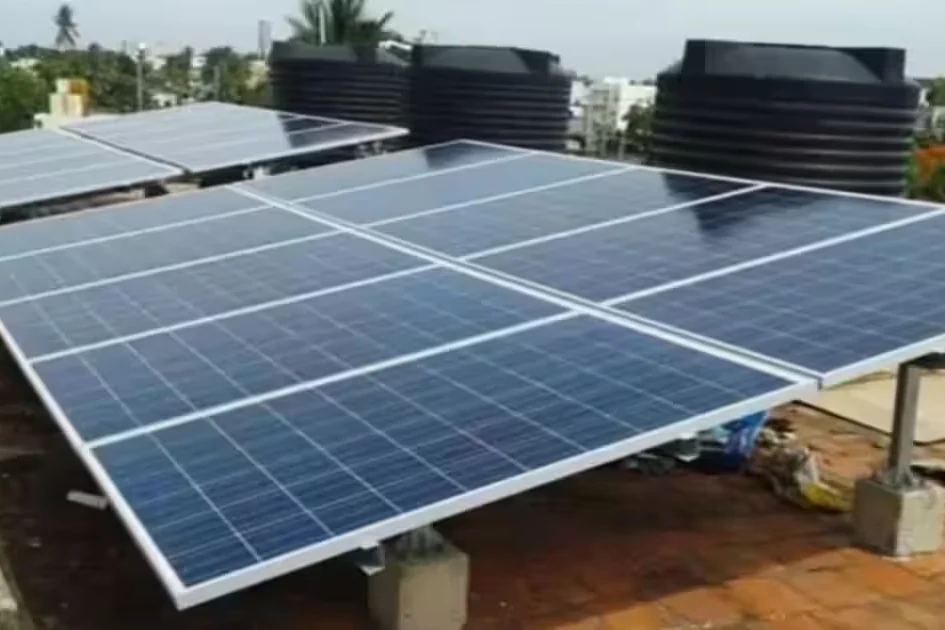
The US Commerce Department finalized anti-dumping and countervailing duties on solar cells and panels from India, Indonesia, and Laos. Indian producers face an anti-dumping margin of 123.04% and a countervailing duty rate of 126.09%, according to the Times of India and ET EnergyWorld. The decision reshapes sourcing economics for solar developers and, by extension, for the mounting, racking, and electrical components that accompany solar installations.
On North American trade, President Trump signaled a Canada deal could come “fairly soon” and downplayed the prospect of leaving USMCA, Bloomberg reported — a potential de-escalation after months of tariff escalation, including Canada’s new 50% tariff on US-made large motorcycles. Reuters reported that Mexico and Washington are sprinting toward a bilateral trade deal before US elections. The direction of travel matters for cross-border component flows: USMCA continuity keeps North American automotive and industrial supply chains integrated, while bilateral deals can introduce new rules of origin.
In Europe, the India-EU free trade agreement opened premium car market access with quota arrangements — 100,000 ICE and hybrid cars for European makers in year one, and a 250,000-unit EU quota for Indian-origin vehicles priced up to €50,000, per Business Standard. India is also pushing back on the EU’s Carbon Border Adjustment Mechanism, arguing it should help shape the rules rather than only comply with them.
Regional Demand: India’s Leasing Boom, Hyundai’s Local-Sourcing Target, Türkiye’s Soft Patch
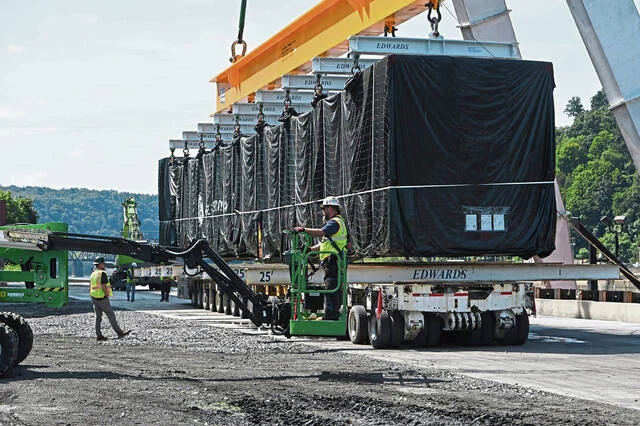
India’s manufacturing leasing market is expanding rapidly. Savills India projected leasing to reach 32 million square feet by 2030, and Realty Plus reported a 49% CAGR over five years. Prime Minister Modi, speaking at the BRICS summit, highlighted manufacturing growth as BRICS economies expand at roughly twice the global pace, per NDTV Profit. The buildout reflects both domestic demand and supply-chain diversification by multinationals.
In North America, Hyundai raised its local-sourcing goal: 80% of parts for vehicle manufacturing in the region to come from local suppliers by 2030, President and CEO José Muñoz said, according to Supply Chain Dive. The target reinforces a broader nearshoring trend that Mexico Business News reported is driving freight volumes, and that Design News described as accelerating despite policy uncertainty and skilled-worker shortages.
Not every signal pointed up. Türkiye’s industrial production fell 0.3% year on year and 1% month on month in July, Hurriyet Daily News reported — a soft patch for a country that has become an important manufacturing and export hub. Jordan’s industrial production rose 1.22% in July, per Sharjah24, a modest but positive reading from the region.
The divergence is the story: capital is flowing toward India, Mexico, and Southeast Asia, while some established manufacturing economies face cyclical weakness. For component suppliers, the geographic mix of demand is shifting, and distribution footprints may need to follow.
Currency Watch: A Softer Dollar and a Firmer Yuan Fixing

The dollar index steadied near 99 ahead of Federal Reserve, Bank of England, and Bank of Japan decisions, with a hawkish CPI report briefly pushing rate-hike odds higher, according to Barchart and VT Markets. UBS sees USD/CNY falling toward 6.50, per Exchange Rates UK, while the People’s Bank of China continued setting firmer fixings but kept the yuan below market estimates to support exports, VT Markets reported.
For industrial exporters and importers, a softer dollar against the yuan and euro changes relative cost positions. European machinery becomes relatively more expensive in dollar terms; Chinese components become relatively cheaper for dollar buyers. These shifts feed into sourcing decisions over quarters, not weeks, but they compound the tariff and freight pressures already in play.
What to Watch Next

Three threads deserve attention in the coming weeks. First, whether the Red Sea situation escalates further — any sustained closure of Suez routings would tighten global container capacity into the fourth quarter. Second, whether copper holds its record levels or continues to correct; the answer will shape input costs across electrical and hydraulic components. Third, the pace of AI adoption on the plant floor, where the gap between pilot projects and production deployment is narrowing but data-readiness remains a bottleneck.
On the policy side, watch for movement on the US-Canada and US-Mexico trade tracks, and for EU enforcement of right-to-repair rules as the compliance deadline pressure builds. And keep an eye on India: the combination of manufacturing leasing growth, FTA openings, and supply-chain diversification makes it the most dynamic industrial market in this week’s news.
Sources
- Reuters – Saudis shut down oil pipeline as Houthis tighten grip on Red Sea shipping
- Al-Monitor – Saudis shut down oil pipeline as Houthis tighten grip on Red Sea shipping
- Splash247 – Perfect storm sends global port congestion beyond pandemic peak
- CNN Business – The AI boom and tariff uncertainty are pushing copper prices to record highs
- Barron's – Copper Prices Are Tumbling Along With Freeport, Other Mining Stocks
- Mining Weekly – Brazilian rare earths developer IMC produces first mixed carbonate, records high terbium recovery rates
- Waste Dive – Rare earths recycler opens first US facility in Arizona
- MarketScale – Lockheed Martin and Xaba cite 10x gain in robot drilling accuracy with xCognition
- Bioengineer.org – AI Learns to Read Metal Microstructures, Unlocking Faster Additive Manufacturing Design
- iFixit – One Year Into EU Ecodesign Rules, 80% of Smartphones Still Lack Required Repair Information
- Euronews – Right to repair: Spare parts and services still too expensive
- The Times of India – US finalises levies on solar cell imports from India, Indonesia, Laos
- Bloomberg Tax News – Trump Sees Canada Deal 'Fairly Soon,' Downplays Leaving USMCA
- Business Standard – India-EU FTA opens premium car mkt, gives Indian firms larger export quota
- Supply Chain Dive – Why Hyundai is raising its local sourcing goal in North America
- Hurriyet Daily News – Türkiye's industrial production down in July
- VT Markets – Dollar Index steadies near 99 ahead of Fed, BoE and BoJ policy decisions amid data deluge