
Executive Summary
Three forces dominated industrial news in the week to September 21, 2026: a deteriorating security picture around the Bab el-Mandeb strait that is pushing ocean freight rates toward record levels, a rare-earths standoff running in parallel with US–China trade talks ahead of a White House summit, and a hawkish Federal Reserve that lifted the dollar index back above 100. Around those macro currents, the week brought concrete capacity moves — XCMG's first overseas mining-component remanufacturing base in Indonesia, Lam Research's roughly $1 billion India expansion, and new plant openings in Vietnam and Serbia — plus a US manufacturing output reading that came in below consensus. This briefing covers the freight, materials, trade, energy and automation storylines that matter most to component buyers, engineers and distributors.
Red Sea Pressure Builds as Bab el-Mandeb Risk Returns to the Fore

The security environment around the Bab el-Mandeb strait deteriorated again this week, with Houthi advances in Yemen adding pressure to the southern approach of the Red Sea corridor. Italy’s defence minister warned of severe economic fallout if the strait becomes impassable and said Rome would deploy warships to protect shipping, moving ahead of slower EU coordination. China, meanwhile, has expanded its military base in Djibouti near the same shipping lanes, and the United States lifted sanctions on Eritrea’s defence forces — a move analysts linked to Eritrea’s strategic position along the Red Sea route.
The practical effect is a corridor that remains partially usable but persistently risky. Bloomberg reported that container ships are returning to the Red Sea only slowly despite continued Houthi–Saudi fighting, which means the industry is not yet willing to treat the route as normalized. For manufacturers and component buyers, the Red Sea is the hinge between Asia’s export machine and European assembly lines. Every week the corridor stays contested keeps voyage distances longer, absorbs vessel capacity, and feeds directly into the freight and inventory-carrying costs that sit inside landed component prices.
Ocean Freight Heads Toward Record Levels as Congestion Migrates
Freight markets responded accordingly. DC Velocity reported that ocean freight rates from the Far East to the US are heading toward record levels, while Chinese container rates rose about 6% as port congestion increased. Global port congestion is approaching 4 million TEUs as peak season extends, according to Container News — and Container Management noted that congestion is holding near its record even as the queue itself has moved to different ports.
That last detail matters more than the headline number. Congestion that relocates rather than clears is harder to plan around: schedules slip, equipment gets stranded in the wrong places, and inland costs rise even when headline ocean rates soften. Container News separately reported inland costs climbing as ocean rates weakened, a reminder that the total landed cost of a shipment can rise while the visible spot rate falls. For anyone importing machined parts, bearings or subassemblies on fixed lead times, the operational takeaway is that buffer stock and schedule float remain expensive but necessary. In West Africa, Ghana’s Construction Chamber has asked for port congestion relief to be extended to more materials, a sign that congestion is now a direct input cost for construction supply chains well beyond the major Asian and European hubs.
Rare Earths Become the Central Bargaining Chip in US–China Talks

US Treasury Secretary Scott Bessent was set to discuss AI, trade and rare earths with Chinese Vice Premier He Lifeng in New York, ahead of an expected Trump–Xi summit in Washington. The second tranche of Section 301 tariffs may be delayed by that summit, according to WWD, and Chinese manufacturers — reportedly including BYD, CATL and Xiaomi — may join Xi’s delegation.
The rare-earths file is where this gets concrete for industry. China’s export limits continue to bite into Japan’s rare earth imports, and a prospective European supplier told the Guardian that China’s stranglehold on rare earths “must be ended.” In North America, S&P Global reported that higher-priced dysprosium and terbium oxide trade was the focus of September CIF business — the two heavy rare earths most closely tied to high-temperature magnets used in motors, actuators and drivetrains. A US–Denmark security arrangement over Greenland has raised hopes of alternative supply, but Barron’s was blunt that securing the Arctic and actually mining its rare earths are very different problems.
The structural read is that rare-earth pricing and availability are now a trade-policy variable, not just a commodity one. For engineers specifying magnet-dependent components, and for buyers negotiating annual contracts, the risk is less a sudden cutoff than persistent premium pricing and allocation uncertainty on heavy rare earths — the kind of friction that quietly raises the cost of electrified and automated equipment.
A Hawkish Fed Pushes the Dollar Back Above 100

The Federal Reserve delivered a rate hike and signaled more to come, sending the US dollar index above 100 for the first time since July and to a roughly six-week high. Wall Street fell on the decision, and markets continued to price at least one more hike this year. The People’s Bank of China set the USD/CNY reference rate at 6.7580, stronger than the previous fix but notably weaker than the Reuters estimate of 6.7241 — a gap that suggests Beijing is tolerating more currency flexibility than the consensus expected.
A stronger dollar cuts two ways for industrial supply chains. It makes dollar-denominated commodities and imported components cheaper for US buyers, but it tightens conditions for exporters and for manufacturers in emerging markets carrying dollar debt. It also tends to compress demand for dollar-priced capital equipment in markets where local currencies weaken. The ruble fell against both the dollar and the yuan on the Belarusian exchange, a reminder that currency stress in sanctioned or conflict-adjacent economies can disrupt payment and spare-parts channels well before it shows up in headline trade data.
US Manufacturing Output Slips Below Consensus
US industrial production was flat in August, with manufacturing output down 0.3% — both below consensus expectations of roughly +0.3% month over month — and capacity utilization fell. The reading landed alongside a broader picture of uneven demand: United Rentals said construction equipment rental demand has exceeded its expectations this year, led by an accelerating large-project pipeline and strong specialty demand, while KanEquip JCB opened a new Kansas City facility to serve construction, agriculture and commercial customers in the region.
The divergence is the story. Large-project and specialty activity is running hot enough to beat rental forecasts, while aggregate factory output stalls. That pattern — strong project-driven demand against a soft general manufacturing base — is consistent with an economy where infrastructure, energy and data-center construction are doing the heavy lifting while traditional goods production treads water. For component suppliers, it argues for watching end-market mix closely rather than reading the aggregate number as a single verdict on demand.
Energy and Grid Spending Emerges as the Durable Demand Engine
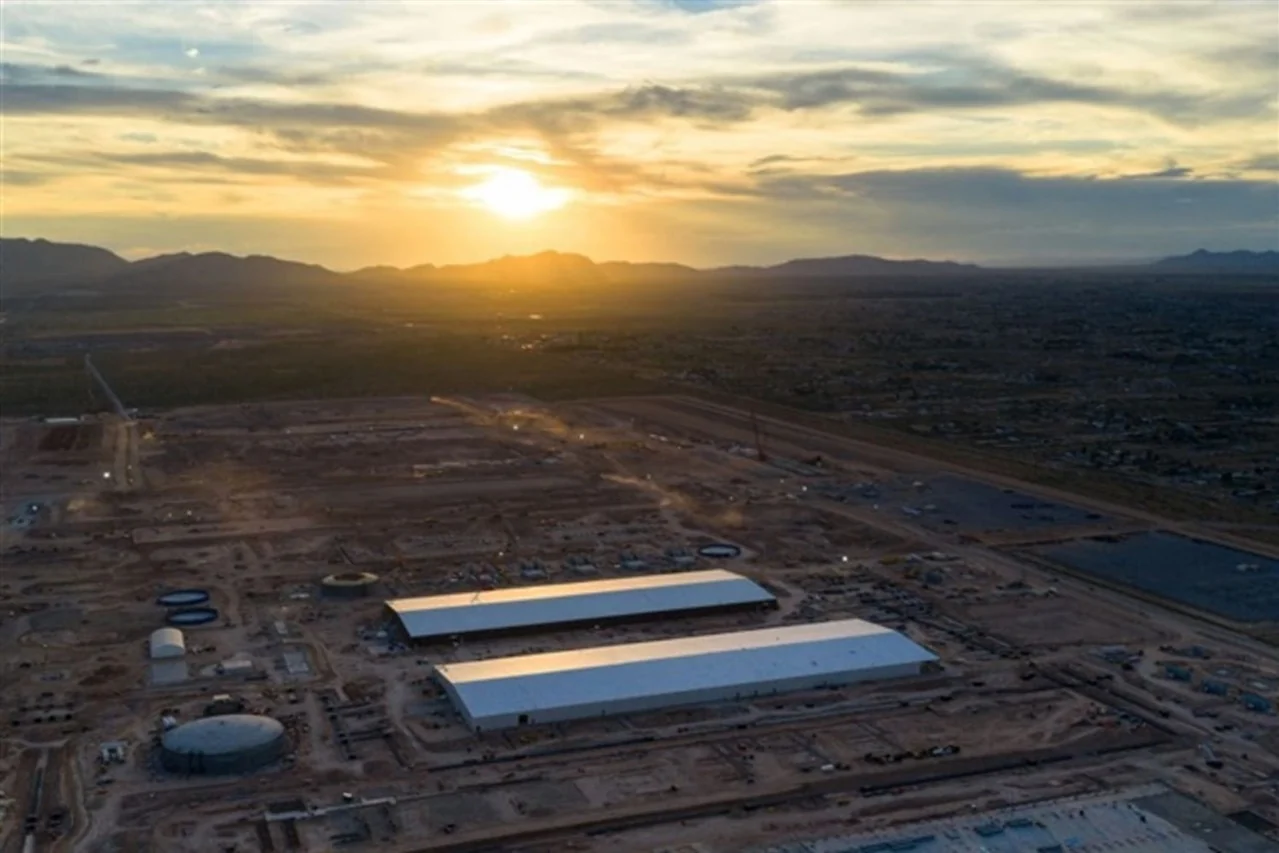
Spain announced a capacity market and roughly $19.5 billion in grid infrastructure investment, the clearest European signal yet that transmission and distribution buildout is being treated as a strategic priority. In the US, the Ratepayer Protection Act — which would require data-center operators above 100MW to fund grid upgrade costs — reached a critical legislative milestone, and Digitimes reported that power grids in both the EU and US cannot keep pace with the AI data-center boom, with most cost models understating generation and delivery costs.
This is where AI demand and industrial demand converge. Data centers need transformers, switchgear, magnetics, cooling and backup power; grids need conductors, structures and control equipment; and both need the machine components inside all of it. CorePower Magnetics raised $10.6 million to scale US manufacturing of advanced magnetics for AI, data centers and grid infrastructure — a small round pointing at a large bottleneck. Sumitomo’s chip materials demand is being lifted by the same AI infrastructure spending. The through-line for component buyers is that electrical infrastructure, not consumer goods, is increasingly the demand center of gravity.
Capacity Moves: Reman in Indonesia, Silicon in India, Plants in Vietnam and Serbia

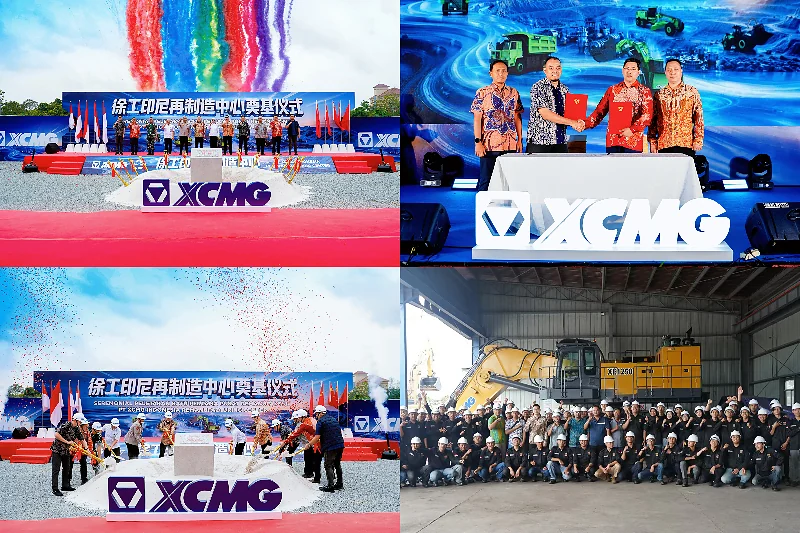
XCMG broke ground on its first overseas base dedicated to mining equipment component overhaul and remanufacturing, in Balikpapan, Indonesia — a direct bet that Indonesia’s mining sector will need localized component life-extension capacity rather than imported replacements. The location, in East Kalimantan near major coal and mineral operations, signals that remanufacturing is becoming a competitive battleground in emerging mining regions, not just a cost-saving afterthought.
Elsewhere, Lam Research plans to invest roughly $1.04 billion in India over several years, adding its first silicon component manufacturing facility there and expanding R&D — a notable step in India’s push to move up the semiconductor supply chain. Ryder Industries is set to quadruple production capacity in Vietnam, and Molex has opened an expanded Vietnam manufacturing plant, continuing the electronics-manufacturing migration into Southeast Asia. In Europe, Engel opened a plant in Kikinda, Serbia, to strengthen its supply chain, and Ammann’s CEO said the Swiss road-equipment maker is betting on India as a global manufacturing and export hub, aiming to export from its Gujarat plant to Europe and emerging markets. India’s Tools & Equipment Expo 2026 showcased global technologies for the country’s manufacturing sector, underlining how much supplier attention is now pointed at Indian capacity.
Automation Advances Meet a Widening Right-to-Repair Regime

On the technology side, UBTech opened a 14,000-square-meter factory in China capable of producing a humanoid robot every ten minutes — roughly 10,000 units a year — while AMC Robotics secured access to up to $50 million to accelerate an AI robotics manufacturing facility. Predictive maintenance continued its advance as well: I-care acquired Amiral Technologies to expand AI-driven predictive maintenance into nuclear and defense applications, and separate coverage highlighted systems that detect faults by learning normal equipment behavior rather than relying on failure signatures. Mining is a particular focus, with digital-twin and sensor-based maintenance moving from pilot to practice.
Running alongside the automation story is a regulatory one. Texas’ new right-to-repair law came into force, a lawsuit alleges Meta and Luxottica violated right-to-repair rules with smart glasses, and Breaking Defense made the case that right to repair matters to the Pentagon. For industrial equipment, the direction of travel is toward more documented access to parts, tools and repair information. That expands the addressable market for independent parts and service channels while raising documentation and compliance obligations for OEMs — a shift worth tracking in aftermarket planning.
What to Watch
Three threads will determine how the next few weeks read. First, whether the Trump–Xi summit produces movement on rare earths and the second tranche of Section 301 tariffs — or merely postpones decisions. Second, whether Red Sea security stabilizes enough to let container lines return in volume, which would relieve the freight and congestion pressure now building toward record levels. Third, whether the Fed’s hawkish path holds, keeping the dollar firm and shaping import economics for everyone buying components in dollars. Underneath all three, the grid, data-center and infrastructure buildout remains the most reliable demand signal in an otherwise flat manufacturing picture.
Sources
- DC Velocity – Ocean freight rates head towards record levels from Far East to U.S.
- Container News – Global port congestion approaches 4 million TEUs as peak season extends
- Container Management – Port congestion is holding near its record. The queue itself has moved.
- Al Jazeera – Italy to deploy warships to protect shipping through Bab al-Mandeb
- Reuters – US removes sanctions on Eritrean Defense Forces, Treasury website shows
- Reuters – US Treasury's Bessent to discuss AI, rare earths with China's He, source says
- South China Morning Post – China's trade limits continue to bite into Japan's rare earth imports
- S&P Global – Rare earths: Higher-priced dysprosium, terbium oxide trade the focus in Sept CIF North America
- Investing.com – Wall Street Falls as Fed Hikes Rates, US Dollar Index Returns Above 100
- FXStreet – PBOC sets USD/CNY reference rate at 6.7580 vs. 6.7628 previous
- Haver Analytics – U.S. Industrial Production Flat in August; Manufacturing IP Down
- MarketBeat – United Rentals Sees Large-Project Pipeline Accelerate as Specialty Demand Stays Strong
- PV Tech – Spain to launch capacity market, announces US$19.5 billion grid infrastructure investment
- TechRadar – Bill to make AI data centers pay for power grid upgrades reaches critical milestone
- Digitimes – Power grids can't keep pace with AI data center boom in EU, US
- PR Newswire – XCMG Breaks Ground on Its First Overseas Base for Mining Equipment Component Overhaul and Remanufacturing in Indonesia
- Digitimes – Lam Research plans US$1 billion India manufacturing expansion
- Manufacturing Management – Ryder Industries to quadruple Vietnam production capacity
- TechRadar – China's UBTech opens world-first factory that builds a humanoid robot every ten minutes
- PIRG – Texas' new Right to Repair law comes into force