

Executive Summary
Global container capacity is being squeezed by congestion that now absorbs roughly 12% of the world fleet, extending peak season well past its usual window. At the same time, three regulatory tracks are converging on industrial trade: the EU's carbon border mechanism is being priced into steel, the USMCA review has pushed trade uncertainty to multi-decade highs, and right-to-repair rules are advancing through courts and legislatures. On the demand side, the picture is uneven — Volvo CE reported a 14% second-quarter sales decline, US August industrial output came in flat, and several European economies posted weaker production, while AI-driven infrastructure spending and data-centre power demand keep setting records. Materials markets are mixed: rare earths remain a processing bottleneck outside China, but European steel pricing is firming. This week's briefing covers freight capacity, trade policy, industrial demand signals, materials, automation standards, and the emerging right-to-repair regime.
Port Congestion Absorbs 12% of Global Container Capacity

The most consequential logistics story this week is not a rate move but a capacity story. Port congestion is now tying up roughly 12% of global container shipping capacity, according to industry tracking, and the effect is visible in how peak season has behaved. What normally winds down after Golden Week has instead stretched longer, with AI-related cargo demand adding volume on top of the usual seasonal pull.
The Drewry World Container Index fell about 2% to $4,351 as Golden Week weakened demand, and Asia–Europe rates continued their decline. That combination — softer headline rates alongside persistent congestion — is the tell. Rates are easing because demand is rotating, not because the system has cleared. When congestion holds capacity hostage, the effective supply of ships falls, and any demand rebound transmits into rates faster than it otherwise would.
For component buyers and distributors, the practical implication is schedule risk rather than price risk in the near term. Ports in Asia remain the congestion epicentre, and Philippine business groups have publicly pressed their government over congestion and stalled trade reforms. Inland and regional gateways are also affected. The lesson from the past several cycles is that congestion data and cargo reality often diverge — a port can look clear on paper while berth windows and inland connections remain constrained.
There is also a security dimension. Conflict dynamics around the Red Sea and Bab el-Mandeb Strait remain unsettled, with Yemeni government forces reporting counterattacks against Houthi positions near the strait and renewed international attention on the shipping lane. Any re-escalation would compound the capacity problem, because rerouting around the Red Sea lengthens voyages and absorbs even more tonnage.
Trade Policy Tightens on Carbon, North America, and Vehicles
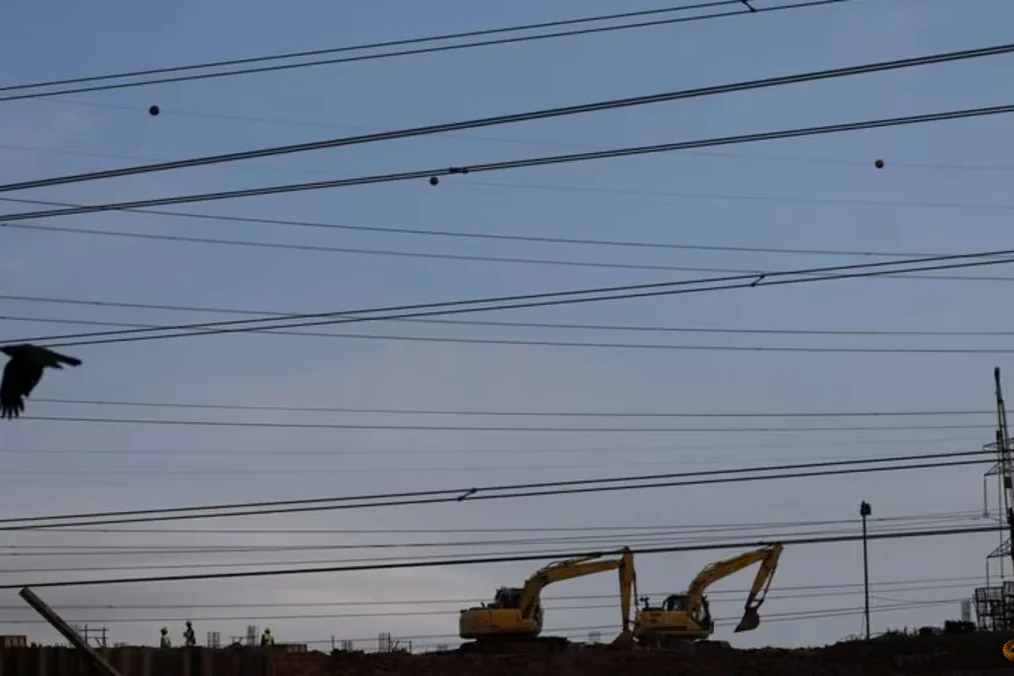
Three separate policy tracks moved this week, and they point in the same direction: higher friction for cross-border industrial goods.
First, carbon. The EU’s Carbon Border Adjustment Mechanism is moving from theory into cost. Trasteel’s chief executive estimated CBAM costs could reach €5 billion per year, and argued that EU steel prices will rise as a result. UBS upgraded ArcelorMittal to Buy on an upbeat European steel price outlook — a signal that the market is beginning to price carbon compliance into European steel economics. Separately, the US is probing how the EU carbon border tax affects trade and the USMCA framework, which suggests CBAM is no longer a European-only question.
Second, North America. The USMCA review has fuelled the highest trade uncertainty in decades, according to Grant Thornton, and the US–Canada dispute has entered what analysts describe as a “slow roll.” US–Mexico talks are reportedly getting closer, but the broader framework remains unresolved. For manufacturers with cross-border supply chains, the planning horizon has shortened considerably.
Third, vehicles. The EU and China reached a deal to “moderate” Chinese car exports to the EU, with the EU trade envoy indicating reductions of up to 50% for electric and plug-in hybrid vehicles. Germany is separately pressing the UK to raise tariffs on Chinese EVs as a condition of a Made in Europe opt-out. The vehicle sector is becoming the proving ground for how trade policy handles industrial overcapacity — and the template it sets will likely be applied to other machinery categories.
India, meanwhile, is planning Exim Bank credit lines to help solar exporters find buyers in Africa and Latin America after US tariffs stalled exports and created a factory capacity glut. That is a reminder that tariff shocks do not just redirect trade — they can create durable overcapacity in the exporting country.
Industrial Demand Splits: Equipment Weakness, AI Infrastructure Strength
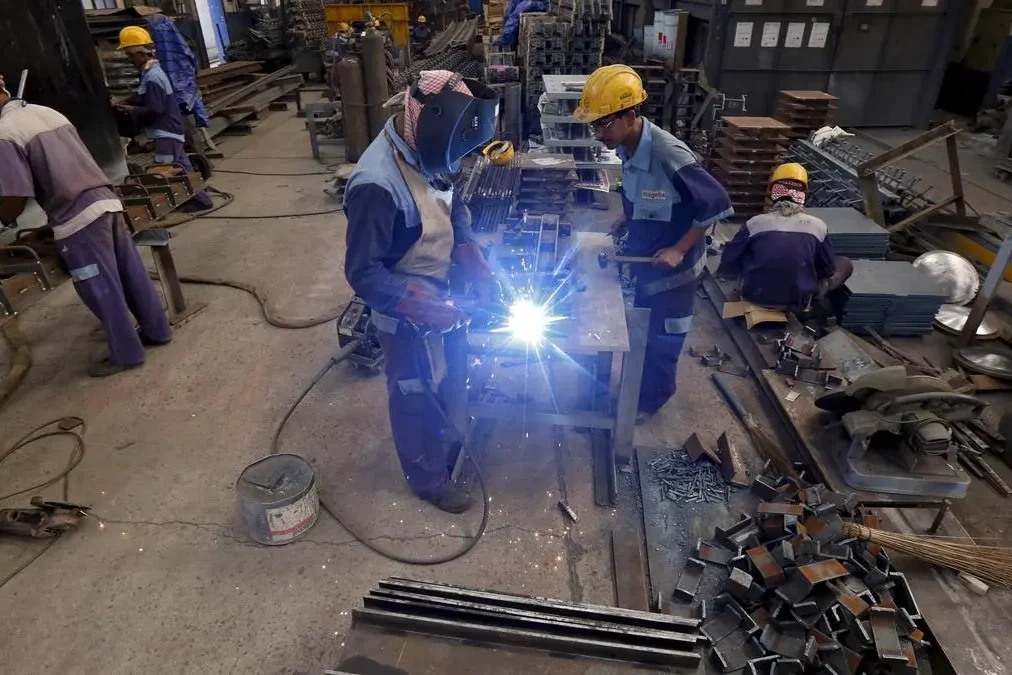
The demand picture this week is genuinely bifurcated, and the split matters for anyone forecasting component volumes.
On the traditional equipment side, the signals are soft. Volvo Construction Equipment reported a 14% sales decline in its second quarter. US industrial production was flat in August and missed forecasts. Italy’s industrial production fell 1.3% month-on-month in August, against expectations of no change, with capital goods and consumer goods both contributing to the decline. Türkiye’s industrial production fell 1.9% year-on-year in August. Saudi Arabia’s industrial production index dropped 23.5% in August. These are not isolated data points — they describe a broad-based softening in conventional industrial output across multiple regions.
On the infrastructure and technology side, the numbers are running the other way. Global technology-services contract value reached $52.5 billion in the third quarter, up 63% — the fastest quarterly growth on record — and infrastructure spending more than doubled in Q3 on AI momentum, according to the ISG Index. Peninsular Malaysia’s utility Tenaga Nasional expects electricity consumption to rise 4.9% in 2027 to 148.66 terawatt hours, driven by data-centre expansion. Samsung posted the most profitable quarter in its history.
The tension between these two pictures is the defining feature of the current industrial cycle. AI infrastructure is pulling capital, power, and construction activity into a narrow set of geographies and categories, while broad-based manufacturing demand remains subdued. For component supply chains, that means demand is concentrated rather than diffuse — and the categories tied to power distribution, cooling, and data-centre construction are running hot while general industrial categories are not.
That concentration is already creating friction. RWE has warned that data-centre power demand is raising a hard question about who pays for grid upgrades, and Texas has paused new data-centre approvals amid grid capacity concerns. The infrastructure buildout is running into the physical limits of the grid faster than the financial case for building it.
Materials: Rare Earths Bottleneck, Steel Firming, Metals Mixed

Rare earths remain the most strategically loaded materials story. Analysts at ING argue the US will not break China’s grip on rare earth elements this decade, citing a processing bottleneck rather than a mining one. That distinction is important: several jurisdictions can mine rare earths, but the midstream separation and processing capacity remains concentrated. Japan is moving to develop deep-sea rare earths and restore domestic penicillin production — both framed as supply-security measures. Brazil is drawing new attention in the global search for critical minerals. Texas rare earths are being discussed as a potential challenge to Chinese dominance, with revenue implications for state schools.
The EU published a new list of critical mineral projects focused on clean energy metals — lithium, nickel, cobalt, and copper dominate. The list directs special EU treatment toward European projects, which is a demand signal for mining and processing equipment in Europe over the medium term.
In steel, the direction is up in Europe. UBS’s upgrade of ArcelorMittal on European steel price outlook, combined with the CBAM cost estimates, suggests European steel prices are firming. That is a cost input for every European manufacturer that buys steel, and it widens the gap between European and non-European production economics.
Broader industrial metals posted mixed third-quarter performance with downside risks persisting, and monetary tightening is expected to keep prices on a leash. Tin has led gains on AI and energy-transition demand. Century Aluminum saw its price target cut by UBS. The overall read: metals are not in a broad rally, but specific categories tied to electrification and AI infrastructure are outperforming.
Automation Standards and the Robot Safety Question

A3’s final mobile robot safety standard has been published, and its framing is notable: it is written for the sites running the robots, not just the robot manufacturers. That is a meaningful shift in how industrial safety standards are structured. As mobile robots move from controlled cells into mixed-traffic environments — warehouses, yards, factory floors shared with people and forklifts — the compliance burden increasingly falls on the deploying facility.
For engineers and operations managers, this changes the procurement calculus. A mobile robot that meets a manufacturer’s specification may still require site-level assessment, traffic management design, and documentation to satisfy the standard. The standard effectively makes the integrator and the end user co-responsible for safe operation.
The technology itself keeps advancing. Nvidia published work on teaching robots to assemble GB300 tester trays, describing lessons in robot learning and mechanical intelligence. OnRobot appointed an industrial automation veteran as general manager for the Americas. And the smart connected tires market is forecast to grow from $18.5 billion in 2025 to $54.2 billion by 2035, driven by fleet telematics, predictive maintenance, and software-defined vehicles — a reminder that the aftermarket is being reshaped by sensor and data layers, not just mechanical parts.
Additive manufacturing continues to broaden. India is developing an additive manufacturing ecosystem, and 3D printing applications are expanding into new categories. The common thread across automation, additive, and connected components is that the value is migrating from the hardware to the software, data, and compliance layers around it.
Right to Repair Moves From Advocacy to Courtrooms

The right-to-repair movement crossed a threshold this week. The Minnesota Court of Appeals is set to hear a St. Paul right-to-repair suit, moving the issue from legislative debate into judicial interpretation. Oregon farms and hospitals are pressing for repair access. New Jersey legislators are highlighting the Right to Repair Act. Vehicle right-to-repair is gaining momentum, and the question has been raised directly in the context of the new John Deere–Yamaha side-by-side collaboration: will owners and independent shops have access to diagnostics and parts?
The FTC and USDA have opened a public comment period on agricultural equipment manufacturing and distribution market practices — a signal that federal attention to equipment repair and dealer practices is broadening beyond consumer electronics.
Consumer electronics remain the visible edge of the debate. iFixit’s teardowns of the Apple Watch Series 12 and Ultra 4 found repairability scores of 4 out of 10, with copious glue and no meaningful improvement, and iFixit publicly criticised the devices for missing right-to-repair requirements. That matters beyond watches: the repair-access norms set in consumer devices tend to migrate into industrial equipment as the same manufacturers and design philosophies cross over.
For the industrial parts ecosystem, the practical question is whether repair access expands the independent aftermarket or gets locked down by software and diagnostic controls. The direction of court rulings over the next several quarters will shape how much of the aftermarket remains addressable by independent distributors and repair shops.
Regional Manufacturing: Divergence Across Europe, Asia, and Africa

Regional production data this week reinforced the divergence theme. Greece’s industrial production posted a sharp turnaround. Slovenia’s industrial production growth accelerated in August. Against that, Italy fell 1.3%, Türkiye fell 1.9% year-on-year, and Saudi Arabia’s index dropped 23.5%. The pattern is not a uniform slowdown but a rotation — some economies are gaining on energy, reshoring, or specific sector strength while others absorb weak capital-goods demand.
Reshoring and nearshoring continue to reshape supply chains. Volkswagen’s reshoring moves are drawing attention to European auto supplier stocks. Latin America’s nearshoring test is whether proximity can convert into growth, and sourcing executives note that Western Hemisphere sourcing has a tariff advantage but still faces gaps in components and manufacturing capability. DNM Denim described disruption as an opportunity for nearshoring. IndustryWeek published a nine-step roadmap to reshoring success, which is itself a signal of how mainstream the topic has become.
In Asia, East Asia’s manufacturing escalator has slowed, and analysts argue AI alone will not restart it. India’s manufacturing gains look stronger when measured against a turbulent decade, and India’s commerce minister expressed confidence in hitting a $1 trillion export target in FY27. The India–EFTA trade agreement issued 8,000 rules-of-origin certificates in its first year. Singapore’s EDB launched a new alliance to help manufacturers expand into Southeast Asia. XPENG’s G9L completed its first production trial in Europe at Magna’s Graz facility — the fourth XPENG model produced in Europe.
In Africa, infrastructure finance is shifting toward bankable projects and climate outcomes, and the Minerals Council South Africa launched an investment and growth strategy for mining. Africa’s infrastructure leaders are meeting in Nairobi for the ConstructAfrica Summit 2026. The recurring theme from South Africa is that the constraint is bankability, not capital allocation — a distinction that matters for equipment suppliers waiting on project pipelines.
Currency: Dollar Near Highs, Yuan Policy in Focus

The dollar index hit 2026 highs before edging back after FOMC minutes, with hawkish Fed commentary keeping the index supported above the 101.60 level. Goldman analysts see USD/CNY at 6.40 on a 12-month horizon. The PBOC set its USD/CNY reference rate at 6.7330, and China’s central bank issued a lengthy statement defending its yuan policy as market-determined, as Europe stepped up pressure over China’s trade surplus.
For industrial exporters and importers, the currency backdrop adds a layer to the trade-policy story. A stronger dollar makes US exports more expensive and imported components cheaper for US buyers, while a weaker yuan supports Chinese export competitiveness — which is precisely the dynamic European policymakers are trying to offset with tariffs and safeguard measures. Currency and trade policy are now working on the same problem from opposite directions.
Sources
- IndexBox – Drewry World Container Index Falls 2% to $4,351 as Golden Week Weakens Demand
- Global Trade Magazine – Port Congestion Now Ties Up 12% of Global Container Capacity
- DC Velocity – Peak season runs long as AI demand and port congestion keep capacity tight
- EUROMETAL – EU steel prices to rise as CBAM cost could reach €5B/y, says Trasteel CEO
- Grant Thornton – USMCA review fuels highest trade uncertainty in decades
- DW – China, EU reach deal to 'moderate' China's car exports to EU
- Volvo Construction Equipment – Sales Slip 14% in Second Quarter at Volvo Construction Equipment
- Modern Distribution Management – Flat August U.S. Industrial Production Misses Forecasts
- Business Wire – Infrastructure Spending More Than Doubles in Q3 on Growing AI Momentum, ISG Index Finds
- CNA – Peninsular Malaysia power use seen up 4.9% in 2027 on data centre growth
- Crypto Briefing – RWE warns data center power demand is raising a hard question: who pays for the grid
- Naturalnews.com – U.S. Rare Earth Push Faces Processing Bottleneck as China Dominance Persists, Analysts Say
- POLITICO.eu – EU's new list of critical mineral projects focuses on clean energy metals
- MarketScale – A3's final mobile robot safety standard is written for the sites running the robots
- Pioneer Press – Minnesota Court of Appeals to hear St. Paul 'Right to Repair' suit Monday
- Hoosier Ag Today – FTC and USDA Seek Public Comment on Agricultural Equipment Manufacturing and Distribution Market Practices
- Anadolu Ajansı – Türkiye's industrial production falls 1.9% year-on-year in August
- Exchange Rates UK – USD/CNY Forecast: Goldman Analysts See 6.40 On 12 Months Horizon