Executive Summary
Global container freight rates have climbed roughly 130% since February as Red Sea security concerns and a super typhoon disrupt Asian port operations, while Brent crude briefly touched $114 a barrel — a combination that raises landed costs for machinery, castings and aftermarket parts. In materials, TSMC is reportedly surveying suppliers on rare-earth-free motors ahead of a Chinese export-control pause nearing legal expiry, Taiwan is planning a rare-earth processing plant, and Wood Mackenzie warns that AI-driven power demand is straining metals supply. On the demand side, US flash manufacturing PMI hit a 53-month high in October while Japan's fell to a seven-month low and India's growth slowed, underscoring a widening regional divergence. Trade policy remains active: the USTR proposes extending its China-linked port fee suspension into January 2027, Washington is weighing wind-turbine negotiations rather than tariffs, and the EU's carbon and "Made in EU" rules are drawing pushback from India and Turkey. This week's briefing covers freight and energy costs, rare-earth and metals supply, regional manufacturing signals, automation and distribution consolidation, trade policy, and the right-to-repair debate.
Freight and Energy Costs Reassert Themselves as Industrial Cost Drivers

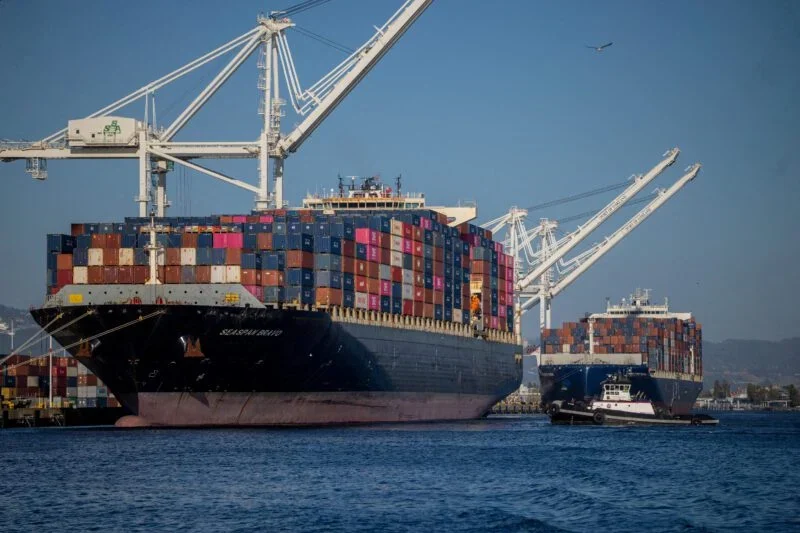
Container shipping has become the most visible cost pressure in global supply chains again. Global container freight rates reached a 15-week high, with Asia–Europe costs surging, and reporting citing Jefferies puts rates up roughly 130% since February on West Asia tensions. The drivers are layered: continued security risk around Red Sea shipping lanes — China and Djibouti have both publicly expressed “serious concern” over threats to Red Sea navigation — plus operational disruption from Super Typhoon Champi, which has generated congestion, delays and freight-rate risk at Chinese ports.
Energy is moving in the same direction. Brent crude reached $114 per barrel intraday on Friday, a level that feeds directly into diesel, inland trucking and air freight costs, and indirectly into the cost of energy-intensive components such as castings, forgings and heat-treated parts. For industrial buyers, the practical effect is a widening gap between ex-works price and landed cost, and more volatility in freight surcharges that are difficult to hedge on long-lead items.
The downstream evidence is already appearing in corporate commentary. JK Tyre plans to raise tyre prices by 4–5% in the current quarter, explicitly citing elevated raw material and container freight costs after earlier increases of 5% and 7%. Jindal Stainless’ chief executive noted that while fuel supplies have improved, fluctuations in fuel prices, container availability and ocean freight rates continue to challenge both imports and exports. These are not isolated anecdotes; they describe a cost environment in which freight is once again a first-order variable in component pricing rather than a rounding error.
There is a countervailing signal on policy. The USTR has proposed extending its suspension of port fees targeting China-linked vessels through January 2027, pushing the potential return of those charges further out. That reduces one near-term cost cliff for ocean carriers and shippers, but it does not address the security and weather disruptions that are actually moving rates today. The net picture for the fourth quarter is elevated and volatile freight costs with a policy cushion that could disappear early next year.
Rare-Earth Supply Lines Are Being Redrawn From the Factory Floor Up

The most consequential materials story this week is not about mining — it is about the machinery that makes everything else. Reuters reported exclusively that TSMC is seeking factory-equipment alternatives to reduce exposure to China’s rare-earth grip, with sources indicating the chipmaker is weighing whether the motors inside its factory-automation equipment can run without rare-earth magnets. Digitimes framed the timing sharply: the survey comes as a key Chinese export-control pause nears legal expiry, meaning the world’s largest contract chipmaker is effectively stress-testing its automation supply chain against a policy deadline.
That is a meaningful shift in how rare-earth risk is being managed. For most of the past decade, the response to Chinese dominance in rare-earth extraction and processing focused on upstream diversification — new mines, new separation capacity, new offtake agreements. TSMC’s move points to a second front: component-level substitution inside capital equipment. Motors, actuators, sensors and drive systems that use rare-earth permanent magnets are now being evaluated for ferrite or other magnet chemistries, which changes the bill of materials for automation equipment and, eventually, for the maintenance and spare-parts market that supports it.
Supply-side responses are also advancing. Taiwan plans to build a rare-earth processing plant, a modest but symbolically important step toward midstream capacity outside China. In Turkey, Chinese scientists have disputed the scale of a claimed “giant” rare-earth deposit, describing it as small in scale — a reminder that headline resource announcements do not automatically translate into usable supply. And on the demand side, Wood Mackenzie warns that AI-driven power demand and geopolitical disruption are straining global metals supply as mining investment struggles to keep pace, with separate analysis suggesting copper and nickel prices could double over a decade.
Technology is beginning to answer the substitution question directly. Ferrstron has road-tested a 150 kW ferrite-magnet motor that uses no rare earths, a data point that matters because it demonstrates rare-earth-free traction motors are moving from laboratory concepts toward vehicle-level validation. None of this resolves the supply question quickly — processing capacity, magnet manufacturing and qualification cycles all take years — but the direction is clear. Rare-earth exposure is being designed out at the component level, not just hedged at the commodity level.
Manufacturing Momentum Diverges Sharply Across Regions

October’s flash PMI data describes three different industrial economies. In the United States, S&P Global’s flash manufacturing PMI came in at 56.0 against a 55.5 estimate and a 55.9 prior reading — a 53-month high — while the services PMI matched forecasts at 57.9. That is a strong reading by any standard and suggests US manufacturing is expanding at a pace that would normally tighten component lead times and absorb capacity.
Japan tells the opposite story. Its manufacturing PMI fell to a seven-month low, reflecting weaker external demand and the drag from energy and freight costs on an economy that imports most of its inputs. India, meanwhile, slowed but remained in expansion: the HSBC–S&P survey showed manufacturing growth easing in October, a cooling from a very high base rather than a contraction.
Taiwan adds a fourth data point. September industrial production rose 19%, a striking figure that reflects the island’s concentration in semiconductors and electronics rather than broad-based industrial demand. The divergence matters for component buyers because it means lead times, pricing power and inventory positions will vary significantly by sourcing region. A US-facing supplier may be capacity-constrained; a Japan-facing supplier may be hungry for orders; an India-based supplier may be investing through a slowdown.
The construction equipment cycle offers a useful cross-check. Volvo Construction Equipment reported Q3 growth, with analysis framing the results as demand signals for project engineers. That is consistent with the US infrastructure and data-center buildout story, but it sits awkwardly against the softer readings in Japan and the Philippines, where infrastructure spending fell for a 14th straight month in August. The global picture is not a single cycle — it is several cycles running at different speeds.
Automation Investment and Distribution Consolidation Accelerate

Two threads this week point to structural change in how industrial components reach the factory floor. The first is automation capability. FANUC has expanded its US training academy, a large-scale investment in robotics and industrial automation education that addresses a persistent constraint: the shortage of technicians who can program, maintain and integrate automated systems. YALONG has launched intelligent CNC machining trainers for milling and lathe education, and Penn College has received funding for heavy equipment upgrades — all signs that the training pipeline is being rebuilt around digital and automated equipment rather than manual machine operation.
The second thread is consolidation in distribution and components. Nordson has acquired Contrinex, adding roughly $50 million in annual revenue and expanding its industrial automation portfolio — a move that folds sensor and connectivity technology into a broader dispensing and precision-control business. Industrial Automation has acquired Conveyor Units Ltd. and Bridge Bearings Ltd., bringing conveyor and bearing products under one ownership structure. Mouser and Amphenol CDI signed a global distribution agreement for rugged RF connectors and cable assemblies, extending catalog access to aerospace-grade interconnect.
These deals matter beyond the balance sheets. Consolidation changes the number of doors a buyer knocks on, the breadth of a single line card, and often the technical support available at the point of specification. For engineers, a broader portfolio under one supplier can simplify sourcing but may also reduce the number of independent technical voices. For distributors, the trend rewards scale and application depth over pure catalog breadth.
The technology layer is shifting too. A 600 MHz MCU family targeting industrial automation has been introduced, reflecting the growing compute demands of edge control, motion and safety functions. ODVA presented advances in security and industrial automation at its industry conference, and analysis in Electronics Weekly argues that embedded engineering is becoming a bottleneck for industrial automation — a reminder that the constraint on automation adoption is increasingly software and engineering talent, not hardware availability. MarketScale makes a related point about digital twins: without real-time data, a digital twin is only a 3D model, which is another way of saying that the value of these systems depends on sensor and connectivity hardware being specified correctly in the first place.
Trade Policy Shifts From Tariff Threats to Negotiation and Rule-Making

The trade story this week is less about new tariffs than about which threats are being deferred and which rules are being written. On wind turbines, the administration opted for negotiations rather than tariffs in the Section 232 investigation — a notable choice given how frequently Section 232 has been used as an immediate tariff instrument. For the wind supply chain, that removes a near-term cost shock but leaves uncertainty in place, since a negotiated outcome can still produce quotas, price undertakings or other restrictions.
On China-linked shipping, the USTR’s proposal to extend the port fee suspension through January 2027 pushes the decision point into the new year. The practical effect is to keep ocean shipping costs for China-linked tonnage lower for now, but the extension is temporary by design, and carriers and shippers will factor the potential return of fees into 2027 contract negotiations.
On carbon and content rules, the pressure is coming from Europe’s regulatory direction. India’s commerce minister, Piyush Goyal, has criticized the EU’s carbon tax and regulatory burden, warning at the Berlin Global Dialogue that the measures could raise costs and reduce competitiveness for EU businesses, and arguing that climate-linked trade barriers place an unfair burden on developing economies. Turkey is seeking wider talks with Italy and Spain to secure its automotive industry’s inclusion in the EU’s proposed “Made in EU” rules — a sign that even close trading partners see the content rules as a market-access question, not just a compliance exercise. China has warned of retaliation if the UK aligns with EU tariffs on Chinese vehicles.
On North America, the approach of the USMCA review is shifting US–Canada trade strategy, and stalled talks are raising concerns across farm country. For industrial supply chains, the USMCA review is the more consequential item: rules of origin for machinery, parts and components determine whether North American production qualifies for preferential treatment, and any tightening or loosening of those rules ripples through sourcing decisions for castings, bearings, hydraulics and electrical components.
One technical but practically important thread runs through all of this: Section 232 supplier data is becoming key to reduced tariff treatment, and the Commerce Department has rescinded an administrative review of the countervailing duty order on common alloy aluminum sheet from China for the 2025 period. The lesson for buyers is that tariff outcomes increasingly depend on documentation — mill certificates, supplier declarations and origin data — rather than on the headline rate alone.
Right to Repair Moves From Advocacy to Ballot Box and Procurement
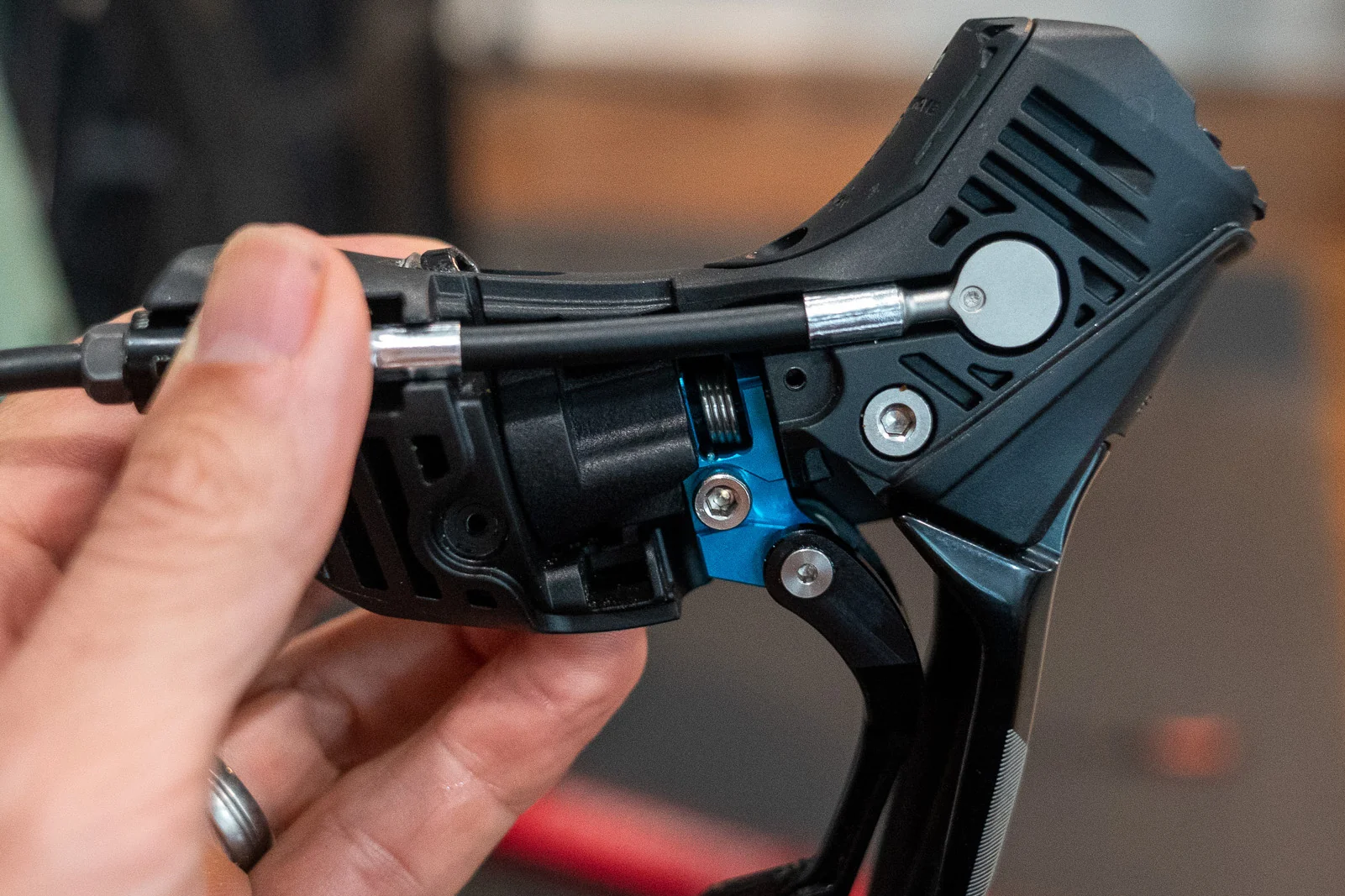
The right-to-repair debate is maturing from a consumer-electronics argument into an industrial and public-sector question. In St. Paul, voters will weigh in on right to repair in November, putting the issue directly on a municipal ballot. In Wisconsin, the attorney general visited a farm to discuss right-to-repair legislation and tariffs, connecting repair access to agricultural equipment costs. PIRG has argued for right to repair in a military context, and European coverage is tracking country-by-country implementation of right-to-repair law.
For the industrial aftermarket, the significance is straightforward. Equipment that can be repaired by the owner or by independent service providers requires published service information, available diagnostic tools and a competitive parts channel. Equipment that cannot be repaired independently concentrates service revenue with the original manufacturer. The direction of policy — toward more repair access — would expand the addressable market for aftermarket components, but it also raises questions about how parts are identified, catalogued and validated when the service network widens beyond authorized dealers.
The counterargument is not going away. Interoperability and security debates, including analysis from EFF, highlight the tension between open access and safety-critical systems. For industrial equipment, that tension is real: a repair that bypasses a safety interlock is not the same as a repair that replaces a worn bearing. The policy debate will likely land on a distinction between access to information and parts versus access to safety-critical software — a distinction that matters enormously for how aftermarket parts are specified and sold.
Regional Investment Patterns: India, Vietnam, Africa and Europe
Investment flows this week reinforce the multi-polar manufacturing map. German companies have announced $7.4 billion in investments in India over two and a half years, and European carmakers are exploring India manufacturing as German firms plan further investments. India’s commerce minister said German firms increasingly see India as a manufacturing, research and development, and innovation hub rather than just a market. India’s manufacturing and services sectors are projected to generate more than 35 crore new jobs by 2030, according to reporting citing official projections — an ambitious figure that underscores the scale of the country’s industrial ambitions.
In Vietnam, Japanese foreign direct investment is supporting the green transition in the manufacturing sector, a pattern that pairs capital with energy-efficiency and emissions requirements. In Africa, the UK Export Finance agency is backing Francophone Africa infrastructure work, and an Africa Infrastructure Expo has been announced for 2027. In Nigeria, only 18 firms reportedly meet the criteria to manufacture oil and gas equipment — a striking illustration of how local-content rules can expose gaps in domestic industrial capability. Somalia’s Case IH distributor won an agricultural equipment award, a small but telling data point on equipment distribution reaching frontier markets.
In Europe, Chinese automakers are localizing: Chery is opening its first European manufacturing site in Barcelona, and Leapmotor is expanding European manufacturing in Spain. That localization is partly a response to tariff and content rules, and it will bring new supplier qualification cycles for European component makers. Husqvarna’s interim report showed organic net sales down 5% in the third quarter against a continued challenging market — a reminder that European industrial demand remains soft even as investment announcements accumulate.
The common thread is that capital is moving toward regions with policy support, energy advantages or market access, and away from regions with cost and demand headwinds. For component suppliers, that means the geographic mix of demand is shifting faster than the installed base of equipment, which has implications for spare-parts demand, service coverage and inventory positioning.
What It Means for the Industrial Parts Ecosystem

Three forces are converging on component buyers this quarter. First, freight and energy costs are reasserting themselves, which raises landed costs and makes total-cost-of-ownership calculations more important than unit price alone. Second, materials risk is moving from commodity hedging to design substitution, particularly in rare-earth magnets, which will gradually change the bill of materials for motors, actuators and automation equipment. Third, demand is diverging by region, so lead times and pricing power will depend heavily on where a component is sourced.
On the policy side, the shift from tariff threats to negotiation and rule-making means documentation and origin data are becoming as important as the tariff rate itself. And the right-to-repair debate is quietly expanding the aftermarket’s addressable market while raising new questions about how parts are identified and validated outside authorized service networks.
The through-line is that the industrial supply chain is being reorganized around resilience rather than pure efficiency — in shipping routes, in magnet chemistry, in manufacturing location and in repair access. That reorganization is uneven and expensive, but it is also creating new capacity, new suppliers and new channels that did not exist a few years ago.
Sources
- Reuters – TSMC seeks factory-equipment alternatives to thwart China's rare earths grip
- Digitimes – TSMC surveys suppliers on rare-earth-free motors as export-control pause nears expiry
- Maritime Gateway – Global container freight rates up 130% since February on West Asia tensions: Jefferies
- Interior Daily – Global container freight rates hit 15-week high as Asia–Europe costs surge
- IndexBox – Super Typhoon Champi: Chinese port congestion, delays and freight rate risks
- Rigzone – Oil hits $114 intraday
- The Times of India – JK Tyre to hike prices by 4-5% in Q3 as raw material costs stay elevated
- BusinessLine – EU move to restrict scrap export may push cost, says Jindal Stainless CEO
- Taipei Times – Taiwan plans to build rare earths plant
- Naturalnews.com – AI boom and geopolitical tensions threaten global metals supply, Wood Mackenzie warns
- Charged EVs – Ferrstron road-tests a 150 kW ferrite-magnet motor that uses no rare earths
- FXStreet – US S&P Global Composite PMI eases in October, manufacturing at 53-month high
- UA.NEWS – Japan's manufacturing PMI falls to a seven-month low
- Taipei Times – September industrial production rises 19 percent
- Modern Materials Handling – Industrial Automation acquires Conveyor Units Ltd. and Bridge Bearings Ltd.
- citybiz – Nordson acquires Contrinex, expanding industrial automation portfolio
- gcaptain.com – USTR proposes extending China ship port fee suspension through January 2027
- Thompson Hine – President Trump opts for negotiations, not tariffs, in Section 232 wind turbine investigation
- Autocar – China threatens retaliation if UK matches EU on tariffs
- BusinessLine – European carmakers explore India manufacturing as German firms plan investments
- Pioneer Press – St. Paul voters to weigh in on 'Right to Repair' in November