Executive Summary
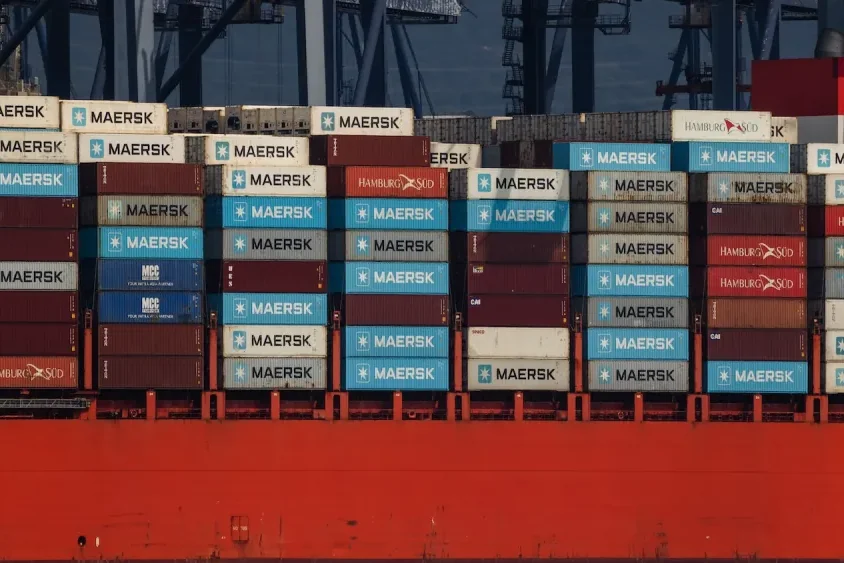
Container shipping rates remain roughly 124% above year-earlier levels even after a modest weekly decline, and Maersk has raised its 2026 outlook for a third time — a signal that port congestion and AI-related cargo demand are still shaping delivery schedules and landed costs for industrial parts. In Washington, the US is pressing Beijing to "immediately" honor rare-earths commitments under the Busan trade framework, while copper prices slipped on fears of an AI infrastructure backlash. OpenAI responded to local opposition by pledging to cover electricity and grid costs for its data centers, a template that could influence how power-intensive projects get permitted. Elsewhere: Liebherr added a 250-tonne electric excavator, South Korea is funding smart-factory upgrades in Vietnam, St. Paul voters approved a right-to-repair ordinance, and India's factory PMI eased while investment in plant capacity continued to climb. This week's briefing connects those threads for component buyers, engineers, distributors, and manufacturers.
Freight Rates Ease at the Margin but Stay Historically High
Global container freight rates fell about 1% week over week but remain roughly 124% higher than a year earlier, according to market tracking cited by trade press. The direction is down; the level is not normal. That distinction matters more than the weekly tick for anyone importing machined components, bearings, castings, or finished assemblies.
The clearest confirmation came from Maersk, which raised its full-year 2026 profit outlook for the third time, citing congested ports, strong consumer demand, and investments tied to artificial intelligence that have kept container rates elevated. The Danish carrier’s volumes actually slipped slightly, which underlines the point: this is a rate and congestion story, not a demand boom in the classic sense. Maersk’s own chief operating officer told Indian media that ocean freight rates “will come down eventually,” adding that the industry has seen this cycle before. That is a reasonable medium-term view, but it offers little comfort to a buyer negotiating a fourth-quarter landed-cost estimate.
Two operational details deserve attention. First, French port disruption was cited alongside the modest rate decline, a reminder that European gateway congestion can offset softening headline rates on specific lanes. Second, Maersk confirmed an order for 26 LNG dual-fuel vessels adding nearly half a million TEU to the newbuilding pipeline — a multi-year bet that fuel transition and capacity will both matter. For industrial shippers, the practical takeaway is to keep buffer stock assumptions tied to lane-level data rather than global indices, and to expect rate volatility to persist into early 2027 even as the trend line bends downward.
Rare-Earth Commitments Become a Live Trade Risk Again

Ahead of planned Trump-Xi meetings, US Treasury Secretary Scott Bessent publicly urged Beijing to “fully and immediately” honor commitments made under the 2025 Busan trade accord, particularly on rare-earth supply and agricultural purchases. China, for its part, raised concerns about what it characterized as US economic and trade restrictive measures. The exchange is diplomatically routine but industrially consequential: rare-earth magnets sit inside motors, actuators, sensors, and countless motion-control assemblies.
The underlying tension is structural. China has spent years accelerating overseas mining investment to secure critical minerals, while Western governments try to build alternative supply chains. This week alone, Gabon sought $2 billion to revive the Mabounie rare-earths project, Brazil placed rare earths and copper atop its critical minerals list, and a rare-earths facility in Greece pursued $54 million in tax breaks and aid. None of these projects will deliver material next quarter. They are decade-scale bets that only make sense if buyers accept price premiums and qualification burdens for non-Chinese supply.
For engineers and component buyers, the near-term implication is procurement risk rather than immediate shortage. Magnet grades and coatings are often specified deep in a bill of materials, and substituting suppliers requires re-qualification. The Busan framework’s durability is now a variable in that planning. Companies that treat rare-earth sourcing as a fixed assumption may find themselves re-engineering under time pressure if commitments slip further.
Copper Slips as the AI Infrastructure Story Gets Political
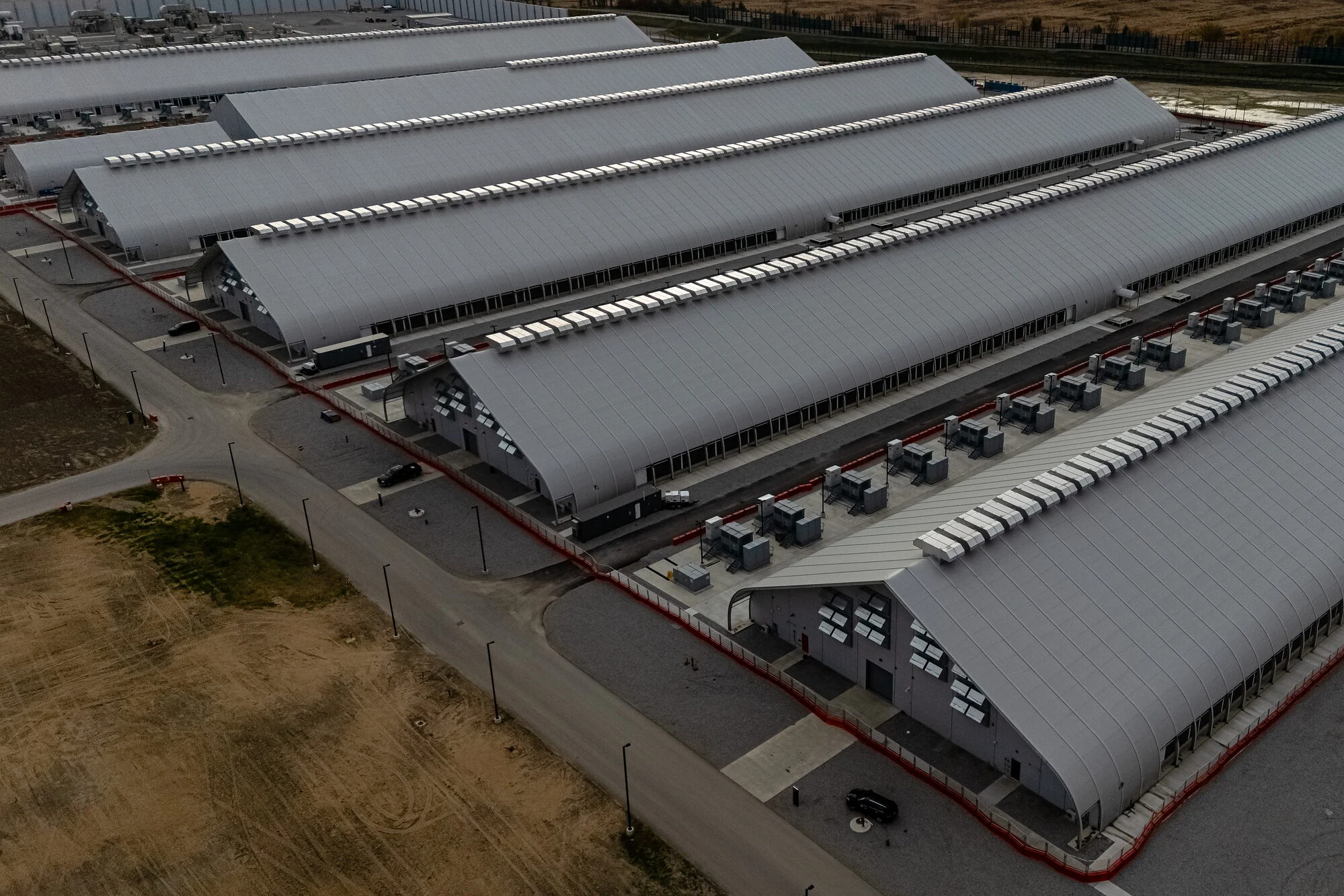
Copper prices fell on fears of an AI backlash, according to the Financial Times, a notable reversal for a metal whose demand narrative has been tightly linked to data-center buildouts. The move followed a US midterm election in which voters in multiple localities appeared to reject data-center projects, and a sharp selloff in AI and chip stocks that produced Wall Street’s worst post-midterm trading day in decades.
The political shift is real but nuanced. OpenAI’s CFO said the company would maintain heavy infrastructure spending and capital raising despite election pushback. OpenAI also published a National Community Compact pledging to cover electricity and grid infrastructure costs for future company-owned data centers, disclose environmental impacts, and involve communities earlier in planning. That is a meaningful precedent: large power consumers volunteering to internalize grid costs changes the negotiation template for every energy-intensive industrial project that follows.
Why should a bearing or hydraulic component manufacturer care? Because data centers are now a demand driver for switchgear, cooling equipment, backup power, and the electrical and mechanical components inside them — and because the backlash introduces schedule risk into that demand. Copper’s pullback suggests markets are repricing the pace, not the direction, of the buildout. Suppliers exposed to data-center construction should plan for lumpier order patterns and more community-consent conditions attached to large projects.
Electrification Reaches the Ultra-Class: Liebherr’s 250-Tonne Electric Excavator
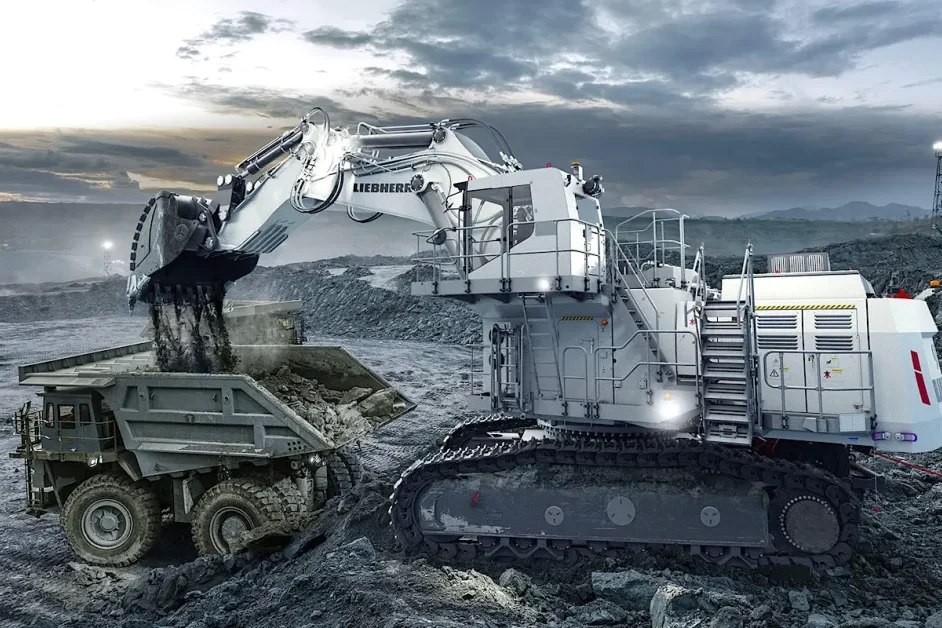
Liebherr expanded its excavator range with a 250-tonne electric model, a machine class where diesel has long been unchallenged. The significance is less about a single product than about where electrification is now landing: not compact urban equipment, but production-scale mining and earthmoving assets.
This fits a broader pattern visible this week. The Journal of Commerce reported that energy and infrastructure projects are keeping heavy equipment makers in growth mode. XCMG highlighted electric mining equipment, predictive maintenance, and automated earthwork monitoring among award-winning projects at a Chinese “AI + Construction Machinery” competition. And JR East’s remotely operated chainsaw robot, deployed to cut dangerous branches along Japan’s Koumi Line, shows the same logic applied to safety-critical maintenance work: remove the human from the hazard, keep the human in control.
For the motion-components ecosystem, electrification at this scale changes the component mix. Large electric drives, high-torque gearboxes, thermal management, and power electronics replace or supplement hydraulic systems — but hydraulic and mechanical content does not disappear. It migrates toward cooling, actuation, and auxiliary functions. Suppliers who understand both worlds will be better positioned than those betting on a clean substitution.
Smart Manufacturing Spreads Through Development Finance
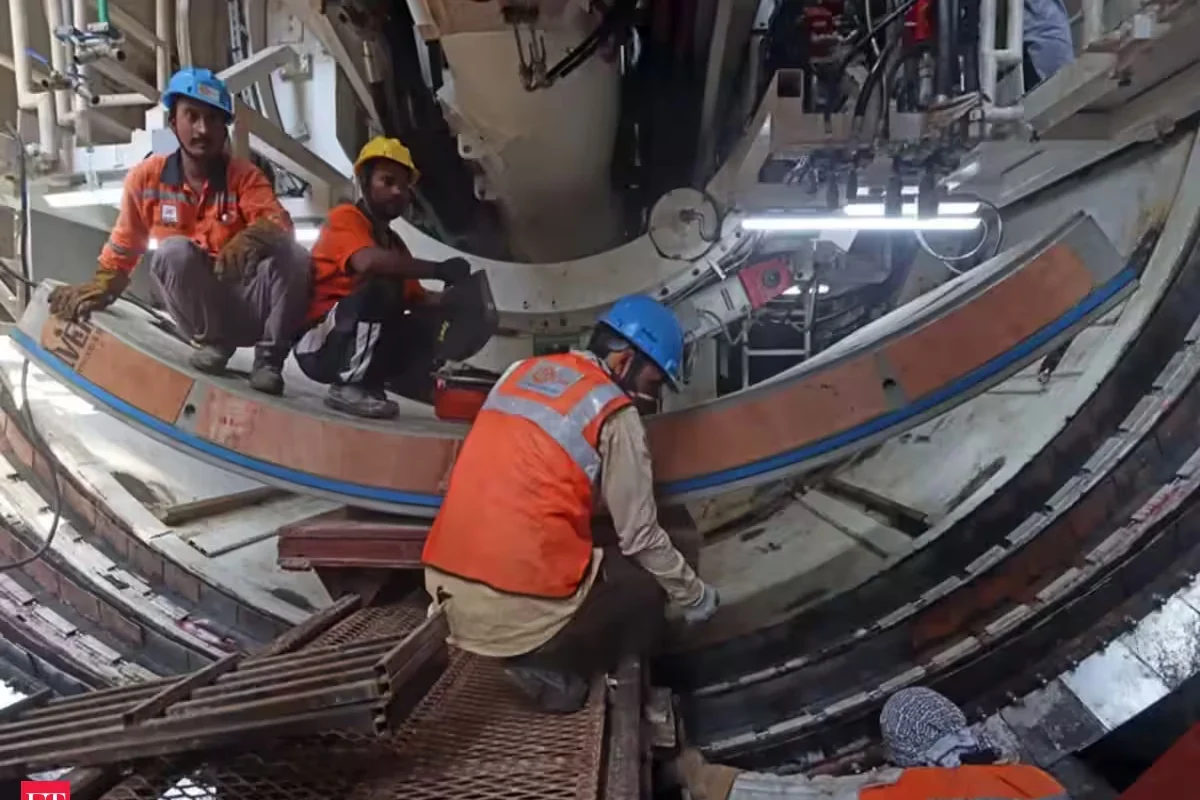
South Korea will fund a Smart Factory project in Vietnam through non-refundable official development assistance, according to Vietnamese state media. This is the kind of item that rarely makes headlines but quietly reshapes supply chains: donor-funded automation upgrades raise the baseline capability of contract manufacturers, making them viable for higher-value work.
The technology stack supporting these upgrades is maturing quickly. NVIDIA’s FOX blueprint, reported this week, links AI agents from defect alert to root-cause report — moving factory AI from detection toward diagnosis. TI expanded multiprotocol connectivity for industrial automation, and industrial IoT routers gained AWS Greengrass V2 support for offline operations, addressing a persistent pain point in plants with unreliable connectivity. Rockwell Automation reported a jump in quarterly net income and issued fiscal-year guidance, while SPIE acquired Austrian automation firm SAR Anlagenbau to expand its industrial automation capabilities.
Predictive maintenance is the commercial thread tying these together. Market research published this week pointed to growing demand for remaining-useful-life estimation, vibration monitoring, and motion-control systems driven by automation and efficiency. For distributors, that means condition-monitoring sensors, connectivity hardware, and replacement-part data are becoming part of the standard industrial offer rather than a specialist niche. For plant engineers, the offline-capability improvements matter most: many factories cannot depend on continuous cloud access, and vendors are finally designing for that reality.
Right to Repair Moves From Ballot Box to Spare-Parts Demand

St. Paul voters approved a right-to-repair ordinance, overcoming city attorney legal filings that had attempted to block the measure from reaching the ballot. The result drew overwhelming support and adds a US municipal data point to a policy trend already visible in Europe and in Canada, where an Alberta farmer told local media that a repair framework would make equipment repairs easier.
The economic logic behind these measures is straightforward: devices and machines that are difficult or expensive to repair generate waste and lock owners into manufacturer service channels. New Zealand’s e-waste runs at roughly 2.5 times the world average while its right-to-repair progress stalls, according to local business press — a cautionary example of what happens when repair access lags consumption.
For the industrial aftermarket, the direction of travel favors availability of parts, documentation, and diagnostic access. That is not a threat to quality manufacturing; it is a shift in where value accrues. Components designed for serviceability — standardized fasteners, accessible wear parts, published torque and tolerance data — become more attractive. Distributors with deep spare-parts catalogs and technical support gain relevance as repair rights expand from consumer electronics toward broader equipment categories.
Industrial Production Diverges: Germany Beats Expectations, India Cools

German industrial production rose 0.7% month over month in September, beating expectations of flat output, according to Destatis data reported by multiple outlets. The Czech Republic posted a 6.2% year-on-year industrial production increase for September, and Norway’s industrial production grew 1% month on month. Europe’s industrial core is not booming, but the September data undercut the narrative of uninterrupted decline.
India tells a more mixed story. The manufacturing PMI eased in October on softer growth in output and new orders, though it remained in expansion territory. Yet factory investments reportedly jumped 46% over four years, and the Annual Survey of Industries shows large factories dominating output while smaller units lag in productivity and carry heavier debt. Mercedes-Benz launched its electric GLC in India while expanding its local manufacturing strategy — a vote of confidence in long-run demand despite near-term softness.
Brazil moved the other way: industrial production fell 0.8% in September and was 2.5% below year-earlier levels. For global component suppliers, the picture is a patchwork rather than a synchronized cycle. Capacity planning based on a single “global manufacturing” assumption will misallocate inventory. Regional demand signals — German machine-building, Indian capacity expansion, Brazilian weakness — now diverge enough to warrant separate forecasting.
Trade Policy Roundup: Solar Duties, USMCA Friction, and Carbon Border Rules

The US issued antidumping duty orders on crystalline silicon photovoltaic cells from India, Indonesia, and Laos, following affirmative determinations by Commerce and the International Trade Commission. Solar supply chains are not classic industrial-motion territory, but they overlap heavily with tracker drives, gearboxes, and structural components — and the orders will redirect module sourcing and project timelines across Asia.
On the North American side, US foreign-trade zones are pushing to fix USMCA tariff obstacles, according to FreightWaves, a sign that rules-of-origin compliance remains a live operational burden for cross-border manufacturers. Canada’s steel tariff refund list expanded to 71 items, from bolts to office chairs, illustrating how granular exemption processes have become. In Europe, discussion at Ecomondo flagged that the EU emissions trading system and the carbon border adjustment mechanism are reshaping steel competitiveness, while a verification service launched pre-checks on CBAM emissions reports across six sectors. For exporters, carbon accounting is becoming a documentation requirement, not a sustainability gesture.
Currency adds another layer. The dollar index jumped after a strong US payrolls report, while the Indian rupee strengthened past 94 per dollar on falling oil prices and returning foreign inflows. The PBOC continued its daily fixing routine with modest adjustments. For importers and exporters pricing components in dollars, these moves affect margin as much as any tariff line.
Sources
- Reuters – Maersk ups 2026 profit guidance again as rates stay high
- InteriorDaily – Global container freight rates fall 1%, but remain 124% higher year on year
- The Economic Times – Ocean freight rates will come down eventually, we have seen this before: DP World COO
- DCA Market Intelligence – French ports disrupted, container freight rates edge lower
- gCaptain – Maersk's 26-Ship LNG Order Adds Nearly Half a Million TEU to Newbuilding Pipeline
- DW – US asks China to uphold Busan trade deal commitments
- Nikkei Asia – US urges China to meet rare-earths commitments ahead of Trump-Xi meetings
- Mining.com – Gabon seeks $2 billion to revive Mabounie rare earths project
- Bloomberg – Brazil Puts Rare Earths, Copper Atop Critical Minerals List
- Financial Times – Copper prices fall on fears of AI backlash
- International Business Times – AI Data Centers Are Becoming A Political Liability. OpenAI Has a New Plan To Win Communities Over.
- Electrek – Liebherr expands excavator range with new, 250-tonne electric model
- Journal of Commerce – Energy, infrastructure projects keep heavy equipment makers in growth mode
- PR Newswire UK – XCMG Highlights International Innovation at "AI + Construction Machinery" Competition
- SGGP English Edition – South Korea to fund Smart Factory project in Vietnam through non-refundable ODA
- MarketScale – NVIDIA's FOX blueprint sends AI agents from a defect alert to a root-cause report
- Pioneer Press – St. Paul voters approve 'Right to Repair' ballot question
- WSJ – German Industrial Production Jumped Unexpectedly in September
- Investing.com – India manufacturing PMI eases in October on weaker demand
- Federal Register – Crystalline Silicon Photovoltaic Cells: Antidumping Duty Orders (India, Indonesia, Laos)
- FreightWaves – Borderlands Mexico: US foreign-trade zones push to fix USMCA tariff obstacles
- SteelOrbis – Ecomondo 2026: EU steel competitiveness under pressure as ETS and CBAM reshape market dynamics