Skip to content

Compact ball-stud joints for control linkage

Small Ball Joints

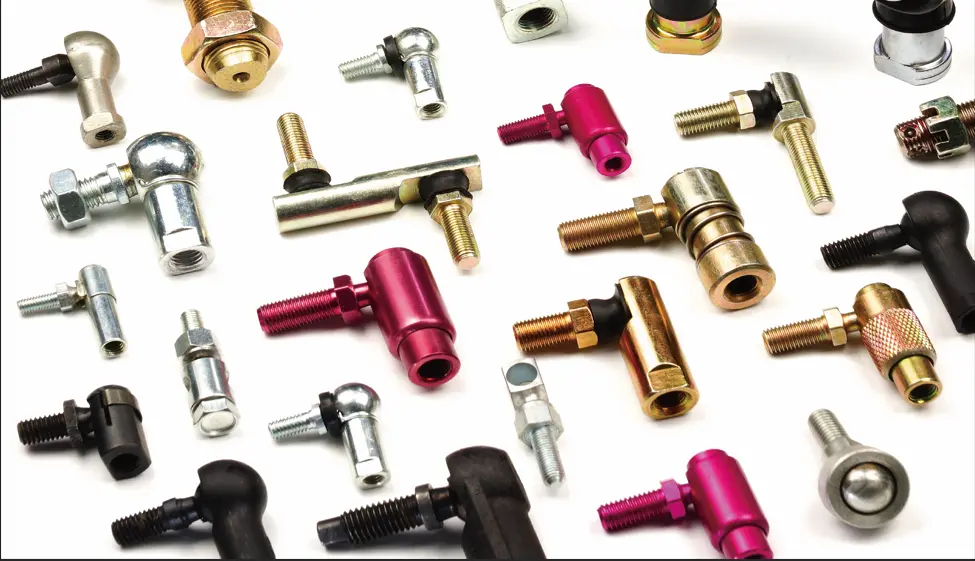
Find compact ball-stud joints for light control and positioning linkage, including CS DIN 71802 angled ball joints, AIM axial ball joints equivalent to GN 71802.1, ES grommet style ball joints, QD quick disconnect ball joints with inner spring, and QI quick disconnect ball joints with outer spring. Use the series sections below to compare geometry, release style, sealing and size charts before requesting a quote.

5 Series
CS / AIM / ES / QD / QI
DIN 71802
Angled ball joint
GN 71802.1
Axial equivalent
Quick Release
QD / QI options
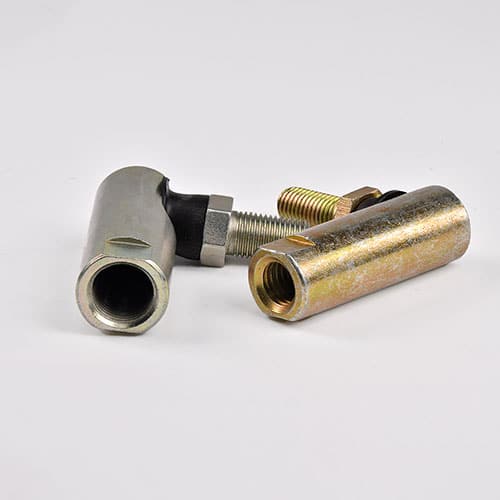
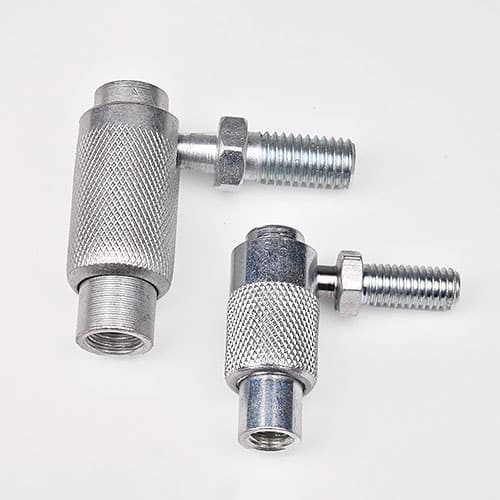
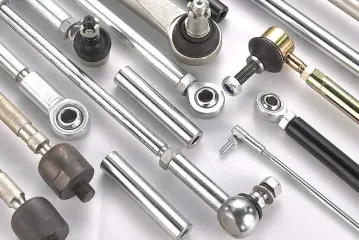
SYZ small ball joints all series including CS AIM ES QD QI
ISO 9001:2015 Certified
Factory Direct Pricing
25 Day Standard Production
Samples in 20 Days
OEM/ODM & Custom Sizes

Definition

What Are Small Ball Joints?

Small ball joints are smaller, lighter articulating linkage joints distinct from rod ends. Rod ends use a spherical bearing in a threaded housing; small ball joints use a ball stud in a socket – simpler and more compact, for low-to-moderate-load control and positioning linkage. These are light industrial/equipment small ball joints, not automotive suspension small ball joints.

Note on Usage: These are light control linkage joints. For structural or suspension loads, confirm the required load rating and consider a rod end or engineered suspension joint.

Selection context

Ball Joint vs Rod End Linkage

Choose the smallest joint that meets the movement and load requirement; a compact ball joint is not a substitute for a rated rod end in structural suspension duty.

RequirementSmall ball jointRod end / heim joint
Typical constructionBall stud retained in a socketSpherical bearing in a threaded housing
Best fitCompact control, pedal, throttle and actuator linkageAdjustable links and higher-load articulated assemblies
Service priorityCompact package, quick release or sealed retentionLoad rating, thread adjustment and documented misalignment
Design checkBall diameter, stud thread, socket retention and pull-out/load dataBore, thread, static/dynamic load, misalignment and safety factor

Build the assembly

Building a Ball Joint Linkage

1. Define movement

Set the required angle, stroke, release access and whether the joint is angled, axial, grommeted or quick-disconnect.

2. Match the interfaces

Confirm ball diameter, thread size and pitch, stud length, socket retention and the mating rod or clevis geometry.

3. Validate the load path

Check static load, pull-out or break load, vibration and environment. Upgrade to a rated rod end or engineered suspension joint when the load path is structural.

Series Overview

Small Ball Joint Series Breakdown

Compare DIN 71802 angled ball joints, axial ball joints, grommet style ball joints and two quick disconnect ball joint layouts by geometry, retention method and service access.

CS Series · Metric angled ball joint

CS Series DIN 71802 Angled Ball Joint

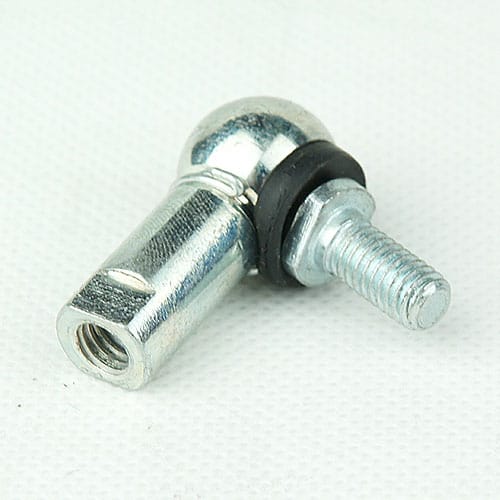
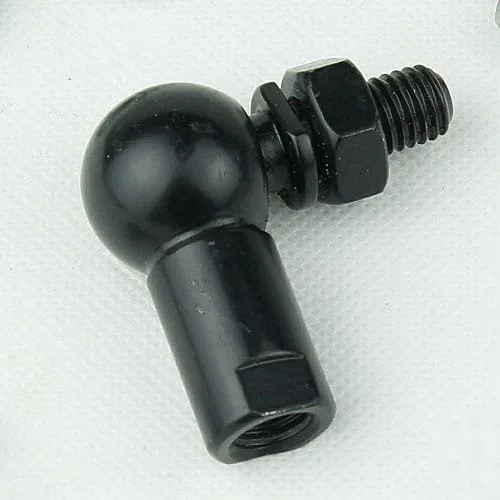
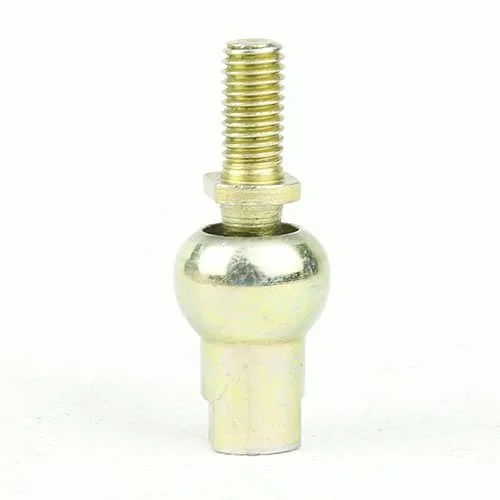
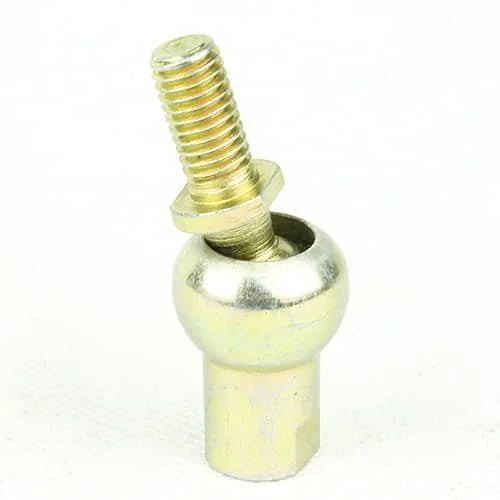
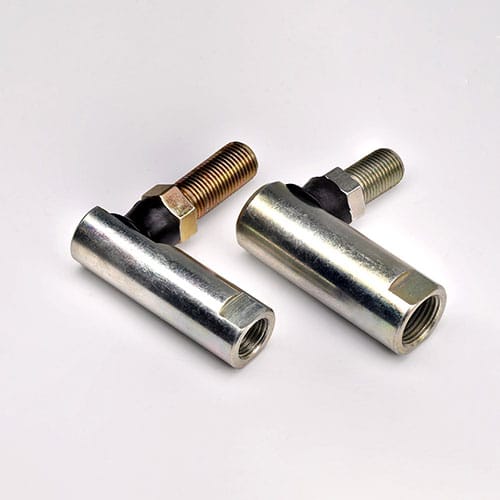
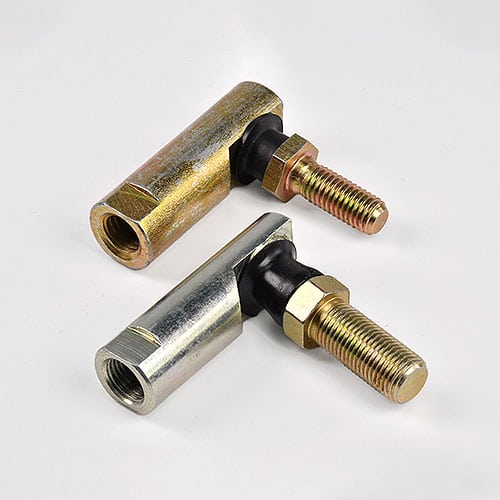
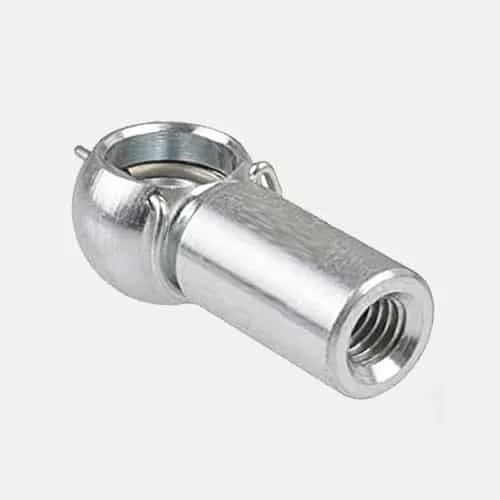
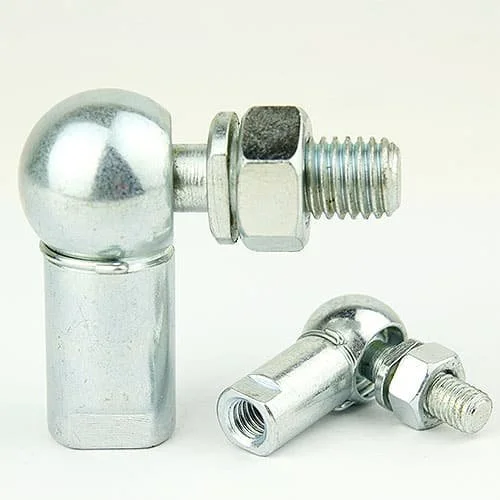
CS series DIN 71802 angled ball joints use a 90-degree ball stud and compact socket housing to connect and guide moving linkage parts in tight assemblies. The angled layout simplifies throttle linkage, control rods, mower steering, actuator links and other compact mechanisms where a straight rod end is too large or too complex.

  • Socket: carbon steel, tensile strength class 5, zinc plated and colorless passivated.
  • Ball: hardened steel with lubricated ball seat; stainless steel versions are available.
  • 90-degree structure helps eliminate extra brackets or levers while maintaining tensile and compressive strength.
Choose DIN 71802 angled ball joint by spec

Spec size chart

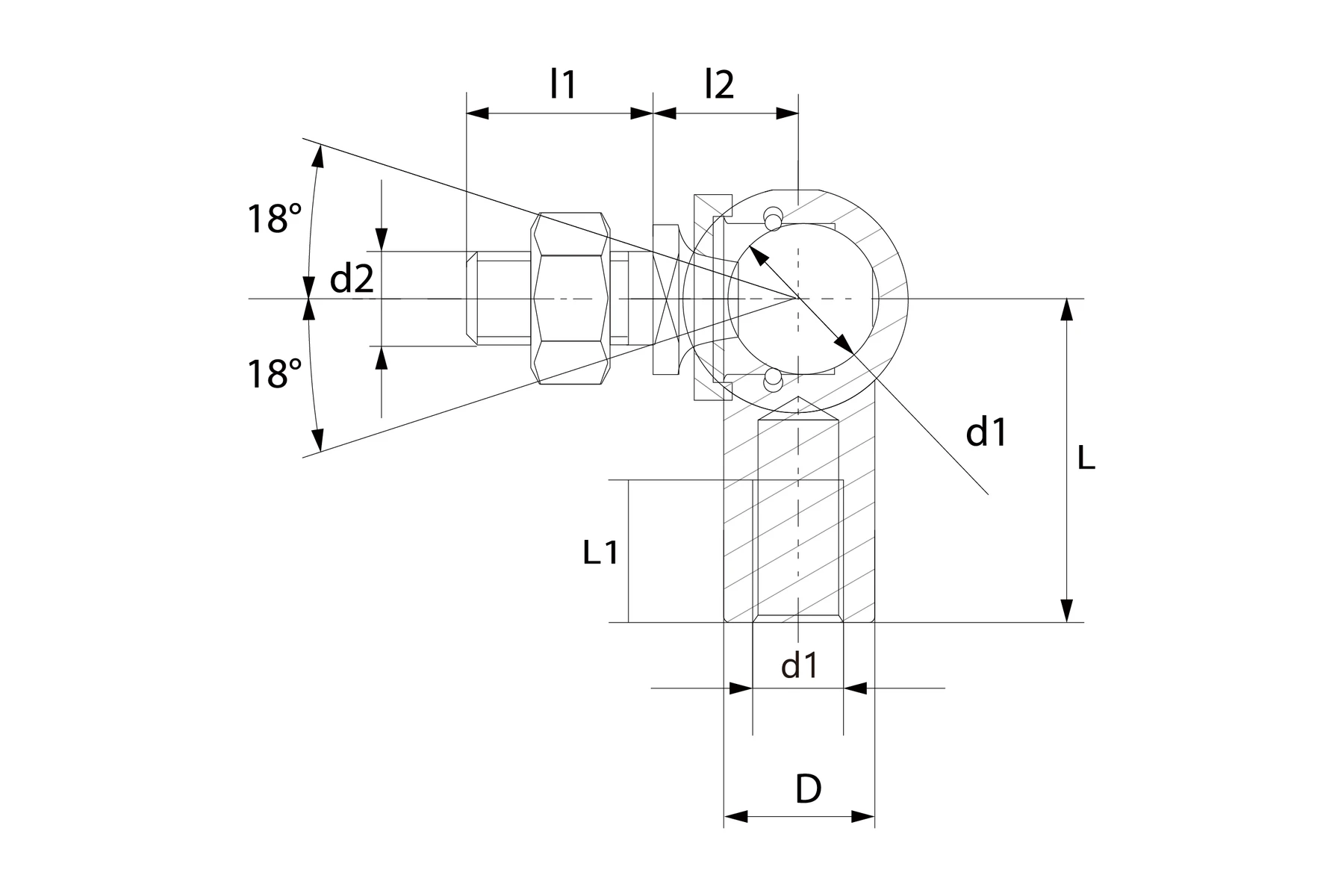
Part NO.THREAD d1THREAD d2Ball Dia d1L +0.3 -0.3L1 +0.3 -0.3l1 +0.3 -0.3l2 +0.3 -0.3Da°APPROX WEIGHT (g)
CSM5M5X0.8M5X0.882210.210.2983615.2
CSM6M6X1.0M6X1.0102511.512.511103625.2
CSM8M8X1.25M8X1.25133014.016.513133653.1
CSM10M10X1.5M10X1.5163515.520.0161636103.8
CSM12M12X1.75M12X1.75163515.520.0161636103.8
CSM14M14X1.5M14X1.5224521.528.0221936220.9
CSM14x2.0M14X2.0M14X2.0224521.528.0221936220.9
CSM16M16X1.75M16X1.75224521.528.0221936220.9
CS DIN 71802 angled ball joint technical drawing
AIM Series · Metric axial ball joint

AIM Series Axial Ball Joint Equivalent to GN 71802.1

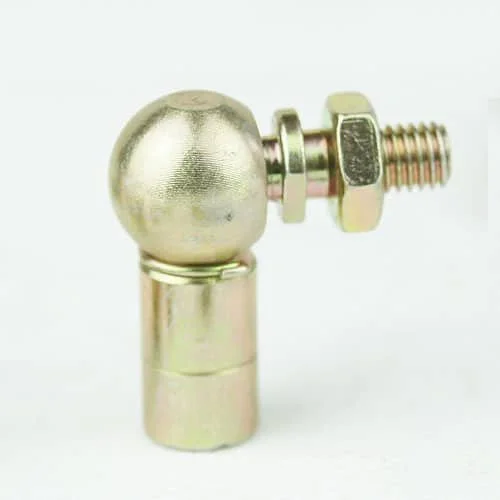
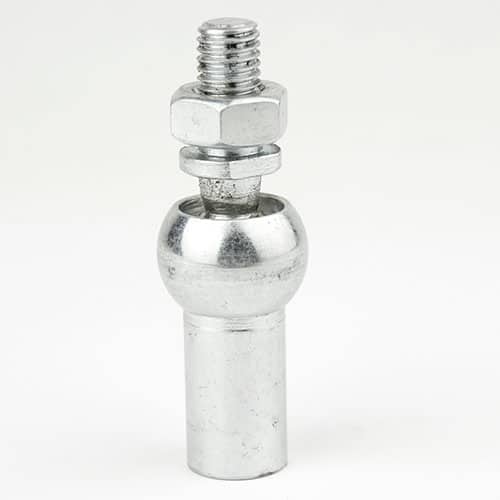
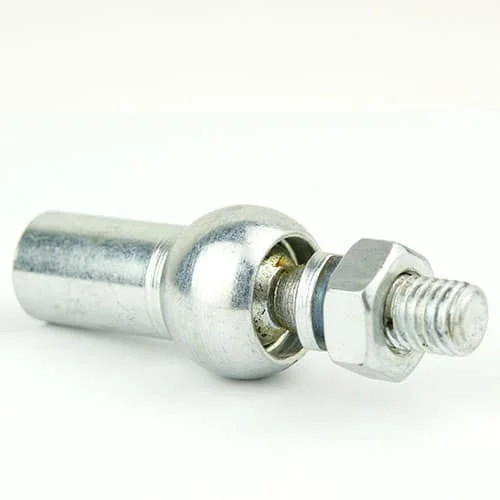
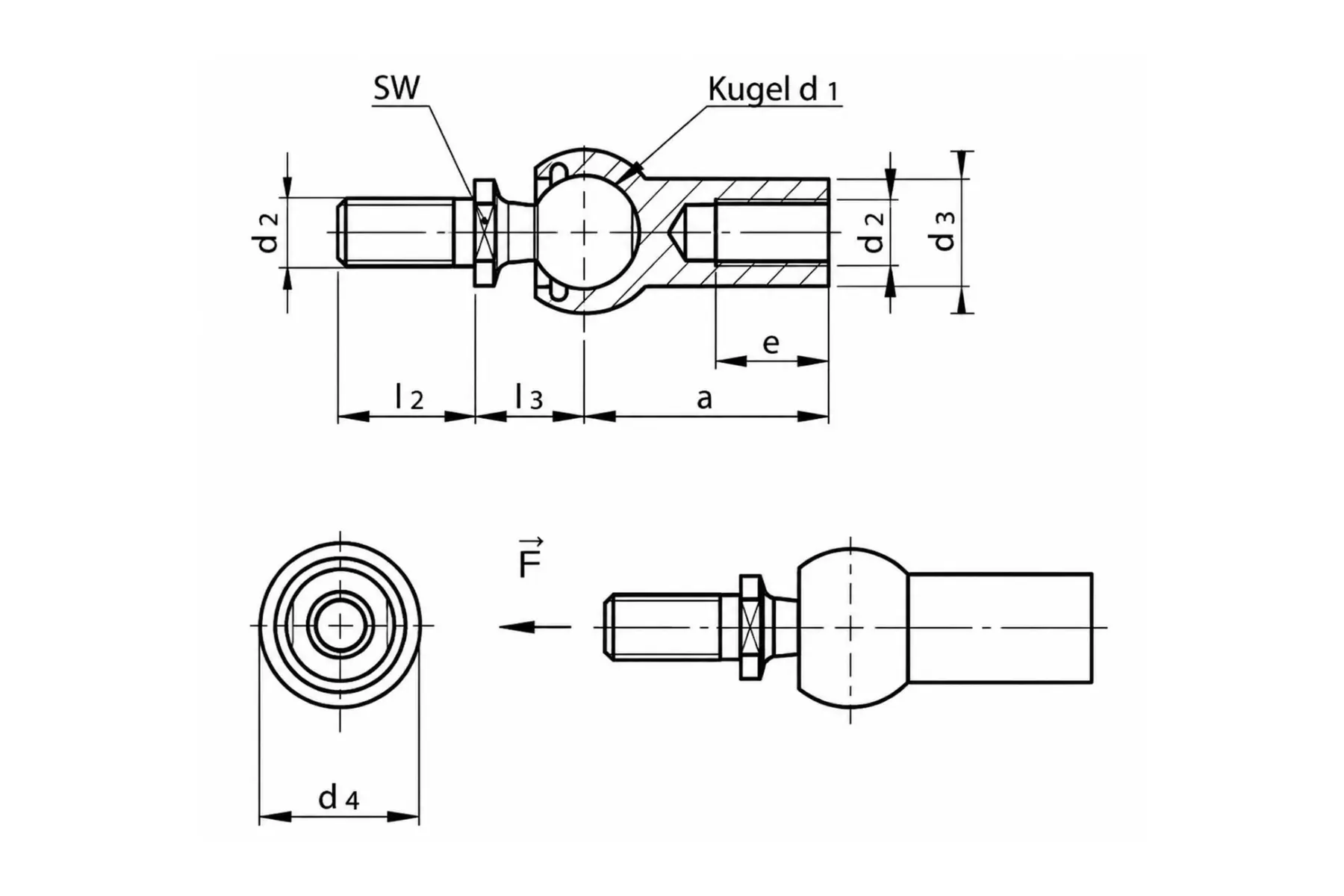
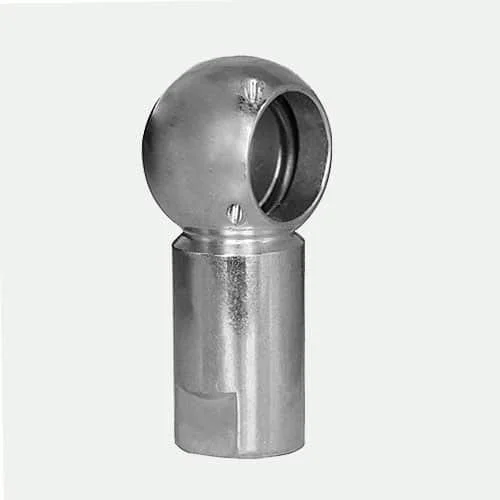
AIM axial ball joints are compact metric ball-and-socket joints for push-pull force transfer along the axis of the connecting rod. They are a practical axial ball joint equivalent to GN 71802.1 when a direct mechanical linkage must transmit tensile and compressive force while still compensating for angular misalignment.

  • Optimized for axial force transmission with minimal power loss through the ball stud centerline.
  • The ball stud pivots within a defined conical angle and allows 360-degree rotation inside the socket.
  • Carbon steel socket and hardened lubricated ball are standard; stainless material options are available.
Choose axial ball joint by spec

Spec size chart

Part No.Ball d1Thread d2a +/-0.3d3 +/-0.5d4 +/-0.5e min.l2 +/-0.3l3 +/-0.3SW h14Pull-out force F (N)
AIM58M522812.810.210.29730
AIM610M6251014.811.512.511840
AIM813M8301319.31416.5131160
AIM1016M1035162415.520161380
AIM1216M1235162415.520161380
AIM14*1.519M14*1.545223021.5282016100
AIM1419M1445223021.5282016100
AIM1619M1645223021.5282016100
AIM axial ball joint technical drawing
ES Series · Inch grommet style ball joint

ES Series Grommet Style Ball Joint

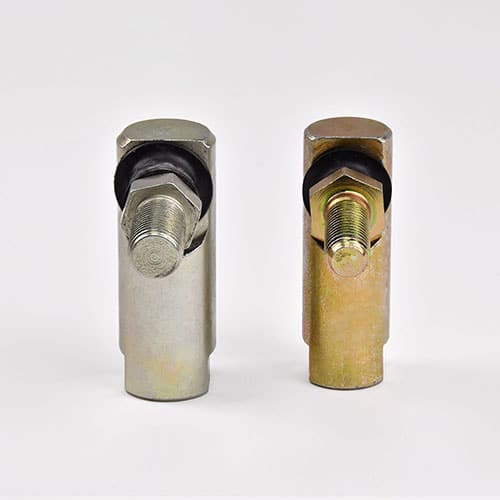
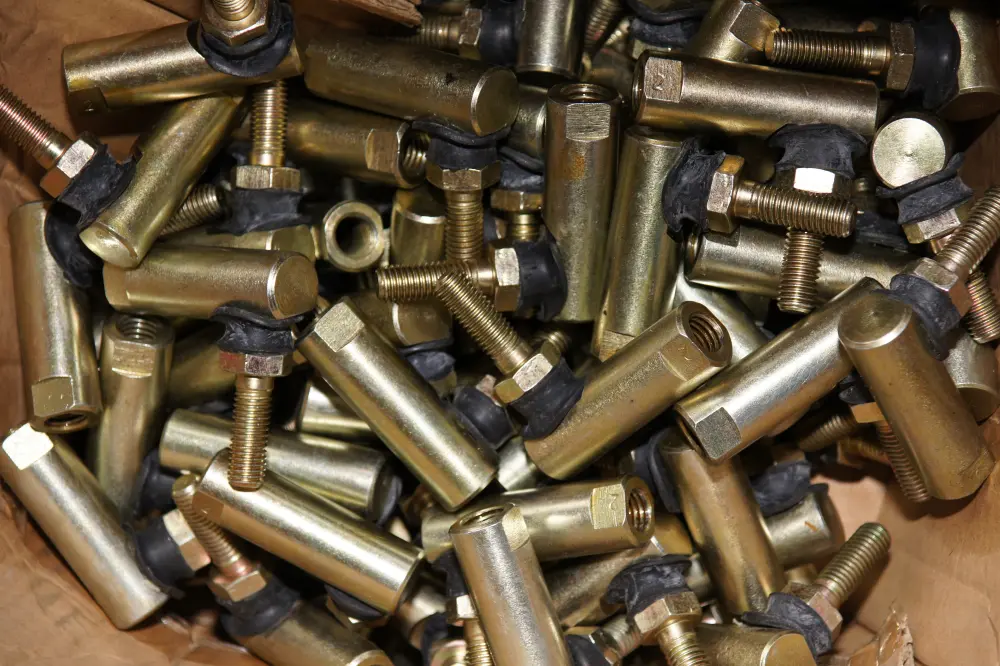
ES series grommet style ball joints are swaged around the ball for metal-to-metal contact with controlled play. A rubber grommet acts as an effective seal against debris, making this series common in lawn and garden equipment, motorsports, agricultural equipment, construction equipment and aftermarket linkage assemblies.

  • Rubber grommet improves sealing, grease retention and vibration damping.
  • Carbon steel ball stud and body with zinc plating for corrosion resistance.
  • Right-hand and left-hand thread options support OEM and replacement linkage programs.
Choose grommet style ball joint by spec

Spec size chart

PART NO.MM1LGFPNC
ES18710-32-2B10-32-2A0.3750.4380.4380.4380.8751.063
ES2501/4-28-2B1/4-28-2A0.4380.5630.4690.5000.9691.219
ES3125/16-24-2B5/16-24-2A0.5000.6880.5310.5631.1251.406
ES3753/8-24-2B3/8-24-2A0.6250.8750.6880.7501.3751.688
ES4387/16-20-2B7/16-20-2A0.7501.1250.8751.0001.9382.375
ES5001/2-20-2B1/2-20-2A0.7501.1250.8751.0001.9382.375
ES6255/8-18-2B5/8-18-2A0.8751.1251.0001.0002.0632.578
ES grommet style ball joint technical drawing
QD Series · Inch quick disconnect ball joint

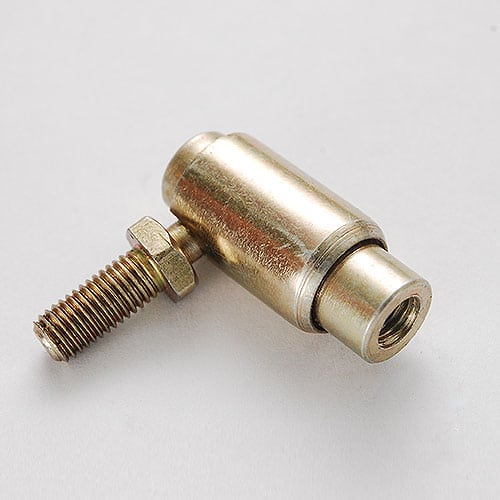
QD Series Quick Disconnect Ball Joint – Inner Spring

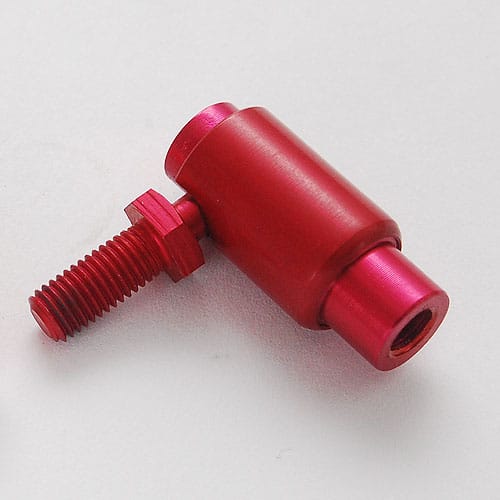
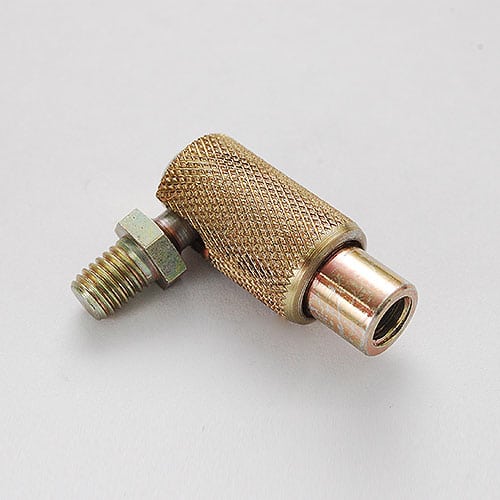
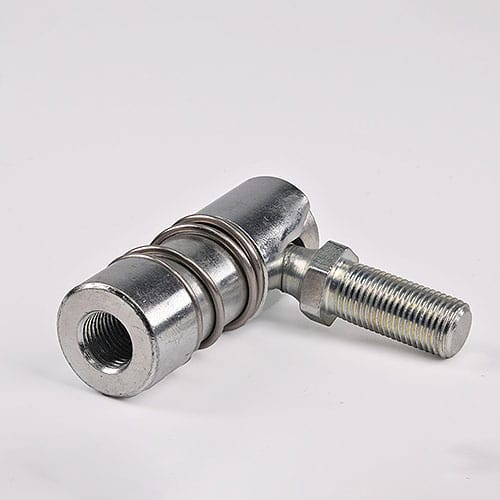
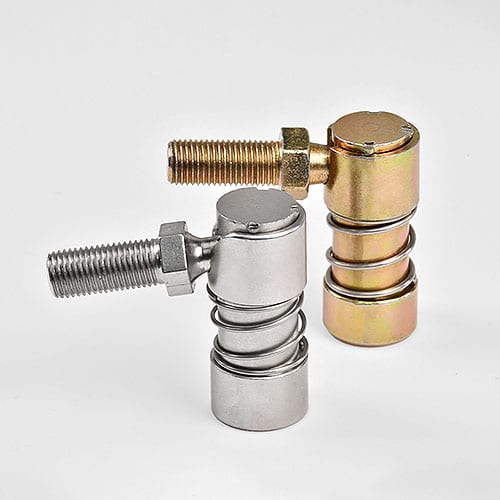
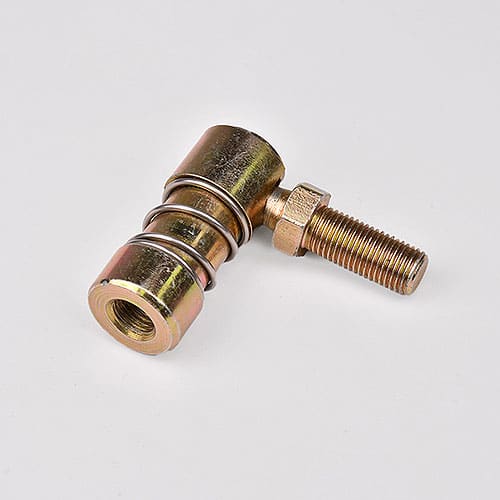
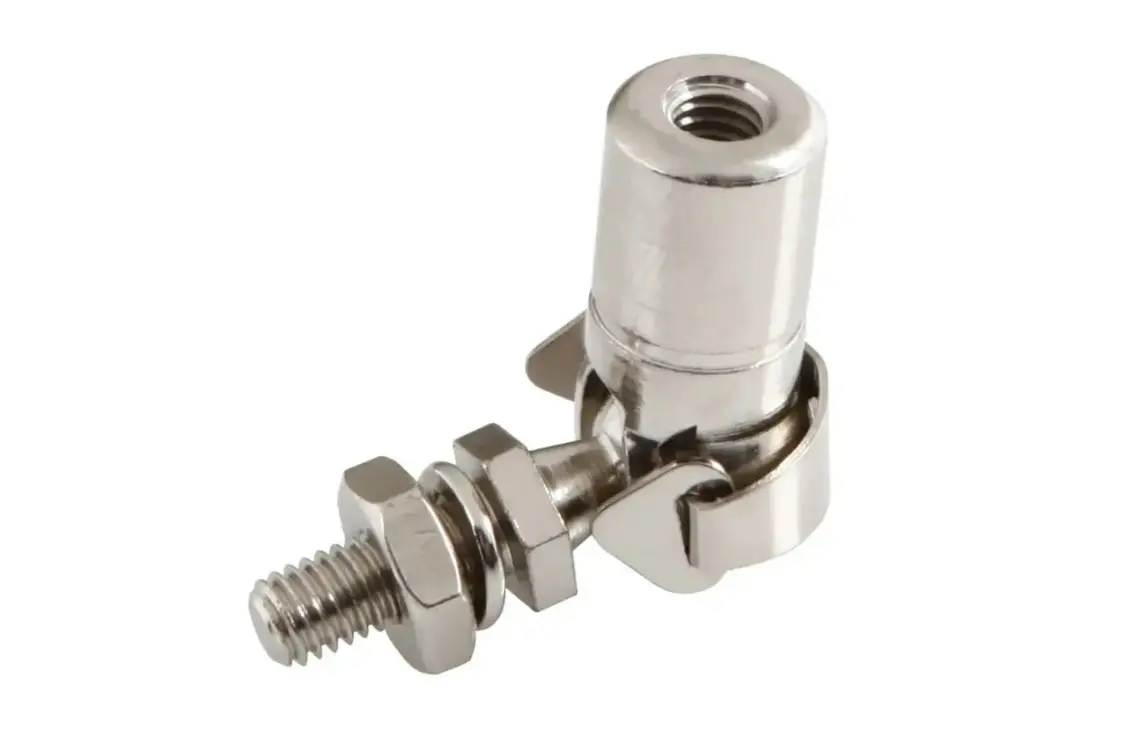
QD quick disconnect ball joints, also called quick release ball joints, are designed for linkages where the housing must be detached from the ball stud quickly. Pulling back the spring-loaded outer housing releases the joint without threading or tools, reducing service time on frequently adjusted assemblies.

  • Inner spring quick-disconnect mechanism for fast tool-free removal.
  • Ball stud, body and sleeve use zinc-plated carbon steel for corrosion resistance.
  • Stainless steel spring is standard; stainless steel and aluminum material options can be supplied.
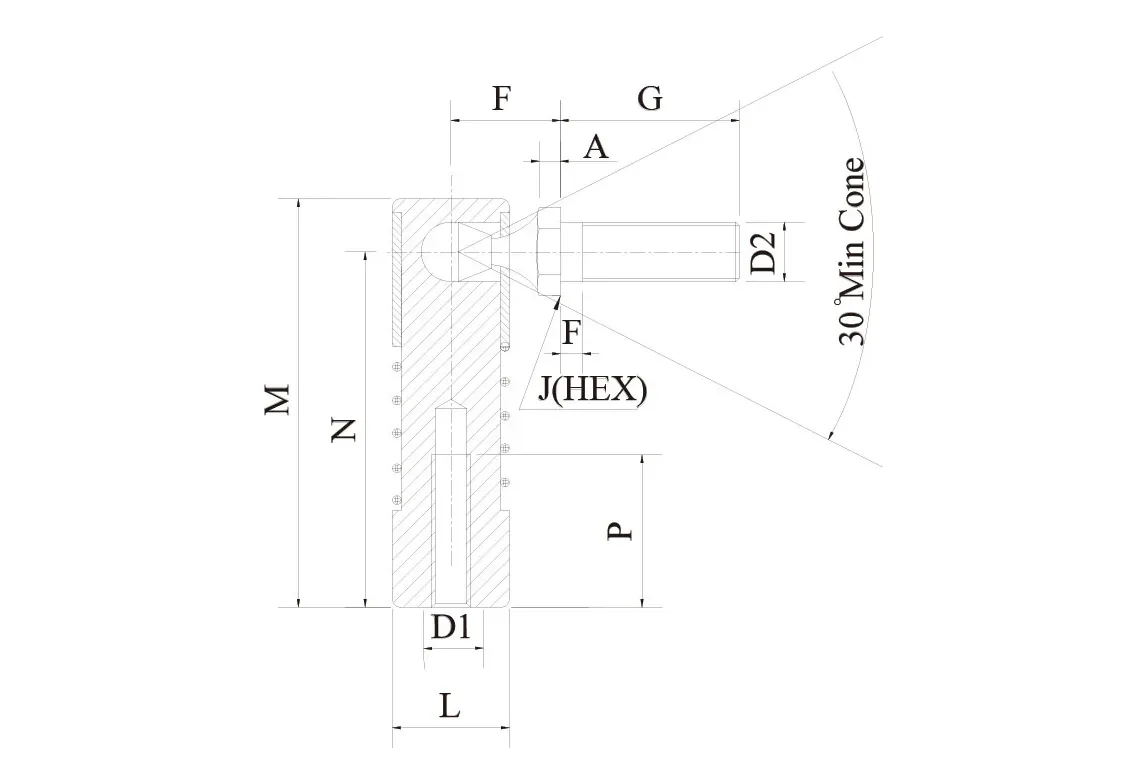
Choose quick disconnect ball joint by spec

Spec size chart

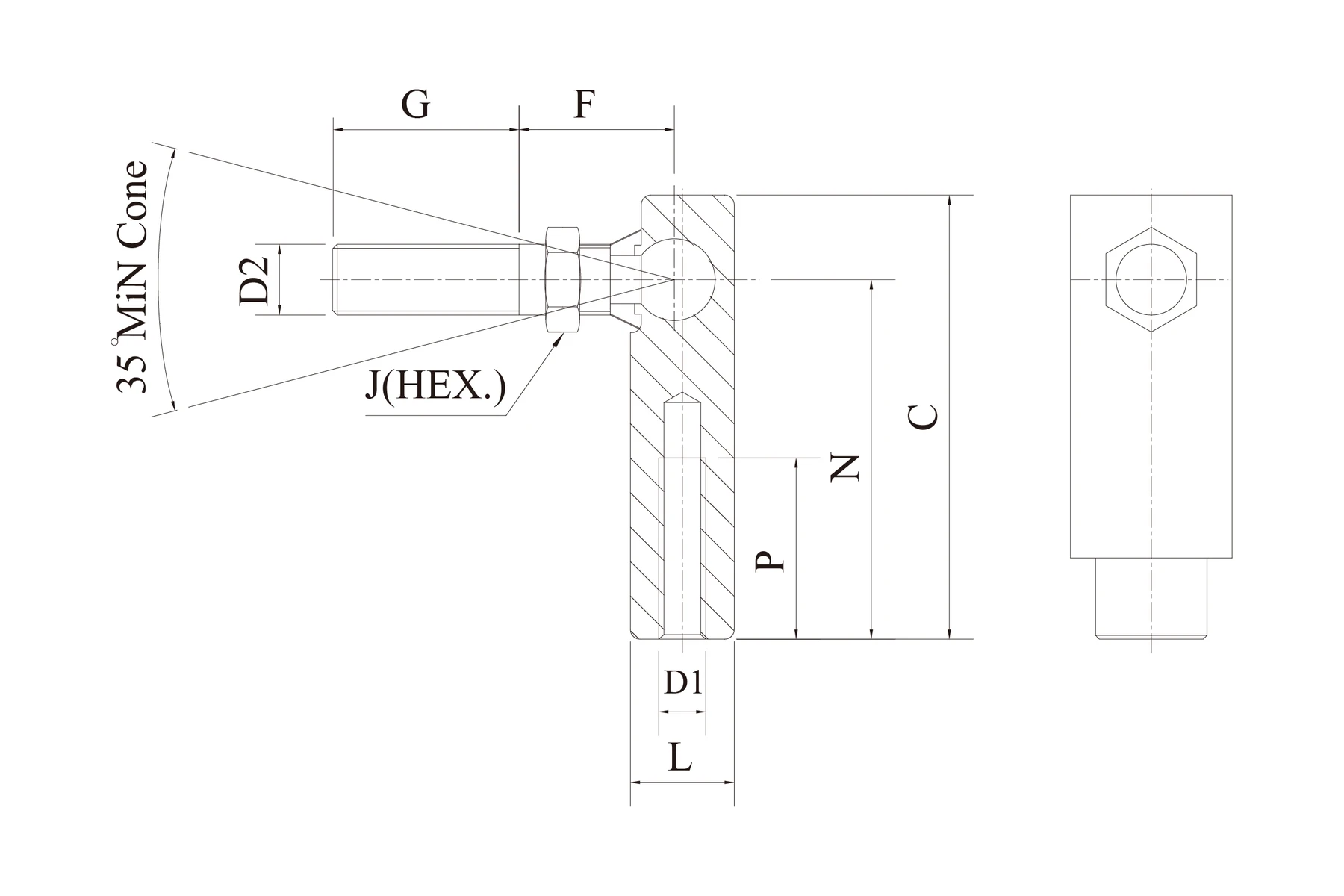
PART NO.D1D2ACFGJLMNP
QD18710-32-2B10-32-2A0.1250.0630.4380.4380.3130.4381.0940.9060.438
QD2501/4-28-2B1/4-28-2A0.1250.0630.4690.5620.3750.5621.2500.9690.531
QD3155/16-24-2B5/16-24-2A0.1560.0940.5310.6870.4370.6251.4531.1250.605
QD3753/8-24-2B3/8-24-2A0.1870.0940.6870.8750.5000.7501.7501.3750.812
QD5001/2-20-2B1/2-20-2A0.2500.0940.8751.1250.6251.0002.5302.0301.000
QD quick disconnect ball joint technical drawing
QI Series · Inch quick release ball joint

QI Series Quick Disconnect Ball Joint – Outer Spring

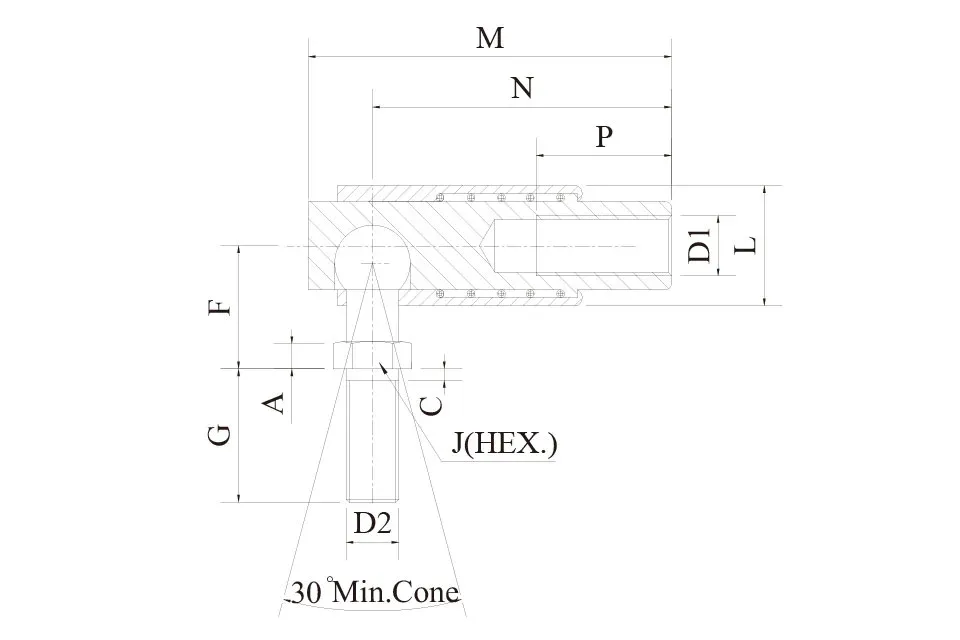
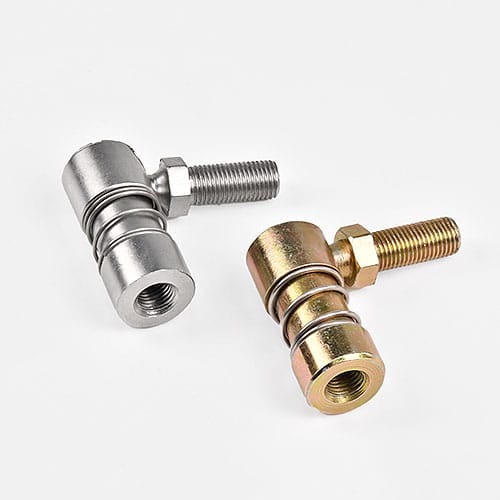
QI series quick disconnect ball joints use an outer spring quick-release layout for compact inch linkage systems that require frequent service access. The configuration supports easy hand disconnection while keeping the ball stud and socket package small for throttle, cable and pedal controls.

  • Outer spring quick-release design for compact linkage access.
  • Zinc-plated carbon steel ball stud, body and sleeve with stainless steel spring.
  • Stainless steel and aluminum materials are available for application-specific programs.
Choose quick release ball joint by spec

Spec size chart

PART NO.D1D2AFGJLMNP
QI18710-32-2B10-32-2A0.1250.4380.4380.3130.4381.0940.9060.438
QI2501/4-28-2B1/4-28-2A0.1250.4690.5620.3750.5621.2500.9690.531
QI3125/16-24-2B5/16-24-2A0.1560.5310.6870.4370.6251.4531.1250.605
QI3753/8-24-2B3/8-24-2A0.1870.6870.8750.5000.7501.7501.3750.812
QI5001/2-20-2B1/2-20-2A0.2500.8751.1250.6251.0002.5302.0301.000
QI quick disconnect ball joint technical drawing

Series Quick Reference Matrix

SeriesProduct nameStandard / GeometryRetention / SealBest-fit use
CSDIN 71802 angled ball jointMetric 90-degree angledSafety catch / optional dust capCompact metric control linkage
AIMAxial ball joint equivalent to GN 71802.1Metric axial push-pullSocket retained axial ball studDirect axial force transfer
ESGrommet style ball jointInch staked bodyRubber grommet sealLawn, garden and small-engine linkage
QDQuick disconnect ball joint – inner springInch quick-disconnectSpring-loaded releaseFrequently serviced linkage
QIQuick disconnect ball joint – outer springInch quick-releaseOuter spring releaseCable, pedal and compact quick-release linkage

Related Components

Ball Studs, Ball Sockets and Linkage Hardware

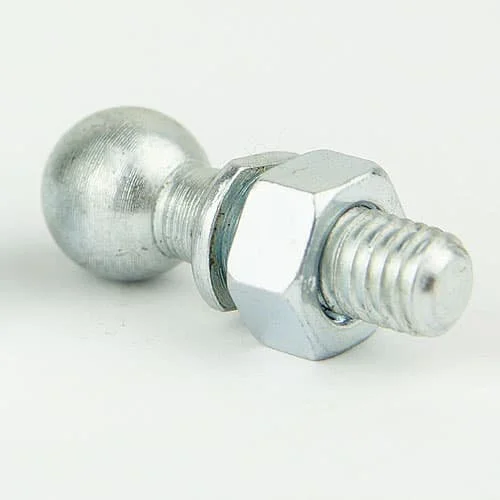
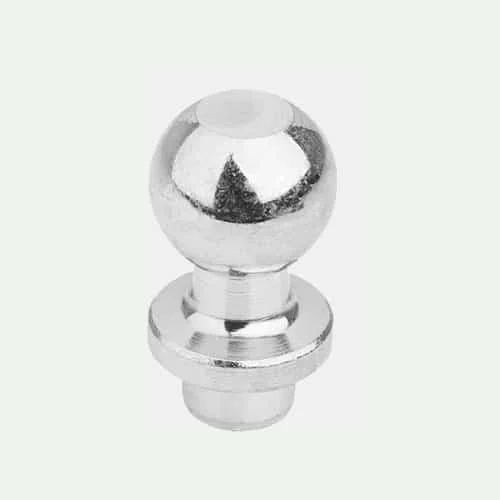
SYZ can supply the small ball joint itself, or the associated DIN ball studs, DIN ball sockets and complete linkage hardware around it.

How to choose

Choose by Geometry, Release Method and Environment

Start with the movement direction and service requirement, then confirm dimensions on the dedicated spec page.

1. Geometry first

Use CS for 90-degree angled linkage. Use AIM when the load must travel along the rod axis. Use ES, QD or QI when inch replacement geometry matches your equipment.

2. Service access

QD and QI are best where the linkage is disconnected often. ES is a staked, sealed style for more permanent assemblies. CS and AIM suit compact metric mechanisms.

3. Environment and material

Zinc-plated carbon steel is standard. Select rubber grommets, dust caps, stainless steel or aluminum options when corrosion, debris, vibration or weight is critical.

Applications

High-Performance Ball Joint Linkages for Multiple Applications

Small ball joints are used wherever compact articulation, misalignment compensation and reliable light-to-medium motion transfer are required.

Material Handling & General Linkages ball joint linkage application

Material Handling & General Linkages

Smooth and accurate motion transfer in sorting, positioning and lifting mechanisms on automated production lines and logistics equipment.

Agricultural & Heavy Machinery ball joint linkage application

Agricultural & Heavy Machinery

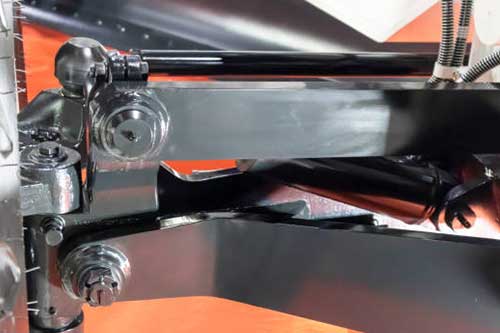
Flexible connection points for implement controls, hydraulic-arm linkages and equipment subject to vibration and outdoor duty.

Solar Energy Systems ball joint linkage application

Solar Energy Systems

Rotational tracking and misalignment compensation in solar fields where linkage movement and thermal expansion must be controlled.

Automotive Pedal, Shift & Throttle Linkages ball joint linkage application

Automotive Pedal, Shift & Throttle Linkages

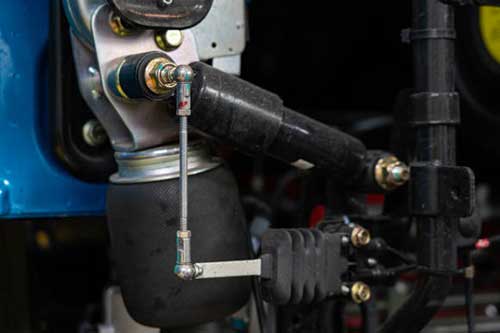
Light steering, pedal and control linkages where compact ball-stud articulation is required; structural suspension joints require separate engineering review.

Hydraulic Damper Linkages ball joint linkage application

Hydraulic Damper Linkages

Smooth articulation and reliable force transfer under dynamic movement in damper and control assemblies.

Garden Machinery & Lawn Equipment ball joint linkage application

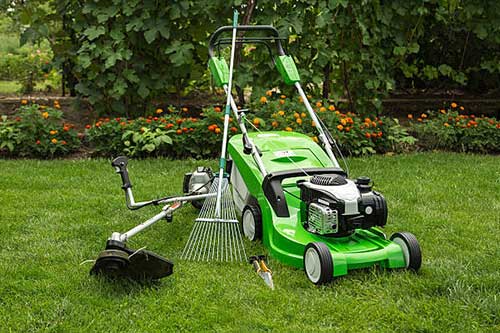
Garden Machinery & Lawn Equipment

Throttle control, steering and deck-height adjustment linkages for lawn mowers, weeders and outdoor power equipment.

Manufacturing

How SYZ Manufactures Small Ball Joints

From ball stud blanks to final assembly, the process focuses on strength, surface finish, corrosion resistance and controlled movement without excessive axial play.

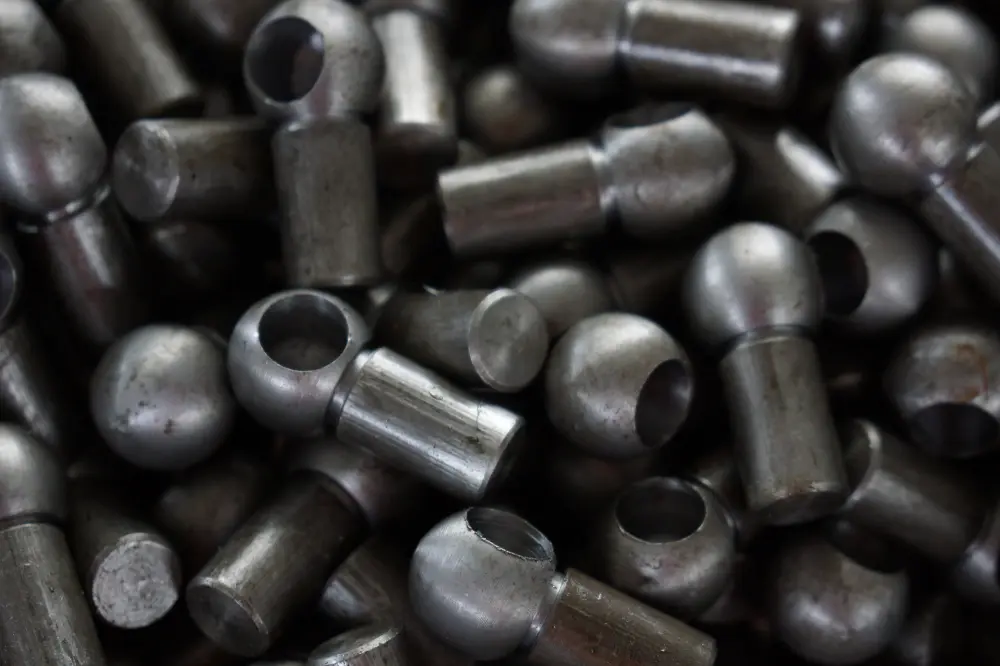
Forging or Bar-Cutting of Blanks for small ball joints
01

Forging or Bar-Cutting of Blanks

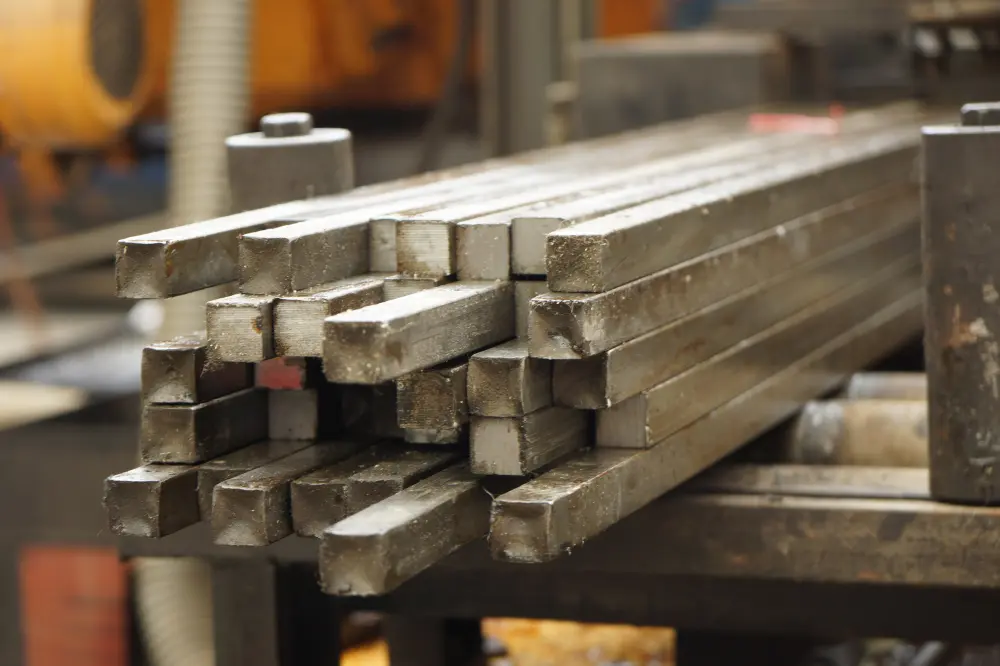
Ball studs may be hot forged to improve grain structure and strength, or bar stock may be cut for smaller production runs. Housings are cold-formed or cut from tube stock to create an economical near-net shape before machining.

CNC Machining of Stud and Housing for small ball joints
02

CNC Machining of Stud and Housing

Precision turning, milling, grinding and polishing create the spherical head, threaded shank and socket features. Tight tolerance control supports smooth articulation and stable fit.

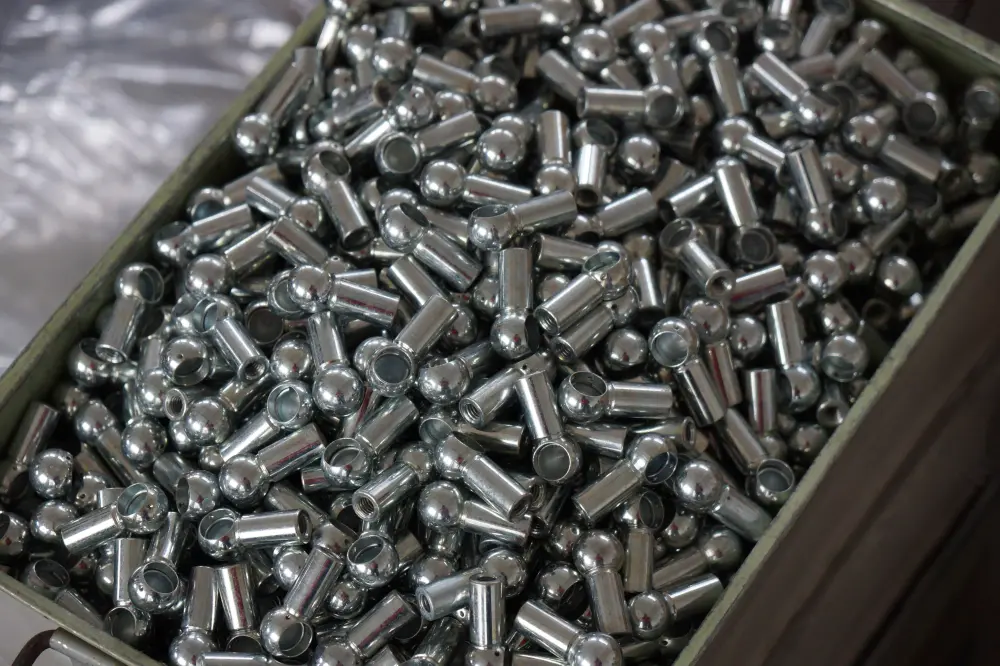
Surface Treatment for small ball joints
03

Surface Treatment

Zinc plating, black oxide, phosphating, passivation or friction-reducing coatings can be selected according to corrosion, friction and service-life requirements.

Assembly of Ball Into Housing for small ball joints
04

Assembly of Ball Into Housing

The polished ball stud is inserted into the socket with controlled interference, then retained by press-fitting, staking or swaging while maintaining free motion and limiting axial play.

Quality Control & Testing

Inspection Steps for Reliable Ball Joint Linkages

Six primary checks summarize the release decision; additional tests are available when the application requires them.

Raw material inspection for small ball joint quality control

Raw Material

Incoming steel and stainless material checks before machining.

Salt spray test for small ball joint quality control

Salt Spray

Corrosion resistance evaluation for zinc plating and surface treatments.

Load-bearing capacity test for small ball joints

Load Capacity

Load performance verification for the specified application.

Ball stud break test for small ball joints

Ball Stud Break

Break-load evaluation for severe service conditions.

Oscillation angle test for small ball joints

Oscillation Angle

Maximum movement angle validation against the selected series.

Dimensional measurement for small ball joints

Dimensions

Dimensional inspection to prevent assembly failures.

More tests available for qualified programs +

Eddy Current

Surface crack and defect detection on critical components.

Durability

Long-term movement and wear assessment.

Mud & Water

Environmental exposure checks for outdoor service.

Temperature Cycling

Performance verification under temperature changes.

Torque

Swing and rotation force checks for ball stud movement.

Appearance

Visual inspection to remove products with surface defects.

One-Stop Solution

Application Kits & Associated Products

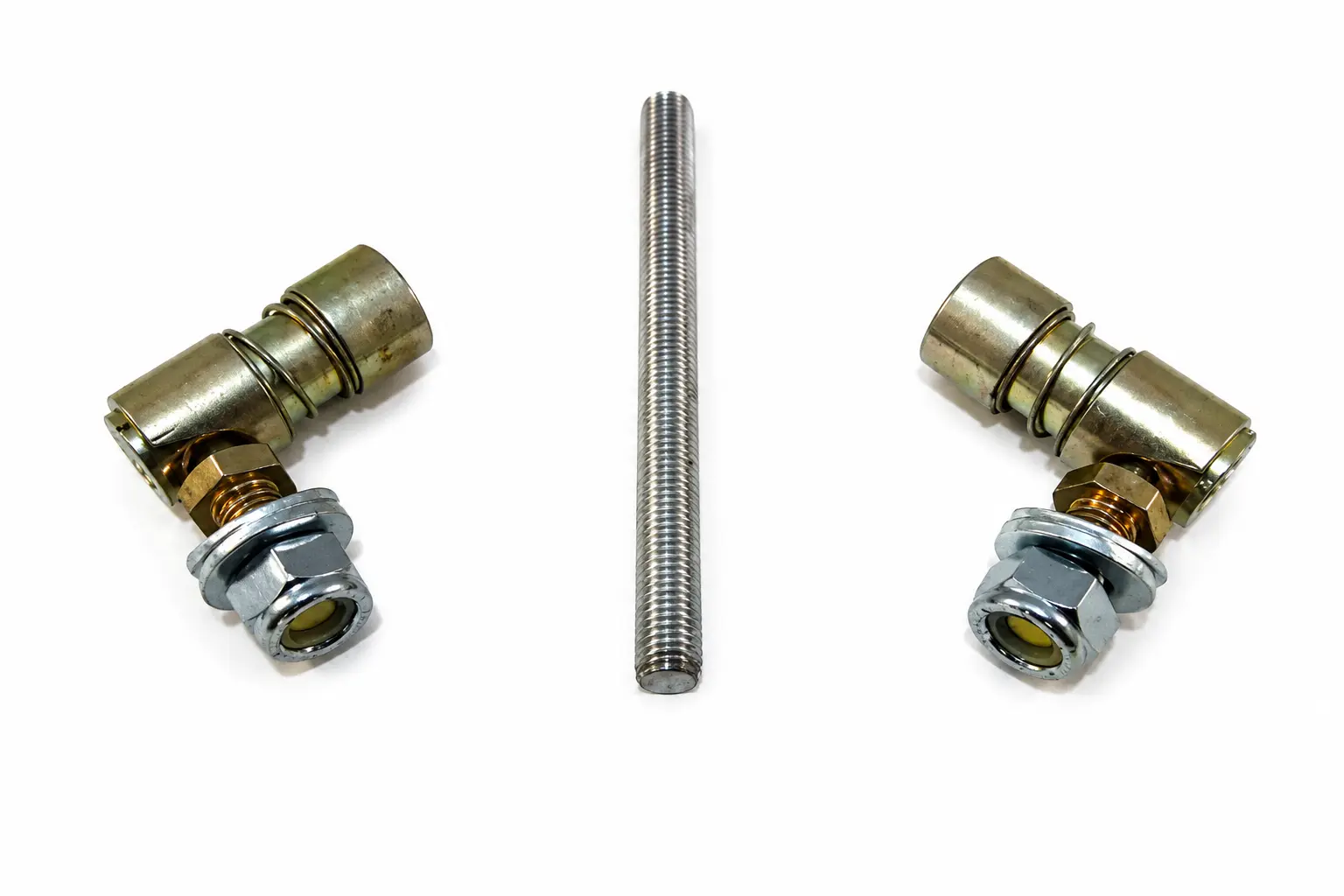
Beyond single ball joints, SYZ can help package sockets, studs, rods, cable ends, extension kits and application-specific linkage assemblies for OEM and aftermarket programs.

Double ball-joint linkage kit with compact ball joints

Double Ball-Joint Linkage Kit

Double ball-joint linkage assemblies, studs and hardware kits for compact motion-control builds.

Ball Joint Linkage Extension Kit

Ball Joint Linkage Extension Kit

Extension rods, sockets and ball studs supplied as matched linkage packages.

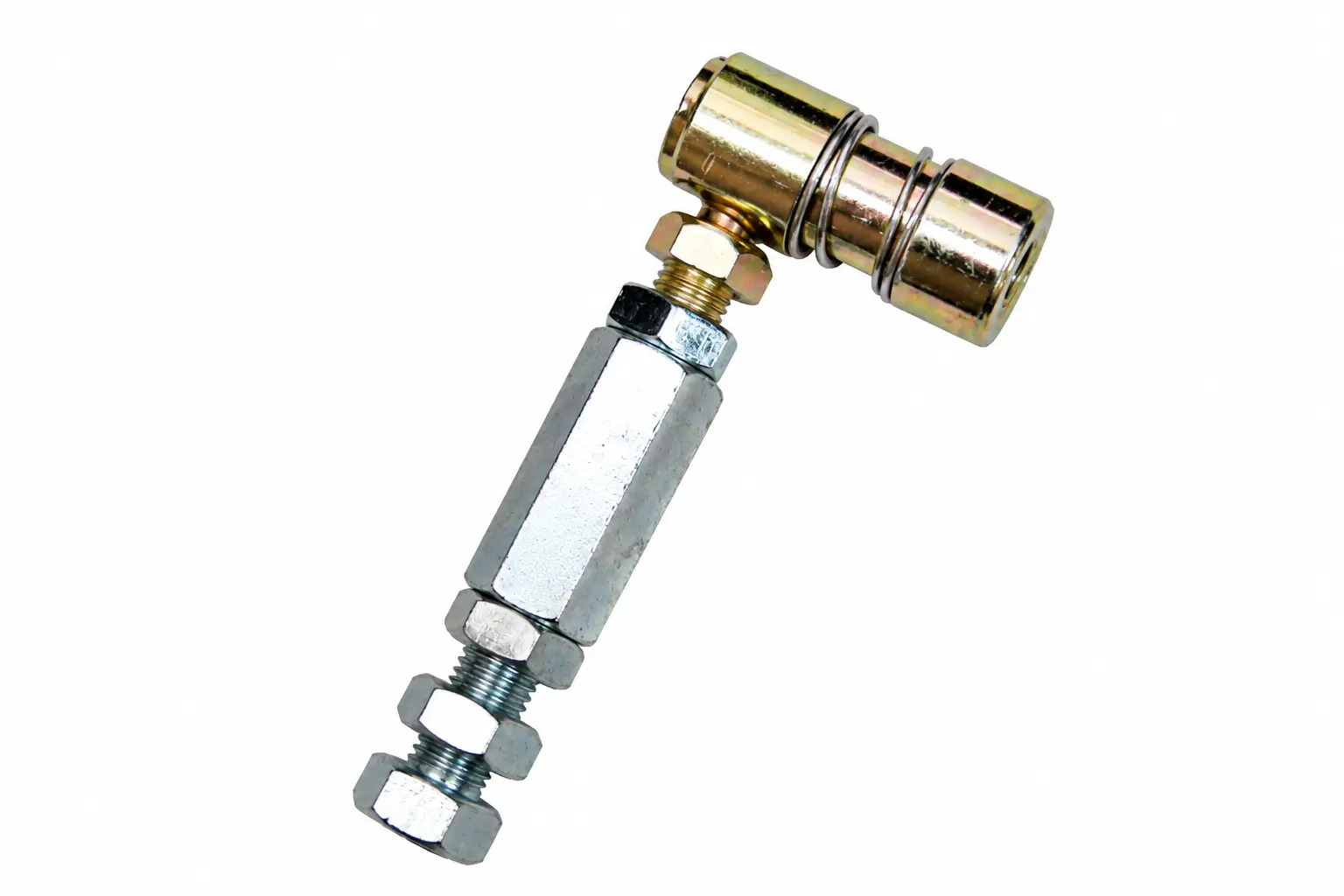
Ball Joint Throttle Linkage

Ball Joint Throttle Linkage

Throttle linkage sockets, right-angle ball joints, studs and related hardware for vehicle and small-engine controls.

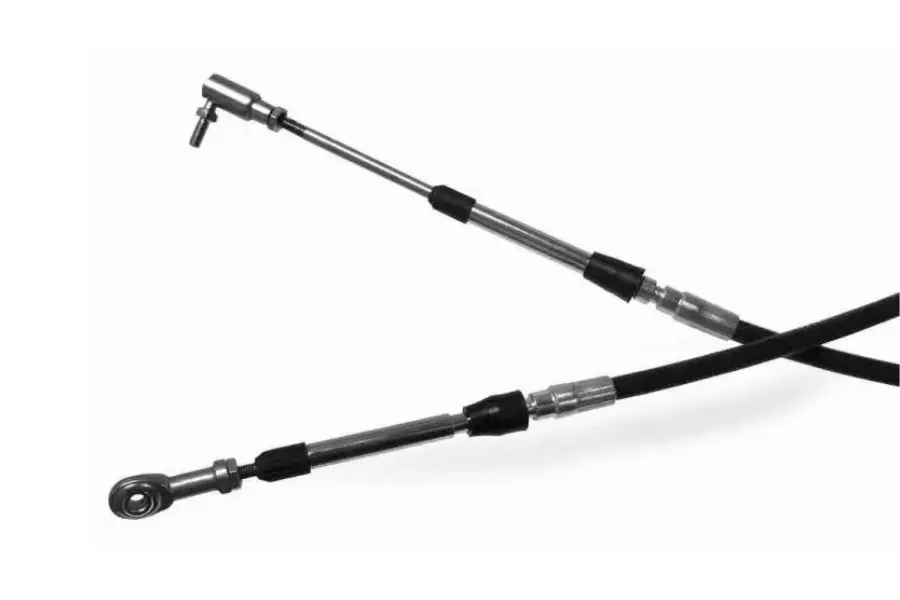
Shifter Cable Kit

Shifter Cable Kit

Cable-end hardware and ball-joint linkage options for shifter and control cable assemblies.

FAQ

Common Questions About Small Ball Joints

What is a DIN 71802 angled ball joint used for?+
A DIN 71802 angled ball joint connects and guides moving linkage parts where a compact 90-degree ball-stud joint is needed. It is common in control rods, throttle linkage, actuator linkage and light equipment mechanisms.
What is the difference between DIN 71802 and GN 71802.1 style axial ball joints?+
DIN 71802 angled ball joints use a 90-degree ball stud layout. GN 71802.1 style axial ball joints transmit pushing and pulling force along the rod axis while still compensating for angular misalignment.
Can SYZ supply DIN 71803 ball studs and DIN 71805 ball sockets?+
Yes. SYZ can quote ball studs, ball sockets, sockets with clips and associated linkage hardware as separate components or as part of a complete linkage kit.
What is the difference between QD and QI quick disconnect ball joints?+
QD uses an inner spring quick-disconnect mechanism. QI uses an outer spring quick-release layout. Both support tool-free service access, but the exact style should be matched to available space and release preference.
When should I choose ES grommet style ball joints?+
Choose ES when the linkage benefits from a rubber grommet for dust sealing, grease retention and vibration damping, such as lawn and garden equipment or small-engine control linkage.
Are stainless steel or aluminum ball joint options available?+
Yes. Carbon steel with zinc plating is standard for many series, while stainless steel and aluminum options can be reviewed for corrosion resistance, weight reduction or OEM program requirements.
What information should I provide for a quote?+
Send the series, thread size and pitch, ball diameter, stud style, required finish, quantity, application environment, drawings or samples, and whether associated ball studs, sockets or linkage kits are needed.
What is your MOQ and lead time for small ball joints?+
Samples can be planned in about 20 days. Production is typically 25 days and the usual production MOQ is 100–300 pcs per item; confirm the current schedule and quantity with the quotation team.

Engineering Tools

Calculators for This Product Family

Buyer Guides

Small Ball Joint Guides

Compact ball-stud-and-socket joints for light control and positioning linkage.

Factory Direct

Request a Quote

Submit your ball joint series and quantity requirements. We reply with a complete quote within 24 hours.

We respond within 24 hours · Factory direct · No spam, ever · For urgent requests, email [email protected] directly

Request a Quote

Please submit the form or email [email protected]

🍪
We Use Cookies